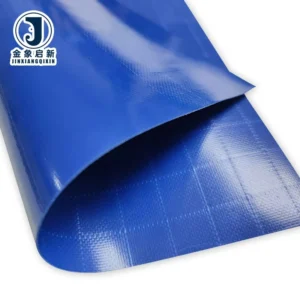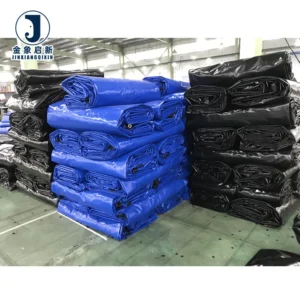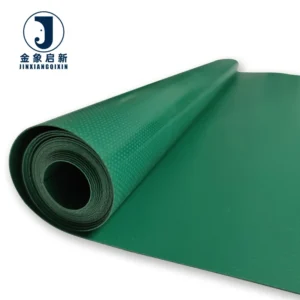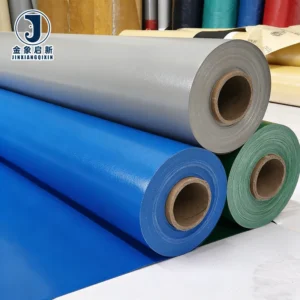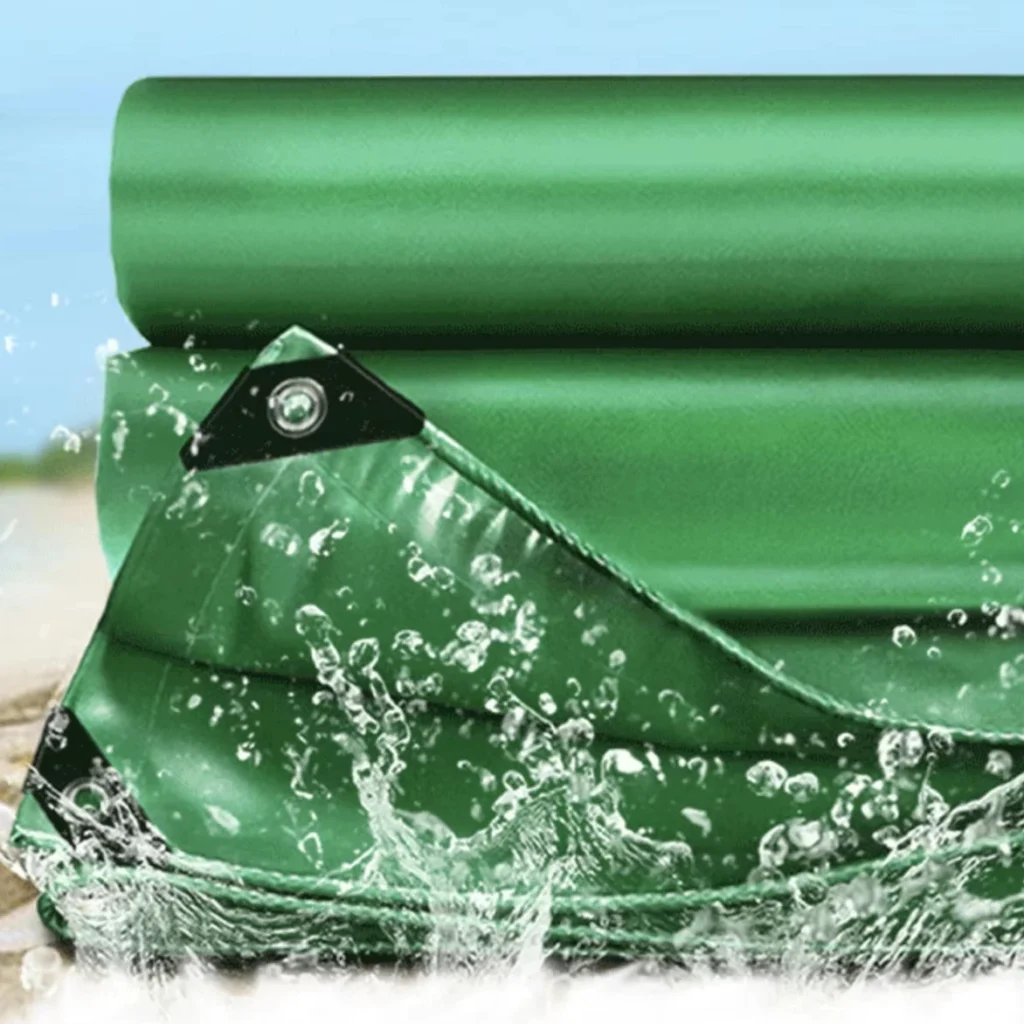
Consistent Roll-to-Roll Quality — every roll inspected against the stated 450-900 g/m² coating weight range before dispatch, so fleet fabricators receive material that matches the specification across an entire order.
Technical Specifications
| Parameter | Value |
|---|---|
| Product Type | PVC Coated Tarpaulin |
| Material Composition | PVC & Polyester |
| Yarn Count | 500D-500D |
| Thickness Measurement | 450-900 g/m² |
| Surface Characteristics | Smooth and soft surface with a leather-like texture |
| Waterproof Performance | Excellent, with overall coating sealing |
| Abrasion Resistance | Very strong |
| Flame Retardancy | Flame-retardant type customizable (confirm the grade required for your market) |
| UV Resistance | Excellent (confirm specific UV treatment for your application) |
| Service Life | 3-5 years |
| Repairability | Repairable by hot air welding |
| Certifications | ISO, CE |
| Key Features | Water Resistant, Waterproof, Anti-UV, Flame Retardant |
Application Suitability
| Application | Exposure & Requirement |
|---|---|
| Truck and Trailer Side Curtains | Constant flexing at load points, road abrasion, tie-down tension, daily weather exposure |
| Top Deck Load Covers | Direct UV exposure, wind flap stress, water pooling, repeated folding and deployment |
| Tie-Down Reinforcement Panels | Concentrated strap tension, abrasion at buckle contact points, seam stress under load shift |
| Equipment and Machine Covers | Outdoor storage exposure, dust ingress prevention, UV degradation over extended periods |
Why GSM Alone Does Not Tell You How Strong the Fabric Is
The 500D-500D polyester base fabric provides the tensile backbone — the PVC coating seals and protects it.
Fleet operators often specify a PVC Coated Tarpaulin for Truck and Transport applications based on weight alone, only to find the material tears at the flex points where the load shifts during transit. A heavier coating does not automatically mean a stronger fabric when the base yarn denier and weave density remain unchanged. [NEED_CITE: relationship between base fabric denier and tensile strength in coated textiles per ISO 1421]. The yarn count defines how much force the woven grid can absorb before the PVC layer cracks or delaminates under repeated bending. When a truck side curtain flexes thousands of times over a route, the base fabric carries the mechanical load while the coating simply follows its movement.
Fabric That Survives the Flex Cycle on a Moving Trailer
Truck side curtains experience a unique stress pattern that flat covers never encounter. The fabric bends along horizontal lines every time the curtain is drawn open, and it stretches diagonally when the load pushes outward during cornering. This PVC Coated Tarpaulin for Truck and Transport uses a 500D-500D polyester base that maintains dimensional stability through these multi-axis flex events. The smooth surface texture reduces friction against adjacent cargo, preventing the surface wear that rougher finishes accumulate over weeks of daily loading and unloading cycles.
Welded Seams That Match the Fabric Life
A side curtain is only as durable as its weakest seam. Hot air welding fuses the PVC coating layers together, creating a bond that distributes stress across the joint rather than concentrating it at stitch holes. [NEED_CITE: hot air welding performance parameters for PVC coated polyester fabrics]. Stitched seams create needle perforations that allow water ingress and become failure initiation points under tie-down tension. This material is designed for welded assembly, meaning fabricators can produce continuous seam lines along curtain edges and reinforcement patches without compromising the waterproof integrity of the cover.
Reading the Specification Beyond the Weight Number
The 450-900 g/m² range indicates the coating weight applied to the base fabric, and this range covers different duty levels within the product family. The 500D-500D yarn count tells you that both warp and weft directions use identical denier yarns, which produces balanced tensile properties — the fabric resists tearing equally in both directions. This matters for truck covers that experience multi-directional stress from wind loading and cargo movement. The leather-like surface texture provides a practical balance: smooth enough to shed water and dirt efficiently, yet textured enough to grip handling equipment during fabrication and installation. Coating thickness and base fabric density work together — a heavy coating on a light base fabric will crack under flex, while a light coating on a heavy base will abrade through before the yarns themselves fail.
The Cost of Getting the Specification Wrong
Selecting a PVC Coated Tarpaulin for Truck and Transport based solely on the lowest available price per roll often leads to premature curtain replacement. When the base fabric denier is too low for the tie-down tension your fleet applies, the material stretches permanently around strap contact points and the PVC coating delaminates at the edges. [NEED_CITE: common failure modes in truck side curtain fabrics under cyclic loading]. Batch colour inconsistency across rolls forces fabricators to reject panels that will sit adjacent to each other on the same trailer, creating visible mismatches that damage the fleet operator’s professional appearance. Welding parameters that suit one coating formulation may burn through another, causing seam failures that appear only after the curtain enters service.
What This Supply Chain Delivers for Fleet Fabricators
Roll-to-roll colour matching is verified during pre-shipment inspection, so panels cut from different rolls in the same order install without visible variation on a single trailer. The 10-person R&D team develops sample swatches within days when a fleet operator needs to confirm colour, weld compatibility, or flex performance before committing to a bulk order. Three full production lines with 36 sets of professional equipment maintain consistent coating weight and adhesion across the entire order volume. Dedicated QA/QC checkpoints at each production stage catch coating defects, colour drift, and base fabric irregularities before they reach the dispatch stage. Material specification sheets accompany every shipment, documenting the exact GSM, base fabric denier, and coating weight for your records.
Documentation & Verification
- Material specification sheet confirming GSM, 500D-500D base fabric denier, and PVC coating weight per roll
- Pre-shipment inspection record verifying colour consistency and coating integrity across the order
- UV and flame-retardant test reports supplied where applicable, matched to the grade specified in your purchase order
- Roll packing list with individual roll dimensions and weights for receiving verification at your facility
- Certificate of origin and customs documentation prepared for cross-border shipment clearance
Fabrication, Handling & Storage
- Hot air welding temperature and speed should be calibrated to the specific PVC coating formulation in your roll batch
- Store rolls upright on pallets in a dry, shaded area to prevent surface impression marks from the core or stacking pressure
- Allow cold-stored rolls to reach workshop temperature before unrolling to avoid coating stiffness and cracking during cutting
- Use sharp rotary blades for cutting panels to prevent fraying the 500D-500D polyester base yarns at panel edges
- Clean the leather-like surface with mild detergent and soft cloth — avoid solvents that may soften the PVC coating layer
- On-site repairs to minor cuts can be performed with a handheld hot air welder using matching PVC strip material
Request the Right Information for Your Fleet Application
Provide your specific trailer model dimensions and the type of curtain track system you use so we can recommend the appropriate roll width and confirm cut-to-fit feasibility. Share any fire safety or UV performance standards your operating region requires, along with your annual roll consumption estimate and preferred colour references. Specify whether you need raw roll stock for your own fabrication shop or pre-cut panels with reinforced hems and eyelet placements matched to your tie-down configuration. Requesting a physical sample swatch before placing a bulk order allows your team to verify weld parameters, colour accuracy, and flex behaviour in your own workshop conditions.
Frequently Asked Questions
Q: How do I confirm the right curtain size for my specific trailer model?
A: Provide the exact make, model year, and body type of each trailer in your fleet. We cross-reference these dimensions against known fitment data and recommend roll widths that minimise offcut waste. For unfamiliar trailer models, we suggest ordering a sample panel cut to the proposed dimensions for a physical fit check before committing to a full production run.
Q: What test reports are available for UV or flame-retardant fabric?
A: When UV or flame-retardant treatment is specified in your order, the corresponding test reports are supplied with the shipment documentation. These reports identify the specific test standard applied and the result achieved. Confirm the exact grade or standard your operating region requires at the inquiry stage so we can match the treatment formulation and provide the correct documentation.
Q: Will the colour match across multiple rolls in a single shipment?
A: Pre-shipment inspection includes a side-by-side colour comparison of all rolls in your order before dispatch. Any roll showing visible deviation from the approved sample swatch is held back and replaced. This process ensures that adjacent panels cut from different rolls install on the same trailer without noticeable colour variation.
Q: Can welded seams be repaired on-site if a curtain is damaged?
A: Yes. Minor cuts and seam separations can be repaired using a portable hot air welder and matching PVC strip material. The smooth leather-like surface texture allows the repair patch to blend with the surrounding area. We recommend carrying a small repair kit with each fleet vehicle for roadside fixes that prevent minor damage from expanding during transit.
Q: What is the expected service life compared to PE tarpaulin?
A: This PVC coated polyester construction is designed for multi-year service under continuous outdoor exposure, substantially outlasting single-season PE tarpaulins. The 500D-500D base fabric and double-sided PVC coating resist UV degradation, mechanical abrasion, and repeated flex cycles that cause PE materials to become brittle and crack within months of deployment.