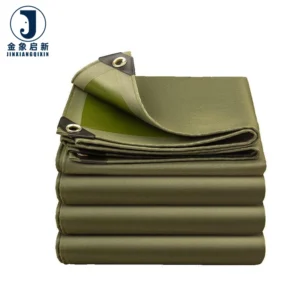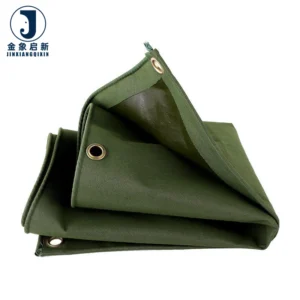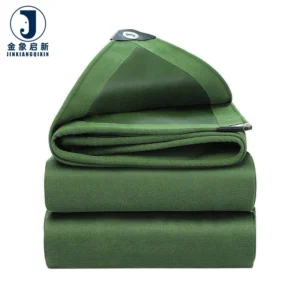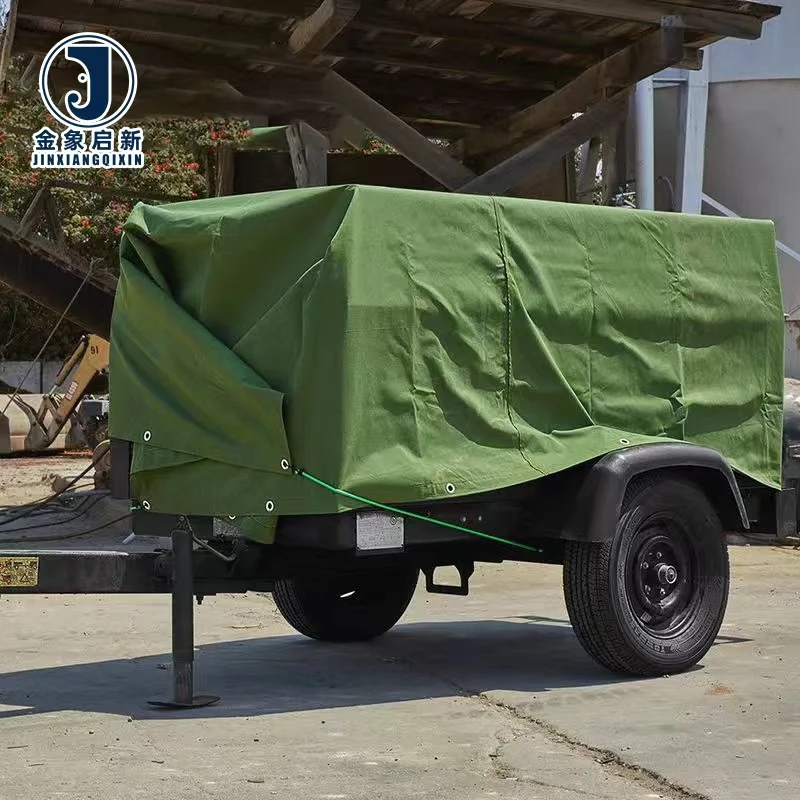
Coating Process Control — Deep expertise in lamination and coating weight ensures this PVC laminated canvas tarpaulin meets the exact waterproof and tear-resistant requirements of truck and trailer covers.
Technical Specifications
| Parameter | Value |
|---|---|
| Product Type | PVC Laminated Tarpaulin / Tent Fabric |
| Base Fabric | Woven canvas |
| Coating Method | Laminated |
| Coating Material | PVC |
| Waterproof | Yes |
| Heat Resistant | Yes (grade not stated in source) |
| Tear Resistant | Yes (test basis not stated in source) |
| Eyelet & Hem Options | Holes installed on all four sides |
| Weight (GSM) | Not stated |
| Flame Retardant Grade | Available in flame retardant grades — confirm the grade required for your market |
| UV Treatment | Available with UV treatment — request test report for your application |
| Anti-Static | Available in anti-static grades if required |
| Tensile Strength | Not stated |
| Tear Strength | Not stated |
| Width | Not stated |
| Roll Length | Not stated |
| Standards | ISO, CE certified manufacturing |
Application Suitability
| Application | Exposure & Requirement |
|---|---|
| Truck and trailer top covers | Highway wind uplift, road debris abrasion, constant flexing at load edges, rain and sun exposure |
| Side curtain fabric for curtain-side trailers | Repeated folding and unfolding, friction against load binders and trailer rails, weather ingress prevention |
| Engine hood covers | Elevated temperatures from engine bays, oil and grease contact, vibration-induced movement |
| Outdoor equipment and pallet covers | Standing water, UV degradation from prolonged sun, tie-down strap tension at grommet points |
| Roof protection and temporary shelters | Direct rainfall, wind-driven water, thermal expansion and contraction cycles |
| Tent and accessory fabrication | Structural tensioning, pole abrasion, repeated assembly and disassembly stress |
| Outdoor floor mats | Foot traffic abrasion, ground moisture, puncture from sharp objects beneath |
Why a Generic-Sized Cover Costs More Than a Purpose-Built Tarpaulin
A PVC laminated canvas tarpaulin cut to generic dimensions will flap loose under highway speeds, concentrate stress at poorly placed eyelets, and tear at the grommet line long before the fabric itself fails.
Fleet operators routinely replace covers that were never measured to their specific trailer model. The result is cargo damage from water ingress, downtime waiting for replacements, and repeated procurement cycles. When a cover flaps at speed, it acts like a sail — pulling at the fixing points with forces the eyelets were never designed to hold. Covers that fit correctly distribute load across the entire hem and tie-down rail, keeping the fabric stable and the cargo dry. [NEED_CITE: wind uplift forces on loose tarpaulins at highway speed]
Secure Fixing at Every Tie-Down Point
This Heavy Duty PVC Laminated Canvas Tarpaulin for Truck Covers ships with holes installed on all four sides, allowing operators to match the exact tie-down configuration of their flatbed or curtain-side trailer. The woven canvas base holds the eyelets firmly in place, preventing the pull-out failures common in lighter base fabrics when straps are tensioned against crosswinds and road vibration.
Fabric Cut to Your Trailer, Not a Catalogue Size
Transport fleets specify covers across multiple trailer models, each with different dimensions and rail positions. A PVC laminated canvas tarpaulin cut to fit eliminates the excess material that flaps loose and the short-fall that leaves cargo exposed. The lamination process bonds the PVC coating to the woven canvas base, maintaining flexibility at fold points while resisting abrasion where the cover contacts trailer edges and load binders.
Tear Resistance Where the Load Flexes Most
How Lamination, Base Fabric, and Coating Weight Work Together
The laminated coating method bonds PVC to both sides of the woven canvas base, creating a unified structure where the coating cannot separate from the fabric under flex or peel stress. This differs from spray-on or dip coatings, where adhesion relies on surface penetration alone. The woven canvas base provides the structural tensile and tear strength, while the PVC lamination delivers waterproof protection and surface durability. Heat-resistant formulation makes this fabric suitable for covering engine bays and exhaust-adjacent cargo areas where standard PVC would soften. The combination of tear-resistant weave and four-side eyelet installation means tie-down loads distribute across the canvas structure rather than concentrating at individual fixing points. [NEED_CITE: lamination versus coating adhesion methods for PVC tarpaulins per ISO 2411]
The Hidden Cost of Specifying on Price Alone
When the Eyelet Fails Before the Fabric Does
Covers that tear at the grommet line are rarely a fabric problem — they are a specification problem. When eyelet spacing does not match the trailer’s tie-down rail, operators force straps through non-reinforced zones. Under wind uplift and road vibration, the load concentrates at individual holes rather than distributing across the hem. The woven canvas base in this tarpaulin holds eyelets firmly, but only if spacing and reinforcement are specified to match the trailer hardware. Covers supplied without pre-shipment inspection of eyelet placement arrive on site with fixing points that do not align with the equipment they must secure. [NEED_CITE: tie-down load distribution and grommet spacing standards for transport covers]
Why Procurement Teams Source This PVC Laminated Canvas Tarpaulin Here
Three full production lines and 36 sets of professional equipment support bulk orders with reliable on-time delivery for fleet-scale cover programs. A dedicated 10-person R&D team handles material selection, custom sizing, and sample development — so a fleet operator can receive a cut-to-size sample before committing to a full production run. Quality control runs through every production stage with 100% inspection before shipment, catching eyelet placement errors and coating inconsistencies before the roll leaves the facility. Deep process control over lamination weight and adhesion means the GSM and coating specification stated on the quotation is what arrives at the dock. Custom width, colour, and print orders that other suppliers decline due to minimums are handled routinely.
Documentation & Verification
- Material specification sheet stating base fabric type, lamination method, and coating weight
- Pre-shipment inspection record confirming eyelet placement and hem reinforcement on every cover
- Test reports for heat resistance and waterproof rating where the application demands them
- Roll packing list and certificate of origin for customs clearance and receiving verification
- ISO and CE certificates available with each shipment batch
Fabrication, Handling & Storage
- Heat-seal laminated PVC edges at recommended temperatures to prevent delamination at weld seams
- Reinforce all eyelet positions with patch material matching the woven canvas base weight
- Store rolls upright on pallets to prevent flat-spot creases in the laminated coating surface
- Avoid folding cut covers at the same line repeatedly to prevent canvas fibre fatigue
- Clean with mild detergent only — solvents can degrade the PVC lamination bond
- Unroll at ambient temperature; cold-stored fabric becomes stiff and may crack if forced
What to Include in Your Enquiry
Specify your trailer model, dimensions, and tie-down rail configuration so the cover can be cut and eyeleted to fit. State whether the cover will be exposed to engine heat, prolonged UV, or regulated fire-retardant requirements on site. Confirm whether you need finished cut-to-size covers or roll stock for in-house fabrication, and provide your annual volume to determine production scheduling.
Frequently Asked Questions
Q: How is the tarpaulin cut to fit specific truck and trailer models?
A: Provide your trailer make, model, and exact bed or curtain dimensions including tie-down rail positions. The cover is cut from PVC laminated canvas tarpaulin to those measurements with eyelets placed to match your rail configuration, eliminating the excess fabric that flaps loose and causes wind damage at highway speeds.
Q: What eyelet spacing and reinforcement options are available for high-wind tie-down?
A: Standard spacing is available, but operators in high-wind corridors benefit from closer spacing with reinforced hem patches. Specify your strap configuration and local wind conditions so the four-side eyelet installation can be engineered to distribute uplift load across the woven canvas base rather than concentrating it at individual fixing points.
Q: How is tear resistance at flex points validated before shipment?
A: Every production run undergoes 100% pre-shipment inspection including visual checks at hem and eyelet zones where load flex concentrates stress. Request the inspection record with your shipment. For fleet orders, a sample cover can be produced and tested under simulated tie-down tension before full production begins.
Q: What custom sizing and minimum order quantities apply for fleet orders?
A: Custom width, length, and eyelet configuration are supported across the production lines. Minimum order quantities depend on whether you need finished covers or roll stock. Provide your fleet size and replacement cycle frequency so the production schedule can be aligned with your operational requirements.
Q: How are welded seams and edge hems constructed to prevent failure under load movement?
A: The laminated PVC coating allows heat-welded seams that bond at the coating layer, creating a waterproof joint that flexes with the woven canvas base. Edge hems are folded and welded or stitched with reinforced binding tape, depending on the stress profile of the trailer application specified.