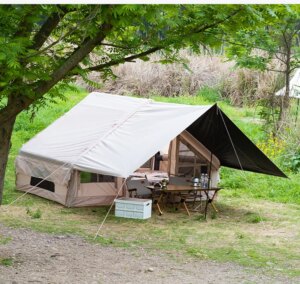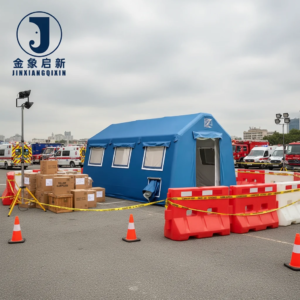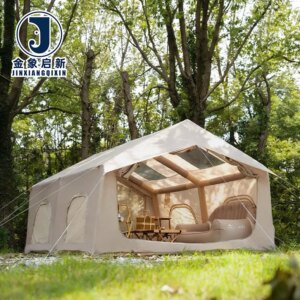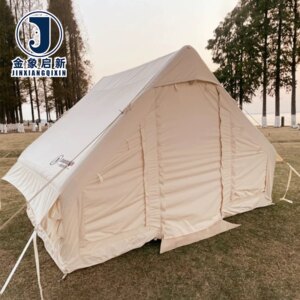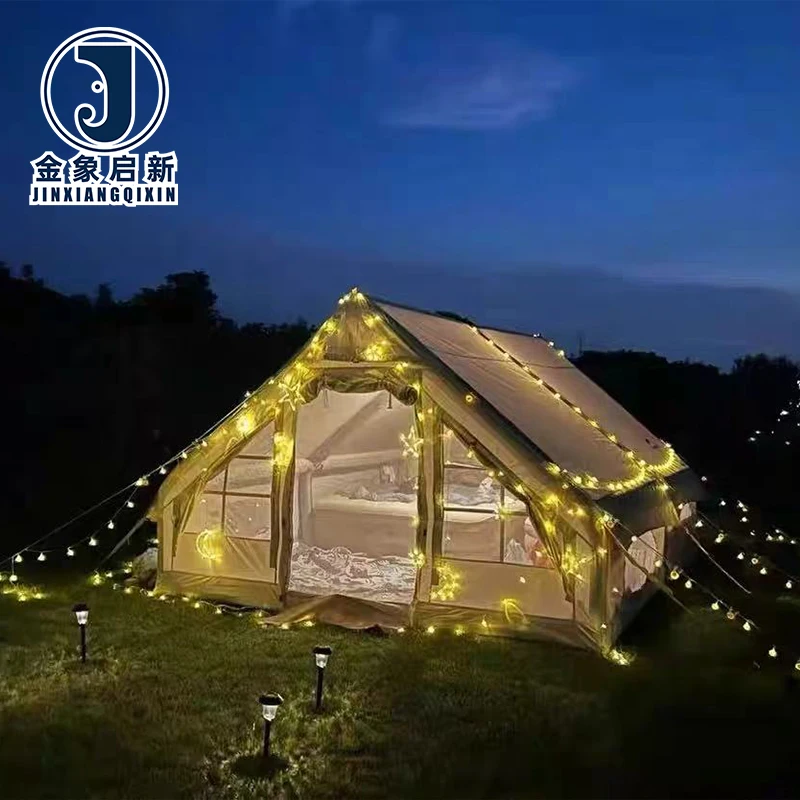
Deep process control — three full production lines and 36 sets of professional equipment ensure every batch of Inflatable Tent fabric meets the exact coating weight and adhesion standards your project demands, with 100% inspection before dispatch.
Technical Specifications
| Parameter | Value |
|---|---|
| Product Type | Inflatable Tent |
| Core Material | PVC coated fabric |
| Waterproof | Yes |
| UV-resistant | Available in UV-treated grades — confirm the test basis required for your market |
| Tear-resistant | Yes |
| Flame Retardant | Available in flame retardant grades — confirm the grade required for your market |
| Anti-Static | Available in anti-static grades — confirm the standard or surface resistance required |
| Capacity | 4–6 Person |
| Opening Mechanism | Quick automatic opening (air-inflated structure) |
| Season Rating | Four-season |
| Customization | OEM & ODM, sample customization, pattern printing |
| Quality Control | Dedicated QA/QC at every production stage, 100% pre-shipment inspection |
| Standards | ISO9001, ISO14001, ISO45001, CE |
Application Suitability
| Application | Exposure & Requirement |
|---|---|
| Construction site temporary housing | Wind, rain, dust, UV exposure, repeated setup and teardown cycles |
| Disaster relief temporary shelters | Rapid deployment, four-season weather protection, transport over rough terrain |
| Emergency response facilities | Quick inflation, durable floor and wall contact, sanitation and cleaning chemicals |
| Commercial outdoor events | High foot traffic, sun exposure, branding and signage requirements |
| Equipment storage at remote sites | Puncture risk from tools and machinery, moisture ingress prevention, thermal stability |
| Temporary workspace during industrial projects | Fire safety compliance, ventilation compatibility, structural integrity under load |
Why "Waterproof" Is Not Enough for a Field-Deployed Inflatable Tent
A shelter that holds water in a lab test can still fail at the seams when wind-driven rain hits a construction site at night.
Field teams deploying inflatable tents for transport staging or construction camps need fabric that survives far more than a static water column test. The inflatable beam structure flexes under wind load, the ground contact zone abrades against gravel and debris, and every fold line becomes a potential crack point after repeated inflation cycles [NEED_CITE: tensile and tear test methods for coated fabrics per ISO 1421]. Sourcing an Inflatable Tent for truck and transport / commercial outdoor application without verifying seam integrity and coating adhesion means accepting the risk that the first storm exposes your crew and equipment to the elements.
Rapid Deployment Without Compromising Structural Integrity
The quick automatic opening mechanism of this Inflatable Tent for truck and transport / commercial outdoor application allows a single operator to establish a weatherproof shelter in minutes. The PVC coated fabric forms the inflatable beam walls, and the coating-to-base-fabric adhesion determines whether those beams hold pressure through a full shift or begin to sag under thermal expansion. Each beam carries the structural load, so coating delamination at the fold radius is not a cosmetic defect — it is a collapse risk.
Matching Fabric Weight to Deployment Frequency
A tent that ships once to a permanent site and stays there faces different stresses than one that inflates and deflates weekly across multiple job sites. The coating thickness and base fabric denier must align with your actual deployment cycle. Heavier coating protects against abrasion during packing and transport, while the base fabric weave density controls how well the material resists tear propagation when a sharp edge catches a beam corner [NEED_CITE: relationship between base fabric denier and tear propagation in PVC coated textiles].
Reading Between the Lines on Material Data Sheets
The PVC coated fabric used in this inflatable tent is defined by more than a single weight figure. The base fabric denier and weave pattern govern tensile strength in both warp and weft directions, while the coating method — whether knife-over-roll, dip, or calender — controls how thoroughly the PVC penetrates the yarn interstices. Deeper penetration yields stronger peel adhesion at the heat-welded seams, which is critical because inflatable tent beams are essentially continuous welded tubes under constant internal pressure. The surface finish, whether glossy or matte, affects both cleanability on muddy sites and the adhesion of printed branding for event applications. Fire-retardant performance depends on the specific additive package compounded into the PVC, and the grade must match the regulatory requirement of your destination market [NEED_CITE: DIN 4102 fire classification for building materials].
What Happens When the Wrong Grade Goes to Site
Specifying an inflatable tent without confirming the fire-retardant grade can shut down an entire project when the site safety officer requests documentation. Similarly, ordering multiple tents for a fleet or event without locking the colour reference means visible shade variation across units installed side by side — a problem that only appears after deployment and is expensive to correct. Coating adhesion that passes a basic peel test may still fail under the cyclic flexing of an inflatable beam in wind, because the test did not replicate the actual stress geometry [NEED_CITE: cyclic flex fatigue testing for inflatable structure fabrics].
Why Procurement Teams Source This Inflatable Tent Here
The 10-person R&D team handles material selection, custom sizing, and pattern printing in-house, so sample development for your specific tent geometry happens within days rather than weeks. Three full production lines and 36 sets of professional equipment give the facility the capacity to deliver project-volume orders with consistent batch-to-batch colour and weight. Every roll and finished unit passes dedicated QA/QC inspection at each production stage, with 100% pre-shipment verification before dispatch. The coating process controls both weight and adhesion with depth, reducing the risk of delamination at welded seams that plague cheaper alternatives. ISO9001, ISO14001, ISO45001, and CE standards govern the production system, and the documentation package travels with your order.
Documentation & Verification
- Material specification sheet stating base fabric denier, coating type, and weight per unit area
- Test reports for UV-resistant and flame-retardant grades where applicable to your market
- Pre-shipment inspection record confirming 100% QA/QC coverage before dispatch
- ISO9001, ISO14001, ISO45001, and CE certificates included in the documentation package
- Roll or unit packing list with batch traceability for colour and weight consistency
- Certificate of origin and customs support documentation for international shipment
Fabrication, Handling & Storage
- Heat-weld seams using temperature and dwell settings matched to the PVC coating thickness to avoid cold welds or burn-through
- Reinforce all inflation valve and tie-down attachment points with additional PVC patches bonded to the base fabric weave
- Store rolls upright on pallets in a dry, shaded area to prevent permanent creasing of the coated surface
- Allow cold-weather fabric to acclimate before unfolding to prevent coating crack at fold lines
- Clean with mild detergent and soft brush; avoid solvents that degrade the PVC plasticizer system
- Repair field punctures with compatible PVC patch kits heat-bonded to the coated surface
Before You Request a Quote
Provide the intended application environment, expected deployment frequency, and any fire-safety or compliance grades your site requires. Specify whether you need finished tents cut to a particular capacity and beam layout, or PVC coated fabric supplied by the roll for your own fabrication line. If colour matching or printed branding is required, share your Pantone reference or artwork file so the sample phase can confirm batch consistency and print adhesion before production begins.
Frequently Asked Questions
Q: How can I verify the fabric weight and coating quality when the Inflatable Tent arrives?
A: Each shipment includes a pre-shipment inspection record and material specification sheet. You should cross-check the stated GSM against a sample cut from the delivered batch. The facility conducts 100% QA/QC inspection before dispatch, and third-party lab testing can be arranged if your project requires independent weight verification.
Q: What flame-retardant grades are available and will they meet my site requirements?
A: Flame-retardant PVC compounds are available in multiple grades, but the correct one depends on your local regulations and the site safety standard enforced by your project owner. Provide the specific standard reference during inquiry so the R&D team can match the additive package and supply the corresponding test report.
Q: How is batch-to-batch colour consistency controlled across multiple tents?
A: The production facility uses controlled coating formulations and in-process colour checks across all three production lines. When ordering multiple units, specify a colour reference standard upfront. The QA team verifies shade consistency before packing, and the roll packing list tracks batch identity for traceability.
Q: What customization options exist for sizing, printing, and minimum order quantities?
A: OEM and ODM services cover custom dimensions, beam configurations, pattern printing, and surface finish selection. Sample customization is available within days for approval before mass production. Minimum order quantities depend on the level of customization — share your project volume and specification requirements for a precise quotation.
Q: What documentation ships with each Inflatable Tent order?
A: Orders include a material specification sheet, relevant test reports for UV and flame-retardant grades where applicable, pre-shipment inspection records, ISO and CE certificates, a packing list with batch traceability, and a certificate of origin. Additional compliance documentation can be prepared based on your destination market requirements.