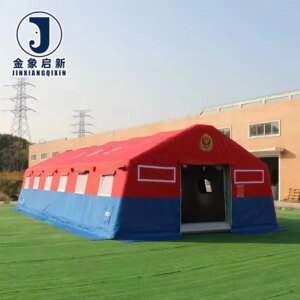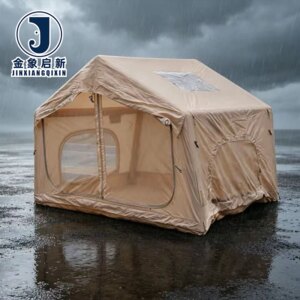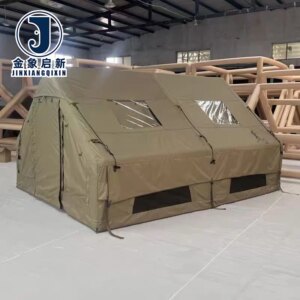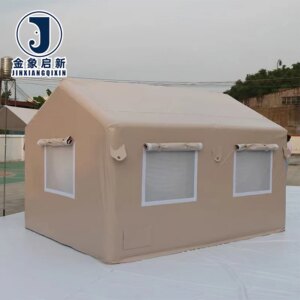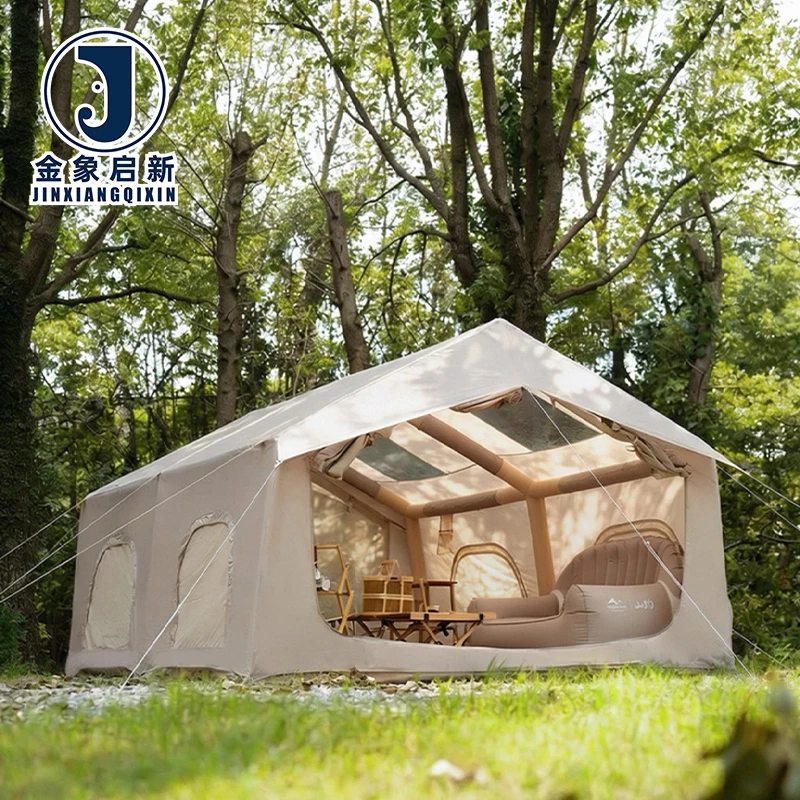
Deep Process Control Over Coating — Inflatable tent fabric for truck and transport shelter applications benefits from controlled PVC coating weight and adhesion across three dedicated production lines.
Technical Specifications
| Parameter | Value |
|---|---|
| Product Type | Inflatable tent |
| Core Material | PVC waterproof fabric |
| Product Form | Inflatable structure, single layer construction |
| Waterproof Rating | Fully waterproof coated construction |
| UV Resistance | UV-resistant treatment (test basis not stated in source) |
| Tear Performance | Tear-resistant construction |
| Setup Mechanism | Quick setup inflatable design |
| Customization Scope | OEM & ODM: sample customization, pattern printing, size adjustments, material thickness modifications |
| Certifications | ISO 9001, ISO 14001, ISO 45001, CE |
Application Suitability
| Application | Exposure & Requirement |
|---|---|
| Fleet depot temporary vehicle shelter | Repeated inflation cycles, wind load flexing, ground abrasion at anchor zones |
| Transport equipment builder integration | Precise fitment to trailer dimensions, seam welding at structural beam profiles |
| Logistics yard staged cargo protection | Continuous weather exposure, UV degradation risk, moisture ingress prevention |
| Roadside emergency response shelter | Rapid deployment requirement, tie-down stress at perimeter hems, variable weather |
Why Generic Inflatable Tent Fabric Fails on Moving Assets
Inflatable tent fabric for truck and transport shelter must survive repeated inflation and deflation while exposed to road vibration and wind shear — conditions that expose weak weld seams before the fabric itself degrades.
The failure point is almost always the welded seam at flex zones, not the coated fabric panel.
Generic tent fabric welded without accounting for the inflation cycle stress pattern tends to delaminate at the seam edge, where the inflatable beam bends most under wind load. I have seen heavy-grade coated rolls fail at the weld line within the first season because the coating adhesion was insufficient for the thermal welding temperature required. The fabric panel remained intact while the structural beam lost air pressure, collapsing the shelter onto the cargo it was meant to protect [NEED_CITE: tensile and tear test methods for coated fabrics per ISO 1421].
Weld Adhesion and Inflation Cycle Endurance
Every inflatable beam profile places cyclic stress on the longitudinal weld seam. PVC coating weight and adhesion directly determine whether that seam survives hundreds of inflation cycles. Our inflatable tent fabric for truck and transport shelter applications is produced with controlled coating adhesion parameters that match the thermal welding requirements of standard inflatable beam fabrication, reducing the risk of seam delamination during repeated setup and takedown.
Reinforcement at High-Stress Anchor and Tie-Down Points
Transport shelter applications concentrate mechanical load at perimeter hems and anchor points where the inflatable structure meets the ground or the trailer deck. Reinforced hem construction and strategically placed eyelets distribute tie-down forces across a broader fabric area, preventing localized tearing when wind load shifts the structure. The PVC coating formulation supports secure high-frequency or hot-air welding of additional reinforcement patches at these critical junctions without compromising the base fabric integrity.
Understanding the Coating and Base Fabric Relationship
The interaction between PVC coating weight and the underlying base fabric determines how inflatable tent fabric behaves under real deployment conditions. Coating adhesion governs weld seam strength — a factor that becomes critical when inflatable beams flex under wind load. The base fabric weave and denier influence tear propagation resistance; a tighter weave limits how far a puncture or cut will spread before the structure loses pressure. Surface finish selection affects field maintenance: a glossy PVC surface sheds dirt and allows faster cleaning between deployments, while a matte finish reduces glare in bright conditions and may improve printing adhesion for branded shelter panels. Available in flame retardant grades — confirm the grade required for your market and specific deployment jurisdiction [NEED_CITE: DIN 4102 fire classification for building materials].
The Hidden Cost of Specifying on Price Alone
When procurement decisions focus exclusively on unit cost, the downstream consequences surface during deployment. Fabric supplied lighter than the quoted specification loses tear resistance proportionally, and the inflatable structure becomes vulnerable to puncture from ground debris or sharp cargo edges. Batch-to-batch colour variation across a multi-unit order becomes visible once shelters are erected side by side at a logistics yard, triggering rejection and rework. Weld seams on under-specified coating fail before the fabric panel, meaning the entire shelter collapses even though the base material appears undamaged [NEED_CITE: pre-shipment weight verification standards for coated fabrics].
Why Transport Builders Source Inflatable Tent Fabric Here
Three full production lines running dedicated PVC coating processes ensure that inflatable tent fabric for truck and transport shelter orders maintain consistent coating weight roll to roll. The 10-person R&D team develops custom samples matching specific trailer dimensions and inflatable beam profiles within days, not weeks. Every production stage undergoes QA inspection, with a 100% pre-shipment check verifying that delivered GSM matches the quotation. Pattern printing and branding are handled in-house, keeping colour registration and print durability under direct factory control rather than outsourced to a third-party printer. Documentation packages ship with each order containing material specification sheets, test reports, and inspection records — the paperwork fleet procurement departments require for compliance audits.
Documentation & Verification
- Material specification sheet confirming PVC coating composition, base fabric type, and stated weight
- UV resistance test report provided upon request to validate outdoor exposure durability claims
- Pre-shipment inspection record detailing batch-specific waterproof rating and tear strength values
- ISO and CE certificates confirming manufacturing compliance for international procurement documentation
- Roll packing list with individual roll identification for traceability across large transport shelter orders
Fabrication, Handling & Storage
- Use hot-air or high-frequency welding parameters matched to the PVC coating thickness for consistent beam seam adhesion
- Reinforce perimeter hem zones with additional PVC patches before installing tie-down eyelets on inflatable shelter panels
- Store rolled fabric upright on pallets to prevent flat-spot creasing that weakens the coating at fold lines
- Deploy in cold conditions by allowing fabric to acclimate before inflation to reduce PVC stiffness and cracking risk
- Clean glossy PVC surfaces with mild detergent solutions; avoid solvents that degrade the coating plasticizer layer
- Repair field punctures using compatible PVC patches welded at temperatures matching the original coating formulation
Requesting a Quote for Your Transport Shelter Project
To move forward, share the trailer model or shelter dimensions you need the inflatable tent fabric cut to, the deployment environment and wind load conditions, and whether you require finished units or roll stock for your own fabrication line. If flame retardant or specific compliance grades are required for your market, state the standard so the correct formulation is selected. Sample development begins once the specification is confirmed.
Frequently Asked Questions
Q: How is the inflatable tent fabric sized to fit specific truck or trailer models?
A: The 10-person R&D team works from your vehicle drawings or physical measurements to develop a custom pattern. Sample panels are produced and shipped for fitment verification before full production begins. Thickness, panel layout, and beam profile compatibility are all adjusted during this stage to ensure the final inflatable shelter matches your trailer geometry.
Q: What reinforcement options are available at tie-down and flex stress points?
A: Additional PVC reinforcement patches can be welded at perimeter hems, anchor points, and beam junctions where flex stress concentrates during inflation cycles. Eyelet spacing and hem fold width are adjusted based on your tie-down hardware and expected wind load, distributing mechanical force across a broader fabric area to prevent localized tearing.
Q: How is batch-to-batch colour consistency maintained across large orders?
A: Colour formulation is locked at the sample approval stage and referenced against a controlled colour standard for every subsequent production run. Each batch undergoes visual inspection under standardized lighting before dispatch. Rolls from the same order are grouped in the packing list so any variation is flagged before shipment rather than discovered on site.
Q: What UV and waterproof test documentation is provided before shipment?
A: A material specification sheet confirming PVC coating composition and waterproof construction ships with every order. UV resistance test reports are available upon request to validate the treatment formulation. All documentation, including ISO and CE certificates and pre-shipment inspection records, is compiled into a compliance package matching your procurement requirements.
Q: What is the sample development process for custom dimensions and pattern printing?
A: Submit your dimensional drawings, inflatable beam profile specifications, and any branding artwork. The R&D team produces a sample panel with the specified coating thickness, dimensions, and printed pattern within days. Once you approve the sample, full production begins with in-process QA checks at every stage and 100% inspection before dispatch.