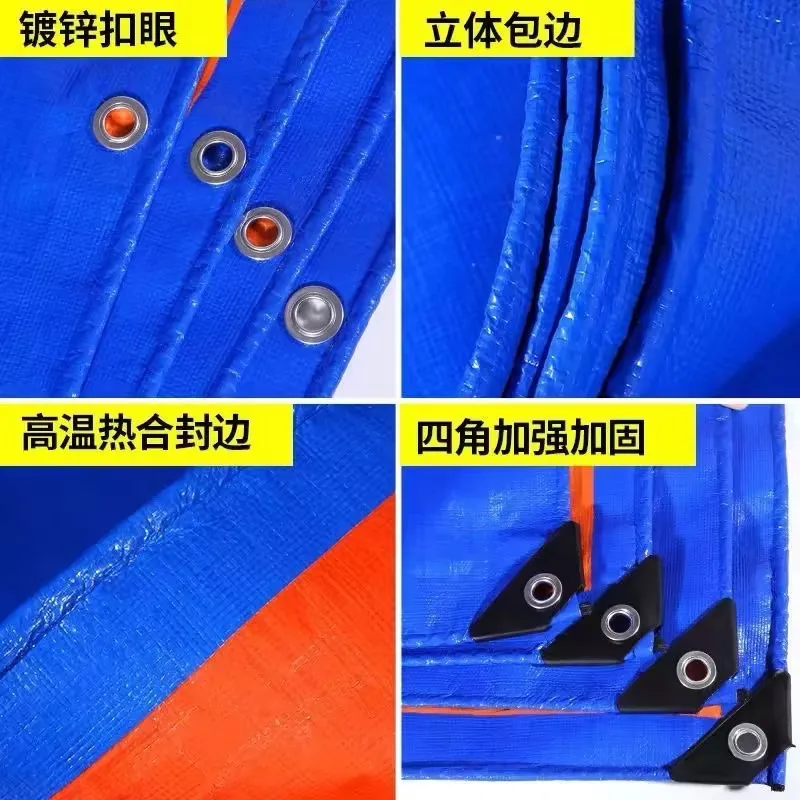
Precision Coating Control — Every roll undergoes in-process QA with GSM verification against the quoted specification, eliminating material weight discrepancies that leave fleet covers under-protected during transit.
Technical Specifications
| Parameter | Value |
|---|---|
| Product Type | PE Tarpaulin |
| Material | PE woven fabric |
| Weave Style | Plain |
| Construction | Heavyweight |
| Waterproof | Yes |
| Mildew-Proof | Yes |
| UV Resistant | Available (test basis not stated — confirm grade required for your market) |
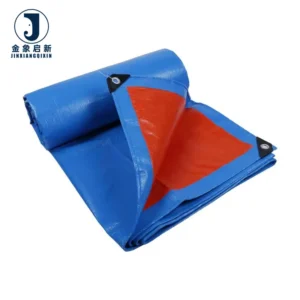
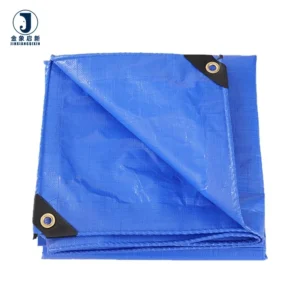
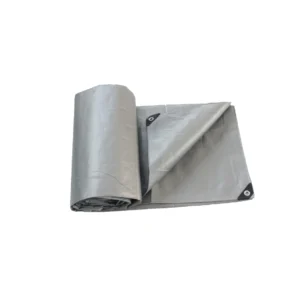
| Color | Various (customizable) |
| Size | Various (customizable) |
| Coating Method | Extrusion coating over HDPE woven base |
Application Suitability
| Application | Exposure & Requirement |
|---|---|
| Truck and trailer load covers | Continuous road vibration, wind flap, UV exposure, tie-down abrasion at hems and eyelets |
| Outdoor event and ceremony shelters | Rapid deployment, rain exposure, ground contact, repeated folding and transport |
| Pond liners and fish farming enclosures | Permanent water immersion, soil chemistry, puncture from substrate irregularities |
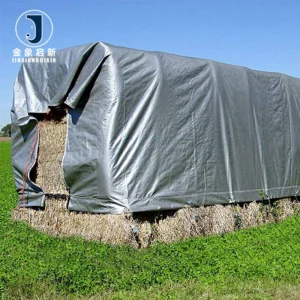
| Agricultural stock and hay covers | Moisture ingress prevention, UV degradation over seasonal storage, wind uplift resistance |
When a Generic-Sized Cover Costs More Than a Custom Fit
PE tarpaulin for truck and trailer cover applications must match exact vehicle dimensions to prevent load shift and fabric fatigue at mismatched stress points.
I have reviewed fleet orders where covers cut to standard sizes left excess fabric flapping at highway speeds or fell short at the rear doors, exposing cargo to rain within the first trip. The hem takes the majority of tie-down load, and when a cover is stretched beyond its cut dimensions to reach anchor points, the stress concentrates at the eyelet rows. Over weeks of loading cycles, this concentrated force pulls the eyelet through the fabric, creating a tear that propagates along the weave. Custom sizing eliminates the over-tension and lets the cover drape naturally over the load, distributing tie-down force evenly across the reinforced perimeter [NEED_CITE: load distribution and hem stress analysis for transport covers].
Weave Construction and Load-Bearing Balance
The plain weave in this PE tarpaulin interlaces warp and weft yarns in a one-over-one-under pattern, creating balanced tensile strength in both directions. For truck and trailer covers, this balance matters because the fabric encounters lateral wind pressure and longitudinal tension from tie-downs simultaneously. A weave biased toward one direction would develop bias distortion under combined loading, leading to permanent deformation at corner panels where diagonal forces peak.
Custom Sizing for Fleet Consistency and Securement
Each PE tarpaulin for truck and trailer cover use is produced to the specific trailer model dimensions provided at inquiry. This approach removes the guesswork of cutting generic stock to fit a curtain-side rig or a flatbed with drop-sides. When a fleet operates mixed trailer models, ordering by vehicle type ensures that every cover in the shipment fits its assigned unit without field modification. Reinforced hems and eyelet spacing are matched to the anchor point layout of each trailer, so tie-down straps seat correctly without improvised grommet placement [NEED_CITE: trailer anchor point standards and eyelet spacing for load securement].
Reading the Specification Sheet Beyond the Weight Claim
GSM alone does not define the mechanical behavior of a PE tarpaulin. The base fabric denier and the extrusion coating weight together determine how the material handles tensile and tear forces. A heavier coating on a low-denier base may reach a high GSM on paper but will crack along the yarn path when flexed repeatedly at low temperatures. Conversely, a high-denier base with a thin coating delivers strong tear resistance but may allow moisture penetration through the weave gaps. Evaluating both the yarn specification and the coating weight gives a more accurate picture of how the fabric will perform under the combined flex, abrasion, and weather exposure that truck covers endure daily.
The Hidden Cost of Skipping Pre-Shipment Verification
When a buyer accepts a batch of PE tarpaulin rolls without independent weight and color verification, two failures commonly surface after installation. The first is a cover that feels noticeably lighter than the quoted specification, reducing tear resistance and shortening service life under road abrasion. The second is visible color variation between rolls in the same fleet order, which becomes apparent once the covers are deployed side by side on adjacent trailers. Both issues trace back to insufficient in-process QA and the absence of a pre-shipment inspection record that ties the delivered material to the original quotation [NEED_CITE: pre-shipment inspection protocols for coated fabric consistency].
Why Source This PE Tarpaulin from Jinan Jinxiang
- Three full production lines and 36 sets of equipment handle bulk fleet orders with reliable lead times, so your transport schedule is not disrupted by supply delays.
- A 10-person R&D team develops custom-sized samples within days, letting you verify fit on your specific trailer model before committing to full production.
- Dedicated QA at every coating stage catches GSM deviation and color drift before the roll leaves the line, not after it arrives at your depot.
- Nearly 30 years of coated fabric process control means extrusion temperature and coating weight are managed by experienced operators, not left to automated defaults.
- Full documentation — from material spec sheets to certificates of origin — ships with every order, supporting your compliance records and customs clearance.
Documentation & Verification
- Material specification sheet confirming base fabric denier, coating material, and color reference per roll
- Weight verification per roll against the stated GSM before dispatch
- UV and mildew resistance test reports supplied where applicable to the ordered grade
- Pre-shipment inspection record with cut-piece dimensions and eyelet placement check
- Certificate of origin and packing list included for customs and inventory reconciliation
- ISO and CE certificates available to support procurement compliance requirements
Fabrication, Handling & Storage
- Heat-seal temperature must match the PE coating grade to avoid delamination at seam overlaps
- Eyelet placement should follow the specified spacing to prevent load concentration on heavyweight fabric
- Store rolls upright on pallets to prevent flat-spot deformation across the PE coating surface
- Unfold at ambient temperature to avoid crease cracking in cold-weather conditions
- Clean with mild detergent only; solvent-based cleaners degrade the PE coating adhesion
- Field repairs use PE-compatible tape or patch kits matching the fabric weight and weave
Requesting a Quotation That Matches Your Fleet
Provide the trailer make, model, and year for each unit so that cover dimensions and eyelet layouts match the anchor points on your vehicles. Specify the annual volume and whether you require roll stock for in-house fabrication or finished covers with hems and eyelets installed. If your fleet operates under specific branding or color standards, include the RAL or Pantone reference to ensure batch consistency across the order.
Frequently Asked Questions
Q: How is the GSM of PE tarpaulin verified before I receive the shipment?
A: Each roll is weighed and measured during the pre-shipment inspection, and the results are recorded against the quoted specification. This inspection record ships with your documentation, so you can cross-check the delivered GSM immediately on arrival without needing to arrange third-party testing.
Q: Can you guarantee color consistency across multiple covers in one fleet order?
A: In-process QA checks color at each coating stage against the approved reference sample. Rolls showing deviation are flagged before they enter the packing line. Your shipment includes a packing list identifying which rolls belong to the same production batch for traceability.
Q: What eyelet spacing and hem reinforcement options fit my trailer tie-down system?
A: Eyelet spacing and hem construction are matched to the anchor layout you provide at inquiry. Options include reinforced webbing hems, double-stitched borders, and adjustable spacing intervals to align with your trailer’s load-securement hardware without requiring field modification.
Q: What test basis supports the UV resistance claim for this PE tarpaulin?
A: UV resistance is available in grades suitable for outdoor exposure, but the specific test standard depends on the grade selected. Confirm the UV test basis required by your market — such as ISO 4892 or ASTM G154 — when you place your inquiry so the correct grade is produced.
Q: What are the lead times and minimums for custom-sized truck and trailer covers?
A: Lead times depend on the number of distinct trailer models and total units in your order. Custom sizing typically carries multi-week production windows once the sample is approved. Minimum order quantities vary by color and specification complexity and are confirmed during the quotation stage.