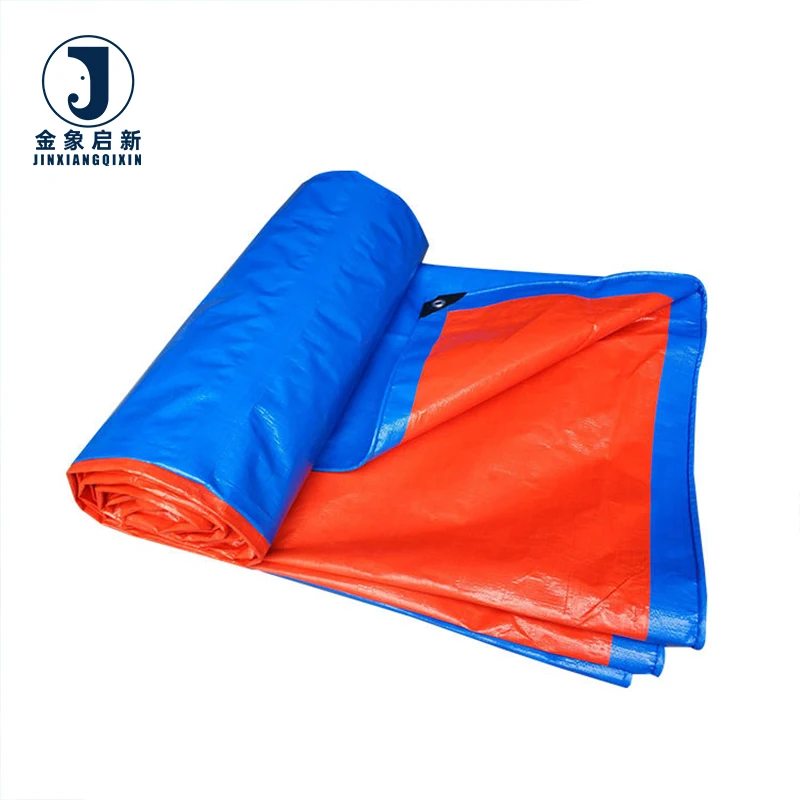
Proven coating control — Nearly 30 years of HDPE woven and LDPE lamination process expertise ensures every PE Tarpaulin for Truck Cover and Awning roll meets the specified GSM before it leaves the line.
Technical Specifications
| Parameter | Value |
|---|---|
| Product Type | PE Tarpaulin |
| Base Fabric | HDPE woven |
| Coating Material | LDPE laminated on both sides |
| Weight (GSM) | 50gr/m² ~ 220gr/m² available (confirm the grade for this item) |
| Total Thickness | 0.2–0.4 mm / 8–16 mil |
| Mesh Count Options | 6×6, 6×7, 7×7, 7×8, 8×8, 9×9, 8×10, 10×10, 12×12, 14×14, 14×16 |
| Roll Width | 6 ft, 8 ft, 10 ft, 12 ft, 2 m, 4 m, 6 m |
| Roll Length | 100 yards, 100 meters, or custom |
| Finished Sizes | 2×2 m through 8×10 m and custom dimensions |
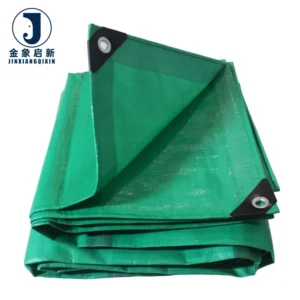
| Color Options | Blue, Blue/Orange, Green, Grey, Black, Clear, Grey/Green, Orange, or custom |
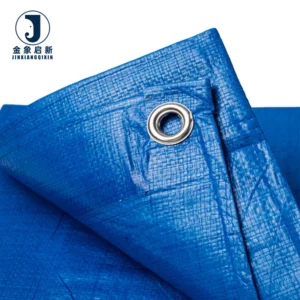
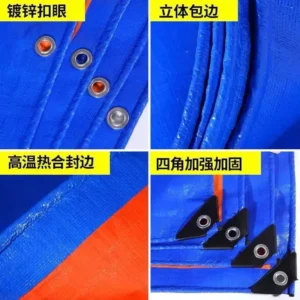
| Edge Reinforcement | PP rope in hem on all four edges |
| Eyelet Options | Galvanized eyelets every 3 ft or 1 m interval |
| Corner Reinforcement | Reinforced plastic corners |
| Key Features | Waterproof, washable, UV treatment available, mildew proof, anti-aging, tear resistant |
Application Suitability
| Application | Exposure & Requirement |
|---|---|
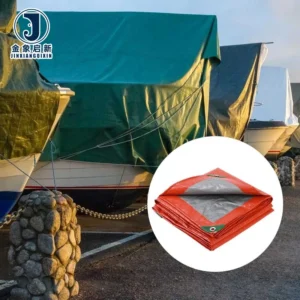
| Truck and trailer load covers | Constant flexing at tie-down points, road debris abrasion, prolonged UV exposure, wind uplift during transit |
| Side curtain fabric for fleet vehicles | Repeated rolling and unrolling, friction against load edges, weather exposure on highway runs |
| Outdoor awning and canopy fitment | Tension across frame spans, sun and rain cycling, colour visibility in public-facing installations |
| Construction scaffolding wraps | Scaffold tube abrasion, wind load, dust and moisture containment on multi-week site use |
| Agricultural crop and timber covers | Ground moisture contact, UV during field storage, mechanical handling during loading and unloading |
Why a Generic-Size Truck Cover Fails Before the Fabric Does
A cover that does not match your trailer dimensions concentrates stress at the corners and leaves gaps that let weather reach the load.
When a PE tarpaulin is cut to a standard rectangle rather than the exact profile of your trailer bed or canopy frame, the excess material flaps in transit, rubbing against itself and the load edges. The eyelets at the corners carry load they were never designed to take. Within weeks, the fabric tears not because the GSM was wrong, but because the geometry was. Fleet operators replacing covers every few months often blame the material when the real issue is dimensional mismatch and reinforcement placement [NEED_CITE: field failure patterns in truck tarpaulin systems]. Specifying a PE Tarpaulin for Truck Cover and Awning that follows your vehicle’s actual tie-down layout and body shape eliminates these premature failure points.
Matching Weave Density to Road Exposure
The mesh count of the HDPE base fabric determines how the sheet behaves under tension and abrasion. A 6×6 weave at lighter GSM grades suits short-haul or temporary site covers where weight savings matter. Higher-density weaves such as 12×12 or 14×16 provide more yarn intersections per square inch, distributing tie-down strap loads across a wider area of the base fabric. For long-haul fleet operators running open-deck trailers, selecting the correct weave density alongside GSM ensures the PE tarpaulin resists tearing at the eyelet line even when crosswinds load the cover unevenly.
Edge and Corner Reinforcement Under Transit Load
The PP rope sewn into the hem on all four edges serves a structural purpose beyond neat finishing. It distributes the pull from each galvanized eyelet across the full hem width rather than concentrating force at a single punched hole. At the corners, where strap tension and wind uplift combine, reinforced plastic corners add an extra layer that prevents the eyelet from pulling through. When covers are tensioned over irregular loads such as machinery or palletised goods, these reinforcement zones are where the PE Tarpaulin for Truck Cover and Awning either holds or fails first [NEED_CITE: reinforcement pull-through test methods for coated and laminated fabrics].
Reading the Specification Sheet Beyond GSM
Buyers often anchor their purchasing decision on grams per square metre alone, but GSM without context is incomplete. Two sheets at the same GSM can perform very differently depending on whether the weight sits in the base fabric or the LDPE lamination. A heavier base yarn with a lighter coat gives better tear resistance; a heavier coat on a lighter base improves waterproofing stiffness. The mesh count tells you how many yarns are woven per inch in each direction, which governs how a puncture or tear will propagate. Thickness measured in mil or millimetres correlates with puncture resistance but not necessarily with tensile strength. Understanding these relationships helps you specify a PE Tarpaulin for Truck Cover and Awning that matches the real mechanical and environmental demands of your fleet operation rather than chasing a single number.
The Hidden Cost of Colour Drift Across a Fleet Order
When a transport company orders twenty truck covers in the same blue and receives rolls from different production batches, visible shade variation can appear once the covers are installed side by side on parked trailers. The fleet looks inconsistent, and for branded vehicles, the professional image suffers. This problem is not cosmetic alone — batch-to-batch colour drift sometimes signals variation in the LDPE lamination temperature or pigment loading, which can also affect surface flexibility and UV treatment distribution. Confirming that your supplier checks colour consistency roll-to-roll within a single dispatch prevents a situation where half the fleet looks right and the other half does not [NEED_CITE: colour consistency standards in laminated polyethylene sheet production].
Why Sourcing This PE Tarpaulin Through Jinxiang
Three full production lines and 36 sets of professional equipment handle bulk roll output and custom cut-to-size orders without sacrificing lead-time reliability. A dedicated 10-person R&D team manages material selection, custom sizing, and sample development, so you can trial a specific weave density and GSM combination before committing to a container load. QA/QC checkpoints at every production stage mean the PE Tarpaulin for Truck Cover and Awning you receive has passed 100 percent pre-shipment inspection with documented records. Samples for custom dimensions and reinforcement layouts are developed within days, shortening the approval cycle. Deep process control over coating weight and adhesion, built over nearly 30 years of focused production, reduces the risk of delamination under transit conditions.
Documentation & Verification
- Weight verification per roll against the stated GSM before dispatch
- Material specification sheet stating GSM, base fabric, mesh count, and colour reference
- Pre-shipment inspection record with photo documentation shared before container loading
- UV treatment and mildew-resistance test report where applicable to the ordered grade
- Roll packing list with batch numbers for traceability across multi-roll orders
- Certificate of origin and customs documentation for international shipment
Fabrication, Handling & Storage
- Heat-seal laminated edges using moderate temperature settings suited to the LDPE lamination layer
- Space galvanized eyelets at intervals matching your strap or bungee layout, standard is 3 ft or 1 m
- Store rolls horizontally on pallets to avoid permanent creasing across the HDPE woven base
- Allow folded finished sheets to relax at ambient temperature before tensioning over a frame
- Clean with mild detergent; avoid solvents that degrade the LDPE surface lamination
- Cut sheets with a sharp blade on a flat surface to prevent fraying of the woven HDPE yarns
What to Include in Your Enquiry
Provide the exact trailer model or canopy frame dimensions so the cut size can be matched to your vehicle rather than supplied as a generic rectangle. Specify the GSM grade and mesh count you require, along with eyelet spacing and any custom reinforcement needs at high-stress corners. If your fleet runs branded colours, share the colour reference or Pantone code and confirm the annual volume so batch consistency can be maintained across repeat orders.
Frequently Asked Questions
Q: How do I specify the exact size for my truck or trailer model?
A: Provide the make, model, and year of your truck or trailer along with measured bed or canopy dimensions including any overhang required. We cut the PE Tarpaulin for Truck Cover and Awning to those exact measurements and adjust eyelet placement to match your existing tie-down points, ensuring a secure fit without excess material that flaps during transit.
Q: What eyelet spacing and hem reinforcement options are available for tie-down security?
A: Standard galvanized eyelets are set every 3 ft or 1 m along the PP rope-reinforced hem. For heavier loads or higher wind exposure, we can adjust spacing to match your strap layout exactly. Reinforced plastic corners are fitted as standard at all four corners where tension concentrates most during transit and tie-down.
Q: How is GSM verified on arrival against the quotation value?
A: Every roll or finished sheet is weighed and recorded against the quoted GSM during pre-shipment inspection. The weight verification record is shared with you before container loading, so you can confirm on arrival that the material matches the specification. Any deviation triggers a hold and review before dispatch.
Q: What UV treatment is applied and how is it tested for outdoor road exposure?
A: UV treatment is available in grades suited to extended outdoor exposure on truck and awning applications. The specific treatment level depends on the GSM grade and intended service environment. Request the test report for the grade you select so you can verify performance claims against your local climate conditions and expected service duration.
Q: Can the tarpaulin be colour-matched to my fleet branding with consistent batch supply?
A: Custom colours including Pantone references are available. To maintain consistency across your fleet, share your annual volume and order schedule so production can be planned within matched batches. Roll-to-roll and batch-to-batch colour checks are performed during pre-shipment inspection to prevent visible shade variation when covers are installed side by side.