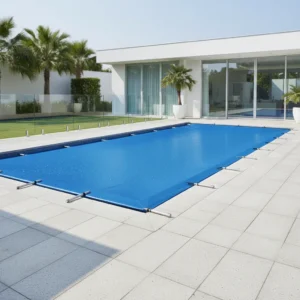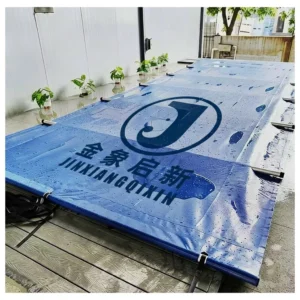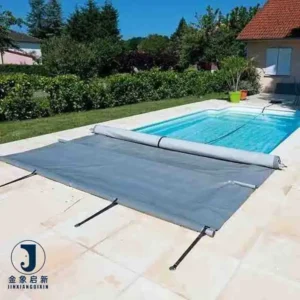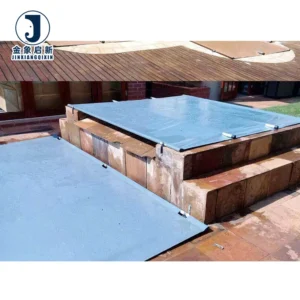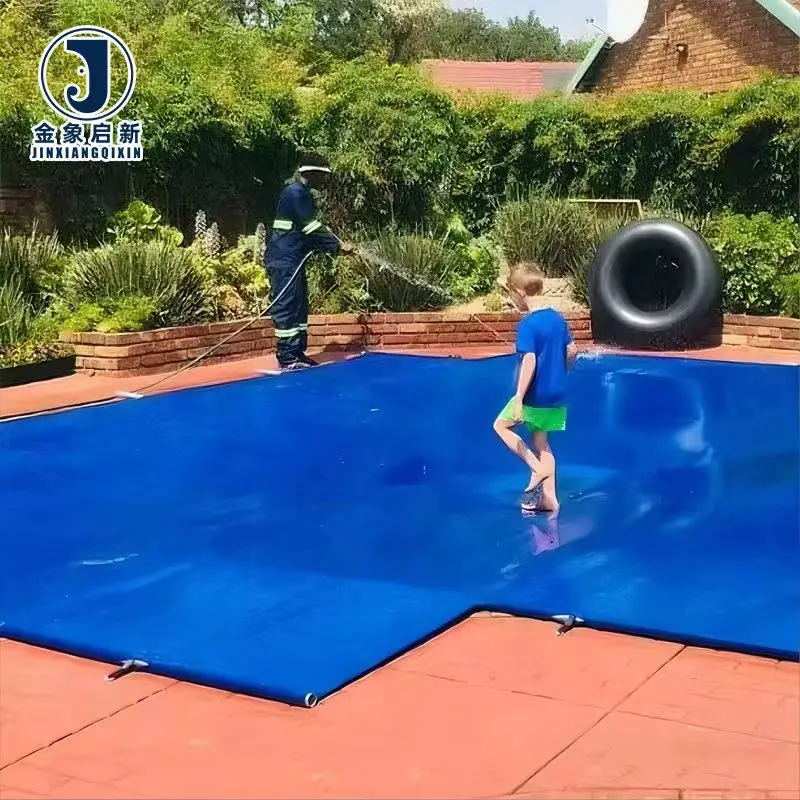
Deep process control over coating weight and adhesion — Our PVC Coated Tarpaulin Roll production uses laminated and hot-melt coating technology with dedicated QA/QC at every stage, ensuring the GSM on your quote is the GSM you receive on the dock.
Technical Specifications
| Parameter | Value |
|---|---|
| Product Type | PVC Coated Tarpaulin Roll |
| Material | PVC + High-strength polyester mesh fabric |
| Coating Method | Laminated technology & Hot-melt coating technology |
| Weight Options | 350gsm / 420gsm / 500gsm / 550gsm / 600gsm / 750gsm |
| Total Thickness | 0.32mm / 0.35mm / 0.4mm / 0.45mm / 0.5mm / 0.65mm |
| Roll Width | 2m / 2.1m |
| Roll Length | 75m (for 2m width) / 50m (for 2.1m width) |
| Color Options | Blue / Red / Yellow / Light Blue / Grey (Customized) |
| Key Features | Cold crack resistance, Anti-mildew, Anti-static treatment, Waterproof, Sunproof, Best color fastness |
| Special Treatments Available | Flame retardant, Anti-static, Anti-cold, Anti-mildew, 3P (grade not stated — confirm the grade required for your market) |
| UV Treatment | Anti-UV claimed (test basis not stated — request test report for your specific grade) |
| Standards | ISO, CE |
Application Suitability
| Application | Exposure & Requirement |
|---|---|
| Truck and trailer side curtains | Constant flexing at load points, road spray and debris impact, continuous UV exposure during transit |
| Flatbed load covers for pool equipment | Abrasion from vibration and tie-down straps, weather exposure across climate zones during multi-day hauls |
| Curtain-side trailer fabric replacement | Repeated rolling and unrolling tension, wind flap fatigue, compatibility with existing track and buckle systems |
| Transport covers for pre-assembled pool structures | Point loads from rigid frame edges, UV and moisture protection over extended outdoor storage before installation |
Why Generic-Size Covers Fail on Moving Loads
A pool cover tarpaulin cut to a standard size will shift, flap and wear through at the seams long before one cut to your exact trailer profile.
Fleet operators replacing tarpaulins mid-season almost always point to two failures: the cover was cut to a generic rectangle that does not match the trailer’s actual dimensions, and the welded seams gave way at the flex point where the load shifts most during transit [NEED_CITE: tensile and tear test methods for coated fabrics per ISO 1421]. When you specify a PVC coated swimming pool cover tarpaulin for transport and fleet use, the cut pattern and seam reinforcement matter as much as the fabric weight itself. Generic sizing leaves excess material that catches wind and creates drag, while insufficient reinforcement at tie-down zones concentrates stress until the weld line splits.
How Trailer Vibration Tests Every Weld Line
When a loaded trailer travels at highway speed, the cover fabric flexes continuously at the points where the load moves against the restraint system. PVC coated swimming pool cover tarpaulin used in transport must handle this cyclic stress without the coating delaminating from the base polyester mesh. The laminated and hot-melt coating technology used in this material produces strong adhesion between the PVC layers and the high-strength polyester mesh, which is critical because weld failures typically start at the interface where coating separates from yarn [NEED_CITE: peel strength testing for laminated PVC fabrics].
Matching GSM to Route Exposure, Not Just Price Per Roll
Transport routes vary enormously in their demands on cover fabric. A trailer running short urban deliveries faces different abrasion and flex cycles compared to one crossing multiple climate zones on long-haul routes. This PVC pool cover tarpaulin is supplied in 350gsm through 750gsm grades, allowing fleet operators to match the fabric weight to the severity of exposure their loads encounter. Heavier grades provide additional material thickness at tie-down and edge hem zones where concentrated stress accelerates wear, while lighter grades reduce overall cover weight for manual handling during daily loading operations.
Reading the Specs Beyond the GSM Number
The weight per square metre tells you how much material is present, but it does not tell you how that material will behave when a strap pulls against an eyelet at an angle. The high-strength polyester mesh base fabric provides the structural skeleton, while the PVC coating delivers waterproofing and UV screening. Total thickness values from 0.32mm to 0.65mm correlate with the coating mass applied to each face of the mesh. Laminated technology bonds the coating to the mesh under heat and pressure, producing consistent adhesion across the full roll width. Cold crack resistance ensures the PVC remains flexible rather than brittle when trailers are loaded in cold yards or transit through low-temperature regions.
The Cost of Getting the Specification Wrong
A transport operator who receives rolls that are lighter than the quoted GSM faces a choice: accept reduced service life or reject the shipment and delay the fleet schedule [NEED_CITE: GSM verification methods for incoming coated fabric inspection]. Colour variation between rolls in the same order becomes visible the moment panels are installed side by side on adjacent trailers, forcing a full reorder to maintain fleet appearance. Welded seams that fail before the fabric does mean the cover must be removed and reworked, taking the trailer out of service for repairs that could have been avoided with correct seam reinforcement specifications at the order stage.
Why Transport Operators Source This Fabric Here
Three full production lines and 36 sets of professional equipment provide the capacity to fulfil fleet-scale orders without splitting production across multiple runs that introduce batch variation. A 10-person R&D team handles custom sizing confirmed against specific trailer model dimensions before production begins, eliminating the guesswork of generic patterns. Dedicated QA/QC at every production stage with 100% inspection before shipment means the colour, GSM and coating adhesion are verified on every roll before it leaves the facility. Samples for custom width, colour or printed branding are developed within days, allowing transport equipment builders to approve the exact material before committing to bulk volume.
Documentation & Verification
- Material specification sheet confirming exact GSM, base fabric construction and coating weight per roll before dispatch
- Pre-shipment inspection record verifying colour consistency across every roll in the order against the approved sample
- Test report for UV treatment supplied with applicable shipments so anti-UV claims are backed by verifiable data
- Certificate of origin and customs documentation prepared to support international freight clearance without delay
- Roll packing list itemised by roll number, weight and dimensions for receiving verification at destination
Fabrication, Handling & Storage
- Heat-weld seams at manufacturer-recommended temperature settings matched to the specific GSM grade selected for your covers
- Reinforce tie-down and eyelet zones with additional PVC patches to distribute strap loads across the high-strength polyester mesh
- Store rolls horizontally on pallets in a shaded, ventilated area to prevent flat spots and coating transfer between layers
- Allow cold-stored rolls to reach ambient temperature before unrolling to protect the cold crack resistant coating from creasing
- Cut panels using the 2m or 2.1m roll width to minimise off-cuts and reduce the number of welded joins per cover
What We Need to Quote Accurately
To provide a specification that matches your fleet requirements, share the trailer make and model or the exact cover dimensions including any contour profiles. Confirm the target GSM grade based on your route exposure conditions and whether flame retardant or anti-static certification is required at your destination. Advise the annual roll volume and whether you need stock colours or a custom shade matched to your fleet livery.
Frequently Asked Questions
Q: How do you ensure GSM on the quotation matches the material received?
A: Every roll is weighed and measured during our 100% pre-shipment inspection before dispatch. The inspection record documents the actual GSM against the quoted value for each individual roll, and this report ships with your documentation so you can verify the match on arrival at your facility.
Q: Can pool cover tarpaulin be cut to fit a specific trailer model rather than a generic size?
A: Yes. Our R&D team develops custom cut patterns based on the exact trailer make, model and year you provide. We confirm the dimensions with you before production begins, ensuring the finished cover fits the specific vehicle profile rather than a standard rectangle that leaves excess material.
Q: What reinforcement options are available at tie-down and eyelet points for transport use?
A: We apply additional PVC patches at specified stress zones to distribute strap and buckle loads across the high-strength polyester mesh base fabric. The reinforcement layout is customised based on your tie-down configuration, with placement confirmed during the sample approval stage before bulk production.
Q: How is batch-to-batch colour consistency controlled when ordering multiple rolls?
A: Colour is controlled at the coating stage using reference standards, and our pre-shipment inspection compares every roll in the order against the approved sample. Any roll showing visible shade variation is identified and replaced before dispatch, so panels installed side by side on adjacent trailers present a uniform appearance.
Q: What is the lead time and minimum order for custom width, colour or printed branding?
A: Lead times and minimums depend on the specific customisation requested. Samples for custom requirements are developed within days for your approval before bulk commitment. Share your target width, colour reference and annual volume, and we will confirm the production schedule and order threshold for your specification.