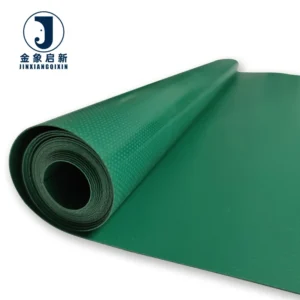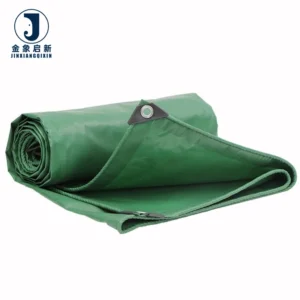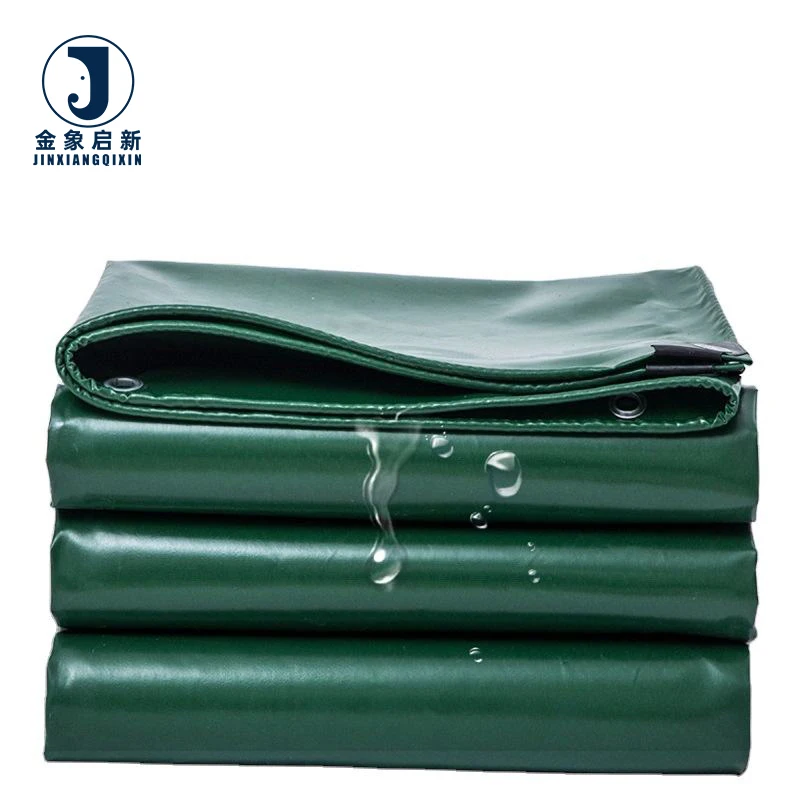
Coating Adhesion Control — Hot-melt coating process bonds PVC to high-tenacity polyester mesh at every flex point, verified stage-by-stage before the roll leaves the line.
Technical Specifications
| Parameter | Value |
|---|---|
| Product Type | PVC Coated Tarpaulin |
| Material | PVC + High-strength polyester mesh fabric |
| Coating Technology | Laminated / Hot-melt Coating |
| Weight Options | 350gsm / 420gsm / 500gsm / 550gsm / 600gsm / 750gsm |
| Total Thickness | 0.32mm / 0.35mm / 0.4mm / 0.45mm / 0.5mm / 0.65mm |
| Surface Finish | Glossy or Matte |
| Roll Size | 2m × 75m / 2.1m × 50m |
| Waterproof | Double-sided 100% Waterproof |
| Cold Crack Resistance | Stated — confirm temperature range for your market |
| Anti-Mildew | Stated |
| Anti-Static | Stated — surface resistance value not specified |
| UV Treatment | Sunproof — test basis not stated |
| Flame Retardant | Available in flame retardant grades — confirm the grade required for your market |
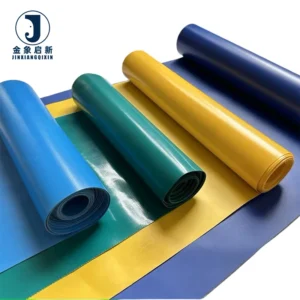
| Color Options | Blue, Red, Yellow, Light Blue, Grey (Customized) |
| Printing Option | Custom brand printing accepted |
| Certifications | ISO, CE |
Application Suitability
| Application | Exposure & Requirement |
|---|---|
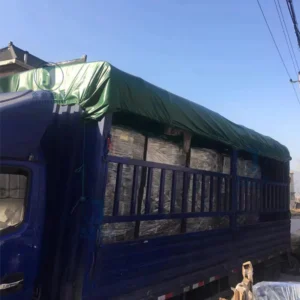
| Truck and trailer side curtain covers | Constant flexing over load edges, road abrasion, tie-down stress at eyelets, UV and weather exposure |
| Flatbed tarpaulin covers for freight fleets | Wind lift, rain ingress, load shift abrasion, repeated folding and unfolding at depots |
| Cargo ship and marine deck covers | Salt spray, prolonged moisture, UV degradation, puncture risk from cargo handling |
| Construction site enclosures | Scaffolding contact, wind loading, dust containment, temporary weather barrier |
| Equipment and agricultural covers | Standing water, soil contact, UV exposure, mildew risk in humid storage |
Why Generic-Sized Truck Covers Fail Before the Fabric Does
Cut-to-model fitment eliminates the gap and overlap problems that cause most early tarpaulin failures on the road.
Generic-sized covers force installers to stretch or fold material at the trailer edges, creating stress concentrations exactly where the load flexes most. The welded seams and hem lines take forces they were never designed to carry, and the first tear appears within weeks rather than years. A PVC Coated Tarpaulin for Truck Cover cut to the specific trailer dimensions distributes tie-down loads evenly across the reinforced hem, keeping the fabric in tension rather than in shear. [NEED_CITE: tensile and tear test methods for coated fabrics per ISO 1421]
How Trailer Fitment Changes Fabric Performance
Every trailer model has different corner radii, headboard heights and side rail profiles. When PVC coated tarpaulin roll stock is cut and welded to match those dimensions, the eyelets align with the trailer’s tie-down points without diagonal pull. The fabric sits flat against the load, reducing wind flap and the abrasion that comes from it.
Weld Line Integrity Under Road Conditions
The weakest point on any truck cover is where two panels meet. Hot-melt coating technology produces a strong bond between the PVC layer and the polyester base fabric, which translates directly into weld strength. When the heat-weld parameters match the coating thickness and GSM grade, the seam holds as long as the surrounding material — not less. [NEED_CITE: hot-melt versus knife-over-roll coating adhesion comparison for PVC tarpaulin]
Coating Technology and Its Effect on Weld Strength
The choice between laminated and hot-melt coating affects more than surface appearance. Hot-melt coating forces PVC into the weave of the high-strength polyester mesh, creating a mechanical lock that resists delamination at the weld zone. Laminated construction bonds pre-formed PVC films to the base fabric, offering consistent thickness across the roll. For truck cover applications where panels are heat-welded together, the coating method determines the temperature window and dwell time needed for a reliable seam. Selecting the wrong weld temperature for a given coating type is a common cause of premature seam failure in the field.
What GSM and Thickness Together Mean for Truck Covers
Weight per square metre and total thickness are related but independent specifications. A 550gsm PVC coated tarpaulin with a dense base fabric will resist tearing under tie-down loads better than a 550gsm material with a looser weave and heavier coating. Thickness readings between 0.4mm and 0.5mm suit most side curtain and flatbed applications, while heavier grades at 0.65mm add puncture resistance for construction and marine covers. The glossy or matte surface finish affects how the material handles during fabrication — glossy surfaces slide more easily over loads, while matte finishes reduce glare and improve print adhesion for branded fleet livery. [NEED_CITE: relationship between base fabric denier and tear propagation in coated textiles]
The Hidden Cost of Colour Variation Across Rolls
When a transport fleet orders enough PVC coated tarpaulin roll stock to cover multiple trailers, even a slight colour shift between rolls becomes visible once the panels are installed side by side. Batch-to-batch colour consistency depends on pigment dosing control at the coating stage and on sourcing base materials from the same production lot. A colour mismatch discovered after installation means removing and replacing panels that are otherwise perfectly functional — a cost that falls entirely on the buyer if the rolls were not matched before dispatch. [NEED_CITE: colour consistency standards for batch-matched coated fabric orders]
Why Sourcing PVC Coated Tarpaulin for Truck Cover Here Reduces Specification Risk
Three full production lines and 36 sets of professional equipment support roll-to-roll consistency across bulk orders, with in-process QA checks at every coating stage. The 10-person R&D team develops cut-to-model samples within days, confirming fitment before the full production run begins. Dedicated QA/QC inspection covers every roll before shipment, verifying GSM weight, colour match and coating adhesion against the original specification. Custom widths, colours and printed branding are handled on the same lines as standard stock, so the production controls apply equally to small and large orders. ISO and CE certified processes underpin the documentation package that accompanies each dispatch.
Documentation & Verification
- Material specification sheet stating exact GSM and coating weight per roll grade
- Test report for UV and flame retardant grades where applicable to your market
- Pre-shipment inspection record confirming GSM weight and colour match before dispatch
- Roll packing list with batch reference for colour consistency traceability
- Certificate of origin and customs documentation for international shipment
Fabrication, Handling & Storage
- Heat-weld temperature and dwell time must match the specific coating technology — hot-melt and laminated grades respond differently
- Reinforced hems should carry the eyelet load; spacing depends on the GSM grade and expected tie-down forces
- Store rolls upright on pallets to prevent flat-spot creases that show through the finished truck cover
- Allow cold-stored rolls to reach ambient temperature before unrolling to avoid coating crack at the crease line
- Clean glossy or matte surfaces with mild detergent; solvent-based cleaners can soften the PVC coating layer
What to Include in Your Enquiry
Provide the specific trailer model or dimensions so the cover can be cut to fit rather than supplied in a generic size. State the GSM grade and any treatment requirements such as flame retardant certification or anti-static compliance for your operating environment. Confirm the roll width and colour needed, along with any brand printing or custom eyelet spacing for your tie-down system. Request a pre-production sample if the order covers an entire fleet, so colour and fitment can be verified before the full run.
Frequently Asked Questions
Q: How is GSM verified on delivery versus what was quoted?
A: Every roll undergoes weight inspection at the production stage against the specification sheet. A pre-shipment inspection record confirms the exact GSM per roll before dispatch, and a test sample can be provided for your own verification on arrival.
Q: Can I get a test report for UV or flame retardant treatment?
A: Test reports are available for UV and flame retardant grades that carry a defined certification. Specify the standard required for your market — such as a particular fire classification — so the correct grade is selected and documented.
Q: How do you ensure colour consistency across multiple rolls in one order?
A: Rolls for a single fleet order are produced from the same pigment batch and base material lot. Colour matching is verified during in-process QA and confirmed on the pre-shipment inspection record before dispatch.
Q: Can truck covers be cut to fit my specific trailer model and year?
A: Yes. The R&D team develops cut-to-model patterns based on your trailer dimensions, including eyelet placement and hem reinforcement aligned to the tie-down system. A sample is produced for fitment approval before the full order runs.
Q: What are the best practices for heat-welding seams on truck tarpaulin?
A: Weld temperature and dwell time must match the coating type — hot-melt and laminated coatings each have a specific processing window. Test welds on offcuts from the same roll confirm the correct settings before joining full panels.