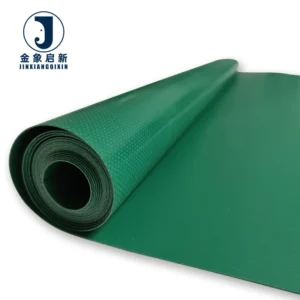
Precision-Coated Roll Stock — Every roll inspected for GSM and colour consistency before dispatch, built for fleet operators who cannot afford cover failure mid-transit.
Technical Specifications
| Parameter | Value |
|---|---|
| Product Type | PE Tarpaulin Roll |
| Coating Material | HDPE weaving with LDPE lamination on both sides |
| Weight (GSM) | 50gr/m2 ~ 220gr/m2 available (range covers product family — confirm the grade for this item) |
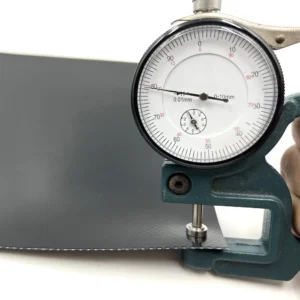
| Total Thickness | 0.2–0.4 mm / 8–16 mil / Custom |
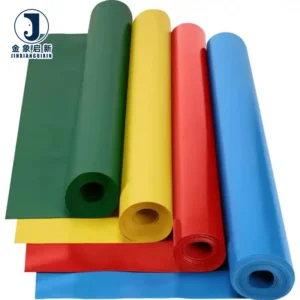
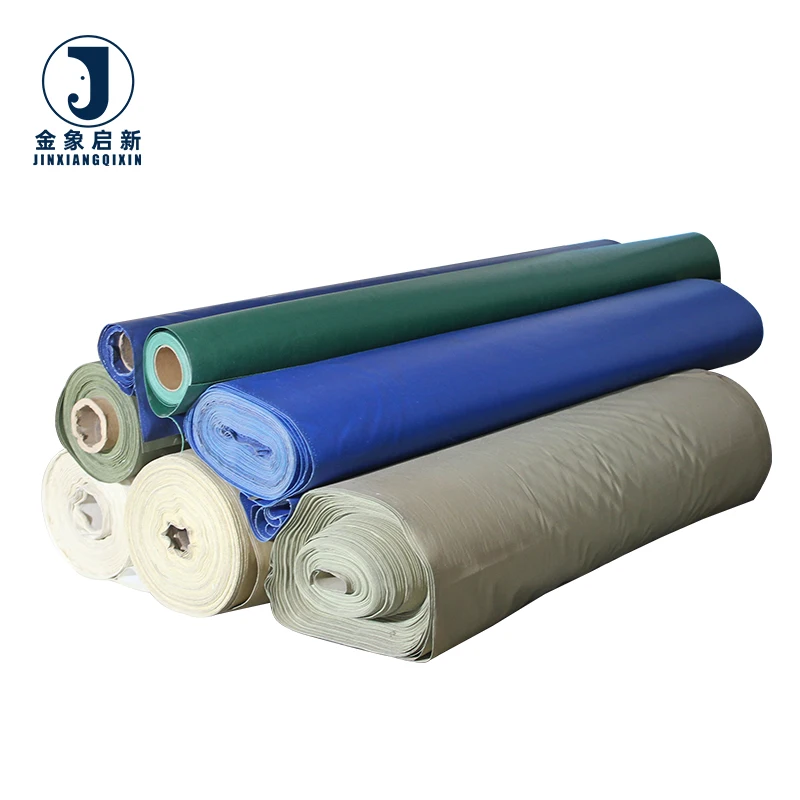
| Color | Blue, Blue/Orange, Green, Grey, Black, Clear, Grey/Green, Orange, or any other color |
| Waterproof | Yes |
| Washable | Yes |
| Tear Resistance | Tear resistant super durability (test basis not stated in source) |
| UV Treatment | UV treatment is available (test basis not stated in source) |
| Anti-Mildew | Mildew proof (grade not stated in source) |
| Anti-Aging | Yes (grade not stated in source) |
| Printing Option | Custom printing available |
| Standards | ISO, CE |
Application Suitability
| Application | Exposure & Requirement |
|---|---|
| Flatbed trailer load cover | Road vibration, wind flap fatigue, rain splash, UV from continuous outdoor transit |
| Curtain-side trailer fabric | Repeated flexing at roll-up points, abrasion against cargo edges, daily tie-down stress |
| Fleet tie-down tarpaulin | Eyelet pull-out force, hem tension under ratchet straps, weather during multi-day hauls |
| Intermodal pallet wrap | Yard storage between dispatches, forklift contact, condensation inside containers |
| Equipment cover for transport | Dust ingress during highway transit, rain exposure on open flatbeds, UV during port staging |
Why Generic-Size Covers Leave Your Cargo Exposed on the Road
A truck cover that does not match the exact trailer dimensions wastes rigging time and creates gaps where weather gets in.
Fleet operators repeatedly order covers cut to a generic size that almost fits. The excess fabric flaps in highway wind, accelerating tear at the eyelet line, while the short side leaves the rear pallet row open to rain and road spray [NEED_CITE: common fleet tarpaulin fitment failures at hem and eyelet points]. When a PE tarpaulin roll for truck and transport is specified and cut to the precise trailer model, those failure points disappear. The difference between a cover that lasts through a full season and one that tears at the first rest stop is measured in centimetres of fit, not in fabric price.
HDPE Woven Base Built for Road Flex and Fatigue
The HDPE woven base with LDPE lamination on both sides gives this PE tarpaulin roll for truck and transport a balance of dimensional stability and surface waterproofing that matters when a load shifts under braking. Woven HDPE resists the micro-tears that propagate at flex points — the exact spots where a flatbed cover bends over sharp cargo edges or where a curtain-side panel folds during roll-up.
Colour Matching Across an Entire Fleet Order
When you order covers for a mixed fleet, colour variation between rolls becomes visible the moment two panels hang side by side on adjacent trailers. Our QA process tracks colour reference across every roll in a single dispatch, so the blue or grey you specified at sample stage is the blue or grey that arrives — no shift between production batches and no mismatched panels in the yard [NEED_CITE: batch-to-batch colour consistency standards for coated PE fabrics].
Reading GSM and Thickness for Transport Duty Levels
The available weight range spans from light pallet-wrap grades through to heavier side curtain applications, and thickness runs from 0.2 mm to 0.4 mm. In PE woven fabrics, GSM reflects the density of the HDPE weave plus the mass of LDPE lamination on each face. A higher GSM typically signals a tighter weave and more coating, which together improve tear propagation resistance — but GSM alone does not define tensile strength, since the base yarn denier and weave count carry the structural load. Thickness indicates total caliper including both lamination layers; a thicker sheet generally offers better puncture resistance against cargo corners, though it also adds weight to every tie-down cycle. Selecting the right point in this range depends on whether the cover wraps a pallet for yard storage or serves as a daily-cycled curtain-side panel under ratchet strap tension.
What Happens When the Wrong Grade Goes on a Truck
Specifying a pallet-wrap GSM for a curtain-side application means the fabric flexes beyond its structural limit at every roll-up, and the LDPE lamination cracks along the fold line within weeks. Covers that arrive lighter than the quoted GSM fail at the eyelet row when strap tension peaks during transit [NEED_CITE: field failure patterns in underspecified transport tarpaulins]. Colour inconsistency across rolls forces a fleet operator to reject an entire batch or accept mismatched panels — both outcomes cost more than getting the specification right at order stage.
Why Fleet Operators Source This PE Tarpaulin Roll Here
Three full production lines and dedicated equipment sets support bulk roll orders with consistent on-time dispatch, critical when a fleet renewal window is fixed. A ten-person R&D team handles custom width cutting, colour matching, and eyelet layout specific to your trailer model before production begins. Every roll passes inspection at each production stage — coating adhesion, GSM verification, colour check — with a pre-shipment record signed off before the container is sealed. Sample development runs within days, so you approve the exact hand-feel and colour before committing to a container load. Custom sizing eliminates the generic-fit problem by cutting to the specific vehicle dimensions you provide at inquiry.
Documentation & Verification
- Material spec sheet stating confirmed GSM, HDPE base weave count, and LDPE lamination weight per roll
- UV and mildew treatment test documentation matched to the batch number on the roll label
- Pre-shipment inspection record with signed GSM and colour verification per roll
- Roll packing list with net weight per roll for container loading calculations
- Certificate of origin and customs documentation for cross-border transport procurement
Fabrication, Handling & Storage
- Heat-seal LDPE lamination at moderate temperature to avoid HDPE base distortion at weld seams
- Reinforce eyelet rows with extra LDPE patch layers to distribute strap pull-out load
- Store rolls upright on pallets to prevent permanent crease marks across the woven base
- Unroll in ambient temperature above freezing to avoid lamination cracking at the fold
- Clean with mild detergent only — solvent-based cleaners degrade the LDPE surface lamination
- Plan panel cutting layout to minimise off-cut waste from the available roll width
What to Include in Your Inquiry
Provide your trailer model dimensions, the cover type (flatbed wrap, curtain-side panel, or tie-down tarp), and the daily cycle frequency so we can recommend the correct GSM and thickness point. If your fleet operates under specific UV exposure or mildew conditions, state the treatment level required for your route climate. Confirm whether you need rolls cut to finished cover dimensions with eyelets and hems, or full roll stock for your own fabrication line.
Frequently Asked Questions
Q: How do I choose the right GSM and thickness for different truck cover duty levels?
A: Lighter grades suit pallet wraps and yard storage covers where flex cycles are minimal. Heavier grades within the available range serve curtain-side panels and flatbed covers exposed to highway wind and daily strap tension. We recommend the GSM and thickness based on your specific trailer type and cycle frequency, then develop a sample for your approval before bulk production.
Q: What eyelet spacing and hem reinforcement options are available for tie-down systems?
A: Eyelet spacing and hem reinforcement are specified at order to match your strap layout and ratchet tension. We reinforce high-stress rows with additional lamination layers to resist pull-out under load. Provide your tie-down configuration and we will confirm the eyelet pattern and hem construction in the sample stage.
Q: Is UV treatment supported by test documentation for road and sun exposure?
A: UV treatment is available for this PE tarpaulin range, and test documentation can be provided for the specific batch — confirm the UV performance level required for your market and operating climate at inquiry stage so we match the treatment to your exposure conditions.
Q: How do you ensure colour consistency when I order covers for an entire fleet?
A: Every roll in a fleet order is checked against the approved colour reference during production and again at pre-shipment inspection. We track batch numbers across the full order so that panels installed side by side on adjacent trailers match. Colour approval is locked at sample stage before bulk runs begin.