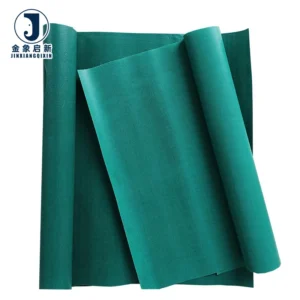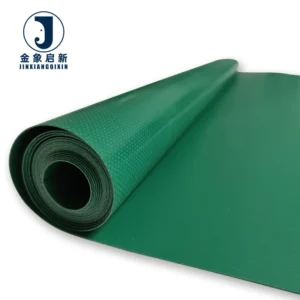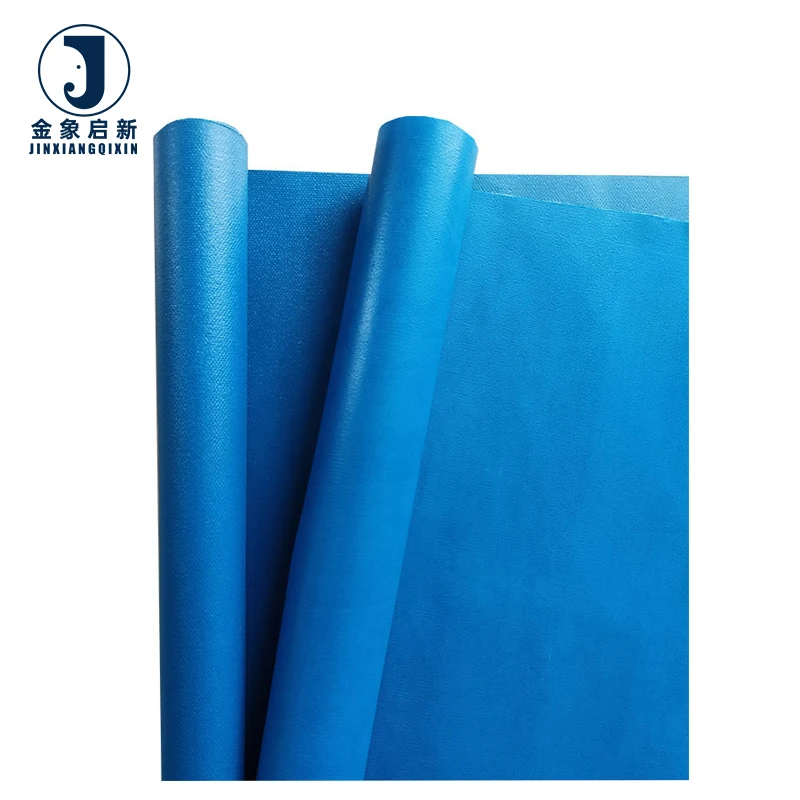
Precision Adhesion Control — Hot-melt and laminated coating lines deliver consistent PVC-to-polyester bonding, verified per roll before dispatch.
Technical Specifications
| Parameter | Value |
|---|---|
| Product Type | PVC Coated Tarpaulin Roll |
| Base Fabric | High-strength polyester mesh |
| Weight Options | 350gsm, 420g, 500gsm, 550gsm, 600gsm, 750gsm |
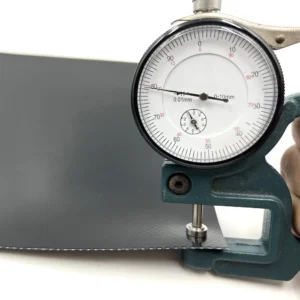
| Thickness Range | 0.32mm, 0.35mm, 0.4mm, 0.45mm, 0.5mm, 0.65mm |
| Coating Method | Laminated technology & Hot-melt Coating technology |
| Roll Dimensions | 2m × 75m / 2.1m × 50m |
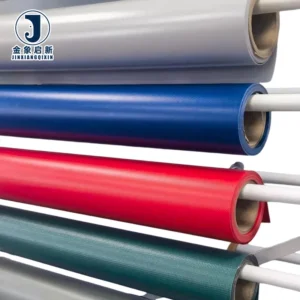
| Available Colours | Blue, Red, Yellow, Light blue, Grey (custom colours available) |
| Key Features | Waterproof, cold crack resistance, anti-mildew, color fastness, outstanding tearing strength for welding |
| Special Treatments | Flame retardant, anti-static, anti-cold, anti-mildew, 3P (grade not stated — confirm the grade required for your market) |
Application Suitability
| Application | Exposure & Requirement |
|---|---|
| Truck side curtain fabrication | Constant flexing at hinges, road abrasion, wind-driven rain ingress |
| Flatbed load covers with tie-downs | Concentrated stress at strap contact points, UV and weather exposure |
| Transport equipment enclosures | Vibration, temperature swing between loading dock and open road |
| Trailer roof and rear door seals | Standing water, repeated folding during open-and-close cycles |
Why Welded Seams Fail First on PVC Tarpaulin for Transport
The weld line is only as strong as the base fabric allows it to be.
Fleet operators frequently replace truck covers not because the PVC tarpaulin for transport fabric has torn in the middle of a panel, but because the welded seam has split at the point where the load shifts most during cornering or braking. This pattern shows up repeatedly across mixed fleets running different trailer models on long-haul routes [NEED_CITE: tensile and tear test methods for coated fabrics per ISO 1421]. The issue is rarely the welding equipment itself — it is the tearing strength of the material at the bond zone, where the coating must transfer stress into the polyester mesh without delaminating.
Coating Adhesion That Survives Road Flex
Laminated and hot-melt coating technologies both aim to bond the PVC layer to the high-strength polyester mesh base fabric, but they achieve adhesion through different mechanisms. Hot-melt coating fuses the PVC directly into the weave structure under heat and pressure, creating a mechanical lock that resists peeling when the fabric flexes repeatedly — exactly what a side curtain experiences on every journey. This PVC coated tarpaulin truck cover roll stock is produced on lines that control coating weight and penetration depth, so the bond zone maintains integrity across thousands of flex cycles without separating.
Matching GSM to Trailer Position and Route
Not every panel on a trailer sees the same mechanical load. Side curtains flex and billow, roof sections carry standing water, and rear door covers fold repeatedly. The available range from 350gsm to 750gsm lets fabricators assign heavier grades to high-stress positions and lighter grades where flexibility matters more. Roll stock in 2m × 75m and 2.1m × 50m dimensions supports efficient cutting for standard curtain-sider widths, reducing the number of cross-panel welds [NEED_CITE: roll width planning for curtain-sider trailer fabrication]. Specifying by position rather than using a single grade across the entire trailer can extend service life where it matters most.
What GSM, Thickness and Coating Method Mean Together
GSM alone tells you how much material is on the roll, but it does not tell you how that weight is distributed between the base fabric and the coating layers. A 650 GSM fabric with a dense polyester mesh and thin coating will tear differently than one with a lighter mesh and thick coating, even though the scale reads the same number. Hot-melt coating tends to produce higher peel strength at the coating-to-mesh interface, which directly affects how well a welded seam holds under tension. Thickness values from 0.32mm to 0.65mm across the available grades correlate with total material build, but it is the base fabric denier and weave density that govern how a puncture or cut propagates into a full tear. Colour fastness and cold crack resistance treatments work at the surface and within the PVC compound respectively, meaning they add functional protection without altering the structural contribution of the mesh.
The Cost of Ordering Generic Sizes Instead of Model-Specific Cuts
A truck cover cut to a generic rectangle may physically drape over a trailer, but it leaves excess fabric that flaps in the wind, creating abrasion points where the material rubs against itself or the load. Conversely, a cover that is too short puts constant tension on the hems and eyelets, accelerating failure at the reinforcement points. For fleet operators running specific trailer models, ordering PVC tarpaulin for transport covers cut to the exact dimensions of each vehicle eliminates both problems and reduces the time installers spend adjusting and re-securing on site [NEED_CITE: generic versus model-specific truck cover fitment failures].
Why Procurement Teams Source This Roll Stock Here
Three full production lines and 36 sets of professional equipment give this facility the capacity to hold delivery schedules on bulk roll orders, even when custom colours or widths are specified. The 10-person R&D team handles sample development within days, so fabricators can test weld parameters and eyelet placement on actual material before committing to a full production run. Dedicated QA and QC inspectors check every roll at each production stage, including GSM verification and colour matching across the order, with 100% pre-shipment inspection before anything leaves the factory. Nearly three decades of focus on coated fabric production means the process controls around coating weight, mesh tension and curing temperature are embedded in standard operating procedure rather than treated as special requests.
Documentation & Verification
- Material specification sheet stating confirmed GSM, base fabric type and coating method per roll
- Weight verification per roll against the stated GSM recorded during pre-shipment inspection
- Test report for flame retardant or anti-static treatment where the grade has been specified and confirmed
- Pre-shipment inspection record covering colour consistency, roll dimensions and surface quality
- Certificate of origin and customs documentation pack for cross-border shipment
- Roll packing list with individual roll identification for receiving warehouse traceability
Fabrication, Handling & Storage
- Hot-melt coated rolls respond well to high-frequency welding; test temperature and dwell time on a sample offcut before production runs
- Cold crack resistant grades remain workable in low temperatures, but allow rolls to acclimatise to workshop conditions before unrolling to avoid creasing
- Store rolls horizontally on racking to prevent flat spots on the 2m or 2.1m width that can cause tracking issues on automated welding tables
- Cut panels from 75m or 50m roll lengths using a flat table longer than the trailer panel to maintain straight edges for accurate weld alignment
- Anti-mildew treatment protects stored fabric, but rolls should still be kept off concrete floors and away from direct ground moisture
- Clean finished covers with mild detergent only; solvent-based cleaners can degrade the PVC coating surface and affect colour fastness over time
What We Need to Quote Your Roll Order
To move from inquiry to sample, we need to know which trailer models the PVC tarpaulin for transport covers will fit, the GSM grade and colour required for each position, and whether you need roll stock only or finished covers with hems and eyelets. If your routes or cargo types require flame retardant or anti-static compliance, specify the standard your market demands so we can confirm the matching treatment grade. Annual volume and delivery schedule help us plan roll production runs that maintain colour consistency across every shipment.
Frequently Asked Questions
Q: What GSM and thickness do I need for a side curtain trailer versus a flatbed load cover?
A: Side curtains flex constantly and benefit from mid-range grades that balance tear strength with flexibility, typically around the 500gsm to 550gsm range with corresponding thickness around 0.4mm to 0.45mm. Flatbed load covers see less flex but more abrasion from strap contact, so heavier grades such as 600gsm or 750gsm with thicker coatings at 0.5mm to 0.65mm are common choices. Confirm the specific grade with a sample test on your welding equipment.
Q: Can I order custom roll width and colour to match my existing fleet covers?
A: Yes. Beyond the standard 2m × 75m and 2.1m × 50m roll sizes, custom widths and colours are available with sample approval before bulk production. Provide a physical colour sample or RAL reference, and our R&D team will develop a matching roll for your review. Minimum quantities and lead times depend on the colour and width requested.
Q: How do you guarantee colour consistency across multiple rolls in one shipment?
A: Every roll undergoes colour inspection during the 100% pre-shipment QC check. Rolls within the same production batch are compared side by side under controlled lighting before packing. If your order spans multiple production runs, we match the new batch against a retained sample from the previous run to prevent visible variation once installed on adjacent trailers.
Q: Are flame retardant and anti-static certifications available for my transport route requirements?
A: Flame retardant and anti-static treatments are available, but the specific grade must be confirmed based on your market and cargo requirements. Provide the standard or regulation your operation must meet, and we will confirm whether the available treatment grade matches, along with the corresponding test documentation for your compliance records.
Q: What is the cold crack resistance performance for winter transport routes?
A: Cold crack resistant grades are formulated to remain flexible at low temperatures without becoming brittle, which is critical for curtains that must be opened and closed in freezing conditions. The exact low-temperature threshold depends on the specific PVC compound and treatment applied. Request a test sample to verify performance against the minimum temperatures your fleet encounters on its winter routes.