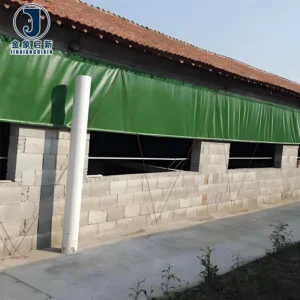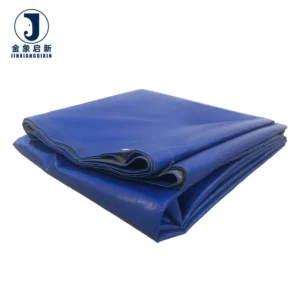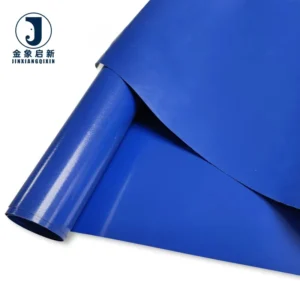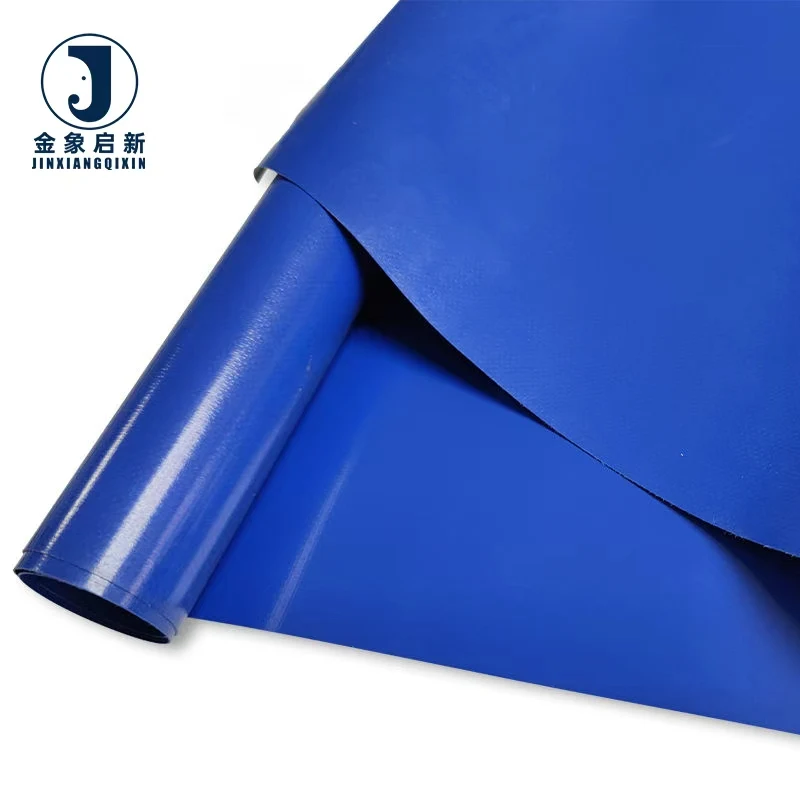
Process-Controlled Coating — Every roll of PVC tarpaulin leaving our lines is weighed and measured against the quoted GSM, with inspection records tied to the batch number so fabricators and fleet operators receive exactly what was specified.
Technical Specifications
| Parameter | Value |
|---|---|
| Product Type | PVC Tarpaulin Roll |
| Material | PVC coated fabric; HDPE weaving with LDPE lamination also available |
| Thickness | 0.35–0.45 mm (medium), 0.70–1.0 mm (heavy-duty), 1.2–1.5 mm (super heavy) |
| Weight | 400–500 g/m² (medium), 700–1000 g/m² (heavy-duty), 1100–1500 g/m² (super heavy) |
| Base Fabric Denier | 500D, 1000D, up to 2000D |
| Tensile Strength | Warp 1500–3000 N/5 cm, Weft 1200–2800 N/5 cm (source value — verify against manufacturer catalog) |
| Width Options | 6 ft, 8 ft, 10 ft, 12 ft, 2 m, 4 m, 6 m, or custom |
| Length Options | 100 yards, 100 meters, or custom |
| Colour Options | Blue, Blue/Orange, Green, Grey, Black, Clear, Grey/Green, Orange, or custom |
| Surface Finish | Available in glossy or matte finish |
| Edge Reinforcement | PP rope in hem on all four edges |
| Eyelets | Galvanised, spaced every 3 ft or 1 m |
| Corner Treatment | Reinforced plastic corners |
| Functional Treatments | Waterproof, washable, tear-resistant, mildew-proof, anti-aging; UV treatment available (confirm grade required for your market); flame-retardant grades available (confirm the grade required for your market) |
| Standards | ISO, CE |
Application Suitability
| Application | Exposure & Requirement |
|---|---|
| Truck and trailer side curtains | Constant flexing at load points, road spray, UV exposure, tie-down abrasion at eyelets |
| Flatbed and tipper covers | Heavy cargo contact, wind flap fatigue, forklift puncture risk during loading |
| Construction site enclosures | Dust and debris impact, prolonged sun exposure, wind load on welded seams |
| Equipment and material wraps | Long-term outdoor storage, moisture ingress, mildew in humid climates |
| Pond and reservoir liners | Permanent water contact, soil chemistry, puncture from substrate |
| Tent, awning and inflatable structures | Tension stress on seams, UV and thermal cycling, fire code compliance |
Why GSM Alone Does Not Tell You How Strong the Fabric Is
GSM is a weight, not a strength rating — two PVC tarpaulin rolls at the same weight can behave completely differently under load.
A 900 g/m² PVC tarpaulin roll woven from 500D yarn with a thick coating layer may feel substantial on the scale yet tear along the weft the moment a flexing load pulls at a welded seam. Flip that around: a 700 g/m² roll built on a 1000D base with tighter warp density often outperforms the heavier fabric in both tensile and tear resistance. This is the gap that catches fleet buyers and tarpaulin fabricators off guard — they approve a sample, sign off on the GSM, and then discover the real-world performance falls short once the cover is tensioned over a moving trailer [NEED_CITE: tensile and tear test methods for coated fabrics per ISO 1421]. When sourcing PVC Tarpaulin Roll aftermarket supplier stock for transport applications, insisting on base fabric denier and knitting density data alongside GSM is the only way to compare like for like.
Colour Consistency Across a Full Container Load
When a fabrication shop orders six rolls of grey PVC tarpaulin for a fleet of truck side curtains, the panels end up installed next to each other in daylight. Even a slight shade shift from one roll to the next becomes obvious to the end client, and the whole job can be rejected on visual grounds alone. Controlling colour starts at the coating stage — pigment dosing, mixing time, oven temperature and line speed all influence the final shade. Our production runs keep these variables locked across the entire batch so that every roll pulled from the same production order matches within a tight visual tolerance. This matters especially for distributors who split container loads across multiple end users; inconsistency between rolls erodes trust at the resale level.
Choosing the Right Width for Transport Cover Fabrication
Standard roll widths in the PVC tarpaulin market tend to cluster around 2 m to 3.2 m. For a standard curtain-sider trailer that needs a single drop panel roughly 2.7 m tall, a 2 m roll forces a horizontal weld seam right across the panel — a seam that will flex every time the trailer is loaded and unloaded. Offering widths up to 6 m means fabricators can cut full-height panels with no transverse weld, eliminating the single most common failure point on truck covers. Wider stock also reduces offcut waste when nesting multiple panel shapes from one roll, which matters to any shop cutting dozens of covers per week [NEED_CITE: coated fabric fabrication yield and seam placement best practices].
How Coating Weight and Base Fabric Density Work Together
In a PVC coated tarpaulin, total weight is the sum of the base fabric and the polymer layers applied to it. A heavy coating on a low-denier base produces a thick, stiff material that resists puncture but can crack along fold lines in cold weather. A lighter coating on a dense, high-denier weave gives a more flexible fabric that handles repeated folding yet may allow water penetration if the coating is too thin to bridge the weave gaps. This is why two rolls both rated at 700 g/m² can perform very differently: one carries most of its weight in PVC and feels rigid, while the other carries its weight in polyester and drapes easily. For truck cover applications where the fabric is folded, strapped and exposed to temperature swings, balancing base denier against coating thickness is more important than chasing the highest GSM figure on the quotation.
The Hidden Cost of Specifying the Wrong Roll Grade
I once supplied a batch of medium-weight PVC tarpaulin rolls to a fabricator who was building covers for a steel coil carrier. The quotation called for 500 g/m², which matched their usual spec for general freight. Steel coils, however, concentrate enormous point loads and generate sharp edge pressure during braking. Within weeks, the covers were splitting at the contact points and the welds were peeling. The fabricator had to replace the entire set at their own cost and reorder in a heavy-duty grade. The lesson is simple: matching roll grade to the actual cargo and exposure conditions avoids costly rework [NEED_CITE: PVC tarpaulin failure modes in heavy cargo transport]. When the application involves concentrated loads, abrasion, or prolonged UV exposure, moving up to a 700–1000 g/m² grade on a 1000D base is a far cheaper decision than dealing with warranty claims in the field.
Why Fabricators and Fleet Operators Source PVC Tarpaulin Rolls Here
Three full production lines with dedicated coating and finishing stages allow us to run multiple roll widths and colourways simultaneously without cross-contamination between batches.
A 10-person R&D team develops custom width, colour and treatment combinations and delivers sample rolls within days, so buyers can test weld parameters and drape before committing to a container order.
QA checkpoints at coating, curing and winding stages catch GSM drift and colour shift before a roll reaches the packing area — every roll is weighed and logged against the purchase specification.
Pre-shipment inspection is performed on the full order, not a sampling, giving buyers photographic evidence and measurement records before the container is sealed.
Custom widths up to 6 m are produced without joining panels, which means fabricators receive single-piece rolls that eliminate mid-panel seams and reduce cutting waste.
Documentation & Verification
- Material specification sheet listing GSM, base denier, coating weight and colour reference per roll batch
- UV and flame-retardant test reports matched to the specific grade ordered, not a generic data sheet
- Pre-shipment inspection record with per-roll weight verification against the quoted GSM
- Roll packing list showing dimensions, net weight and core diameter for container planning
- ISO and CE certificates applicable to the production facility and product range
- Certificate of origin and customs documentation for international PVC tarpaulin roll shipments
Fabrication, Handling & Storage
- Hot-air weld temperatures must be adjusted to the coating thickness; heavier grades such as 1000 g/m² require higher dwell times to achieve full seam adhesion
- Galvanised eyelets should be set with reinforced plastic corner patches to distribute tie-down load across the PVC coating and base fabric
- Store rolls upright on pallets in a shaded area to prevent flat-spotting on the outer coating layer
- Allow cold-stored rolls to acclimatise before unrolling to avoid cracking the PVC surface in low-temperature conditions
- Use mild detergent rather than solvent-based cleaners on matte-finish rolls to preserve surface texture and UV treatment
- Plan cutting layouts to maximise yield from wider rolls, reducing the number of transverse welds on truck side curtain panels
What to Include in Your Next Roll Stock Enquiry
To match the correct PVC tarpaulin roll to your fabrication or fleet requirement, share the trailer or structure dimensions, the expected cargo type and exposure conditions, and the annual roll volume you plan to order. If your market mandates a specific flame-retardant or UV grade, include the standard reference so we can align the treatment. Specify whether you need full roll stock only or also require sample panels for weld and drape testing before the bulk production run.
Frequently Asked Questions
Q: How do you guarantee GSM matches the quotation when the rolls arrive?
A: Every roll is weighed on calibrated scales during pre-shipment inspection and logged against the purchase specification. We supply a weight verification record with the shipping documents so you can cross-check the stated GSM for each roll in your batch before it leaves our facility.
Q: Can I get different colours or widths in one container without hitting separate minimums?
A: Yes. Our production lines can run multiple colour and width combinations within the same order. You can consolidate various PVC Tarpaulin Roll aftermarket supplier grades into a single container load, which is useful for distributors serving several end-market segments simultaneously.
Q: What test reports come with UV-treated or flame-retardant roll stock?
A: We provide test reports corresponding to the specific UV or flame-retardant grade produced in your batch. These reports reference the test standard used, so you can submit them directly to local compliance authorities or include them in your own product documentation.
Q: How do you handle colour variation between rolls in the same production batch?
A: Colour is controlled at the coating stage through regulated pigment dosing and oven conditions. Rolls from the same production run are compared visually and instrumentally before packing. If any roll falls outside the batch tolerance, it is held back and reprocessed rather than shipped.
Q: What is the typical lead time and roll count per container for bulk orders?
A: Lead times depend on roll width, colour and treatment requirements, with standard stock grades moving faster than custom specifications. Roll count per container varies by roll diameter and weight grade. We provide a detailed loading plan showing exact roll count and weight before production begins.