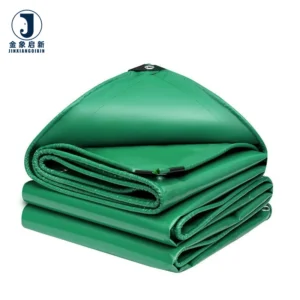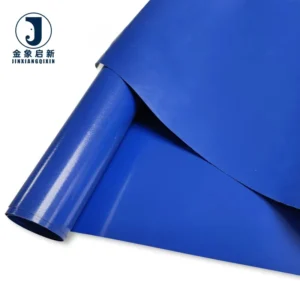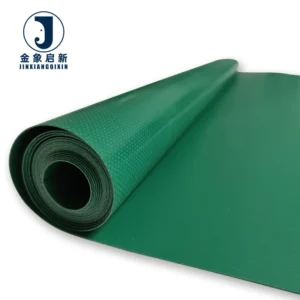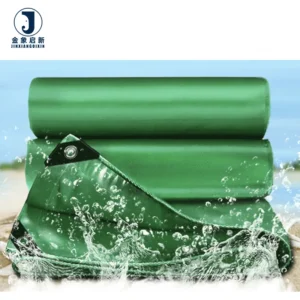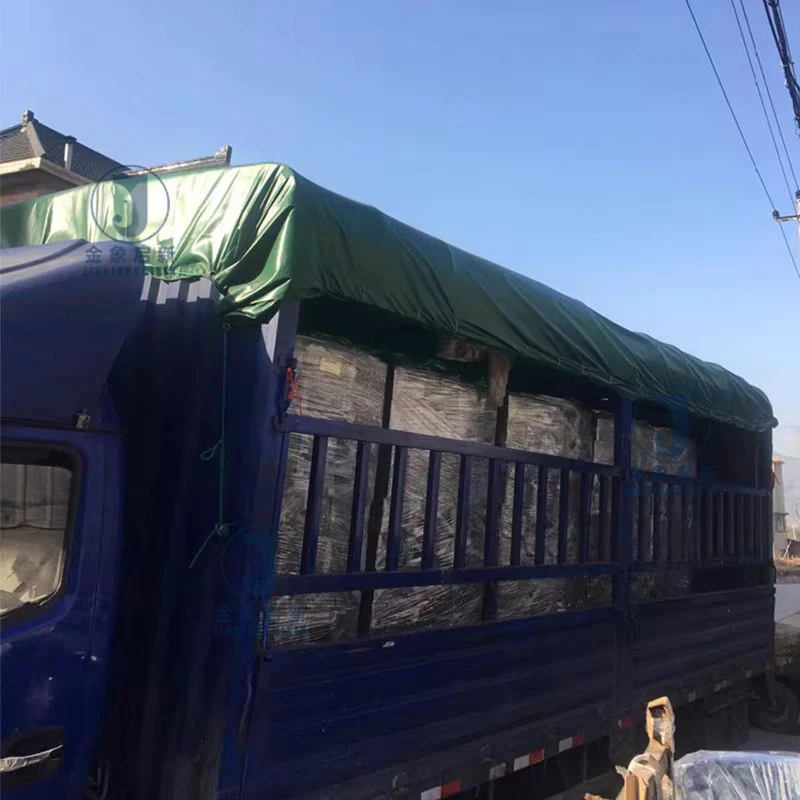
Precision Fitment Engineering — every PVC Coated Tarpaulin for Truck and Trailer Cover is cut to the exact vehicle dimensions you provide, eliminating the edge gaps and fabric flap that cause highway-speed abrasion on generic-size covers.
Technical Specifications
| Parameter | Value |
|---|---|
| Product Type | PVC Coated Tarpaulin Roll |
| Coating Material | PVC |
| Base Fabric | Warp Knitted Polyester |
| Weave Style | Plain |
| Waterproof | Yes — fully coated construction |
| Anti-Static | Claimed (surface resistance or test standard not stated) |
| Tear Resistance | Tear resistant (test standard not stated) |
| Color | Customizable (specific shades available on request) |
| Flame Retardant Grade | Available in flame retardant grades — confirm the grade required for your market |
| UV Treatment | Available — confirm the UV treatment level required for your operating region |
| Weight (GSM) | Available in multiple GSM grades — specify the weight suited to your load and route conditions |
| Width | Custom widths available — specify to match trailer panel or curtain dimensions |
| Roll Length | Custom lengths available |
Application Suitability
| Application | Exposure & Requirement |
|---|---|
| Curtain-sider truck side curtains | Constant flexing at load shift points, road spray abrasion, daily tensioning and release cycles |
| Flatbed load covers | Wind lift at highway speed, tie-down strap abrasion, rain and debris impact |
| Trailer roof and rear door covers | Pooled water load, UV exposure on parked units, repeated opening and folding |
| OEM curtain fabric for new trailer builds | Consistent colour and weight across full production run, weld seam integrity at panel joints |
Why Generic-Size Truck Covers Fail Within Months on the Road
A cover cut to a generic size does not account for your trailer’s actual frame geometry, and the excess fabric becomes a failure point.
Fleet operators often order PVC coated tarpaulin for truck and trailer cover replacements using standard dimensions from a catalogue, only to find the edges do not align with the rail or the fabric bunches at corners where the frame curves. That loose material flaps at speed, abrading against itself and the trailer structure until the coating cracks and the base fabric frays. I have reviewed returned covers where the entire bottom hem failed not because the material was weak, but because it was never sized to the trailer in the first place [NEED_CITE: field failure analysis of curtain-sider tarpaulins]. The PVC Coated Tarpaulin for Truck and Trailer Cover is cut to the specific make, model and year you provide, so every edge lands where your securing hardware expects it.
Custom Dimensions Matched to Trailer Make and Model
Providing the exact trailer specifications allows the PVC coated tarpaulin for truck and trailer cover to be cut with hem lines and eyelet positions that align with your existing rail and buckle system. Generic stock sizes force fabricators to fold excess material or add improvised reinforcement patches, both of which create stress concentrations. When the cover is dimensioned from the actual vehicle drawing, the load transfers evenly across the full curtain area during transit flexing.
Reinforcement at the Points Where Loads Flex Most
Tie-down straps, buckles and curtain runners concentrate force into small areas of the fabric. The PVC Coated Tarpaulin for Truck and Trailer Cover can be supplied with reinforced hems and eyelet spacing matched to your fleet’s securing system. Without that targeted reinforcement, the coating cracks around the eyelet and the warp threads pull through, typically within the first few months of highway use.
Weld Seam Behaviour Under Transit Vibration
Heat-welded seams on truck covers face constant vibration and load shift during transit. The PVC coating on a warp-knitted base fabric bonds well under thermal welding, but the weld parameters must match the specific coating weight and base fabric density. A weld that is too hot burns through the coating and weakens the yarn; one that is too cool creates a surface bond that peels apart when the curtain flexes. The PVC coated tarpaulin for truck and trailer cover is welded using settings adjusted to the material specification in your order, not a default machine setting. Seams that fail before the fabric does are almost always a result of mismatched weld parameters rather than material deficiency [NEED_CITE: thermal welding parameters for PVC coated polyester fabrics].
How Coating Weight and Base Fabric Density Interact on the Road
The GSM value alone does not determine how a truck cover will perform under highway conditions. A heavier coating on a loosely woven base fabric adds weight without proportional gains in tear resistance, while a lighter coating on a tightly warp-knitted base can outperform it at flex points. The plain weave structure in this PVC Coated Tarpaulin for Truck and Trailer Cover provides a stable grid that distributes load across multiple yarn intersections. Coating adhesion to the base fabric is equally critical — if the PVC layer delaminates under repeated flexing, the exposed yarn absorbs moisture and degrades. The waterproof coating on this material is applied to fully encapsulate the base fabric, maintaining protection at the yarn level even where the curtain folds against itself during daily operation.
The Cost of Specifying Weight Without Verifying on Arrival
Quoting a specific GSM and receiving material that measures lighter on arrival is a recurring issue in coated fabric procurement. When a truck cover is fabricated from under-weight material, the coating is thinner at flex points and the abrasion resistance drops accordingly — the cover may look correct on delivery but fails within weeks under road conditions. The PVC coated tarpaulin for truck and trailer cover is subject to in-process coating weight checks and pre-shipment inspection to confirm the delivered rolls match the stated specification. Buyers should always request a material specification sheet that states the GSM, base fabric denier and coating weight before placing a production order, rather than relying on the quoted figure alone [NEED_CITE: GSM verification methods for coated tarpaulin at receiving inspection].
Why Sourcing From This Production Line Matters
Three full production lines and 36 sets of professional equipment support consistent output across large fleet orders, so colour and weight remain stable from the first roll to the last. The 10-person R&D team handles custom sizing, pattern printing and sample development, allowing you to approve a trailer-specific cover before full production runs. Dedicated QA and QC at every production stage means the PVC Coated Tarpaulin for Truck and Trailer Cover undergoes 100 percent inspection before dispatch, not random sampling. Samples for custom dimensions and reinforcement layouts are developed within days, reducing the gap between initial enquiry and production start. Nearly 30 years of coated fabric process control underpins the coating adhesion and weight consistency that truck covers depend on.
Documentation & Verification
- Material specification sheet stating GSM, base fabric denier and PVC coating weight per roll
- Pre-shipment inspection record with photographs verifying cut dimensions and eyelet placement
- Colour reference sample retained against your order for batch-to-batch matching
- Test report for UV treatment or flame retardant grade where applicable to your specification
- Roll packing list with individual roll weights and dimensions for receiving verification
- Certificate of origin and customs documentation for cross-border fleet supply chains
Fabrication, Handling & Storage
- Heat weld parameters must match the specific PVC coating weight — request the recommended temperature and dwell time before fabrication
- Eyelet spacing should align with your trailer buckle positions to distribute tie-down load across the reinforced hem
- Store rolls vertically on end cores to prevent flat-spot creasing that transfers to the finished curtain surface
- Allow cold-stored rolls to reach ambient temperature before unrolling to avoid coating micro-cracking
- Clean with mild detergent only — solvent-based cleaners can soften the PVC coating at contact points
- Cut panels should be welded rather than stitched to maintain waterproof integrity at every seam
What to Include With Your Enquiry
Provide the trailer make, model, year and the type of curtain or cover system fitted to your fleet. Specify the eyelet spacing and hem reinforcement your securing hardware requires, along with any colour or branding requirements for fleet identification. Confirm whether you need finished cut-and-hemmed covers or roll stock for your own fabrication facility.
Frequently Asked Questions
Q: How do I provide trailer dimensions to get a cover that actually fits my specific model?
A: Send the trailer make, model, year and the curtain rail system type. If you have a dimensional drawing from the trailer manufacturer, include that. We use these details to set cut dimensions, eyelet positions and hem reinforcement locations so the PVC coated tarpaulin for truck and trailer cover matches your vehicle exactly rather than a generic stock size.
Q: What eyelet spacing and hem reinforcement options are available for tie-down systems?
A: Eyelet spacing and hem reinforcement are set to match your fleet’s securing hardware. Provide the buckle or strap positions and the load rating of your tie-down system. The reinforcement type and eyelet diameter are then selected to distribute force across the hem without coating damage during transit tensioning.
Q: How is GSM verified on arrival to confirm the material matches the quotation?
A: Request the material specification sheet that states GSM, base fabric denier and coating weight before ordering. On delivery, cut a measured sample from the roll and weigh it to verify. Our pre-shipment inspection record includes weight checks per roll, documented with photographs before dispatch.
Q: What is the lead time and minimum order for custom-sized truck and trailer covers?
A: Lead times depend on the custom dimensions, colour and reinforcement specifications required. Samples are developed within days for approval before production. Minimum order quantities vary with the level of customisation — standard roll stock carries lower minimums than fully cut and finished covers with model-specific eyelet placement.
Q: How are welded seams reinforced at the flex points where load movement concentrates stress?
A: Weld parameters are adjusted to the specific PVC coating weight and base fabric density in your order. At high-stress zones such as corners and tie-down points, additional coating material or reinforcement patches can be applied before welding. This prevents the seam from becoming the first failure point when the curtain flexes under load movement.