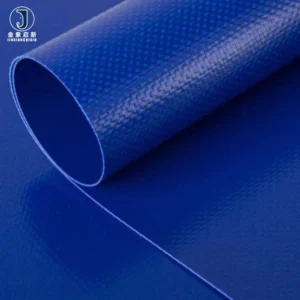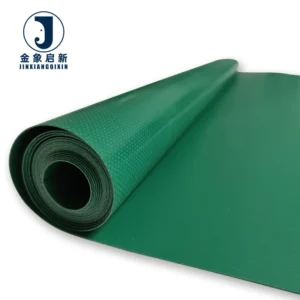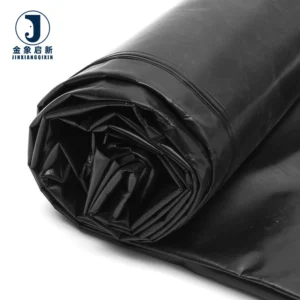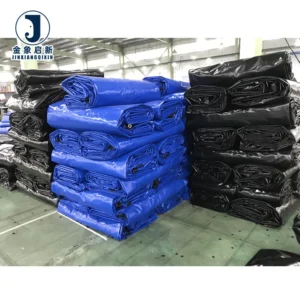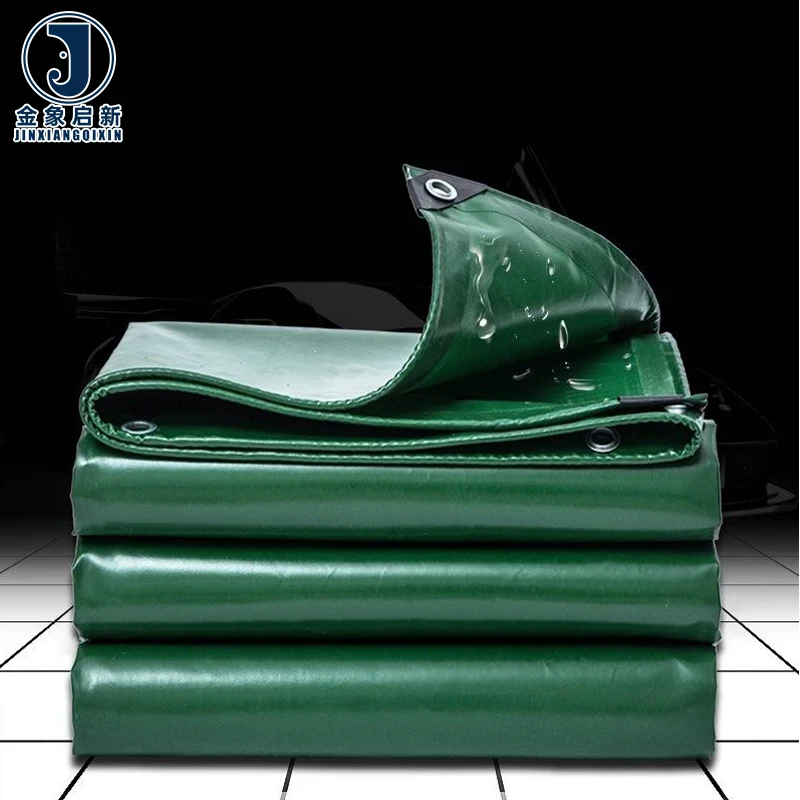
Process-Controlled Coating — Deep control over coating weight and adhesion across three full production lines ensures roll-to-roll consistency for truck and trailer cover applications.
Technical Specifications
| Parameter | Value |
|---|---|
| Product Type | PVC Coated Tarpaulin Roll |
| Material | PVC Coated Polyester Fabric |
| Surface Treatment | Anti-UV, Flame Retardant Options (grade not stated) |
| Finish | Available in Glossy or Matte |
| Assembly State | Roll Form |
| Custom Width | Available |
| Custom Length | Available |
| Key Features | Waterproof, Heavy Duty, Breathable Options |
| Certification | ISO, CE |
Application Suitability
| Application | Exposure & Requirement |
|---|---|
| Truck and Trailer Side Curtains | Constant flexing, road abrasion, weather exposure, secure tie-down at hems |
| Flatbed and Tipper Load Covers | Direct UV, wind flap stress, water ingress prevention, load containment |
| Transport Equipment Fabrication | Weld seam integrity, model-specific fitment, long-term weather resistance |
Why Generic-Size Truck Covers Fail at the Flex Points
A truck cover cut to a generic size that does not match the trailer model causes slack, flapping, and premature seam failure exactly where the load flexes most.
PVC tarpaulin for truck and trailer cover applications must match the exact dimensions of the vehicle. Generic sizing leaves excess material that catches wind, creating repetitive stress at welded seams and eyelet points. Transport fleets replacing covers every few months often find the failure is not the fabric itself but the fit. [NEED_CITE: tension distribution at welded seams on moving loads]
Sizing That Follows the Trailer, Not the Other Way Around
Custom width and length cutting allows each PVC tarpaulin for truck and trailer cover order to match specific trailer model dimensions. This eliminates the slack that causes wind catch and reduces the repetitive stress on seams during transit. Fleet operators specifying covers for mixed fleets benefit from per-model sizing rather than a one-size approach.
Reinforcement Where Road Stress Concentrates
Eyelet spacing and reinforced hem options address the tie-down points where load restraint meets fabric. Heavy-duty construction handles the abrasion that occurs at corners and edges during long-haul transport. The choice between glossy and matte finish affects surface cleanability and how road grime adheres during service. [NEED_CITE: hem reinforcement requirements for transport tie-down systems]
Reading the Spec Sheet Beyond Weight Alone
GSM indicates the mass per square metre but does not independently define tensile or tear performance. The base fabric denier and weave density work together with the coating weight to determine how the material behaves under load. A heavier coating on a low-density base fabric may add weight without proportional strength gain, which is why reviewing both the base fabric construction and the coating specification together provides a more accurate picture of field performance.
Coating adhesion method influences how well the PVC layer bonds to the polyester base during welding and flexing. Strong adhesion prevents delamination at welded seams, which is critical for side curtain applications where the fabric folds and unfolds repeatedly. The available anti-UV and flame retardant treatments address specific exposure and compliance needs — confirm the grade required for your market and operating region. [NEED_CITE: ISO 1421 tensile and tear test methods for coated fabrics]
What Happens When Roll Consistency Is Missing
Colour variation between rolls in a single order becomes visible once installed side by side on adjacent trailers or across a fleet. Batch-to-batch colour matching during production prevents this rejection scenario. Similarly, GSM that differs from the quoted value means the material may not perform as expected under load stress. Dedicated QA and QC at every production stage with full inspection before shipment addresses both of these risks before the rolls leave the factory. [NEED_CITE: batch colour consistency standards for coated fabric production]
Why Sourcing Here Supports Fleet Operations
Three full production lines and 36 sets of professional equipment support bulk capacity with reliable on-time delivery for large fleet orders. The 10-person R&D team handles material selection, custom sizing, and sample development so that fitment can be verified before full production runs. A dedicated QA/QC process with 100% pre-shipment inspection catches GSM deviation and colour drift before dispatch. Material specification sheets, test reports for UV and flame-retardant grades where applicable, and pre-shipment inspection records accompany each shipment. Samples for custom requirements are developed within days, allowing transport equipment builders to confirm fitment and weld behaviour before committing to volume.
Documentation & Verification
- Material specification sheet stating GSM, base fabric denier, and coating weight for each PVC tarpaulin for truck and trailer cover roll
- Test reports for anti-UV and flame retardant grades provided when these treatments are specified on the order
- Pre-shipment inspection record confirming roll-to-roll colour and weight consistency before dispatch
- ISO and CE certificates on file and available for compliance review
- Roll packing list with dimensions and roll count for container loading planning
Fabrication, Handling & Storage
- Heat welding parameters should be set according to the PVC coating thickness and finish type to achieve full seam adhesion
- Reinforced hems with specified eyelet spacing distribute tie-down loads across the heavy-duty PVC coated polyester fabric
- Store rolls upright on a flat surface to prevent permanent creasing in the PVC coating layer
- Allow rolls to acclimatise before unrolling in cold conditions to avoid coating stiffness and crease damage
- Use mild detergents compatible with PVC surfaces; avoid solvents that attack the coating on glossy or matte finishes
Planning Your PVC Tarpaulin for Truck and Trailer Cover Order
Specify the trailer model dimensions, preferred eyelet spacing, and whether the cover will be used as a side curtain or a flat load cover. Indicate your target market so that the correct anti-UV or flame retardant grade can be matched to local compliance requirements. Confirm whether you need rolls for in-house fabrication or finished cut-to-size covers ready for fitment.
Frequently Asked Questions
Q: How is truck cover sizing matched to a specific trailer model?
A: Provide the trailer make, model, and year along with measured dimensions for the cover area. Custom width and length cutting ensures the PVC tarpaulin for truck and trailer cover fits without excess slack. Samples are developed for fitment verification before full production, reducing the risk of wind catch and seam stress on the finished vehicle.
Q: What eyelet spacing and hem reinforcement options are available?
A: Eyelet spacing can be specified to match your tie-down system, with reinforced hems added at stress concentration points. The heavy-duty PVC coated polyester fabric handles the load at these fixation points. Confirm the spacing and reinforcement type during the sample stage so the final production matches your fleet’s restraint hardware.
Q: How is colour consistency maintained across rolls in one order?
A: Batch colour matching is controlled during production, and the pre-shipment inspection verifies consistency across all rolls before dispatch. This prevents visible colour drift when multiple PVC tarpaulin for truck and trailer cover rolls are installed on adjacent vehicles. The inspection record accompanies the shipment as documented proof.
Q: What lead time and minimum apply to custom width or size?
A: Lead time and minimum order depend on the custom width, colour, and finish selected. Custom sizing is supported across the production lines, and samples are developed within days for approval. Confirm your required dimensions and annual volume during inquiry so an accurate schedule can be provided for your fleet or fabrication programme.
Q: How are welded seams tested at high-flex points?
A: Welded seam strength is verified through pre-shipment inspection as part of the 100% quality check. This targets the high-flex areas where side curtain and load cover fabric undergoes repeated folding during service. The inspection record documents the results, providing assurance that seams will perform under road conditions.