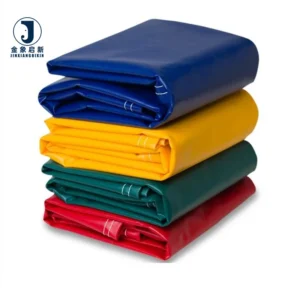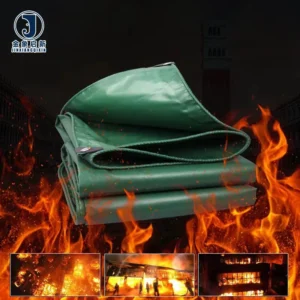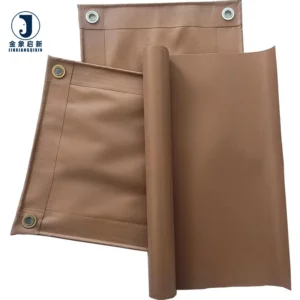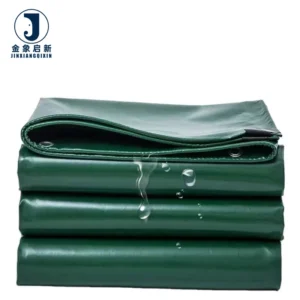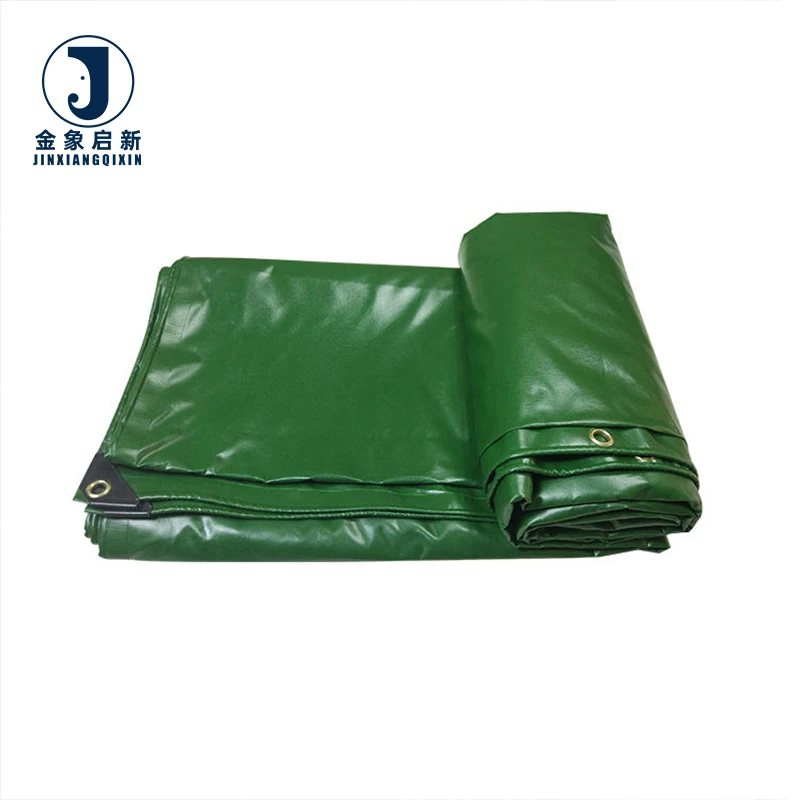
Deep Process Control — Hot-melt coating and lamination technology applied across three full production lines, maintaining consistent adhesion and GSM from first roll to last for truck and transport covering applications.
Technical Specifications
| Parameter | Value |
|---|---|
| Product Type | PVC Coated Fabric |
| Material | PVC + High-strength polyester mesh fabric |
| Coating Method | Laminated technology & Hot-melt Coating technology |
| Weight (GSM) | 350gsm / 420gsm / 500gsm / 550gsm / 600gsm / 750gsm (available in these grades — confirm the grade required for your application) |
| Total Thickness | 0.32mm / 0.35mm / 0.4mm / 0.45mm / 0.5mm / 0.65mm |
| Roll Width | 2m / 2.1m |
| Roll Length | 75m (for 2m width) / 50m (for 2.1m width) |
| Color | Blue / Red / Yellow / Light blue / Grey / Green (Customized) |
| Key Features | Waterproof, sunproof, anti-mildew, cold crack resistance, anti-static treatment, outstanding tearing strength for welding, good flexibility and adhesion strength, color fastness |
| Flame Retardant | Grade not stated — available in flame retardant grades, confirm the grade required for your market |
| Service Life | 3–7 years under normal circumstances (manufacturer stated value — verify against your exposure conditions) |
| Finish Product Size | Custom items as per customer’s needs, or sold by inventory |
| Custom Printing | Accepted |
| Standards | ISO 14001, ISO 45001, CE, RoHS |
Application Suitability
| Application | Exposure & Requirement |
|---|---|
| Dump truck tarpaulin | Constant load flexing, road debris abrasion, UV and rain exposure, tie-down tension at reinforced edges |
| Side curtain trailer cover | Daily roll-up and drop-down cycles, wind flutter at highway speed, repeated fold-line stress |
| Flatbed cargo cover | Multi-point abrasion against load edges, weather exposure during transit, ratchet strap pressure |
| Truck awning | Prolonged sun exposure, water pooling on horizontal surfaces, mildew risk in humid climates |
| Emergency rain shelter | Rapid deployment, ground contact abrasion, standing water, short-term high-wind tension |
What a Generic-Size PVC Coated Truck Tarpaulin Costs You on the First Highway Run
A truck cover cut to a standard size that does not match your trailer model leaves edges flapping, cargo exposed, and fabric tearing at the first flex point.
When fleet operators order PVC coated truck tarpaulin for transport from catalogue sizes rather than vehicle-specific dimensions, the consequences show up fast. Excess material bunches at the corners, creating pockets where water collects and wind catches. Undersized covers leave the rear or top edge of the load open to rain ingress. I have seen transport companies reorder within the first quarter because the initial batch simply could not survive the flex cycle of a loaded tipper body. The real cost is not the replacement cover — it is the damaged cargo, the delayed delivery, and the credibility lost with a shipper [NEED_CITE: cost of cargo damage from inadequate load covering in road transport].
Custom Fitment Over Catalogue Dimensions
Every trailer body and dump truck has specific dimensions — body length, internal width, drop-side height, and tie-down rail position. Ordering PVC coated truck tarpaulin for transport by generic roll width means someone on your loading dock is cutting, folding, and improvising every time a cover goes on. Model-specific sizing eliminates that variability. The cover is hemmed to the exact body perimeter, with eyelet or D-ring spacing matched to the anchor points already welded to your chassis. This is the difference between a cover that a driver can throw on in two minutes and one that takes ten minutes and still does not sit right.
Welded Seams Where the Load Actually Flexes
The highest stress on a truck cover is not the flat panel — it is the seam where two panels join across a fold or corner. A tipper body flexes every time it lifts and drops; a side curtain billows and snaps with every crosswind on the highway. Hot-melt coating technology delivers the adhesion strength needed for hot-air welding at these joints, so the seam holds as long as the surrounding fabric. Laminated construction adds a secondary bond layer that resists delamination under repeated thermal cycling. When you specify PVC coated truck tarpaulin for transport, the welding performance of the seam zone is as critical as the base fabric tensile strength [NEED_CITE: hot-air weld peel strength test methods for PVC coated polyester per ISO 1421].
Reading the Specification Sheet Beyond the GSM Number
Weight per square metre tells you how much material is present, but it does not tell you what that material is doing. A 500gsm fabric built on a low-denier, loose-weave base mesh may weigh the same as a 500gsm fabric built on a high-tenacity, tight-weave polyester mesh, but the tearing strength and weld-zone integrity will differ significantly. Coating method matters equally: hot-melt coating drives the PVC into the mesh interstices under heat and pressure, producing higher adhesion and better weld receptivity than simple lamination. Thickness readings should be evaluated alongside GSM — a thicker coating does not automatically mean a stronger fabric if the base mesh is underspecified. The balance between base fabric denier, weave density, coating weight, and total GSM is what determines real-world performance on a truck body.
The Hidden Cost When Specs Are Not Verified Before Dispatch
I have seen situations where a transport fleet received a full order of covers that felt lighter on the hand than expected. Without a pre-shipment weight sample, there is no baseline to dispute until the covers start failing months early. Batch color variation is another issue: when one roll is noticeably lighter than the next and both are installed on adjacent trailers in the same fleet, the visual inconsistency reflects poorly on the operator. Covers ordered with a flame retardant requirement but delivered without supporting test documentation get rejected at sites that audit compliance [NEED_CITE: site safety audit requirements for flame retardant materials in transport and construction]. These are not quality problems that show up in a sample — they only surface at volume, which is why 100% pre-shipment inspection and documented verification matter.
Why Source This PVC Coated Fabric Here
Three full production lines and 36 sets of professional equipment run dedicated batches, so your PVC coated truck tarpaulin for transport order is not squeezed between unrelated product runs. A 10-person R&D team handles pattern printing, custom sizing, and sample development, producing fitment samples within days rather than weeks. Dedicated QA/QC runs at every production stage with 100% inspection before shipment — every roll is weighed and checked against the specification sheet. Hot-melt coating and laminated technology are controlled in-house, giving consistent adhesion for downstream welding and fabrication. ISO 14001 and ISO 45001 certified processes ensure that environmental and safety management are documented, not just claimed.
Documentation & Verification
- Material specification sheet stating GSM, base fabric construction, coating method, and color reference for every roll
- Pre-shipment weight verification confirming actual GSM matches the quoted grade
- Pre-shipment inspection record covering visual defects, dimensional accuracy, and weld-zone sampling
- Roll packing list with individual roll weights, dimensions, and batch identification
- UV and flame retardant test reports provided where applicable grades are specified
- Certificate of origin and customs documentation included with every export shipment
Fabrication, Handling & Storage
- Hot-air weld temperature and speed settings should be calibrated to the specific coating method — hot-melt coated fabric typically welds at a narrower temperature window than laminated grades
- Eyelet and D-ring reinforcement zones benefit from an additional fabric patch layer, especially on the heavier GSM grades used for dump truck applications
- Store rolls upright on pallets in a dry, shaded area to prevent permanent creasing and surface marking on the coated face
- Allow cold-stored rolls to reach ambient temperature before unrolling and cutting to prevent cracking along fold lines
- Clean with mild detergent and water only — solvent-based cleaners may attack the PVC coating and compromise color fastness
- Field repairs on small tears are possible by hot-air welding a patch of matching PVC coated fabric over the damaged area
What to Include in Your Enquiry
Specify your exact vehicle model, body dimensions, and whether you need finished covers or roll stock for your own fabrication line. Confirm the GSM grade, color, and any custom printing requirements for fleet branding. If your route or operating site mandates a specific flame retardant or anti-static certification, state the standard and issuing body so the correct grade can be quoted with supporting test documentation.
Frequently Asked Questions
Q: How do you verify GSM on arrival matches the quotation?
A: Every roll undergoes weight verification during our 100% pre-shipment inspection. A pre-shipment weight sample and material specification sheet stating the confirmed GSM, base fabric, and coating details are provided before dispatch, giving you a documented baseline to compare against on receipt.
Q: Can truck covers be cut to fit specific trailer models rather than generic sizes?
A: Yes. We cut and hem covers to exact trailer body dimensions — length, width, and drop-side height — with eyelet spacing matched to your tie-down rail configuration. Provide the vehicle model and body measurements, and we develop a fitment sample before production begins.
Q: How do welded seams hold up at high-flex load points?
A: Hot-melt coating and laminated technology deliver strong adhesion between the PVC coating and the polyester mesh base. This adhesion strength supports reliable hot-air welding at seam zones, so the weld resists peeling and delamination even at the flex points where a tipper body or side curtain cycles repeatedly.
Q: What custom color and fleet branding print options are available?
A: Standard colors include blue, red, yellow, light blue, grey, and green, with custom colors available on request. Custom printing for fleet branding and logos is accepted. Batch color consistency is controlled across rolls within the same production run to ensure uniform appearance across your fleet.
Q: What is the batch color consistency across multiple covers in one order?
A: All covers in a single order are produced from the same coating batch, with dedicated QA/QC checking color reference at every production stage. This controlled process minimizes visible variation between covers installed side by side on adjacent vehicles in the same fleet.