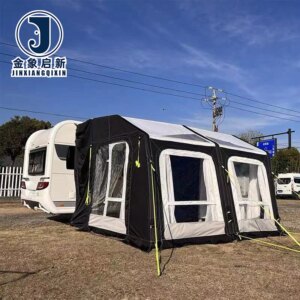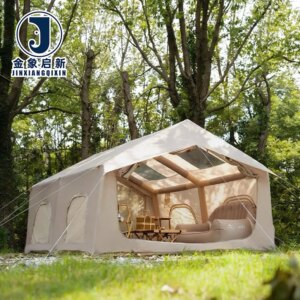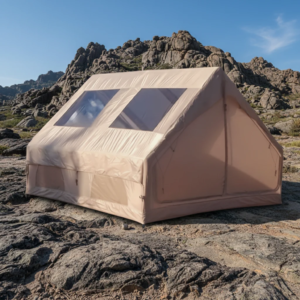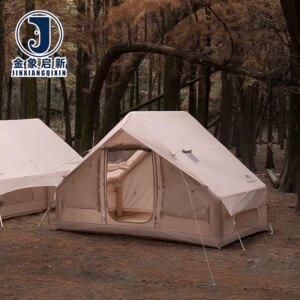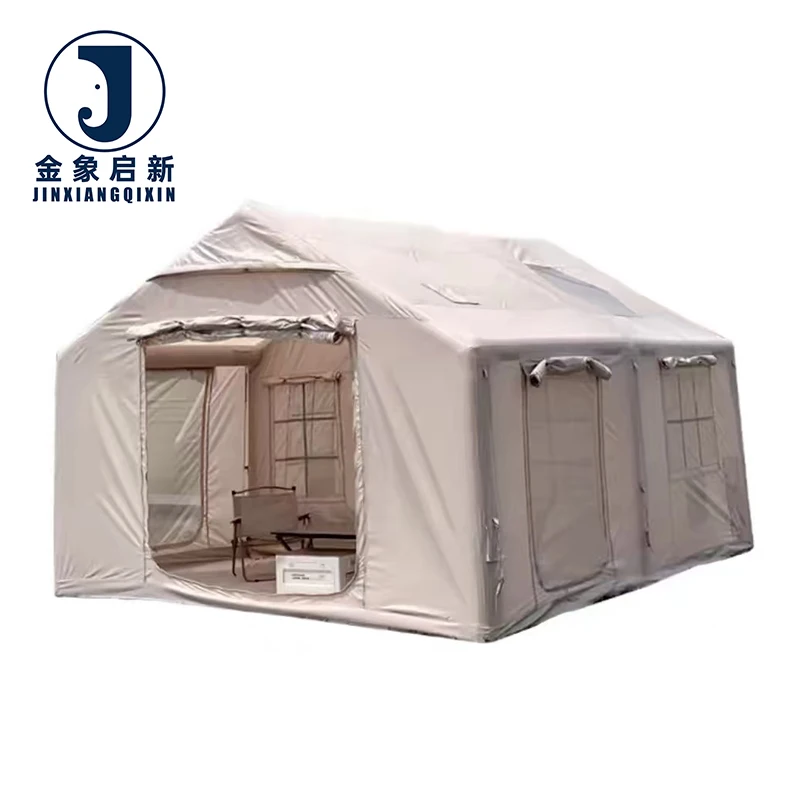
Rapid-Deploy Inflatable Shelter — This inflatable tent for truck and transport application is fabricated from tear-resistant PVC tarpaulin with automatic inflation, designed for fleet and construction crews who need immediate weather protection without manual tarpaulin rigging.
Technical Specifications
| Parameter | Value |
|---|---|
| Product Type | Inflatable Tent |
| Core Material | PVC tarpaulin |
| Capacity | 3-5 person |
| Design | Four-season, single layer construction, extended type |
| Key Performance | Waterproof, tear-resistant, automatic inflatable |
| UV Protection | Available — confirm the test basis required for your target exposure duration |
| Customization | OEM & ODM, sample customization, pattern printing |
| Certifications | ISO9001, ISO14001, ISO45001, CE |
Application Suitability
| Application | Exposure & Requirement |
|---|---|
| Fleet roadside breakdown shelter | Wind flex, road-side debris abrasion, rapid deployment needed in minutes |
| Remote construction equipment cover | Prolonged UV exposure, dust ingress, puncture risk from site materials |
| Emergency disaster relief workspace | Multi-day continuous outdoor exposure, temperature swings, repeated inflation cycles |
| Industrial maintenance temporary enclosure | Chemical splash resistance, waterproof integrity, crew access and ventilation |
Why Fabric Weight Alone Misleads Transport Shelter Buyers
Coating adhesion and base fabric weave density determine real-world performance more than any single GSM number.
When a transport fleet orders emergency shelters for roadside repairs, the tent faces repeated inflation stress, wind-driven flexing at seams, and abrasion from gravel and site debris. A lightweight PVC tarpaulin may read adequately on a spec sheet yet fail at the welded seams where the inflatable structure concentrates stress. I have seen transport operators replace shelters mid-season because the seam lines split under lateral wind load while the fabric body remained intact [NEED_CITE: tensile and tear test methods for coated fabrics per ISO 1421]. The inflatable tent for truck and transport application must balance base fabric denier with coating penetration to survive these compound stresses.
Inflation Speed and Crew Productivity on Active Sites
Traditional tarpaulin shelters require multiple crew members to rig poles, tension guy lines, and secure stakes — a process that pulls workers away from the actual repair or maintenance task. This automatic inflatable design deploys in a fraction of that time, allowing a single operator to establish a weather-sealed workspace while the rest of the crew continues their primary assignment. For fleet maintenance teams responding to breakdowns on highway shoulders, those saved minutes directly reduce exposure to traffic hazards.
Tear Resistance Under Industrial Wind and Debris Conditions
PVC tarpaulin construction provides a continuous coated surface that resists puncture from flying gravel, tool drops, and contact with sharp equipment edges. Unlike woven covers that can unravel once a yarn breaks, the coated structure contains damage locally. The four-season single-layer design keeps the shelter light enough for transport crews to carry in a service vehicle while maintaining sufficient tear resistance for sustained outdoor deployment [NEED_CITE: coated fabric tear propagation testing standards].
How Material Choices Shape Inflatable Shelter Performance
The PVC coating method determines how well the inflatable tubes hold pressure over extended deployment. A coating that penetrates the base fabric weave creates a mechanical lock between yarn and polymer, reducing the chance of delamination when the tubes flex repeatedly under wind gusts. Single-layer construction trades insulation for weight savings — a deliberate choice for transport applications where the shelter must fit inside a service truck alongside tools and spare parts. The waterproof coated surface also serves as the primary barrier against rain ingress, eliminating the need for a separate groundsheet or rainfly that would add pack volume and setup complexity. UV protection treatment extends the service life of the PVC surface when the shelter remains deployed for consecutive days at construction staging areas — buyers should confirm the specific test basis that matches their regional outdoor exposure conditions.
The Cost of Specifying Inflatable Shelters Without Verifying Seam Integrity
Transport operators who source emergency shelters based solely on capacity rating and price often discover failures at the most predictable point: the welded seams where inflatable tubes connect to the shelter body. Under wind load, these junctions experience concentrated stress that exceeds the load on flat fabric panels. When the coating adhesion is insufficient or the welding temperature was set incorrectly during fabrication, the seam peels apart while the surrounding PVC tarpaulin remains undamaged. This failure mode is particularly costly because it renders the entire shelter unusable in the field — a crew cannot patch a structural seam split with tape or adhesive under roadside conditions [NEED_CITE: heat welding parameters and peel strength for PVC coated fabrics].
Why This Inflatable Tent Suits Transport and Fleet Procurement
Three full production lines and 36 sets of professional processing equipment support batch consistency across multiple shelter orders placed throughout a fleet expansion cycle. A 10-technician R&D team handles pattern printing and size adjustments when a transport operator needs shelters branded with fleet identification or sized for specific equipment maintenance bays. Dedicated QA and QC staff conduct full-process inspection, verifying coating weight and seam integrity before each shelter leaves the facility. ISO9001, ISO14001, ISO45001, and CE certifications accompany shipments, providing the documentation that fleet procurement departments require for vendor qualification. Sample development within days allows buyers to evaluate inflation performance and material hand-feel before committing to bulk production volumes.
Documentation & Verification
- Material specification sheet listing PVC tarpaulin grade, coating type, and colour reference per batch
- UV protection test report matched to the specific production run and exposure duration claimed
- ISO9001, ISO14001, ISO45001, and CE certificates included in the shipment documentation package
- Pre-shipment inspection record confirming seam weld integrity and inflation pressure test results
- Roll and cut-size packing list with unit count, net weight, and pallet configuration for customs clearance
Fabrication, Handling & Storage
- Weld seams at inflatable tube junctions using temperature-controlled hot air to match the PVC tarpaulin coating melt point
- Store deflated and folded in dry conditions below direct sunlight to prevent surface coating tackiness
- Clean with mild detergent and soft cloth — avoid solvent-based cleaners that degrade the PVC coating layer
- Inspect valve fittings before each inflation cycle to ensure airtight seal integrity at connection points
- Repair minor punctures with PVC-compatible adhesive patches applied to clean, dry surface areas
What We Need to Quote Your Inflatable Shelter Requirement
Provide your target capacity per unit, annual volume estimate, and the primary deployment environment — whether highway roadside, remote construction camp, or disaster staging area. Specify any pattern printing or branding requirements, along with colour preferences for the PVC tarpaulin surface. Confirm whether your market mandates specific UV protection or fire classification documentation so we can align the material test basis before sampling begins.
Frequently Asked Questions
Q: How is UV protection validated for prolonged outdoor deployment of these inflatable shelters?
A: UV protection treatment is applied during the PVC coating process, but the specific test basis must be confirmed against your target exposure duration and regional climate conditions. Request the test report matched to your production batch, which documents the exposure hours and degradation thresholds measured under standardized conditions. This allows your technical team to evaluate whether the protection level meets your deployment cycle requirements.
Q: What customization options exist for fleet-specific inflatable tent requirements?
A: Custom sizing beyond the standard 3-5 person capacity is available, along with pattern printing for fleet identification or safety markings. OEM and ODM services cover material grade selection, colour specification, and structural modifications. Sample development typically takes days, allowing your procurement team to evaluate inflation performance, seam strength, and surface finish before authorizing mass production.
Q: How does the automatic inflatable mechanism perform under wind and weather stress?
A: The inflatable tube structure distributes wind load across the entire shelter frame rather than concentrating stress at pole connection points as rigid-frame tents do. PVC tarpaulin construction provides sufficient rigidity when inflated to resist lateral wind pressure typical of open construction sites and roadside environments. The single-layer four-season design maintains structural stability across temperature ranges encountered during year-round transport operations.
Q: What certifications and inspection documents accompany each inflatable tent shipment?
A: Each shipment includes ISO9001, ISO14001, ISO45001, and CE certificates alongside a pre-shipment inspection record documenting seam weld tests and inflation pressure verification. A material specification sheet details the PVC tarpaulin grade and coating parameters for your batch. Certificate of origin and customs documentation are prepared to support international freight clearance without delays.
Q: How are tear resistance and seam integrity verified during production?
A: Full-process QA and QC inspection covers coating adhesion, base fabric integrity, and welded seam strength at each production stage. The 100% pre-shipment inspection includes inflation pressure testing to confirm that tube seams hold under sustained internal pressure. Any unit showing seam separation or coating delamination is rejected before packing, ensuring that only structurally verified shelters reach your site [NEED_CITE: pre-shipment inspection protocols for inflatable PVC structures].