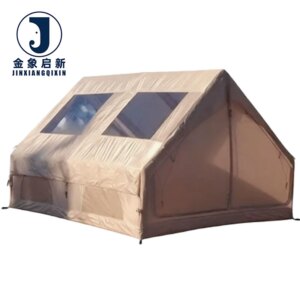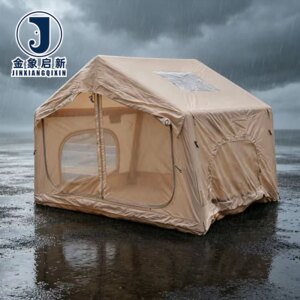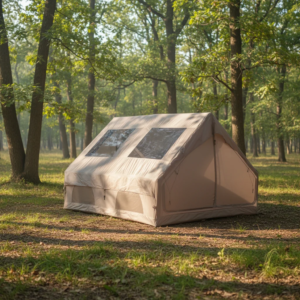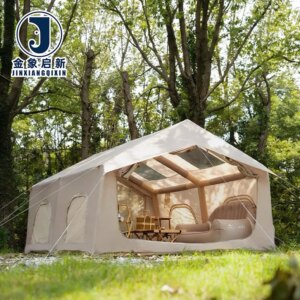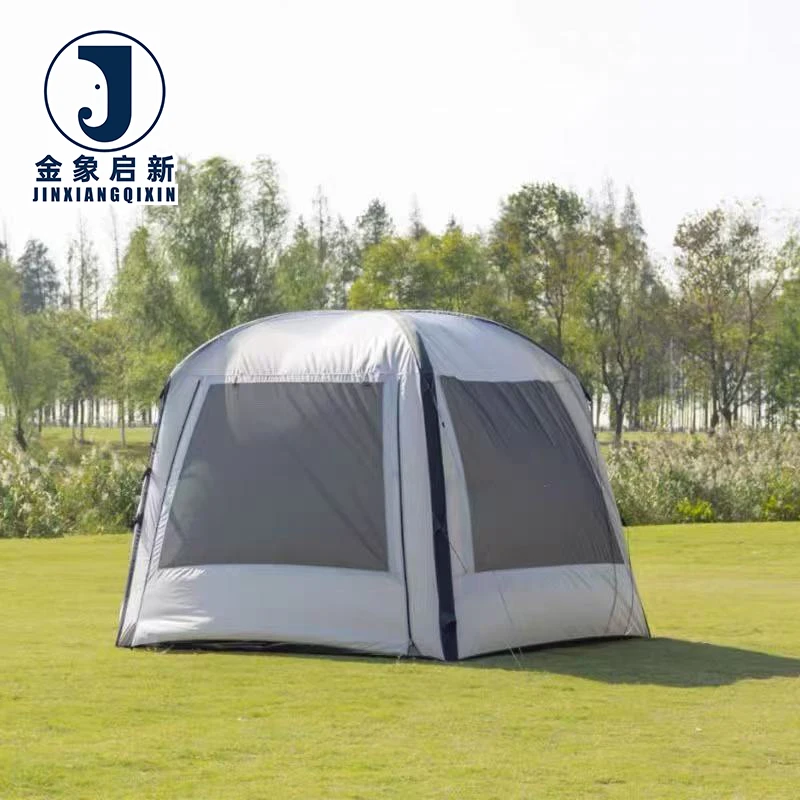
Coated Fabric Process Control — Deep expertise in PVC coating weight and adhesion management ensures every inflatable tent fabric roll meets consistent waterproof and structural requirements across your entire project order.
Technical Specifications
| Parameter | Value |
|---|---|
| Product Type | Inflatable Tent |
| Core Material | PVC Tarpaulin |
| Product Forms | Automatic Inflatable 3-5 Person Camping Shelter |
| Waterproofing | Fully coated waterproof construction |
| UV Resistance | UV-resistant treatment available — confirm grade required for your market |
| Fire Retardancy | Fire-retardant grades available — confirm the grade required for your market |
| Anti-Static | Anti-static treatment available — confirm surface resistance standard required |
| Tear Resistance | Tear-resistant PVC coated fabric |
| Customization | OEM & ODM including sample customization, pattern printing, material selection, product design |
| Quality Control | Full-process inspection with dedicated QA & QC staff |
| Certifications | ISO 9001, ISO 14001, ISO 45001, CE |
Application Suitability
| Application | Exposure & Requirement |
|---|---|
| Construction site temporary shelters | Continuous weather exposure, abrasion from site debris, rapid deployment between phases |
| Mining camp accommodations | Dust ingress, heavy wind loads, fire safety compliance on regulated sites |
| Logging site personnel shelters | Moisture saturation, fallen branch impact, seasonal temperature extremes |
| Emergency response base camps | Frequent inflation and deflation cycles, transport abrasion, multi-climate deployment |
| Industrial event pavilions | Public safety compliance, branding visibility, high foot traffic wear at entry points |
| Outdoor equipment storage facilities | UV degradation from prolonged sun exposure, condensation management, wind uplift resistance |
Why Fabric Consistency Matters More Than Stated Specifications on Inflatable Tent Orders
Batch-to-batch variation in coating weight and treatment concentration is the reason identical-looking inflatable tent fabric performs differently across production runs.
When procurement teams specify an Inflatable Tent for truck and transport or commercial outdoor deployment, the quoted material often arrives with subtle differences in PVC coating thickness, UV stabiliser loading, or fire-retardant chemical concentration that are invisible at receiving inspection but surface after weeks of field exposure [NEED_CITE: tensile and tear test methods for coated fabrics per ISO 1421]. Panels from different rolls may show visible colour shifts once installed side by side on a multi-unit camp layout. Welded seams on under-treated fabric fail at flex points during inflation cycles, while correctly coated material holds through the same stress. The cost of replacing a single failed shelter mid-project outweighs the savings from accepting unverified material on the initial order.
Coating Uniformity Across the Inflatable PVC Tent Envelope
An Inflatable PVC Tent for commercial outdoor use depends entirely on the air-holding integrity of its coated envelope. The PVC tarpaulin base fabric must maintain uniform coating adhesion across every panel so that inflation pressure does not create delamination at seam junctions. Our 3-line production facility applies coating under controlled tension and temperature, addressing the adhesion inconsistency that causes field failures in rapidly deployed shelters. Each roll undergoes in-process QA checks before it reaches the fabrication stage.
Welded Seam Behaviour Under Repeated Inflation Cycles
Stitched seams on inflatable structures create needle holes that compromise waterproofing and concentrate stress at every puncture point. Hot-air or high-frequency welding fuses the PVC layers into a continuous bond that flexes with the structure rather than against it. The 36 sets of professional processing equipment in our facility handle both flat-panel welding and complex three-dimensional joint geometry found in inflatable tent valve surrounds and structural rib intersections [NEED_CITE: high-frequency welding parameters for PVC coated fabrics]. This welded construction directly addresses the flex-point failures that cut short the service life of stitched alternatives.
Reading Beyond the Specification Sheet for Inflatable Tent Fabric
GSM alone does not determine how a PVC tarpaulin will perform as inflatable tent fabric. The base fabric denier and weave density work together with coating weight to produce the final tensile and tear values — a lighter coating on a high-density base may outperform a heavier coating on a loose weave in tear propagation resistance. The coating method influences peel strength at welded joints: knife-coated fabrics typically deliver stronger weld adhesion than laminated constructions because the coating penetrates the base yarns rather than sitting on the surface. Surface finish selection matters for downstream fabrication; matte finishes provide better ink adhesion for printed branding, while glossy finishes shed dirt more effectively in dusty mining or construction environments. Fire-retardant grades must align with the regulatory framework of the destination market, as different regions reference different test standards for temporary structures. Anti-static treatment concentration affects surface resistivity, which is critical for compliance in regulated mining and aviation environments where spark ignition is a hazard.
The Hidden Cost of Specifying Inflatable Tent Material on Price Alone
Accepting the lowest GSM quotation without verifying coating adhesion or treatment loading leads to predictable downstream consequences. Under-coated fabric delaminates at welded seams during the first inflation cycle in cold weather, when PVC stiffens and joint stress increases. Fire-retardant chemicals applied below the concentration needed for certification cause shelters to fail site safety audits, forcing emergency replacement orders at premium lead times [NEED_CITE: fire classification standards for temporary structures and tents]. UV stabiliser depletion in under-treated panels manifests as surface chalking and embrittlement, requiring full camp replacement within a single season rather than lasting through the project duration. Colour variation between rolls delivered on the same order forces installers to sort and match panels, adding unplanned labour hours before the first shelter is inflated.
What Supports Consistent Inflatable Tent Supply Beyond the Quotation
Material selection starts with a 10-technician R&D team that evaluates base fabric construction and coating formulation against your specific deployment conditions rather than defaulting to stock grades. Three full production lines provide capacity to deliver multi-unit camp orders within a single production window, reducing the batch variation that occurs when orders are split across time. A 100 percent pre-shipment inspection protocol checks coating weight, colour consistency, and weld integrity on every unit before dispatch. Sample development within days allows you to verify material hand-feel, inflation behaviour, and print registration before committing to full production volume. Full documentation accompanies each shipment, providing the traceability your site compliance team requires for audit readiness.
Documentation & Verification
- Material specification sheet confirming PVC coating weight, base fabric denier, and treatment types per order line
- Fire-retardant and anti-static test reports matching the grade specified for your site compliance requirements
- Pre-shipment inspection record with waterproof testing and inflation pressure check results for each unit
- ISO 9001, ISO 14001, ISO 45001, and CE certificate copies included in the shipment documentation package
- Roll packing list with batch numbers linking each inflatable tent unit to its production run
- Certificate of origin and customs documentation prepared for international shipment clearance
Fabrication, Handling & Storage
- Hot-air welding temperature must match the PVC coating formulation to achieve full peel strength at seam junctions
- Store rolled fabric upright on pallets to prevent permanent creasing that weakens the coated surface at fold lines
- Deploy cold-stored inflatable tents gradually — PVC stiffens at low temperatures and forced inflation stresses welded joints
- Clean with mild detergent only; solvent-based cleaners degrade the PVC surface and strip UV stabiliser from the coating
- Field repairs require compatible PVC adhesive and patch material matched to the original coating weight and finish
Before You Request a Quote on Inflatable Tent Fabric
Tell us the deployment environment and the regulatory framework your site operates under, including any fire-retardant or anti-static standards referenced in your project specification. Confirm whether you need finished inflatable units with valve fittings and carry bags, or fabric rolls for your own fabrication line. Specify your colour references, any printed branding requirements, and the approximate order volume so we can plan production scheduling and batch allocation accordingly.
Frequently Asked Questions
Q: How is batch-to-batch colour and performance consistency ensured across large inflatable tent orders?
A: Every production run is monitored by dedicated QA and QC staff at each stage from coating to final inspection. Coating weight, colour reference, and treatment concentration are measured and recorded per batch. This ensures that all units shipped against a single purchase order match in appearance and performance, eliminating visible panel variation during multi-unit camp installation.
Q: What fire-retardant grade and UV test basis can be provided for site compliance?
A: Fire-retardant and UV-resistant treatments are available in multiple grades. We supply the test report matching the grade specified on your order, so your site safety team can verify compliance against local regulations. Confirm the exact standard or classification your market requires during the inquiry stage so the correct formulation is applied.
Q: What custom sizing, printing, and material options are available for inflatable tents?
A: Our R&D team handles OEM and ODM requirements including adjusted dimensions, material thickness selection, and pattern printing. Samples are developed within days for your review and approval before bulk production begins. This step ensures sizing accuracy, print registration, and material suitability are verified before your full order enters the production line.
Q: How does the pre-production sample and approval process work?
A: After you confirm your application requirements and specification preferences, we produce a sample using the exact material and construction intended for your bulk order. You evaluate inflation behaviour, seam integrity, colour accuracy, and print quality. Production only proceeds after you approve the sample, preventing costly rework on the full order.
Q: What documentation accompanies each inflatable tent shipment for audit purposes?
A: Each shipment includes a material specification sheet, relevant test reports for fire-retardant and anti-static grades, pre-shipment inspection records with waterproof and pressure test results, ISO and CE certificate copies, a batch-linked packing list, and certificate of origin. This documentation package supports site compliance audits and procurement traceability requirements.