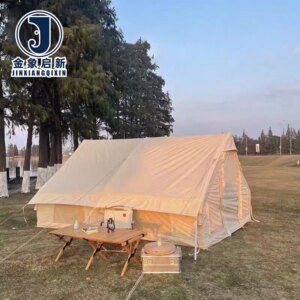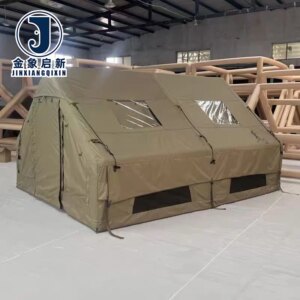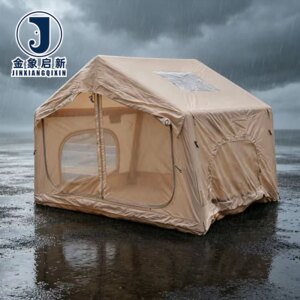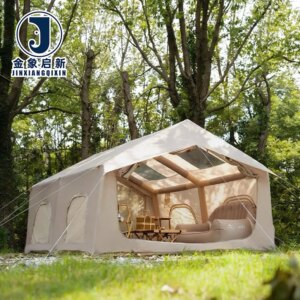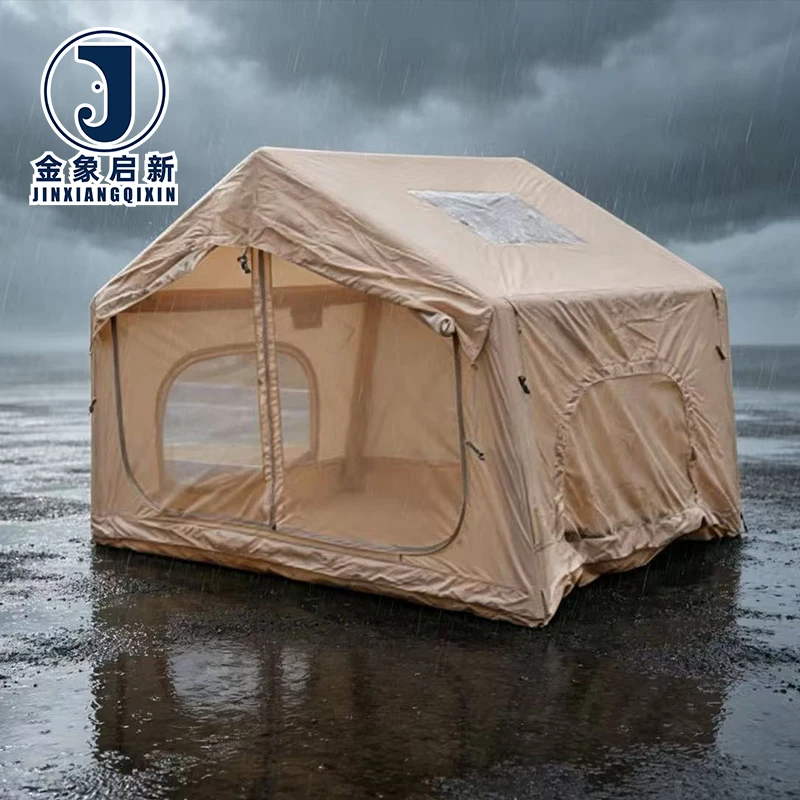
Rapid Deployment Shelter — Engineered with waterproof, UV-resistant PVC fabric and quick auto-opening capability, this inflatable camping tent delivers reliable temporary cover for transport staging areas and commercial outdoor operations where setup time directly impacts fleet scheduling.
Technical Specifications
| Parameter | Value |
|---|---|
| Product Type | Inflatable Tent |
| Core Material | Waterproof UV-Resistant PVC Fabric |
| Product Forms | Inflatable Camping Tent |
| Key Performance | Waterproof, UV-Resistant, Quick Auto Opening |
| UV Treatment | UV-Resistant (test basis not stated in source) |
| Waterproof Rating | Waterproof (grade not stated in source) |
| Flame Retardant Grade | Not stated in source |
| Customization Service | OEM & ODM (sample customization, pattern printing) |
| Certifications | ISO9001, ISO14001, ISO45001, CE |
| Quality Control | Strict full-process inspection with dedicated QA & QC staff |
Application Suitability
| Application | Exposure & Requirement |
|---|---|
| Transport fleet staging areas | Continuous weather exposure, vehicle access clearance, rapid setup between shift changes |
| Construction site temporary storage | Rain and wind loading, dust ingress prevention, equipment protection across multi-week projects |
| Mobile field stations for engineering projects | Remote terrain deployment, four-season temperature variation, repeated inflation and deflation cycles |
| Commercial outdoor event shelters | High foot traffic around anchor points, UV exposure over multi-day events, branded appearance |
When "Waterproof" and "UV-Resistant" Lack the Test Data to Back Them Up
Procurement teams need verifiable test reports, not marketing adjectives, before signing off on shelter fabric for fleet and site operations.
A recurring frustration across industrial procurement is receiving tent fabric described as waterproof and UV-resistant with no supporting test documentation. When the Inflatable Tent aftermarket supplier lists performance claims without referencing a standard or grade, buyers have no way to confirm the shelter will hold up through a full season of outdoor staging. Inflatable camping tent for transport fleet deployments must withstand rain ingress at seams and UV degradation across weeks of direct sunlight — yet the test basis for both waterproof rating and UV treatment remains unstated in the current specification. Buyers should request the specific test method and result before approving material for their project. [NEED_CITE: coated fabric tensile and tear test methods per ISO 1421]
How Quick Auto Opening Changes Staging Efficiency
The quick auto opening mechanism eliminates the manual pole assembly that typically consumes significant crew time at transport hubs and logistics staging zones. For fleet operators running tight turnaround schedules, an inflatable camping tent that deploys in minutes rather than hours directly reduces idle time for drivers and ground staff. The PVC fabric structure inflates to full form using a compatible air pump, holding shape through internal air beam architecture rather than rigid frames. This approach removes the risk of bent or lost poles that render conventional shelters unusable mid-project.
Custom Sizing That Matches Your Operational Footprint
Standard tent dimensions rarely align with the exact space a fleet operator or construction contractor needs. OEM and ODM customization allows buyers to specify dimensions, colour references and pattern printing that match fleet branding or site identification requirements. A 10-technician R&D team handles sample development so buyers can evaluate material hand, seam construction and inflation behaviour before committing to a production run. Inflatable camping tent for transport fleet use benefits from this pre-production sampling, catching fit and performance issues before containers ship. [NEED_CITE: fire classification standards for temporary structures and tent fabrics]
Reading the Specification Sheet Beyond Surface Claims
Waterproof PVC fabric performance depends on coating adhesion to the base fabric, not just the presence of a coating layer. The bond between the PVC coating and the woven substrate determines whether the material delaminates under repeated inflation cycles or flexing at anchor points. UV-resistant treatment, where applied, must be verified against a recognised test standard — without that reference, buyers cannot compare this inflatable tent fabric against alternative sources on an equal basis. Flame retardant grades are available across the manufacturer’s coated fabric range, but the specific grade for this inflatable tent product is not stated in the current specification. Confirm the fire classification required for your market and request the corresponding test report before placing a bulk order.
The Cost of Accepting Unverified Material Claims
When a buyer approves an inflatable camping tent order based on general performance language rather than documented test results, the consequences surface after deployment. Fabric that lacks verified UV treatment may show colour shift and surface chalking within a single season of outdoor exposure, forcing premature replacement across an entire fleet staging area. Welded seams on inflatable structures carry internal air pressure continuously — if seam strength has not been tested, failure concentrates at beam junctions where stress is highest. Batch-to-batch inconsistency in coating weight compounds the problem when replacement panels do not match the original shelter in colour or stiffness. [NEED_CITE: coated fabric weld seam strength testing methods]
Why Source This Inflatable Shelter Here
Three full production lines and 36 sets of processing equipment support consistent output volume for repeat orders, reducing the risk of extended lead times on restocking. A dedicated QA and QC team inspects every production stage, with 100% inspection before dispatch — critical when inflatable tent seams must hold air pressure without leakage. Sample development within days allows buyers to test inflation performance, fabric hand and custom print accuracy before committing to mass production. ISO9001, ISO14001, ISO45001 and CE certifications underpin the quality management system. Nearly 30 years of coated fabric process control means the manufacturer understands how coating weight and adhesion behave under the cyclic stress specific to inflatable structures.
Documentation & Verification
- Material specification sheet confirming PVC coating type, base fabric construction and colour reference for each batch
- UV-resistant test report provided upon request with stated test method and result
- ISO9001, ISO14001, ISO45001 and CE certificates included in shipment documentation package
- Pre-shipment inspection record covering seam integrity, inflation test and dimensional check
- Roll packing list and certificate of origin for customs clearance at destination
Fabrication, Handling & Storage
- Heat weld seams using temperature and dwell settings matched to PVC coating thickness to prevent beam failure under pressure
- Store deflated inflatable tent in dry conditions away from direct sunlight to preserve UV-resistant treatment effectiveness
- Avoid folding along the same crease lines repeatedly to prevent coating crack initiation at stress points
- Clean PVC fabric surface with mild detergent only — solvent-based cleaners degrade coating adhesion over time
- Inspect air beam junction seams before each redeployment to catch early delamination signs
What to Include in Your Inquiry
Provide the exact footprint dimensions and intended deployment environment so the technical team can recommend appropriate fabric weight and inflation system specifications. State your market’s fire safety classification requirement if the inflatable camping tent will be used in regulated commercial or public-access settings. Confirm whether you need finished units with pattern printing and branding or blank fabric for your own fabrication. Specify annual volume and reorder frequency to align production scheduling with your project timeline.
Frequently Asked Questions
Q: What customization options are available for size, colour, and branding?
A: OEM and ODM services cover custom dimensions, colour references and pattern printing for fleet identification or event branding. The R&D team develops samples so you can evaluate material, print quality and inflation behaviour before approving mass production. Confirm your exact size and artwork requirements early to allow adequate sampling time.
Q: Which certifications and test reports ship with each batch?
A: Each shipment includes ISO9001, ISO14001, ISO45001 and CE documentation alongside a pre-shipment inspection record. UV-resistant and waterproof test reports are available upon request with the specific test method referenced. Buyers should state their compliance requirements during inquiry so the correct documentation package is prepared before dispatch.
Q: How does the sample approval process work before mass production?
A: Submit your size, colour and performance requirements to receive a sample developed within days. Evaluate inflation performance, seam construction and fabric hand against your deployment conditions. Once the sample is approved, production proceeds with in-process quality checks and 100% pre-shipment inspection to match the approved sample standard.
Q: How is batch-to-batch colour and weight consistency controlled?
A: Dedicated QA and QC staff monitor coating application at each production stage. Material specification sheets confirm coating parameters and colour reference for every batch. Pre-shipment inspection includes visual and measurement checks to ensure consistency across the order, reducing the risk of mismatched panels when multiple inflatable tents are deployed side by side.
Q: What storage and handling practices preserve fabric performance?
A: Store the deflated inflatable tent in a dry, shaded environment to protect the UV-resistant PVC coating from unnecessary exposure. Avoid sharp folds along air beam lines and inspect welded seams before each redeployment. Clean only with mild detergent to maintain coating adhesion and surface integrity over repeated use cycles.