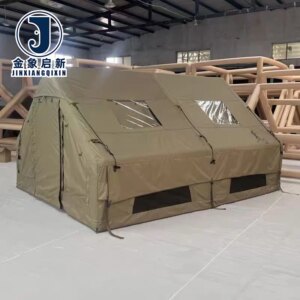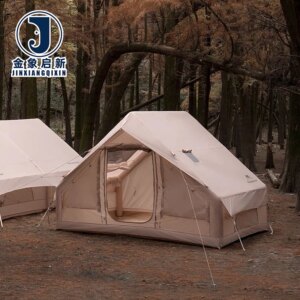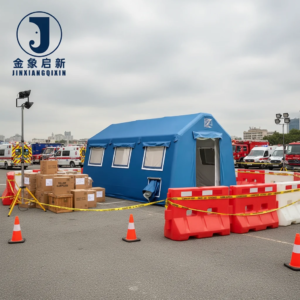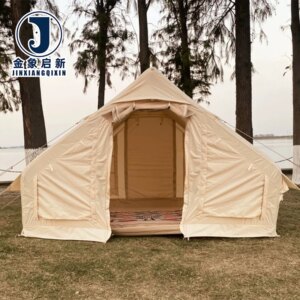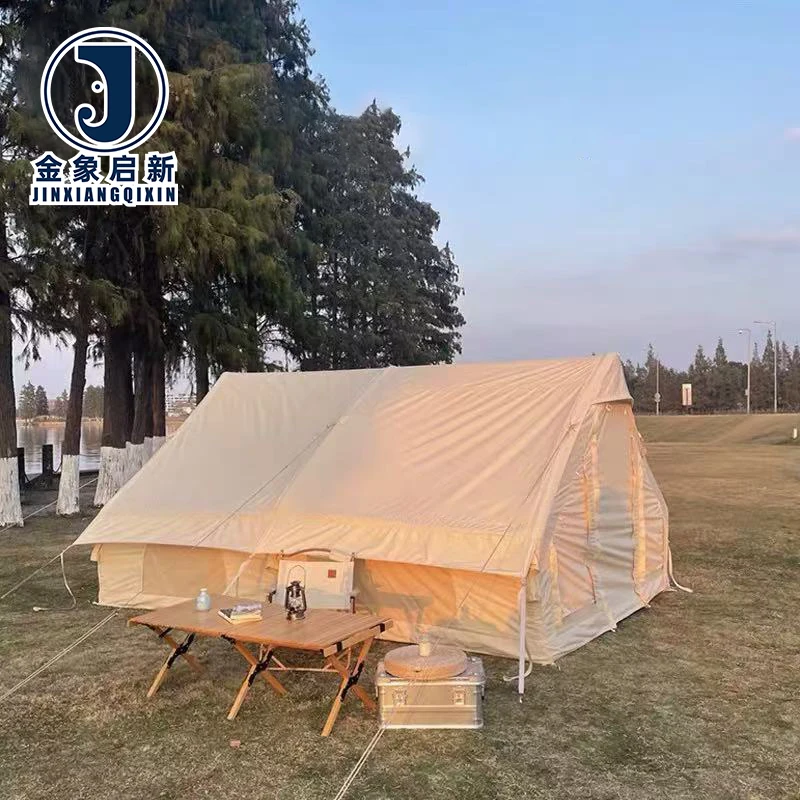
Proven Coating Consistency — nearly three decades focused on PVC coated fabric production, with in-process QA controlling coating weight and adhesion across every roll destined for commercial glamping deployment.
Technical Specifications
| Parameter | Value |
|---|---|
| Product Type | Inflatable Tent |
| Core Material | PVC Tarpaulin |
| Waterproof Performance | Yes (grade not stated) |
| Construction | Single Layer |
| Deployment Mechanism | Quick Automatic Opening |
| Seasonal Rating | Four-Season |
| Customization | OEM & ODM available — sample customization, pattern printing, size adjustment |
| Quality Control | Dedicated QA & QC staff at every production stage with 100% pre-shipment inspection |
| Certifications | ISO9001, ISO14001, ISO45001, CE |
Application Suitability
| Application | Exposure & Requirement |
|---|---|
| Commercial glamping resorts | Continuous weather exposure, guest expectation for aesthetics, rapid seasonal setup and teardown |
| Event management temporary shelters | Short-term deployment across varied terrain, frequent transport, waterproof integrity under rain |
| Expedition base camps | Remote locations with limited repair access, wind loading, temperature fluctuation across seasons |
| Industrial temporary shelters | Worksite dust and debris, mechanical abrasion from equipment movement, extended outdoor standing |
Why Material Batch Consistency Matters More Than the Quoted GSM
A tent that looks different from its neighbour undermines the entire glamping site before a single guest arrives.
When sourcing PVC glamping tents for a commercial operation, buyers often focus on the stated weight and waterproof claim. Yet the disruption rarely comes from a single failed unit. It arrives as colour variation between tents erected side by side, or fabric that feels noticeably thinner on the second batch despite matching paperwork. These inconsistencies force operators to reject shipments, delay site openings, and absorb replacement logistics costs that far exceed the material price difference [NEED_CITE: tensile and tear test methods for coated fabrics per ISO 1421].
What Rapid Deployment Means at Scale
For a glamping resort operator preparing for peak season, the speed at which each inflatable camping tent deploys directly determines how quickly the site becomes revenue-generating. The quick automatic opening mechanism on this PVC glamping tent reduces the on-site labour window, meaning a crew can position and inflate multiple units in a single shift rather than spending days on manual framing. This matters when weather windows are narrow and booking calendars are fixed.
Maintaining Specification Integrity Across a Multi-Unit Order
Commercial buyers rarely order a single tent. A resort development might require dozens of identical units, and every one must match in colour, material hand-feel, and structural behaviour when inflated. The dedicated QA and QC protocol inspects coating adhesion, seam weld integrity, and colour reference at each production stage, ensuring that the last tent in the batch performs identically to the first. This level of control is what separates a reliable custom inflatable camping tent supplier from one that simply fulfills volume.
Reading Beyond the GSM Number on a Tarpaulin Spec Sheet
The stated weight of a PVC tarpaulin tells you the combined mass of base fabric and coating per square metre, but it does not reveal how that weight is distributed. A fabric with a heavier coating but a lighter base fabric may show the same total weight as one with a balanced construction, yet behave very differently under wind load and inflation pressure. The base fabric denier and weave density govern tear propagation resistance, while the coating weight determines waterproof integrity and surface durability. For an inflatable tent structure that relies on internal air pressure to maintain shape, both elements must work together [NEED_CITE: DIN 4102 fire classification for building materials]. Single-layer construction also affects how the material handles transport folding — a well-balanced fabric resists crease whitening and coating micro-cracking that can develop when tents are packed and shipped in bulk. Surface finish, whether glossy or matte, influences how readily dirt accumulates and how effectively pattern printing adheres over repeated cleaning cycles. Buyers specifying PVC glamping tent fabric should request the base fabric construction details alongside the total weight to confirm the material suits their structural and aesthetic requirements.
The Hidden Cost of Overlooking Weld Behaviour in Inflatable Structures
An inflatable tent places continuous stress on every welded seam, particularly at panel junctions where the internal air pressure concentrates force. When heat-welding parameters are not matched to the specific coating formulation and weight of the PVC tarpaulin, the seam can fail before the fabric body does — typically at the exact point where the structure flexes under wind or occupant movement. For a glamping operator, a seam failure mid-season means guest displacement, emergency repair logistics, and reputational damage that no material cost saving can justify. Batch inconsistency in coating thickness compounds this risk, because the same welding temperature and dwell time that produced a strong bond on one roll may under-penetrate or scorch on the next [NEED_CITE: coated fabric weld strength testing standards].
Why Buyers Source This PVC Glamping Tent Here
Three full production lines and dedicated processing equipment support bulk inflatable tent orders without compressing lead times into unrealistic windows. The R&D team handles material selection, custom sizing, and pattern printing development, delivering pre-production samples within days so buyers can confirm colour, thickness, and print quality before mass production begins. Every production run undergoes stage-by-stage inspection — not just a final check — catching coating weight deviations and seam integrity issues before they leave the facility. With ISO9001, ISO14001, ISO45001, and CE certifications backing the management systems, compliance documentation arrives complete with each shipment rather than requiring follow-up requests.
Documentation & Verification
- Material specification sheet confirming PVC tarpaulin grade, weight, and coating details per purchase order
- Batch quality inspection report documenting coating adhesion, weld integrity, and colour reference checks
- ISO9001, ISO14001, ISO45001, and CE certificates included for site compliance and import clearance
- Pre-shipment inspection record with photographic evidence of finished tent condition before packing
- Certificate of origin and customs documentation prepared for international export requirements
Fabrication, Handling & Storage
- Confirm heat-welding temperature and dwell time against the specific PVC tarpaulin coating formulation before production runs
- Reinforce all inflation port attachment points with additional PVC patches matched to the single-layer construction weight
- Store rolled tents upright on pallets to prevent flat-spot compression marks on the coated surface
- Avoid deploying inflatable tents below the material’s stated low-temperature flexibility threshold to prevent coating crack
- Clean surfaces with pH-neutral detergent only to preserve any applied treatment on the PVC tarpaulin finish
Structuring Your PVC Glamping Tent Inquiry
To receive a precise specification recommendation and sample, share your intended deployment environment — including typical wind exposure, seasonal temperature range, and expected deployment frequency. Confirm whether your project requires finished tents with the automatic opening mechanism or fabric rolls for your own fabrication line. Provide target dimensions, colour references or print artwork, and estimated annual volume so the quotation reflects accurate lead time and production scheduling.
Frequently Asked Questions
Q: How can I verify the material weight and coating specification match what was quoted?
A: Each shipment is accompanied by a material specification sheet stating the PVC tarpaulin grade, weight, and coating details for your specific order. A batch quality inspection report documents the actual measurements taken during production. You can cross-reference these documents upon arrival, and pre-shipment inspection records with photographic evidence are available before dispatch.
Q: What is the basis for the waterproof performance claim on this inflatable tent?
A: The waterproof PVC glamping tent uses a fully coated PVC tarpaulin construction designed for four-season outdoor exposure. The specific waterproof test standard applied depends on the grade selected for your market requirements. Request the applicable test report when confirming your specification, and note that waterproof performance also depends on seam welding quality during fabrication.
Q: What customization options exist for dimensions, pattern printing, and minimum order quantities?
A: OEM and ODM services cover custom sizing, pattern printing, and material thickness selection for the inflatable camping tent range. Pre-production samples are developed within days to confirm colour, print quality, and dimensions before mass production. Minimum order quantities vary depending on the level of customization required — share your specifications to receive a precise quotation.
Q: How is batch colour and material consistency maintained across a large commercial order?
A: Dedicated QA and QC staff inspect coating weight, colour reference, and material properties at every production stage rather than only at final check. This stage-by-stage control catches deviations early, ensuring each custom inflatable camping tent in a multi-unit order matches visually and structurally. A batch quality inspection report accompanies the shipment as documented evidence.
Q: What documentation ships with each order for international customs and compliance?
A: Every PVC glamping tent shipment includes a material specification sheet, batch quality inspection report, ISO and CE certificates, pre-shipment inspection record, roll packing list, certificate of origin, and customs support documentation. These documents are prepared per order to satisfy import compliance and site-level verification requirements in the destination market.