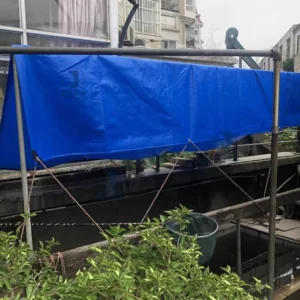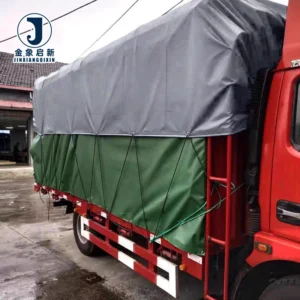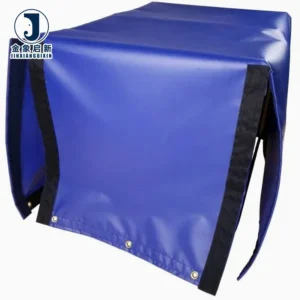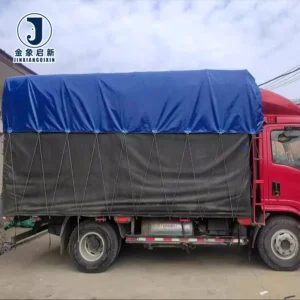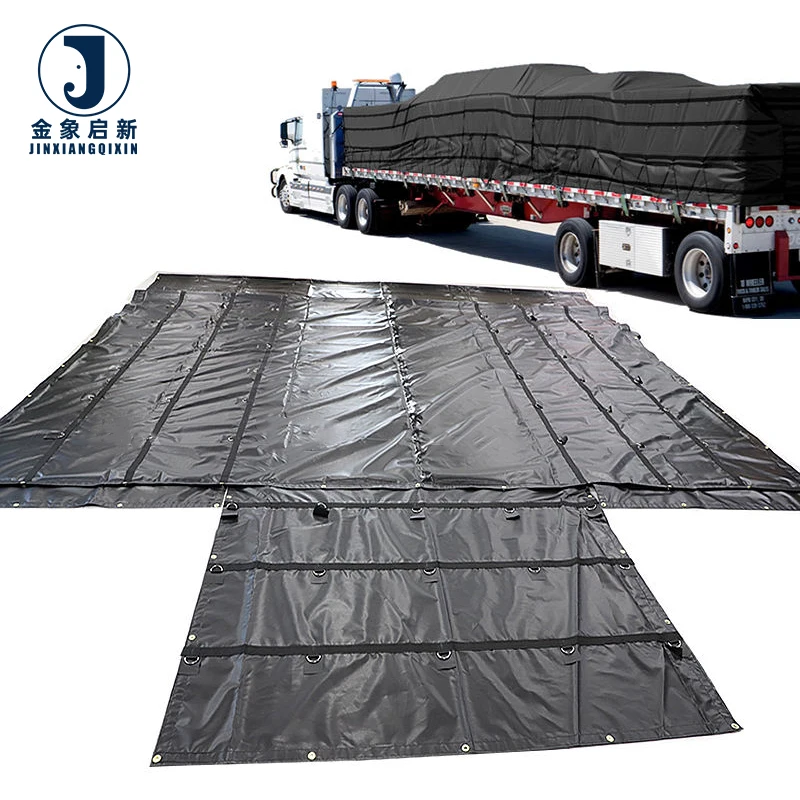
Coating weight control — Each PVC Truck Cover is inspected against the specified GSM before dispatch, matching the exact weight your fleet requires for long-haul exposure.
Technical Specifications
| Parameter | Value |
|---|---|
| Product Type | PVC Truck Cover |
| Material Options | 12oz, 14oz, 15oz, 18oz Vinyl or RipSTOP |
| Base Fabric | RipSTOP weave (available across weight grades) |
| Coating | PVC / Vinyl |
| Waterproof Rating | Fully waterproof coated construction |
| Anti-Mildew Treatment | Yes |
| Abrasion Resistance | Yes |
| Configuration | 1PC / 2PC / 3PC options |
| Drop Length | 8′ Drops |
| Custom Sizing | Adjustable density to fit various truck and trailer dimensions |
Application Suitability
| Application | Exposure & Requirement |
|---|---|
| Flatbed semi-truck freight | Constant wind load, road spray, tie-down abrasion at flex points |
| Lumber and building material transport | Rain ingress prevention, UV exposure during multi-day transit |
| Step-deck and extendable trailers | Side drop coverage, load shifting stress on seams and hems |
| Long-haul over-the-road carriers | Extended weather exposure, repeated folding and deployment cycles |
Why a Generic-Size PVC Truck Cover for Flatbed Semi Truck Loads Fails Within Months
A cover that does not match your trailer deck length, width, and load height creates stress concentrations that no amount of fabric strength can compensate for.
Fleet operators routinely order covers based on nominal trailer size only to discover that the drops do not reach the deck edge, or that the fabric pulls tight across an uneven load profile. The result is seam failure at the points where cargo flexes most — typically within the first season of use [NEED_CITE: common failure modes in flatbed tarpaulin field use]. Generic sizing ignores the variation in deck height, bolster position, and load crown that define how a PVC truck cover for flatbed semi truck applications actually sits on the load.
Trailer-Specific Fitment Eliminates the Leading Cause of Cover Replacement
Every flatbed and step-deck configuration differs in deck length, rub rail height, and load profile. This PVC truck cover for flatbed semi truck use is configured to your exact trailer dimensions rather than a generic catalogue size. Drop lengths, hem positions, and tie-down spacing are set to match the securing hardware already installed on your fleet, so the cover sits flush without excess fabric that flaps at highway speed or gaps that allow water ingress.
RipSTOP Weave Prevents Small Damage From Becoming Total Cover Failure
Road debris, sharp lumber edges, and repeated tie-down contact can nick the coating surface. Standard woven base fabrics allow that nick to propagate into a long tear under load flex and wind vibration. The RipSTOP base fabric in this PVC truck cover for flatbed semi truck loads uses a reinforced grid pattern that arrests tear propagation at each intersection, keeping small punctures localised and repairable rather than forcing a full cover replacement [NEED_CITE: RipSTOP weave tear arrest mechanism in coated technical textiles].
Choosing the Correct Weight Grade for Your Cargo and Route Exposure
The available weight range — 12oz, 14oz, 15oz, and 18oz — exists because different freight types and haul durations place different demands on the fabric. Lighter grades suit short-haul and enclosed-route operations where the cover is deployed and removed frequently. Heavier grades suit multi-day over-the-road runs where the fabric endures sustained wind loading, road spray, and UV exposure without intermediate inspection. The RipSTOP reinforcement is available across these weight options, allowing you to match tear resistance independently of the overall fabric weight. Selecting the right grade starts with knowing your typical load type, route duration, and the abrasion environment at the tie-down contact zones [NEED_CITE: PVC coated fabric weight selection criteria for transport covers].
The Hidden Cost of Specifying Cover Weight Without Considering Base Fabric Construction
Buyers who focus only on the stated oz weight overlook the base fabric architecture that determines how the cover behaves under real load conditions. Two covers rated at the same weight can perform very differently if one uses a standard plain weave and the other uses a RipSTOP grid. The coating weight and base fabric density together determine tensile and tear behaviour — a heavy coating on a low-density base may resist puncture but split along the weave under tension. Conversely, a tightly woven RipSTOP base at a moderate weight can outperform a heavier plain-weave fabric in tear resistance. Request the base fabric specification alongside the GSM to verify that the construction matches your fleet’s stress profile [NEED_CITE: relationship between base fabric denier, weave density, and tear strength in PVC coated fabrics].
Why Here for Your Fleet Cover Supply
Three full production lines with dedicated coating and fabrication capacity handle fleet-scale orders with consistent lead times across multiple trailer configurations. The 10-person R&D team develops cover patterns matched to specific flatbed, step-deck, and extendable trailer models, including custom drop lengths and tie-down layouts. Every cover undergoes inspection before dispatch, with seam integrity and dimensional accuracy verified against your trailer specification. Material specification documentation accompanies each shipment, stating the base fabric type, coating weight, and treatment claims so your maintenance team has a reference for warranty and replacement decisions. Cross-border fleet procurement is supported with certificate of origin and customs documentation prepared per destination market requirements.
Documentation & Verification
- Material specification sheet stating base fabric type, coating weight, and RipSTOP construction per cover
- Pre-shipment inspection record confirming cover dimensions against your specified trailer model
- Anti-mildew treatment verification with test evidence available for your compliance records
- Certificate of origin and customs documentation prepared for cross-border fleet procurement
- Roll and cut-piece packing list with weight and dimension detail for receiving inspection
Fabrication, Handling & Storage
- Heat-weld seams at temperatures matched to the specific vinyl weight grade to prevent coating delamination
- Reinforce tie-down contact zones with additional fabric patches at the 8′ drop hem line
- Store folded covers dry and off concrete floors to preserve anti-mildew treatment effectiveness
- Deploy in cold conditions gradually — allow the PVC coating to warm and flex before pulling tight over sharp load edges
- Clean with mild detergent only; solvent-based cleaners degrade the PVC coating surface and anti-mildew finish
- Repair field punctures with compatible PVC patch kits matched to the cover’s vinyl weight grade
What to Include With Your Enquiry
Provide your trailer make, model, deck length, and rub rail height so the cover pattern is configured to your actual equipment. Specify your typical cargo type and haul duration to determine the appropriate weight grade from the 12oz to 18oz range. Indicate whether your fleet uses standard D-ring tie-downs or custom securing hardware so the reinforcement points are positioned correctly. Confirm if you need covers supplied individually packed per unit or consolidated for container loading.
Frequently Asked Questions
Q: How do I measure my trailer for a custom-fit PVC truck cover?
A: Measure deck length between bulkhead and rear bolster, overall deck width at the rub rail, and load height from deck to the highest point of your typical cargo. Note the drop distance from the deck edge to where the cover should terminate. Provide these dimensions along with your trailer make and model so the cover is patterned to your exact configuration.
Q: What is the difference between 12oz, 14oz, 15oz, and 18oz vinyl weights?
A: Lower weights offer easier handling and faster deployment for short-haul or frequent-cover operations. Higher weights provide greater puncture and abrasion resistance for long-haul routes with sustained road exposure. The RipSTOP base fabric is available across all grades, so tear resistance can be maintained regardless of the weight you select.
Q: Can you match my fleet’s existing tie-down and grommet spacing?
A: Yes. Provide the spacing measurement between your current tie-down points and the position relative to the deck edge. The cover hem and reinforcement layout are configured to align with your existing securing hardware, avoiding the need to modify your trailer or use adapter straps.
Q: How do you ensure colour consistency across multiple covers in one order?
A: All covers in a single production run are coated from the same batch and inspected side by side before packing. A colour reference sample is retained on file so that future reorders for fleet expansion can be matched to the original batch without visible variation when deployed alongside existing covers.
Q: What anti-mildew treatment verification can I request before shipment?
A: Request the material specification sheet that documents the anti-mildew treatment claim along with any available test evidence. This documentation accompanies the pre-shipment inspection record so your receiving team can verify that the treatment specification matches your purchase order requirements before the covers enter fleet service.