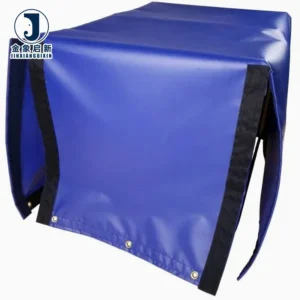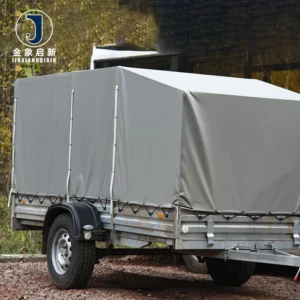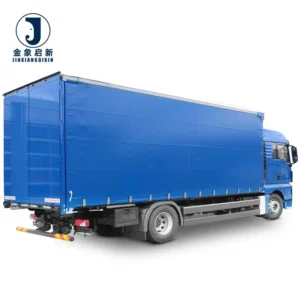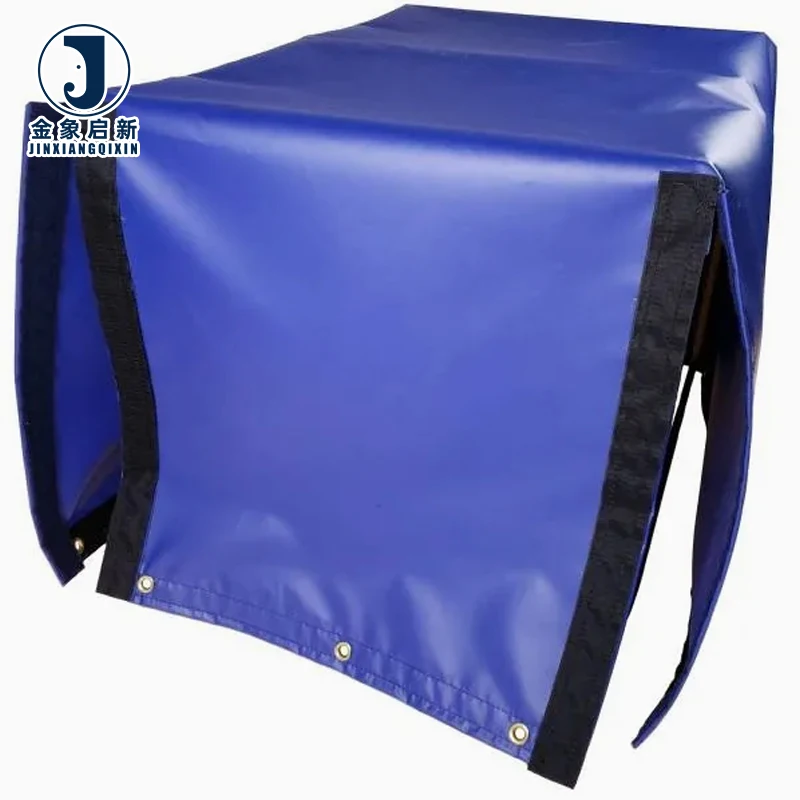
Deep Process Control Over Coating Weight — every roll of PVC truck cover fabric undergoes in-line GSM verification and adhesion testing before leaving the coating line, ensuring the material you receive matches the quoted specification exactly.
Technical Specifications
| Parameter | Value |
|---|---|
| Product Type | PVC Coated Tarpaulin Truck Cover |
| Coating Material | PVC |
| Weight (GSM) | 250gsm–1500gsm |
| Base Fabric Denier | 200Dx300D / 500Dx500D / 840Dx840D / 1000Dx1000D |
| Surface Finish | Glossy or Matte |
| Treatment | Waterproof, UV, Flame Retardant, Anti-fungal |
| Temperature Range | -15°C to 70°C |
| Standard Sizes | 3x4m / 6x8m / 8x10m / 10x12m or custom made |
| Color | Blue, yellow, black, green, white, or custom |
| Printing Option | Custom logo, brand printing |
| OEM/ODM | Accepted |
| Standards | ISO, CE |
Note: Flame retardant grade available — confirm the grade required for your market. UV treatment available on a test basis — request test report for your specific requirement.
Application Suitability
| Application | Exposure & Requirement |
|---|---|
| Flatbed trailer top cover | Constant road vibration, rain pooling, UV exposure, tie-down strap abrasion at edges |
| Curtain-side trailer side panel | Repeated flexing at fold points, contact with cargo edges, wind-driven rain ingress |
| Tipper and bulk truck cover | Heavy particulate abrasion, high-tension tie-down loads, chemical residue from bulk loads |
| Vehicle transport carrier deck | Point loading from tyre contact, hydraulic fluid drip, low-temperature flexibility in transit |
Why Generic-Sized Covers Fail on Modern Trailers — and What a PVC Truck Cover Manufacturer Does Differently
A cover dimensioned to your exact trailer model eliminates the slack zones where water pools and the tension points where seams tear first.
Transport fleets routinely receive truck covers cut to generic dimensions that leave excess material flapping in crosswinds or, worse, pull tight across load-bearing edges. The resulting friction at high-stress points causes welded seams to fail long before the base fabric reaches the end of its service life. When a PVC truck cover manufacturer patterns each cover to the specific trailer profile — including door clearance, roller mechanism housing, and buckle positions — the load path through the fabric is distributed rather than concentrated. [NEED_CITE: tension distribution across welded seams in heavy-duty coated fabrics]
Cutting to the Trailer, Not to a Stock Pattern
Every trailer model has its own geometry: side-rail height, corner radius, roller track offset and tie-down rail position. A custom truck tarpaulin made from PVC coated fabric accounts for each of these variables. When the cover wraps cleanly around the frame without surplus material, wind cannot catch loose edges and generate the cyclic peel forces that delaminate coatings from the base weave. Fleet operators who specify vehicle-model covers report fewer mid-route re-tensioning stops and reduced claims for water-damaged cargo.
Reinforcement at the Points That Actually Wear
Generic reinforcement spreads eyelets at uniform intervals regardless of where strap tension concentrates. For a PVC truck cover built to a known trailer, eyelet spacing is tightened at corners and load-bearing cross-members where ratchet straps impose the highest point load. Hem webbing is doubled at flex zones — typically the rear third of curtain-side panels where the fabric folds most often during loading. This targeted approach means the PVC truck cover manufacturer invests material only where abrasion and tension data confirm it is needed. [NEED_CITE: reinforcement placement strategies for transport tarpaulin systems]
Reading the Specification Sheet Before You Commit
Two covers can share the same stated GSM yet behave very differently on a trailer. The base fabric denier — whether 500Dx500D or 1000Dx1000D — governs how much load the yarn skeleton carries before the PVC coating takes over. A lower-denier base at the same GSM means a thicker coating layer that may resist puncture but tears more easily once a nick starts. Conversely, a high-denier base with a leaner coat gives better tear propagation resistance at the cost of surface abrasion life. The finish also matters: a glossy surface sheds road grime more readily and supports sharp brand printing, while a matte finish reduces glare for drivers checking mirrors alongside curtain-side loads. Understanding these trade-offs helps procurement teams match the right grade to the route profile rather than defaulting to the heaviest option available.
The Cost of Overlooking Denier When Selecting a Grade
Procurement teams that choose a truck cover based solely on GSM often encounter premature failures that appear unrelated to material weight. A 900 GSM fabric built on a 200Dx300D base may pass initial tensile tests but develop propagating tears when cargo edges press against it during braking events. Similarly, specifying a flame retardant treatment without confirming the test standard accepted at the destination terminal can result in a load being refused entry. These mismatches rarely surface during factory inspection — they emerge weeks into service, when replacement logistics cost far more than the original fabric. [NEED_CITE: coated fabric tear propagation testing per ISO 1421 and related methods]
Why Fleet Buyers Source This PVC Truck Cover Here
Three full production lines allow short-run custom sizing without the minimum-order penalties that single-line factories impose on non-standard trailer dimensions.
A 10-person R&D team develops pattern samples within days of receiving trailer drawings, so buyers can verify fitment before committing to a fleet-scale order.
In-process quality checks at coating, lamination and welding stages catch GSM drift and colour variation before rolls reach the cutting table, reducing batch-to-batch inconsistency across a mixed-model fleet order.
Pre-shipment inspection records document the actual measured weight and colour reference for every cover in the consignment, giving receiving teams a verification baseline at the dock.
ISO and CE certification documentation accompanies each shipment, supporting compliance submissions at terminals that require third-party-backed material traceability.
Documentation & Verification
- Material specification sheet stating base fabric denier, coating weight and GSM per roll
- Test report for flame retardant and UV grades matched to the destination market standard
- Pre-shipment inspection record confirming measured GSM and colour reference
- Custom sizing confirmation drawing cross-checked against buyer-provided trailer dimensions
- Certificate of origin and customs support documentation for cross-border fleet deliveries
Fabrication, Handling & Storage
- Hot-air welding parameters must match the selected GSM to achieve full seam adhesion on PVC coated truck covers
- Eyelet setting pressure should be calibrated to the base denier to avoid cutting through the weave at tie-down points
- Store rolls upright on core plugs to prevent flat-spot creases that weaken the coating layer
- Allow cold-stored PVC truck cover fabric to reach ambient temperature before unrolling to avoid coating micro-cracking
- Clean glossy finishes with neutral pH detergent to preserve surface integrity and brand print sharpness
What to Include in Your PVC Truck Cover Inquiry
Specify the trailer make, model and year so the pattern can be drafted to the actual frame dimensions rather than a generic template. Note the operating climate — particularly whether the route crosses high-humidity or sub-zero zones — so the correct anti-fungal or low-temperature grade is selected. Confirm the fire safety standard required at your destination terminals, if any, to ensure the treatment specification aligns before production starts.
Frequently Asked Questions
Q: How do I provide trailer dimensions for a precise-fit PVC truck cover?
A: Send the trailer make, model and year along with a photograph showing the frame profile. If the trailer has been modified — extra rails, relocated buckles or non-standard roller tracks — include those measurements. The pattern team drafts a cutting file from this data and shares a dimensioned drawing for your approval before any fabric is cut.
Q: What eyelet spacing and hem reinforcement options are available?
A: Standard spacing places brass eyelets at regular intervals, but spacing can be tightened at corners and cross-member zones where strap load concentrates. Hem webbing can be doubled or tripled at high-flex areas such as the rear curtain fold. Specify your tie-down system so the reinforcement plan matches your strap geometry.
Q: Will colour be consistent across covers for a mixed-model fleet?
A: Colour matching is controlled per production batch using reference standards. When ordering covers for multiple trailer models in the same fleet colour, request that all panels be cut from the same dyed batch. A pre-shipment colour verification record is included in the dispatch documentation for your receiving inspection.
Q: How durable are welded seams under road vibration compared to the fabric itself?
A: Welded seams on PVC coated truck covers can match or exceed the base fabric strength when hot-air temperature, pressure and speed are matched to the specific GSM and coating formulation. Most seam failures trace back to incorrect welding parameters or contamination at the joint rather than material limitation. Request a weld peel test sample with your order.
Q: Can I add a custom logo or brand print to the truck cover fabric?
A: Custom logo and brand printing is available on both glossy and matte PVC truck cover surfaces. Provide artwork in vector format with Pantone colour references. Print placement is confirmed on the cutting drawing so branding appears correctly when the cover is installed on the trailer, accounting for fold lines and buckle cut-outs.