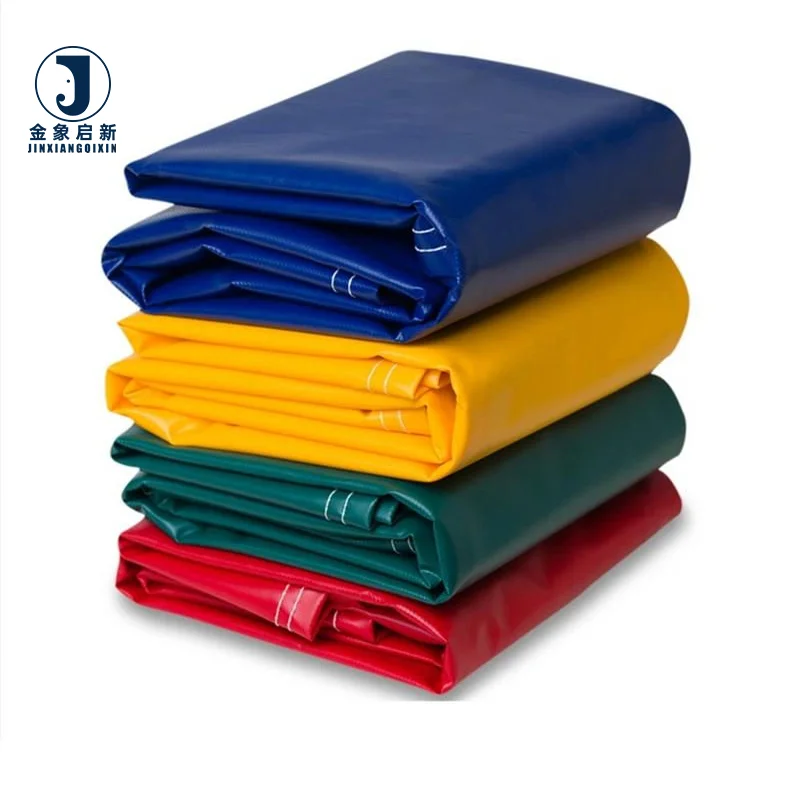
Precision-Coated Fabric Expertise — nearly three decades of focused coating process control ensures consistent GSM accuracy and seam reliability for truck and trailer tarpaulins cut to specific vehicle models.
Technical Specifications
| Parameter | Value |
|---|---|
| Product Type | PVC Coated Tarpaulin |
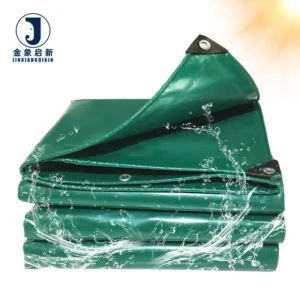
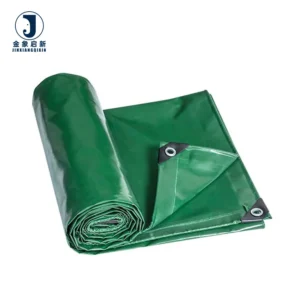
| Material | Polyester Base Fabric + Double-Sided PVC Coating |
| Weight Range | 500gsm–1000gsm (grade selection per application) |
| Yarn Count Options | 500D×840D / 500D×1000D / 1000D×1000D / 1000D×1300D / 1300D×1300D / 1000D×2000D |
| Thickness Range | 0.29mm – 0.65mm |
| Tensile Strength (Warp) | 1650N – 3900N (test standard not stated) |
| Tensile Strength (Weft) | 1600N – 3500N (test standard not stated) |
| Seam Treatment | High frequency hot melt / Hot air welding / Sewing |
| Edge Reinforcement | 5mm rope hem without splicing, heat-sealed seamless edge wrapping |
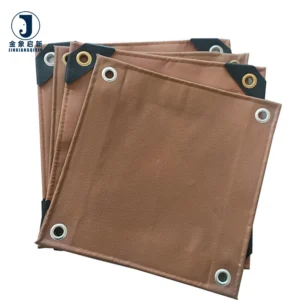
| Eyelets | 3cm enlarged aluminum alloy buttonhole, brass eyelets every 1 meter |
| Corner Reinforcement | Reinforced patches on all sides |
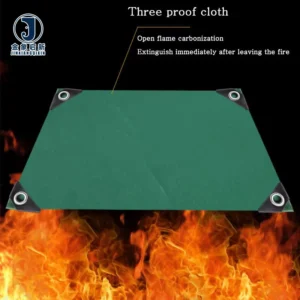
| Fire Retardant | Available in flame retardant grades — confirm the grade required for your market |
| Anti-UV | Available with anti-UV treatment — test basis to be confirmed per order |
| Additional Features | Waterproof, Heavy Metal Free, Anti Mildew, Flexible, Self Clean |
| Printing | Printable, Customized |
| Certifications | ISO, CE |
Application Suitability
| Application | Exposure & Requirement |
|---|---|
| Truck and trailer top cover | Direct UV and rain exposure, wind uplift at highway speed, abrasion from load movement |
| Side curtain for articulated trailers | Continuous flexing at curtain fold points, lateral wind load, road debris impact |
| Pallet and container load cover | Moisture ingress prevention, stacking pressure, tie-down strap tension at edge zones |
| Transport equipment custom covers | Model-specific fitment, vibration-induced fatigue at seams, frequent removal and reinstallation |
Why Generic-Sized Truck Covers Cost Fleets More Than Fabric
A PVC coated tarpaulin for truck and trailer covering only delivers value when it fits the exact trailer model and survives the flex points where loads shift on the road.
Generic-sized covers leave loose fabric that flaps at speed, accelerating wear at eyelet zones and creating water channels that pool on the load. Worse, welded seams often fail before the fabric itself does — typically at the point where the cover bends around the load during cornering or braking. For fleet operators managing mixed trailer models, each misfit cover generates downtime for rework, replacement, or cargo damage claims. [NEED_CITE: seam failure frequency versus fabric failure in transport tarpaulins per field inspection data]
Seam Integrity at Load Flex Points Under Road Conditions
When a loaded trailer corners or brakes, the PVC coated tarpaulin for truck and trailer covering flexes at predictable stress zones — the corners, the tie-down lines, and wherever the fabric wraps around an uneven load profile. High-frequency hot melt welding and hot air seam treatment produce joins that flex with the base fabric rather than cracking against it. This matters because a seam that cannot match the tensile capacity of the surrounding material becomes the first failure point, leaving cargo exposed mid-route.
Edge and Eyelet Reinforcement for Highway-Speed Tie-Down
The edge of a truck cover carries the full tie-down load transmitted through straps and ropes. A 5mm rope hem without splicing distributes this tension evenly across the cover perimeter, preventing localized pull-through at individual eyelets. The 3cm enlarged aluminum alloy buttonholes, paired with reinforced corner patches, handle repeated strap engagement and release without tearing the surrounding PVC coating. This reinforcement approach addresses the vibration and shock loads specific to long-haul road transport, where static tension ratings alone do not predict field performance. [NEED_CITE: tie-down load distribution standards for transport covering systems]
Reading the Specification Sheet Beyond GSM
Weight in grams per square metre indicates coating mass, not overall structural capacity. Two PVC coated fabrics at the same GSM can perform very differently depending on base fabric denier and weave density. A 1000D×1000D base fabric with tight weave delivers higher tensile and tear resistance than a 500D×840D base at the same coating weight, because the polyester yarn structure carries the mechanical load while the PVC coating provides environmental protection. Thickness across the 0.29mm to 0.65mm range correlates with both coating depth and base fabric mass, influencing how the material handles abrasion at contact points. For side curtain applications where the fabric folds and unfolds continuously, a higher denier base with moderate coating weight often outperforms a heavier coating on a lighter base — the yarn structure resists fatigue cracking at the fold lines. The brittle temperature rating of ≤ -50 to -60°C and softening point of ≥ 80°C define the thermal envelope within which the coating maintains flexibility and adhesion to the base fabric.
The Hidden Cost of Specifying on Price Per Kilogram
When buyers select PVC coated tarpaulin based on quoted price per kilogram without verifying delivered GSM, the material arriving on site can be lighter than agreed — thinner coating, lower tensile capacity, and reduced abrasion life at exactly the points where a truck cover needs durability most. Similarly, fire retardant claims without supporting test documentation create compliance risk at the destination terminal or border inspection. Batch-to-batch colour variation across rolls in a single order becomes visible once covers are installed side by side on a fleet, forcing either acceptance of inconsistent appearance or full replacement. [NEED_CITE: pre-shipment GSM verification methods for coated fabric orders]
What Production Capability Means for Your Truck Cover Order
Three full production lines and 36 sets of professional equipment allow bulk truck cover orders to run without splitting across multiple machines, which maintains coating consistency across every roll in the shipment. A 10-person R&D team develops samples within days for custom sizing, matching cover dimensions to specific vehicle model drawings before production starts. Dedicated QA/QC inspection at every production stage, with 100% pre-shipment check, catches GSM deviation, colour shift, and seam weakness before the material leaves the factory. Hot melt seam parameters are calibrated to each specific GSM grade, preventing the adhesion failures that occur when generic welding settings are applied across different fabric weights. Deep process control over coating weight and adhesion, built over nearly 30 years of focused coated fabric production, is what keeps delivered specification aligned with quoted specification.
Documentation & Verification
- Material specification sheet stating exact GSM, base fabric denier, and coating type for each roll
- Test report for fire retardant and anti-UV grades where applicable, matched to order batch
- Pre-shipment inspection record confirming GSM and colour consistency before dispatch
- Roll packing list with individual roll identification for traceability
- Certificate of origin and customs documentation for cross-border shipment
Fabrication, Handling & Storage
- Heat-seal seams at temperatures matched to the specific PVC coating weight to avoid delamination at flex zones
- Space brass eyelets at maximum 1 meter intervals along the 5mm rope hem to distribute tie-down load evenly
- Store rolls upright on pallets to prevent flat-spot creasing that weakens coating adhesion at the fold
- Allow cold-transported rolls to reach ambient temperature before unrolling to prevent coating crack at low flex
- Clean surfaces with non-solvent detergents to preserve the self-clean treatment on the PVC coating face
- Repair minor field damage with PVC-compatible adhesive patches applied to clean, dry substrate
What to Include in Your Enquiry
Provide the specific trailer model dimensions or drawings so the cover can be cut to exact fitment rather than generic size. Specify whether fire retardant certification is required for your destination market, and which grade applies. Indicate annual volume and whether you need finished covers with eyelets and hem reinforcement, or roll stock for in-house fabrication. Colour references and any printed branding requirements should be confirmed at sample stage to ensure batch consistency across the full order.
Frequently Asked Questions
Q: How do you ensure the truck cover fits my specific trailer model?
A: We work from your vehicle model drawings or dimensional templates to develop a sample cover first. Fitment is verified against the trailer profile before bulk production begins, including eyelet placement and hem length. This eliminates the gap between generic cover sizing and the actual dimensions of your fleet.
Q: What seam treatment options are available for high-flex areas on side curtains?
A: High-frequency hot melt and hot air welding are both available, selected based on the fabric grade and the flex pattern of your side curtain system. Both methods produce seams that flex with the base fabric rather than cracking under repeated folding cycles encountered during curtain operation.
Q: How is GSM verified on arrival to match the quotation?
A: Every roll undergoes GSM verification during pre-shipment inspection, with results recorded and matched to the quoted specification. The inspection record travels with the shipment documentation so you can cross-reference on arrival before accepting delivery.
Q: What eyelet and hem reinforcement options suit long-haul road exposure?
A: The standard configuration uses 3cm enlarged aluminum alloy buttonholes with reinforced corner patches and a 5mm rope hem without splicing. This combination distributes tie-down tension evenly and handles the vibration loads specific to highway-speed transport over extended distances.
Q: Can fire retardant or anti-UV treatment be supplied with a supporting test report?
A: Yes. Fire retardant and anti-UV treatments are available in specific grades, and a test report matching the grade supplied is included with the shipment documentation. Confirm the grade required for your market at enquiry stage so the correct formulation is applied.