Deep Process Control Over Lamination Weight — Every roll of PE Tarpaulin for Truck and Transport Cover is verified against stated GSM before dispatch, ensuring fleet operators receive consistent waterproofing across the entire shipment.
Technical Specifications
| Parameter | Value |
|---|---|
| Product Type | PE Tarpaulin |
| Material Composition | HDPE weaving with LDPE lamination on both sides |
| Weight (GSM) | 50gr/m2 ~ 220gr/m2 available (range covers product family — confirm the grade for this item) |
| Total Thickness | 0.2-0.4mm / 8 mil-16 mil / Custom |
| Mesh Count Options | 6×6, 6×7, 7×7, 7×8, 8×8, 9×9, 8×10, 10×10, 12×12, 14×14, 14×16 |
| Roll Width Options | 6ft, 8ft, 10ft, 12ft, 2m, 4m, 6m |
| Roll Length Options | 100 yards, 100 meters, or custom |
| Finished Tarpaulin Sizes | 2x2m to 8x10m (and corresponding ft sizes) |
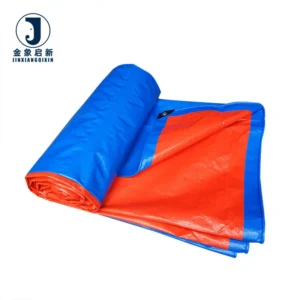
| Color Options | Blue, Blue/Orange, Green, Grey, Black, Clear, Grey/Green, Orange, or custom |
| UV Treatment | Available (test basis not stated) |
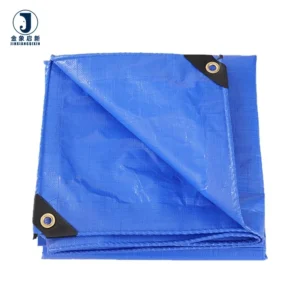
| Edge Reinforcement | All four edges reinforced with PP rope in hem |
| Eyelet Specification | Galvanized eyelets every 3ft or 1 meter interval |
| Corner Reinforcement | Reinforced plastic corners |
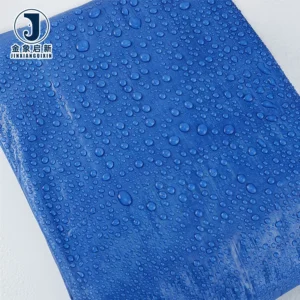
| Key Features | Waterproof, washable, tear resistant, weather proof, anti-mildew, anti-aging |
Application Suitability
| Application | Exposure & Requirement |
|---|---|
| Flatbed and trailer load covers | Road vibration, wind flap, UV exposure, tie-down abrasion at flex points |
| Container and boat covers | Road spray, rain ingress, salt-air corrosion of fittings, UV during transit |
| Construction site material protection | Tie-down tension, puncture from sharp aggregates, standing water on horizontal surfaces |
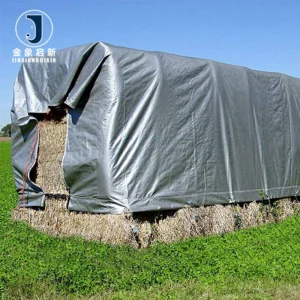
| Timber and hay transport covers | Sap and resin contact, moisture wicking, repeated folding and unfolding at depots |
| Agricultural crop covers | Direct sunlight, mildew risk under trapped humidity, mechanical handling damage |
Why Generic-Size Truck Covers Fail Your Fleet
A tarp that does not match your trailer dimensions wastes dock time and leaves load edges exposed to weather.
Fleet operators frequently order PE Tarpaulin for Truck and Transport Cover in standard sizes, only to find the material bunches at the corners or falls short of the rear edge. The excess fabric flaps at highway speed, concentrating stress at the eyelets and accelerating tear propagation. When a cover is cut to model instead of bought off the shelf, the hem sits flush against the load edge and the tie-down points align with the trailer’s anchor rails. [NEED_CITE: trailer dimension standards and tarpaulin fitment tolerances for road transport]
Matching Roll Width to Flatbed and Curtain-Side Configurations
Selecting the correct roll width eliminates mid-load seams that become failure points under road vibration. Our PE tarpaulin stock is available in widths from 2m to 6m, allowing a single-panel cover for most standard flatbed widths without a transverse weld. For curtain-side trailers requiring side panels, narrower rolls reduce waste during fabrication and keep the cut edges parallel to the weave direction, preserving tear strength along the length of the panel.
Eyelet Spacing and Hem Reinforcement for Tie-Down Loads
The interval between galvanized eyelets determines how evenly tie-down tension distributes across the hem. Spacing at 3ft or 1 meter ensures that each ratchet strap engages multiple eyelets, preventing the concentrated pull that tears lightweight fabric from its reinforcement rope. The PP rope sewn inside the hem acts as a load-bearing spine — when a strap cinches down, the rope absorbs the point load rather than the LDPE lamination bearing it alone.
Mesh Count, Weave Density and Real-World Tear Behaviour
The mesh count specification directly governs how the HDPE base fabric resists tear propagation once a puncture occurs. A 14×14 or 14×16 weave creates a dense grid that limits tear spread to a few centimetres, while a 6×6 weave — lighter and more flexible — allows a tear to run further before the cross-yarns arrest it. This is why density must be evaluated alongside GSM rather than in isolation: a heavier coating on a sparse weave adds weight without proportional tear improvement. [NEED_CITE: relationship between HDPE weave density and tear propagation in laminated PE fabrics]
The LDPE lamination on both sides seals the weave intersections, preventing water from wicking through the yarn crossings — a common failure path in uncoated woven fabrics. The lamination thickness, combined with base fabric denier, determines how the material handles repeated folding at depot yards. Thinner laminations crack at the fold line over time, particularly in cold conditions where LDPE becomes brittle. Requesting a sample folded and creased at low temperature reveals whether the lamination grade suits your operating climate.
The Hidden Cost of Colour Inconsistency Across Rolls
When multiple rolls from the same order show visible shade variation after installation side by side, the entire fleet presents a mismatched appearance that undermines brand identity. This problem surfaces most often when pigmented LDPE batches are not blended from a single master-batch lot. Pre-shipment inspection comparing rolls against a colour reference under standardised lighting catches the deviation before it reaches the loading dock. [NEED_CITE: colour consistency standards for pigmented polyethylene laminates in roll goods]
Sourcing PE Tarpaulin With Verified Specifications
Our production runs on three dedicated lines with 36 sets of professional equipment, giving us the capacity to maintain batch consistency across high-volume roll orders. A 10-person R&D team develops custom widths, colours and hem configurations matched to your trailer specifications. Every roll undergoes 100% inspection before dispatch, with weight checked against the stated GSM. Samples for custom requirements are developed within days, allowing you to confirm fit and finish before committing to production. Documentation accompanies each shipment — from material specification sheets to pre-shipment inspection records — so your receiving team can verify the order against the purchase specification.
Documentation & Verification
- Material specification sheet stating GSM, HDPE base fabric mesh count, and LDPE lamination weight per roll
- Colour reference standard documented for multi-roll orders to enable receiving inspection
- Pre-shipment inspection record confirming weight verification against quoted GSM
- Roll packing list with individual roll dimensions and net weight for container loading
- Certificate of origin and customs documentation supporting cross-border freight clearance
Fabrication, Handling & Storage
- Heat-seal HDPE hems at moderate temperature to bond PP rope without melting through the LDPE lamination
- Punch galvanized eyelets through the reinforced hem zone only, avoiding the unreinforced field of the fabric
- Store rolls horizontally on pallets to prevent permanent creasing of the LDPE coating at contact points
- Unroll in temperatures above freezing to prevent micro-cracking of the lamination at the fold lines
- Cut panels parallel to the weave direction to maintain tear resistance along the length of the cover
What We Need to Specify Your Cover Correctly
Provide the exact trailer model or flatbed dimensions so the cover can be cut to fit without excess fabric or shortfall. Confirm the mesh count or GSM grade required for your load weight and exposure conditions, and specify eyelet spacing if your tie-down system uses non-standard intervals. If colour matching to a fleet standard is required, supply a Pantone or RAL reference so we can formulate the LDPE master-batch before production begins.
Frequently Asked Questions
Q: How do I verify the GSM of PE tarpaulin on arrival matches my purchase order?
A: Our pre-shipment inspection record documents the measured weight per square metre for each roll against the quoted GSM. On arrival, cut a measured sample from any roll, weigh it on a calibrated scale, and compare to the documented value. Any deviation beyond acceptable tolerance triggers a review against the inspection record we supplied.
Q: What UV treatment test basis supports the outdoor exposure claim?
A: UV treatment is available across our PE tarpaulin range, but the specific test standard depends on the formulation selected for your order. Request the test report before confirming your specification so you can verify the treatment matches the exposure duration and solar intensity of your operating region.
Q: Can you cut finished tarpaulin to fit my specific trailer model with reinforced hems?
A: We cut finished panels to your trailer dimensions with PP rope reinforcement in all four hems and galvanized eyelets at your specified interval. Provide the make, model and year of each trailer so we match the cover to the load bed and anchor rail positions precisely.
Q: How do you control colour consistency across rolls in the same order?
A: All rolls in a single production run use LDPE lamination blended from one master-batch lot. Our 100% pre-shipment inspection compares each roll against the documented colour reference under standardised lighting, and any roll falling outside tolerance is separated before packing.
Q: What eyelet spacing and hem reinforcement options are available for heavy tie-down loads?
A: Standard eyelet spacing is every 3ft or 1 metre, with closer intervals available for high-tension applications. All four edges are hemmed with PP rope inside to distribute tie-down load across the fabric rather than concentrating stress at individual eyelet holes.