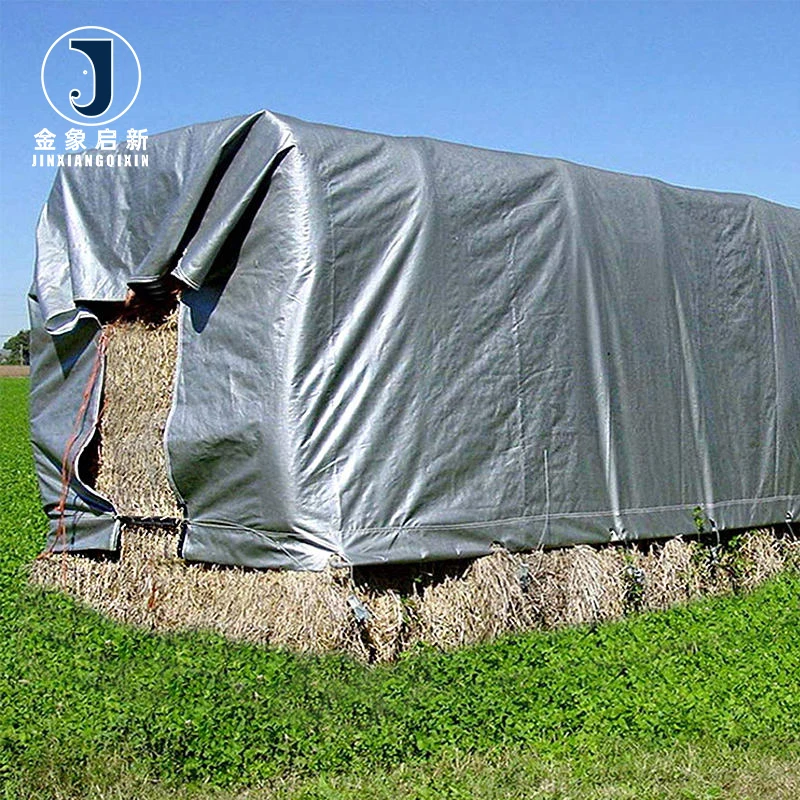
Proven Process Control — Nearly 30 years focused on coated and laminated fabric means every roll of HDPE woven PE tarpaulin we produce carries verified GSM, consistent mesh count, and reliable lamination adhesion from core to edge.
Technical Specifications
| Parameter | Value |
|---|---|
| Product Type | PE Tarpaulin Roll / Finished PE Tarpaulin |
| Base Fabric | HDPE weaving |
| Coating Material | LDPE lamination on both sides |
| Coating Method | Laminated |
| Weight Range | 45gsm ~ 400gsm (confirm the grade for your application) |
| Mesh Count Options | 6×6, 8×8, 10×10, 12×12, 14×14 |
| Total Thickness | 0.2–0.4 mm / 8 mil–16 mil |
| Roll Width Options | 6ft, 8ft, 10ft, 12ft / 2m, 4m, 6m |
| Roll Length Options | 100 yards, 100 meters, or custom |
| Finished Sizes Available | 2x2m, 3x3m, 3x5m, 4x4m, 4x5m, 4x6m, 4x8m, 4x10m, 5x5m, 5x6m, 5x8m, 5x10m, 6x6m, 6x8m, 6x10m, 8x10m (and imperial equivalents) |
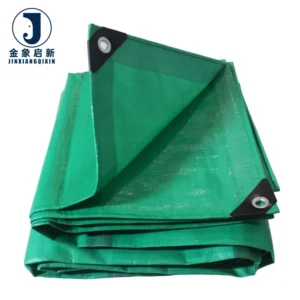
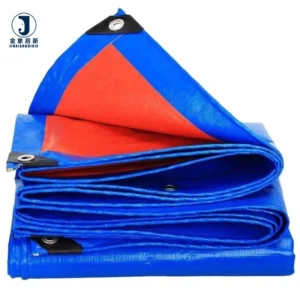
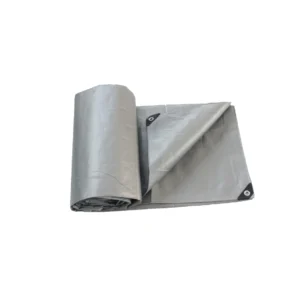
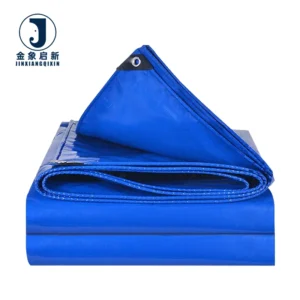
| Color Options | Blue, Blue/Orange, Green, Grey, Black, Clear, Grey/Green, Orange, or any Pantone color |
| Hemming | All four edges reinforced with PP rope, 4 cm hemming margin unless specified |
| Eyelets | Galvanized, every 3 ft or 1 m interval; material options: PC, brass, aluminum |
| Corner Guards | PP or PE reinforced plastic corners |
| Gussets | Available for heavy-duty tarps |
| Flame Retardant Grade | NFPA 701 (available — confirm the grade required for your market) |
| UV Treatment | Available (test basis not stated in source — request test report) |
| Key Features | Waterproof, washable, tear resistant, weather proof, sunproof, mildew proof, anti-aging |
Application Suitability
| Application | Exposure & Requirement |
|---|---|
| Truck and trailer load covering | Constant road vibration, flex-point stress at tie-downs, weather cycling, UV exposure, abrasion from cargo shift |
| Fleet side curtain fabric | Repeated rolling and unrolling, lateral wind load, highway-speed airflow, daily UV and rain contact |
| Transport equipment builds | Structural tie-down reinforcement, exact model fitment, long-term weather exposure on parked and moving loads |
| General cargo protection | Outdoor storage, rain and dust ingress prevention, secure strapping through reinforced eyelets |
Why Generic-Sized Covers Fail Transport Fleets
A cover cut to an approximate size leaves the load exposed at the exact point where tie-down tension is highest.
Truck covers cut to a generic size that does not fit the specific trailer model cause load exposure and tie-down failures at the edges and corners. When the fabric does not wrap the full profile of the load, wind gets underneath and creates uplift force that stresses the eyelets and hems beyond their rated capacity. PE Tarpaulin for truck and transport cover must be specified to exact vehicle dimensions — length, width, and drop — so every edge seats flush and every tie-down point aligns with the trailer’s anchor rails. [NEED_CITE: tie-down failure modes for flatbed and curtain-side trailers under highway wind load]
HDPE Weave and LDPE Lamination Built for Moving Loads
The base fabric uses HDPE woven yarns in mesh counts ranging from 6×6 to 14×14, each grade matched to different tensile and tear demands. A 6×6 weave suits lighter covering duties where flexibility and cost matter more than tear propagation resistance. A 14×14 weave delivers the denser yarn structure needed for long-haul truck covers that face constant road vibration and cargo shift.
Both sides receive LDPE lamination, creating a fully waterproof barrier that also locks the weave structure in place. This laminated construction prevents water ingress through the weave gaps that uncoated HDPE fabric would allow, while maintaining the flexibility needed for rolling, folding, and draping over irregular loads.
Reinforcement Where the Load Flex*, giving the tie-down system a continuous load path from eyelet to rope to fabric. Galvanized eyelets are punched at every 3 ft or 1 m interval, and the spacing is chosen to distribute strap tension evenly across the hem rather than concentrating it at a single point. Reinforced plastic corner guards — available in PP or PE — sit at the four stress-concentrated corners where two hems meet and where most handling abrasion occurs.
For oversized or high-abrasion loads, gussets are available to add extra fabric at high-wear zones. [NEED_CITE: stress distribution at tarpaulin corner reinforcement points under dynamic loading]
Reading the Spec Sheet: Mesh Count, GSM, and Laminate Weight Together
Mesh count tells you the density of the HDPE yarn grid — a 14×14 weave places more yarns per unit area than a 6×6, which directly affects how the fabric resists tear propagation when a puncture or nick occurs on the road. GSM combines the weight of the HDPE base fabric with the LDPE lamination on both sides, so a higher GSM can mean a heavier base yarn, a thicker laminate, or both. Looking at GSM alone without checking mesh count and laminate thickness leaves gaps in your understanding of how the PE Tarpaulin for truck and transport cover will handle flex fatigue and abrasion over repeated trips.
Lamination as a coating method bonds the LDPE film to the HDPE weave under heat and pressure. This process delivers consistent coating weight across the roll width and reliable adhesion at the yarn crossover points, which matters when the fabric flexes and the laminate must stay bonded without delaminating at the intersections. The total thickness range of 0.2–0.4 mm reflects different combinations of base yarn denier and laminate film weight.
What Happens When the Spec Does Not Match the Route
A cover specified at a lighter GSM than the route demands will show wear first at the hem line, where the PP rope and fabric meet under strap tension. Colour varying between rolls in the same order becomes visible once multiple covers are installed side by side across a fleet, forcing a full replacement to maintain a uniform appearance. Anti-UV treatment claimed without a supporting test report means the fleet operator has no basis for predicting when the fabric will begin to embrittle on sun-exposed long-haul routes.
Welded seams and hemmed edges that fail before the main fabric body indicate a mismatch between the reinforcement method and the actual dynamic load the cover experiences. [NEED_CITE: common failure modes at tarpaulin seams and hems under cyclic loading]
Why Source Your PE Tarpaulin Here
Three full production lines and 36 sets of professional equipment handle bulk roll orders with reliable on-time delivery, so fleet procurement schedules stay on track. A 10-person R&D team develops samples within days for custom sizing, colour matching, or treatment requirements — allowing fleet operators to approve a finished cover before committing to a full production run.
Dedicated QA/QC at every production stage, with 100% inspection before shipment, catches GSM deviations, colour drift, and eyelet spacing errors before they leave the factory. Nearly 30 years of process control over HDPE weaving and LDPE lamination means the coating weight and adhesion quality remain consistent from the first roll to the last in your order. Custom widths, lengths, and Pantone colours are produced with practical minimums and lead times suited to fleet-scale procurement.
Documentation & Verification
- Material specification sheet stating base fabric denier, mesh count, LDPE lamination weight, and colour reference
- GSM verification per roll against the quoted weight before dispatch with pre-shipment inspection record
- UV and flame-retardant test reports supplied where applicable to the grade ordered
- Roll packing list detailing roll count, dimensions, net and gross weight per roll
- Certificate of origin and customs documentation for cross-border shipment
Fabrication, Handling & Storage
- Heat-seal at moderate temperature settings suited to LDPE lamination; test seam peel strength on the specific GSM grade ordered
- Punch eyelets through the PP rope hem for load distribution; verify 3 ft or 1 m spacing matches the specification
- Store rolls upright on pallets in a shaded area to prevent LDPE film compression marks and surface adhesion between layers
- Unroll and allow the fabric to relax at ambient temperature before cutting to avoid dimensional distortion from cold-rolled tension
- Clean with mild detergent and soft brush; avoid solvents that may degrade the LDPE lamination surface
- Cut finished covers from the specified roll width to minimize off-cuts and seam joins across the load profile
How to Specify Your Next Order
Provide your trailer model, exact load dimensions (length, width, height/drop), and the route conditions your fleet operates under — including typical weather exposure and highway speeds. Indicate the mesh count and GSM grade that match your duty requirement, and specify whether you need roll stock or finished cut-to-size covers with eyelets and hemming already in place.
If your market requires flame-retardant or UV-treated fabric, state the grade and standard your end customer or regulator expects so we can match the treatment and supply the supporting test documentation. Let us know whether a sample cover is needed for fitment approval before the bulk production run begins.
Frequently Asked Questions
Q: How do you verify the GSM on arrival matches what was quoted?
A: Every roll undergoes weight verification against the stated GSM during our pre-shipment inspection. The inspection record travels with your documentation package, so you can cross-check the measured weight against your purchase specification the moment the shipment arrives at your warehouse.
Q: How should I measure my trailer for a custom-fit truck cover?
A: Measure the load platform length, overall width including any side rails, and the vertical drop from the load surface to the lowest point the cover must reach. Provide these dimensions along with your trailer model identifier so we can cut the PE Tarpaulin for truck and transport cover to an exact fit with eyelets aligned to your anchor points.
Q: What eyelet materials are available, and which suits long-haul use?
A: We offer galvanized steel, brass, aluminum, and PC eyelets. Galvanized steel handles high strap tension and resists corrosion from road salt and rain. Brass suits applications where non-sparking material is required. The choice depends on your tie-down hardware, exposure conditions, and any site-specific material restrictions.
Q: How do you maintain colour consistency across multiple rolls for a fleet?
A: Rolls for a single fleet order are produced in the same batch run using matched LDPE compound and Pantone colour reference. Our in-process QA checks colour against the approved sample at each production stage, and the pre-shipment inspection includes a side-by-side comparison before dispatch.
Q: What happens if a hem or eyelet fails during use?
A: The PP rope hem and reinforced corner guards are designed to distribute tie-down stress across the full edge. If a single eyelet is damaged on the road, the adjacent eyelets at 3 ft or 1 m spacing continue to carry the load. We supply repair guidance and replacement eyelet kits as part of our after-sales support.