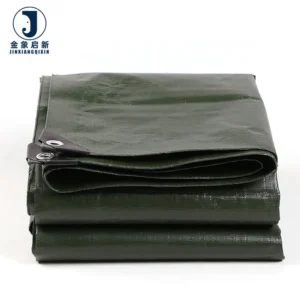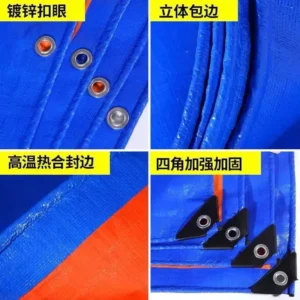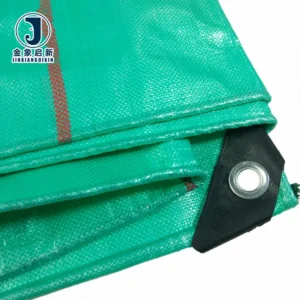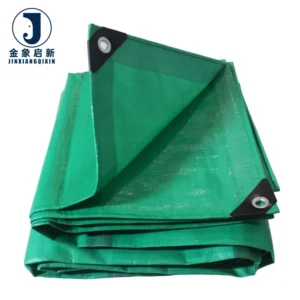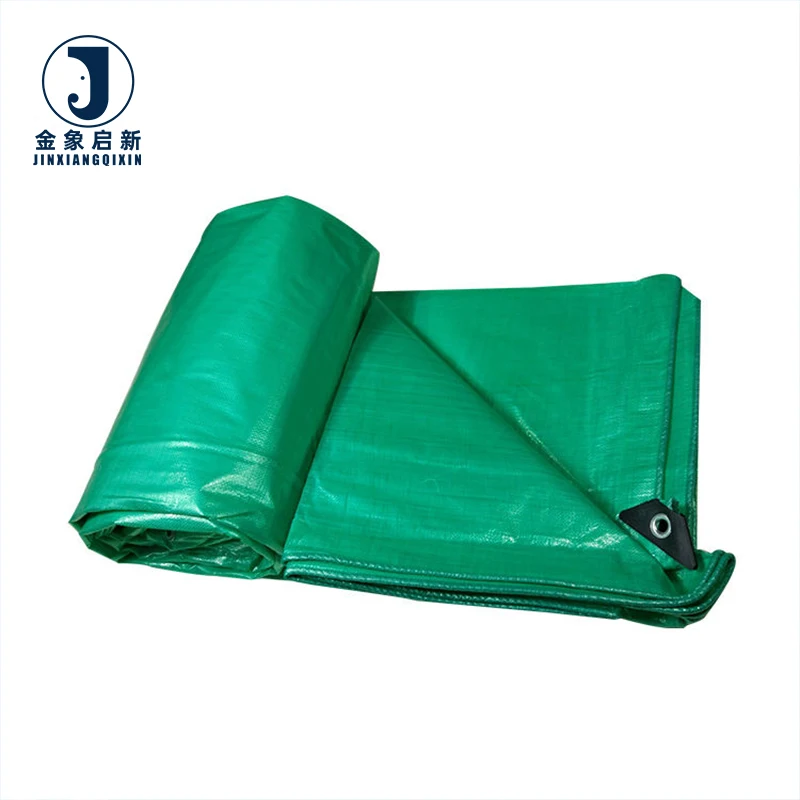
Deep Process Control Over Coating Weight — Every roll of PE tarpaulin undergoes in-process QA at each lamination stage, ensuring the HDPE weave base and dual-side LDPE coating meet specified GSM before it reaches the packing line.
Technical Specifications
| Parameter | Value |
|---|---|
| Product Type | PE Tarpaulin Roll / Finished PE Tarpaulin |
| Material | HDPE weaving with LDPE lamination on both sides |
| Weight (GSM) | 50 gr/m² ~ 220 gr/m² available (confirm the grade for this item) |
| Total Thickness | 0.2–0.4 mm / 8 mil–16 mil / Custom |
| Mesh Count | 6×6, 6×7, 7×7, 7×8, 8×8, 9×9, 8×10, 10×10, 12×12, 14×14, 14×16 |
| Roll Width | 6 ft, 8 ft, 10 ft, 12 ft or 2 m, 4 m, 6 m |
| Roll Length | 100 yards, 100 meters, or custom |
| Color Options | Blue, Blue/Orange, Green, Grey, Black, Clear, Grey/Green, Orange, or custom |
| Waterproof | Yes |
| UV Treatment | Available (test basis not stated) |
| Anti-Mildew | Yes |
| Edge Reinforcement | PP rope reinforced hem on all four edges |
| Eyelet Spacing | Galvanized eyelets every 3 ft or 1 m interval |
| Corner Reinforcement | Reinforced plastic corners |
| Printing | Custom printing available |
| Standards | ISO, CE (product-level certificates to confirm) |
Application Suitability
| Application | Exposure & Requirement |
|---|---|
| Truck and trailer top covers | Highway wind load, rain ingress, constant flexing at load shift points, abrasion against cargo edges |
| Flatbed side curtains | Lateral wind pressure, repeated rolling and unrolling, UV exposure on long-haul routes |
| Container and boat transport covers | Marine salt spray, road debris impact, secure tie-down at port and yard |
| Vehicle and equipment storage covers | Prolonged outdoor UV exposure, dust and moisture ingress, mildew risk in humid climates |
Why Generic-Size PE Tarpaulin for Truck and Transport Cover Fails Before the Trip Ends
A cover that does not match the trailer profile will pull away from eyelets under highway speed, exposing the load long before the destination is reached.
Fleet operators routinely order PE tarpaulin for truck and transport cover in off-the-shelf dimensions, only to find the corners bunch or the hem lifts under crosswind. The grommets bear concentrated stress instead of the load distributing across the PP rope hem, and the first tear appears within the initial trips [NEED_CITE: tensile and tear test methods for coated fabrics per ISO 1421]. Transport equipment builders specifying covers for particular trailer models need cut-to-fit dimensions with eyelet spacing aligned to their existing tie-down rail configuration.
Reinforcement at the Points Where Transport Covers Actually Fail
The majority of field failures on truck covers originate at the edges and corners, not the field of the fabric. This PE tarpaulin for truck and transport cover add*edges, spreading tie-down tension across the full perimeter. Galvanized eyelets are set at intervals matching standard ratchet strap spacing, while reinforced plastic corners protect the highest-wear positions where strap hooks concentrate load during transit.
Dual-Side Lamination and Tear Behaviour Under Road Vibration
HDPE woven base fabric provides the tensile backbone, while LDPE lamination on both sides locks the weave in place and prevents water penetration. On long-haul routes, the cover flexes continuously as the load shifts under braking and cornering. The dual-side lamination resists delamination at these flex points, maintaining tear resistance through repeated stress cycles rather than cracking at the coating-to-weave interface [NEED_CITE: DIN 4102 fire classification for building materials].
Reading the Mesh Count and GSM Map for Transport Duty
Mesh count and GSM together define how the tarpaulin performs under load. A 6×6 weave at 50–60 gr/m² serves light-duty dust and weather covers for short-distance hauls. Stepping to 8×8 or 9×9 at 80–90 gr/m² introduces sufficient density for regional fleet covers exposed to sustained wind. For long-haul and heavy equipment transport, a 14×14 weave at 150–250 gr/m² or 14×16 at 250–300 gr/m² delivers the tear and puncture resistance needed at highway speed. Selecting on GSM alone without checking mesh density can result in a fabric that weighs enough but weaves too loosely to resist tear propagation under strap tension.
The Hidden Cost of Specifying on Colour Swatch Alone
Batch colour inconsistency across rolls in the same order becomes visible the moment two panels hang side by side on a trailer fleet. This is not a cosmetic issue — it signals uneven LDPE coating thickness, which correlates to inconsistent waterproofing and UV treatment distribution [NEED_CITE: quality control standards for coated fabric batch consistency]. Buyers who approve a single sample but do not require pre-shipment colour verification across the full production run risk receiving covers that perform differently panel to panel. For fleet branding, visible colour mismatch also undermines the professional appearance of the transport operation.
Why Procurement Teams Source PE Tarpaulin Here
Three full production lines and 36 sets of professional equipment allow bulk roll and finished cover orders to run concurrently without bottleneck. The 10-person R&D team develops custom cut sizes, eyelet spacing layouts, and colour matches within days, not weeks. Dedicated QA/QC at every production stage includes GSM verification and 100% inspection before shipment, catching coating weight deviations before rolls are packed. Near 30 years of coated fabric production provides process control over lamination adhesion that newer facilities have not yet stabilised. Custom width, colour and print runs carry practical minimums rather than prohibitive thresholds.
Documentation & Verification
- Material specification sheet stating GSM, HDPE base weave and LDPE coating weight per roll
- Pre-shipment inspection record with GSM check against the quoted value
- UV treatment test report where UV grade is specified in the purchase order
- Roll packing list with individual roll dimensions, weight and colour reference
- Certificate of origin and customs documentation for export shipment
Fabrication, Handling & Storage
- Heat-seal LDPE laminated panels at temperatures matched to the specified GSM to avoid coating burn-through
- Punch galvanized eyelets only through the PP rope-reinforced hem to distribute strap load evenly
- Store rolls upright on pallets to prevent flat-spot deformation on the HDPE weave core
- Unroll in moderate temperatures; cold-stiffened LDPE lamination can crack if force-flexed below freezing
- Clean with mild detergent only; solvent-based cleaners degrade the LDPE surface lamination
What to Include in Your Enquiry
Provide the specific truck or trailer model dimensions so the cover can be cut and eyeleted to match the tie-down system rather than supplied in generic size. Confirm the GSM range and mesh count suited to your route exposure, and whether UV treatment with a stated test basis is required for your market. Indicate colour references and whether finished panels or roll stock is preferred.
Frequently Asked Questions
Q: How is GSM verified on arrival to ensure the PE tarpaulin matches the quotation weight?
A: Each roll undergoes GSM verification during pre-shipment inspection, with the result recorded on the inspection report included in the dispatch documentation. Buyers can cross-reference the quoted GSM against this record upon receipt. Third-party testing at destination is also supported if the purchase order specifies an independent lab requirement.
Q: What eyelet spacing and hem reinforcement options are available for truck tie-down systems?
A: Standard configuration places galvanized eyelets at 3 ft or 1 m intervals along the PP rope-reinforced hem on all four edges. Custom spacing can be matched to your trailer’s tie-down rail pattern. Reinforced plastic corners are fitted at all four corners to handle concentrated hook load during transit.
Q: How are custom sizes cut to fit specific truck and trailer models rather than generic dimensions?
A: Provide the trailer make, model and body dimensions. The R&D team produces a cut-size drawing with eyelet placement for approval before production. Finished covers are then cut, hemmed, and eyeleted to those exact dimensions, eliminating the loose material and bunching that generic sizes create.
Q: How is roll-to-roll and batch colour consistency controlled across a fleet cover order?
A: LDPE colour masterbatch is metered at the lamination stage with in-process colour checks across each roll. Pre-shipment inspection includes visual comparison of all rolls in the order under standardised lighting before packing, ensuring panels installed side by side on different vehicles show no visible shade variation.