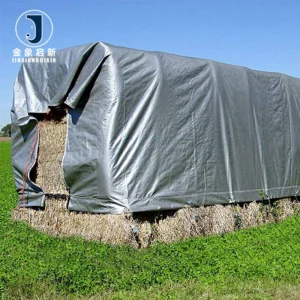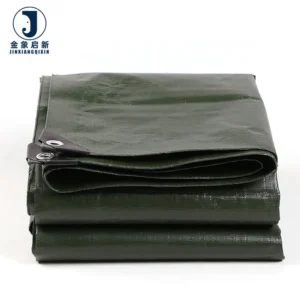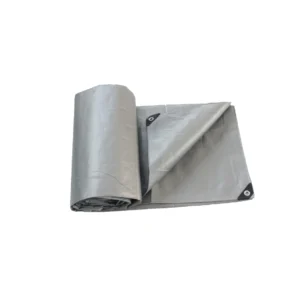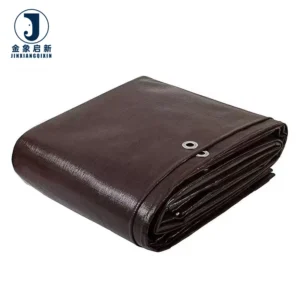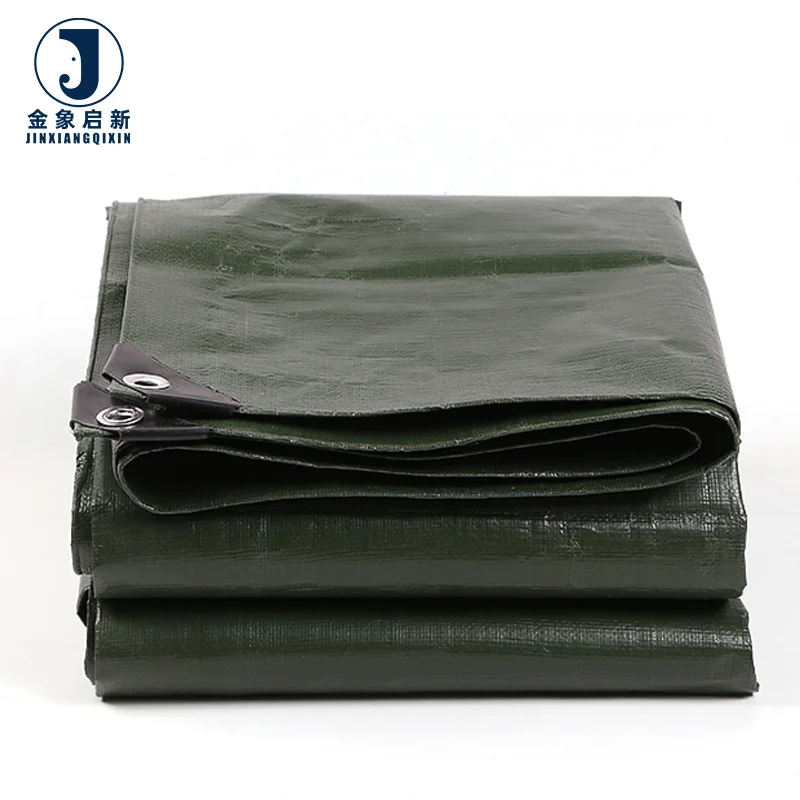
Custom Fitment Focus — Every Heavy Duty Poly Tarpaulin Cover order begins with trailer dimensions and exposure review, not a generic size chart.
Technical Specifications
| Parameter | Value |
|---|---|
| Product Type | PE Tarpaulin |
| Thickness Options | 5 / 10 / 12 / 16 / 20 Mil |
| Coating Material | Polyethylene (PE) |
| Waterproof Rating | Waterproof |
| Flame Retardant Grade | Fire Retardant (confirm the grade required for your market) |
| UV Treatment | Anti-UV (test basis to confirm at inquiry) |
| Wind Resistance | Windproof |
| Mildew Resistance | Mildew-Proof |
| Abrasion Resistance | Abrasion-Resistant |
| Key Features | Waterproof, fire retardant, anti-UV, windproof, mildew-proof, abrasion-resistant |
Application Suitability
| Application | Exposure & Requirement |
|---|---|
| Truck and trailer transit cover | Constant flexing at load edges, road debris impact, UV exposure over long-haul routes, tie-down stress at hems |
| Flatbed cargo protection | Rain ingress risk, wind uplift on highway, abrasion from steel or timber loads shifting during braking |
| Construction and agricultural equipment wrap | Prolonged outdoor storage, dust and moisture, UV degradation over weeks of yard parking |
| Temporary tent and shelter structure | Wind load on fabric spans, water pooling at low points, repeated assembly and folding stress |
Why a Mil Rating Alone Does Not Define a Heavy Duty PE Tarpaulin for Truck and Transport
Thickness tells you how much material is there — it does not tell you how that material behaves under load, UV exposure, or repeated flexing.
Many fleet buyers specify a mil number and assume durability is settled. In practice, two tarps at the same mil can perform very differently depending on base fabric weave density, coating adhesion method, and whether additives like UV stabilizers are compounded into the PE or only surface-applied. A 16 Mil cover with weak hem reinforcement will fail at the tie-down point long before the field fabric shows wear. [NEED_CITE: tensile and tear test methods for coated fabrics per ISO 1421]
Fitment Precision for Moving Loads
A Heavy Duty PE Tarpaulin for Truck and Transport that does not match your trailer model leaves edges exposed to wind lift and water channeling. Generic cut sizes force operators to fold excess material, creating pockets where rain collects and accelerates coating breakdown. Model-specific sizing means each panel lands flush against the load profile, with hems positioned where tie-down straps can apply even tension without dragging fabric across abrasive surfaces.
Reinforcement at the Points That Actually Fail
The field of a tarp rarely tears first. Failure starts where eyelets pull through the hem under strap tension, or where a welded seam meets a flex point as the load shifts during cornering. Reinforced hems and strategically placed eyelets distribute that load across a wider fabric zone. For long-haul transport, this is where abrasion-resistant surface treatment earns its keep — not in the center of the panel, but at the edges and seams that see the most mechanical stress. [NEED_CITE: typical failure points in heavy transport tarpaulin systems]
Reading the Thickness Options Against Your Actual Duty Cycle
The 5 Mil to 20 Mil range exists because no single thickness suits every transport scenario. A 5 Mil cover may be adequate for short-distance yard moves or temporary equipment wraps where weight and pack-down size matter. A 20 Mil option addresses long-haul highway exposure, heavy timber or steel loads that abrade the inner surface, and high wind regions where fabric stiffness helps resist billowing. The middle grades — 10, 12, 16 Mil — serve mixed-duty fleets that rotate tarps across different load types and routes.
What Happens When Specification Choices Miss the Mark
Ordering a Heavy Duty PE Tarpaulin for Truck and Transport without confirming fire retardant grade against your destination market’s regulations can mean the load is refused at the checkpoint or the site. Similarly, accepting an anti-UV claim without a test report leaves you guessing when premature chalking or embrittlement appears months into service. Colour variation between rolls in a single order becomes visible the first time two panels hang side by side on adjacent trailers. [NEED_CITE: fire retardant compliance requirements for transport covers across regional markets]
Why Procurement Teams Source This Range Here
Deep process control over PE coating weight and adhesion means the mil thickness stated on your quotation is the mil thickness you measure on arrival. Three full production lines and dedicated equipment sets handle bulk orders without compressing lead times at the cost of inspection rigour. A ten-person R&D team develops custom sizes matched to your trailer model before production begins, not after the first roll ships. Every production stage carries QA checkpoints, and 100 percent pre-shipment inspection catches coating weight drift and colour variance before dispatch. [NEED_CITE: ISO and CE certified production process for coated PE fabrics]
Documentation & Verification
- Mil thickness measurement record per roll against quoted specification
- Fire retardant test report aligned with destination transport safety standard
- Anti-UV treatment verification with exposure test basis documented
- Pre-shipment inspection record with photo evidence of hem and eyelet reinforcement
- Roll packing list and certificate of origin for customs clearance
Fabrication, Handling & Storage
- Heat-seal parameters vary by mil grade — confirm temperature and dwell time for your chosen thickness before welding seams
- Eyelet placement should align with reinforced hem zones to prevent pull-through under tie-down tension
- Store rolls flat and avoid stacking heavy items on PE tarpaulin to prevent permanent crease marks in the coating
- Deploy in cold conditions slowly; PE becomes less flexible at low temperatures and may crack if forced open
- Clean with mild detergent only — solvent-based cleaners can strip anti-UV additives from the coating surface
- Field repairs on minor cuts can be made with PE-compatible adhesive patches matched to the mil grade
Before You Request a Quote
Fleet operators specifying this range should confirm the trailer make, model, and deck dimensions so the cover is cut to fit rather than folded to approximate. Share the typical cargo type and transit environment — highway speed, coastal humidity, or construction site dust — so the right mil grade and surface treatment are recommended. If your destination market mandates a specific fire retardant classification, state that upfront so the correct grade is sourced and documented.
Frequently Asked Questions
Q: How do I verify mil thickness when the tarpaulin arrives?
A: Your shipment includes a pre-shipment inspection record with measured mil values per roll. You can cross-check with a digital thickness gauge at your receiving dock. If readings fall outside the quoted range, the inspection record gives you documented grounds to raise a claim before the material enters service.
Q: What fire retardant documentation ships with the order?
A: A fire retardant test report accompanies the shipment, matched to the grade specified at order stage. Confirm your destination market’s transport or site safety requirement before ordering so the correct standard is applied. Generic "fire retardant" labels without supporting paperwork will not pass compliance checks.
Q: Can I get a sample before committing to a bulk order?
A: Samples are developed within days for custom size and mil grade requirements. Testing the sample under your actual tie-down method and exposure conditions helps verify fitment and surface behaviour before the full production run is scheduled.
Q: How are hems and seams reinforced for transport stress?
A: Hems are built with additional fabric layers at eyelet zones, and welded seams are positioned to avoid the highest flex points. The abrasion-resistant PE coating formulation is designed to withstand repeated contact with load edges and strap hardware during transit.
Q: What if my trailer model is not listed in your standard size chart?
A: Provide the exact deck length, width, and any protrusions or load profile details. The R&D team develops a cut pattern matched to those dimensions and sends a sample for approval before bulk production begins.