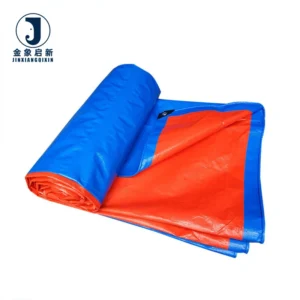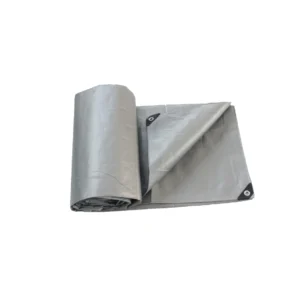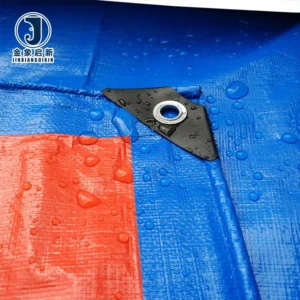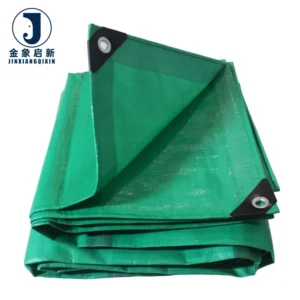
Process Control Over Weave and Coating Weight — Nearly 30 years focused on coated fabric with deep control over base fabric density and lamination consistency, applied here to PE woven tarpaulin cut for truck and trailer load protection.
Technical Specifications
| Parameter | Value |
|---|---|
| Product Type | PE Tarpaulin |
| Coating Material | PE (woven) |
| Construction | Heavyweight woven fabric |
| Waterproof | Yes |
| Anti-Mildew | Yes (mildew-proof claimed, test basis not stated in source) |
| UV Treatment | Yes (UV resistant claimed, test basis not stated in source) |
| Color | Customizable |
| Size | Customizable |
| Style | Plain woven |
| Key Features | Waterproof, mildew-proof, UV resistant |
Application Suitability
| Application | Exposure & Requirement |
|---|---|
| Flatbed and curtain-side truck loads | Constant road vibration, wind flap at highway speed, tie-down strap abrasion at flex points |
| Box trailer and container top covers | Prolonged UV exposure on yard and during transit, pooling rainwater on horizontal surfaces |
| Transport equipment side curtains | Repeated manual or mechanical retraction, contact with cargo edges, daily flex cycling |
| Logistics yard temporary load covers | Open-air weathering, forklift and pedestrian contact, stacking pressure on folded material |
Why a Generic-Size PE Tarpaulin Fails on a Moving Load
A cover that does not match the trailer profile creates slack zones where wind gets underneath and water pools at the seams.
Transport operators who buy off-the-shelf PE tarpaulin sheets cut to standard dimensions frequently find the material rides up on the headboard or leaves the tail gate exposed. The loose sections flap at speed, generating stress concentrations that tear the fabric at the eyelets long before the body of the sheet shows wear. When the cover is pulled tight to compensate, the hem reinforcement takes the full tie-down load at points that were never designed for it [NEED_CITE: field failure patterns in generic-size transport covers]. Cutting each PE tarpaulin for truck and trailer cover to the exact body profile of the vehicle removes both problems — the material sits flush, the eyelets align with the tie-down rails, and the load stays sealed at every flex point.
Cut to the Trailer, Not to a Catalogue Dimension
Every trailer model has a distinct headboard height, side profile and tail gate geometry. A PE tarpaulin for truck and trailer cover that is ordered against the specific vehicle drawing arrives with hems positioned to meet the actual tie-down points on that body. The eyelet spacing follows the strap spacing used by the fleet, so the operator does not have to improvise with bungee cords or additional ratchets. This approach also removes the excess fabric that normally folds over the edge and traps road spray between the cover and the load.
Reinforcement Where the Load Flexes Most
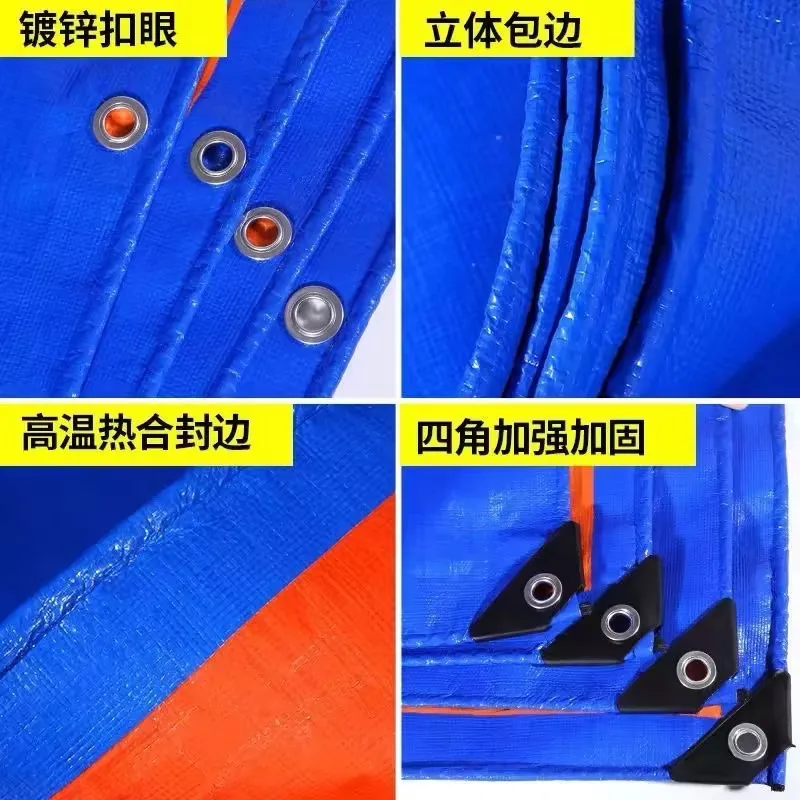
The highest stress on any transport cover occurs at the corners and along the edges where the material meets the tie-down hardware. Reinforced hems with additional webbing or doubled fabric layers distribute the point load across a wider area, preventing the eyelets from pulling through under tension. On curtain-side applications, the leading and trailing edges endure repeated contact with the curtain track and cargo edges. Specifying extra reinforcement at these zones extends the interval between replacements and keeps the load weatherproof through sustained daily use [NEED_CITE: stress concentration testing at hem and eyelet zones in transport tarpaulins].
Reading the Specification Sheet for Transport Duty
The plain woven PE construction provides the base tear resistance that determines how the material behaves when a strap edge cuts into it under tension. Weave density — the count of warp and weft yarns per unit area — works together with the coating weight to produce the final tensile and tear values. A heavier coating on a loosely woven base may feel substantial by hand but will split more easily along the weave direction once a nick starts. Conversely, a tightly woven base with adequate PE coating gives the fabric a balanced strength profile that resists tear propagation in both directions, which is critical when the cover is under multi-axis tension from wind and tie-down forces simultaneously.
The Cost of Skipping Verification Before the Roll Ships
A PE tarpaulin quoted at a given GSM that arrives lighter than stated will feel thinner, drape differently and fail sooner at the stress points. Without a pre-shipment weight check, the buyer discovers the shortfall only after the covers are in service and the first failures appear [NEED_CITE: incoming material weight verification practices for coated fabrics]. Colour variation between rolls in the same order becomes visible once the covers are installed side by side on adjacent trailers, forcing a fleet operator to either accept a mismatched appearance or reject an entire batch. UV treatment that is claimed but not backed by a test report leaves the buyer exposed to premature fading and embrittlement, with no recourse against the supplier when the material degrades within months of deployment.
What the Production Line Brings to Your Transport Cover
Three full production lines and 36 sets of professional equipment provide the capacity to run bulk orders of PE tarpaulin for truck and trailer cover without sacrificing delivery schedules. A 10-person R&D team handles the pattern development, custom sizing and sample production so that each trailer model receives a cover that fits from the first delivery. Dedicated QA and QC at every stage — from base fabric inspection through coating, cutting and finishing — means the material that ships has passed 100% inspection before packing. Samples are developed within days for custom dimensions, allowing the buyer to confirm fit and finish before committing to the full production run.
Documentation & Verification
- Material specification sheet stating GSM, base fabric weave and PE coating type for each roll
- Pre-shipment inspection record confirming actual weight against the quoted value before dispatch
- UV treatment test report where applicable, matched to the stated resistance level for outdoor transport use
- Roll packing list with individual roll identifiers for traceability across the shipment
- Certificate of origin and customs documentation prepared for cross-border dispatch
Fabrication, Handling & Storage
- Heat welding parameters should be set to the PE coating melting range; test welds on scrap from the same roll confirm bond strength before production seaming
- Eyelet placement must account for the plain woven structure; backing plates or reinforced patches prevent pull-through under tie-down strap tension
- Store rolls horizontally on padded racks to avoid flat spots on the PE coating that become permanent crease lines when unrolled
- Unfold covers at ambient temperature; cold PE fabric becomes stiff and may crack at fold lines if handled below freezing
- Clean with mild detergent and soft brush; avoid solvent-based cleaners that can degrade the PE coating surface
- Field repairs on minor cuts can be made with PE-compatible adhesive patches applied to a clean, dry surface
What to Include in Your Enquiry
To specify the right PE tarpaulin for truck and trailer cover for your fleet, share the trailer model drawings or body dimensions, the tie-down strap spacing and hardware type, and the primary operating environment — whether long-haul highway exposure or short-haul yard storage. If your fleet runs in regions with specific fire safety or environmental compliance requirements, note those so the correct treatment grade can be confirmed. Indicate whether you need finished covers with hems and eyelets or roll stock for in-house fabrication, and whether a sample is required for fit validation before the bulk order is placed.
Frequently Asked Questions
Q: How do you verify the PE tarpaulin GSM matches what was quoted when the roll arrives?
A: Each roll undergoes a weight check during the pre-shipment inspection, where sample cuts are weighed and compared against the GSM value stated on the quotation. The inspection record accompanies the shipment so the buyer can cross-reference on arrival. This process catches any deviation before the material leaves the factory.
Q: What UV test basis supports the stated outdoor exposure life for transport covers?
A: UV resistance is available as a treatment option, and the test basis depends on the grade specified. Buyers should confirm the UV standard required for their market — such as accelerated weathering hours or a specific exposure classification — at the enquiry stage so the correct treatment is applied and documented with the corresponding test report.
Q: Can the tarpaulin be cut to my specific trailer model rather than a generic size?
A: Yes. Covers are cut to the exact dimensions of the trailer body profile, including headboard height, side drop and tail gate geometry. Providing the vehicle drawing or measurement sheet at the enquiry stage ensures the hem lines and eyelet positions align with the actual tie-down points on your trailer.
Q: How do you prevent welded seams from failing at the points where the load flexes most?
A: Welded seams are reinforced with additional material layers or webbing at high-stress zones such as corners and tie-down attachment areas. Heat welding parameters are matched to the PE coating type, and sample welds are tested for peel strength before full production begins to ensure the bond outlasts the fabric itself.
Q: What eyelet spacing and hem reinforcement options are available for tie-down compatibility?
A: Eyelet spacing is set to match the strap spacing used by the fleet, and hem reinforcement can include doubled fabric, inserted webbing or backing plates depending on the tie-down hardware. Specify the strap type and tension rating at the enquiry stage so the reinforcement is sized to handle the actual load-securing forces in service.