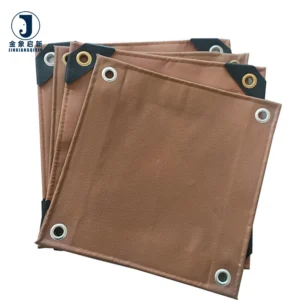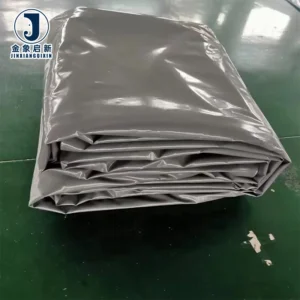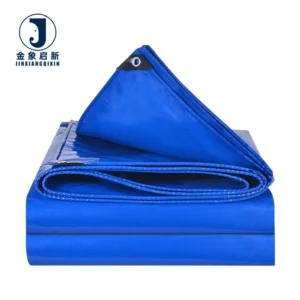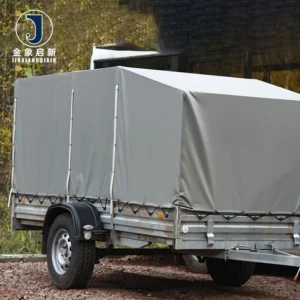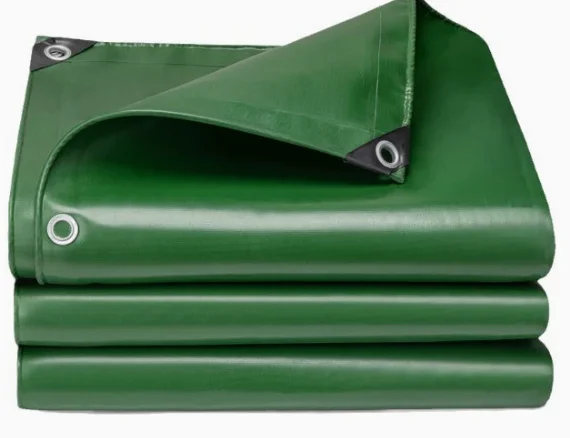
Coating Weight Control — PVC vinyl coating applied over a woven base fabric, with in-process adhesion and GSM verification at each production stage for roll-to-roll consistency.
Technical Specifications
| Parameter | Value |
|---|---|
| Product Type | PVC Coated Fabric |
| Material | PVC Vinyl |
| Weight | At least 450 g/m² |
| Fabric Construction | Woven |
| Waterproof Rating | Waterproof |
| Surface Treatment | Anti-UV, Flame Retardant (grade not stated) |
| Certification | ISO, CE |
Application Suitability
| Application | Exposure & Requirement |
|---|---|
| Truck and Trailer Covers | Constant flexing at load points, road spray, abrasion from tie-downs and cargo shifting |
| Side Curtain Fabric for Articulated Trailers | Repeated rolling and tension cycles, wind-driven rain, UV from prolonged outdoor parking |
| Industrial Equipment Covers | Dust, moisture, outdoor weathering during storage or transit between sites |
| Outdoor Structure Enclosures | Long-term sun and rain exposure, wind loading on fixed frames |
| Construction Site Protection | Abrasive contact with building materials, puncture risk from sharp edges |
Why the Wrong PVC Coated Tarpaulin Fails Before the Truck Reaches Its Destination
Cover failure starts where the load flexes most, not where the fabric is thinnest.
A truck cover cut to a generic size leaves loose fabric that flaps, chafes and eventually splits at the stress point. Fleet operators replacing side curtains or commissioning new trailer covers often discover that the PVC coated tarpaulin for truck and transport applications they specified on paper does not survive the first season. Seams part at the weld line, eyelets tear free from the hem, or the material shows colour drift between rolls once installed side by side on the same trailer. [NEED_CITE: weld seam strength relative to base fabric tensile under dynamic load per ISO 1421]
Fitting the Cover to the Trailer, Not the Other Way Around
A generic rectangle draped over a specific trailer model will always leave slack at the corners and tension at the centre. This PVC coated tarpaulin supports custom cut-to-model sizing so that the fabric follows the exact profile of the trailer body. The woven base fabric resists tear propagation precisely at the tie-down and hem points where road vibration concentrates stress, keeping the cover intact through repeated trips.
Waterproof Protection That Survives Motorway Spray
Rain on a stationary cover tests the coating; rain driven horizontally at motorway speed tests the seams. The PVC vinyl coating on this fabric forms a continuous waterproof barrier that sheds road spray and standing water. Combined with heat-welded seams that fuse the coating layers rather than relying on thread, the cover keeps cargo dry without needle holes becoming leak paths over time.
Reading the Specification Sheet Beyond the GSM Number
Weight alone tells you how much material is on the roll, not how that material behaves under load. The woven base fabric construction matters because the denier of the yarns and the density of the weave determine tear resistance, while the PVC vinyl coating weight determines surface durability and waterproof integrity. A lighter base fabric with a heavier coating may pass a GSM check but tear easily at the eyelet. Conversely, a tight weave with balanced coating delivers consistent performance across the entire panel. The relationship between base fabric density and coating adhesion is what governs weld seam strength when the cover is fabricated. [NEED_CITE: coating adhesion and peel strength test methods for PVC coated woven fabrics]
The Cost of a Specification That Does Not Match the Route
Specifying a PVC coated tarpaulin without verifying the anti-UV or flame-retardant grade against the actual exposure route leads to problems that appear only after installation. A cover that crosses desert highways daily requires confirmed UV stabilisation; a cover that enters a tunnel or enclosed loading bay may need a documented flame-retardant grade for site compliance. When the grade is not verified before dispatch, the cover fails an inspection or degrades prematurely, and the replacement cost includes downtime, labour and freight — far beyond the material price difference. [NEED_CITE: flame retardant classification requirements for transport and construction covers]
Why Buyers Source This PVC Coated Fabric Here
Three full production lines and 36 sets of professional equipment maintain output volume without sacrificing the batch-to-batch GSM consistency that fleet operators require.
The 10-person R&D team develops custom cut-to-model samples within days, letting transport equipment builders confirm fitment before committing to a production run.
Dedicated QA and QC at every production stage includes 100 percent pre-shipment inspection, catching colour variation and coating defects before rolls leave the facility.
Deep process control over coating weight and adhesion, built over nearly 30 years of focused coated fabric production, means the PVC vinyl layer bonds reliably to the woven base for durable weld seams.
Full documentation accompanies each shipment — from material specification sheets to certificates of origin — so importers clear customs without delays or disputes.
Documentation & Verification
- Material specification sheet stating GSM, base fabric type, and PVC vinyl coating weight per roll
- Pre-shipment inspection record confirming 100 percent visual and dimensional check before dispatch
- Test report for UV stabilisation and flame-retardant grades where applicable to your market
- Roll packing list with gross and net weight for container load planning
- Certificate of origin and customs documentation for international freight clearance
- ISO and CE certificates included in the shipping document set
Fabrication, Handling & Storage
- Heat-weld seams using temperature and dwell settings matched to the PVC vinyl coating weight for full fusion
- Reinforce eyelet positions at tie-down points where the woven base fabric carries the concentrated load
- Store rolls upright on pallets in a dry, shaded area to prevent flat-spot deformation of the woven core
- Allow cold-stored rolls to reach ambient temperature before unrolling to avoid coating crack at the fold
- Use mild detergent and soft brush for cleaning; avoid solvents that soften the PVC vinyl coating surface
- Plan panel cutting layout to maximise yield from the roll width and minimise transverse weld seams
What to Include in Your Inquiry
Provide the specific truck or trailer model and the type of cover you need — side curtain, flatbed tarp, or full enclosure. State the operating environment, including expected UV exposure, temperature range, and whether flame-retardant compliance is required for your route or site. Confirm the quantity of finished covers or roll metres needed and whether you require samples for fitment testing before the bulk order.
Frequently Asked Questions
Q: How do you verify the GSM matches the quotation on arrival?
A: Each roll is produced under in-process coating weight control, and a material specification sheet stating the exact GSM, base fabric and PVC vinyl coating details ships with the order. A 100 percent pre-shipment inspection record documents the measured values before dispatch, so you can cross-check on arrival.
Q: What are the minimums and lead times for custom-sized truck covers?
A: Custom cut-to-model samples are developed within days so you can confirm fitment before production. Minimum quantities and lead times depend on the trailer model complexity and order volume. Share your model drawings and required quantities for a specific quotation with realistic timelines.
Q: Which eyelet and hem reinforcement options are available?
A: Eyelet spacing and hem construction are configured to match the tie-down system on your trailer. The woven base fabric provides a stable anchor for reinforced eyelet patches, and hem folding is adjusted to the PVC vinyl coating thickness to prevent cracking at the fold line during fabrication.
Q: What are the key points for heat-welding this fabric?
A: Weld temperature and dwell time must match the PVC vinyl coating weight to achieve full layer fusion without burning through the woven base fabric. We recommend test welds on sample pieces to dial in the settings, then verifying peel strength at the seam before running full production panels.
Q: What test reports support the anti-UV and flame-retardant claims?
A: Where anti-UV or flame-retardant treatment is specified, test reports documenting the grade and test basis ship with the documentation package. Confirm the specific grade required for your market or route before ordering so the correct treatment is applied and verified during production.