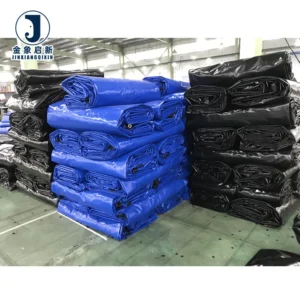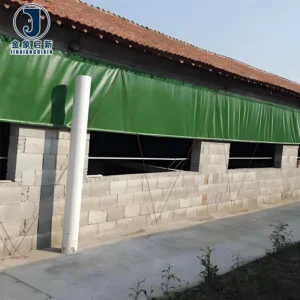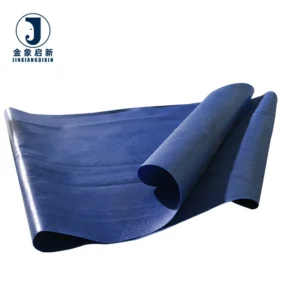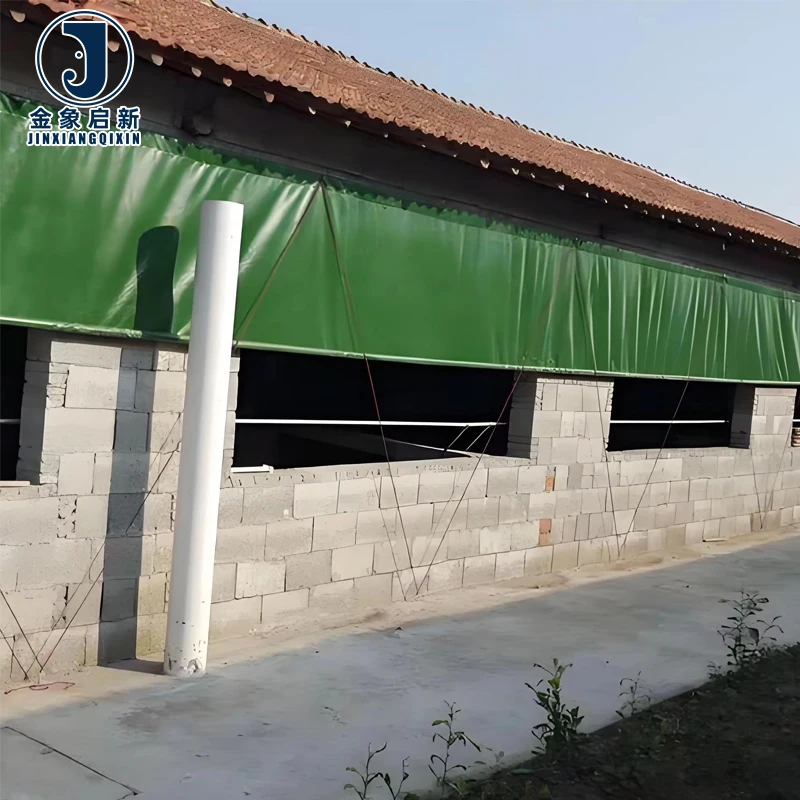
Proven coating control — three dedicated production lines and 36 sets of professional equipment maintain consistent PVC adhesion and weight distribution across every roll of farm tarpaulin produced.
Technical Specifications
| Parameter | Value |
|---|---|
| Product Type | PVC Coated Tarpaulin |
| Base Fabric | Warp knitted woven polyester |
| Coating Material | PVC |
| Application Style | Plain woven |
| Waterproof | Yes — fully coated construction |
| Tear Resistance | Claimed (test standard not stated) |
| Anti-Static | Claimed (grade not stated) |
| Color | Customizable per order |
| Grade | Industrial strength / heavy-duty |
| Seam Method | Heat-welded |
| Certification | ISO, CE (per company profile) |
Application Suitability
| Application | Exposure & Requirement |
|---|---|
| Poultry broiler house side curtains | Constant humidity, ammonia exposure, repeated flexing from ventilation operation, static discharge risk in enclosed housing |
| Pig and sheep shelter enclosures | Direct animal contact and pushing force, wind load on large panels, rain and moisture ingress |
| Agricultural feed stockpile covers | UV exposure, abrasion from loading and unloading, water pooling on horizontal surfaces |
| Farm equipment transport covers | Road vibration, tie-down strap pressure at flex points, weather exposure during transit |
Why Generic Tarpaulin Fails Where Farm Covers Must Hold
Agricultural environments expose coated fabric to chemical, mechanical, and biological stress that general-purpose tarps were never designed to withstand.
When a livestock shelter cover tears at the hem after one season, the failure rarely starts with the fabric itself. It begins at the weld line where repeated wind gusts flex the panel against the frame, or at the tie-down point where strap pressure concentrates load onto a small area of coating [NEED_CITE: tensile and tear test methods for coated fabrics per ISO 1421]. Farm operators who specify PVC coated tarpaulin for farm covers without verifying seam construction, coating adhesion, or base fabric denier frequently discover that the quotation described a material the delivered roll only partially resembles. The gap between stated specification and actual performance becomes visible once the cover is installed and exposed to real conditions.
Covering Livestock Loads That Push Back
Unlike static industrial covers, a PVC coated tarpaulin for farm use must resist mechanical force from inside the structure. Livestock push against shelter walls, creating point loads that test coating adhesion and base fabric tear strength simultaneously. The warp knitted construction distributes this stress across multiple yarn intersections rather than allowing a single tear to propagate through the panel. Heat-welded seams eliminate needle holes that would otherwise become failure initiation points under repeated animal contact and wind-induced flexing.
Anti-Static Requirements in Poultry Housing
Enclosed broiler houses accumulate static charge through air movement, dust circulation, and low-humidity ventilation cycles. The anti-static treatment claimed for this PVC coated tarpaulin addresses a condition that affects both bird welfare and dust accumulation on interior surfaces [NEED_CITE: static discharge risk in enclosed agricultural environments]. Because the grade is not stated in the current specification, buyers operating in markets with defined electrostatic thresholds should request a surface resistance test report to confirm the treatment meets their facility requirements before placing a bulk order.
Reading the Specification Sheet Beyond GSM
Coating weight alone tells you how much PVC sits on the fabric surface, but it does not describe how strongly that coating bonds to the base yarn or how the base fabric itself resists tearing. A warp knitted polyester base with high denier yarns provides tear resistance that a lighter base with the same coating weight cannot match. The plain woven application style creates a stable grid that limits bias stretching when large panels are tensioned across shelter frames. The interaction between base fabric density and PVC coating thickness determines whether the material fails by coating delamination, yarn breakage, or weld separation under the combined stress of wind load and animal contact.
The Hidden Cost of Specifying on Price Per Square Meter
When procurement decisions reduce to cost per square meter without examining the full specification, the delivered material often compensates through lighter base fabric, thinner coating, or skipped treatment steps. A roll that arrives lighter than the quoted GSM will show reduced tear resistance and shorter service life under the same farm conditions [NEED_CITE: GSM verification methods for coated fabrics upon delivery]. Color variation between rolls in the same shipment becomes visible once panels are installed side by side on a long shelter wall, forcing either acceptance of an inconsistent appearance or costly panel replacement. Weld lines that fail before the fabric itself indicates that heat welding parameters were not matched to the actual coating weight delivered.
What Consistent Production Control Delivers
Deep process control over coating weight and adhesion means the PVC layer applied to the warp knitted base matches the specification agreed at sampling stage, roll after roll. The 10-person R&D team develops custom color matches and confirms them against reference standards before bulk production begins, preventing the batch-to-batch shade variation that plagues multi-roll farm installations. Dedicated QA/QC inspection at every production stage catches coating irregularities and weld defects before they reach the dispatch area. Three full production lines provide capacity to fulfill large-volume orders within typical multi-week lead times for custom colours. Samples developed within days allow buyers to verify hand feel, color, and weldability before committing to production volume.
Documentation & Verification
- Material specification sheet confirming PVC coating weight, base fabric denier, and GSM for each roll batch
- Color reference match record per dye lot with sample approval signature before bulk coating begins
- Pre-shipment inspection record covering heat-welded seam integrity and coating adhesion at flex points
- ISO and CE certificates on file with test reports available for anti-static claim verification
- Roll packing list with individual roll weight and dimensions for receiving verification against order
Fabrication, Handling & Storage
- Heat-weld seams using temperature and dwell time matched to PVC coating weight for full fusion at joints
- Reinforce tie-down eyelet zones with additional PVC patches to distribute strap load across the warp knitted base
- Store rolls horizontally on pallets to prevent creasing that becomes permanent once the coating sets under compression
- Allow cold-transported rolls to reach ambient temperature before unrolling to prevent PVC cracking at the fold line
- Clean surfaces with mild detergent only — solvent-based cleaners degrade the plasticizer in the PVC coating layer
- Cut panels using hot-knife or thermal methods to seal edges and prevent yarn fraying from the woven base
What We Need to Quote Accurately
To specify the correct PVC coated tarpaulin for your farm application, we need the end-use environment — whether the cover will serve as a poultry house curtain, an outdoor livestock shelter wall, or a transport cover for agricultural loads. Provide the required panel dimensions and annual volume so we can determine whether standard roll widths serve your cutting layout or whether a custom width reduces waste. If your market requires documented anti-static performance, confirm the surface resistance threshold your facility must meet so we can verify the treatment grade before production.
Frequently Asked Questions
Q: What GSM is recommended for poultry farm covers versus outdoor livestock shelters?
A: The appropriate weight depends on panel size, wind exposure, and whether animals contact the fabric directly. Indoor poultry curtains experience less wind load but require anti-static properties and chemical resistance to ammonia. Outdoor livestock shelters face higher mechanical stress and weather exposure, requiring heavier base fabric. Share your structure dimensions and local conditions so we can recommend the suitable grade.
Q: Can I get a test report confirming anti-static treatment before ordering?
A: Yes. The anti-static treatment is claimed for this PVC coated tarpaulin but the specific grade is not stated in the base specification. Request a surface resistance test report during the sampling phase so you can verify the treatment meets your poultry housing compliance requirements before authorizing bulk production.
Q: How do you ensure color consistency when I order multiple rolls for one project?
A: Each production batch uses a single dye lot matched to your approved color reference sample. The pre-shipment inspection record documents color verification per roll. For large farm installations requiring adjacent panels to match, we recommend ordering the full project quantity in one production run to eliminate batch-to-batch variation.
Q: Do welded seams hold up where animals push against the fabric daily?
A: Heat-welded seams on PVC coated woven fabric create a continuous bond without needle holes that would otherwise become tear initiation points. The weld line strength depends on matching temperature and dwell time to the actual coating weight. We provide seam samples with your material approval package so you can verify weld integrity before committing to full production.