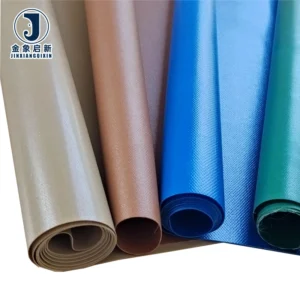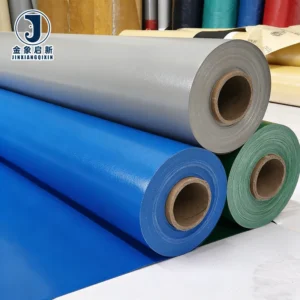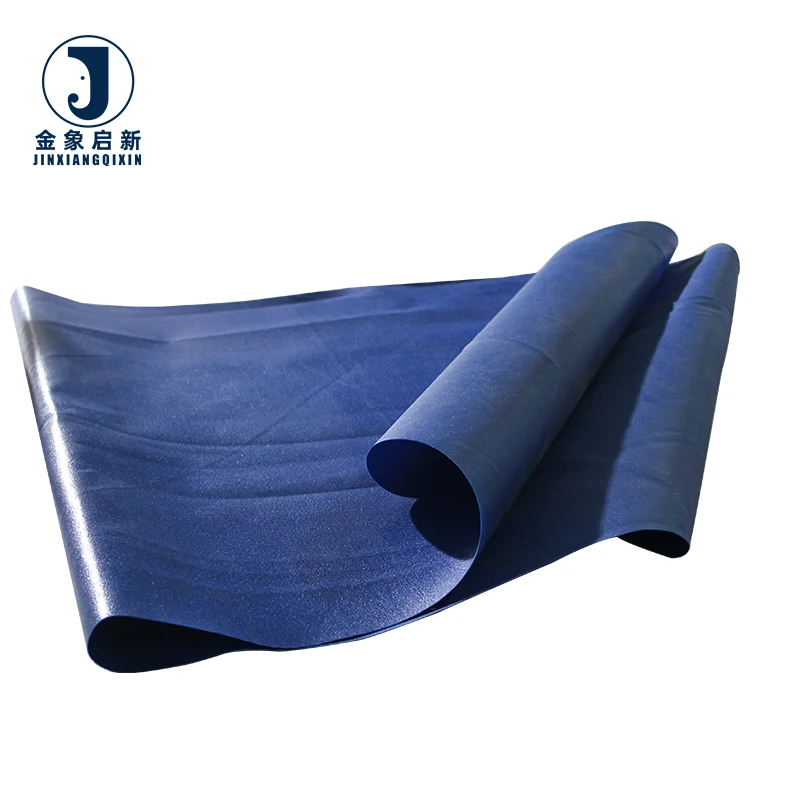
Deep Process Control — coating weight and adhesion are managed at every stage to ensure each PVC Coated Tarpaulin Roll for Truck Cover arrives with verified GSM and batch consistency.
Technical Specifications
| Parameter | Value |
|---|---|
| Product Type | PVC Coated Tarpaulin Roll |
| Coating Material | PVC (HDPE weaving with LDPE lamination noted in source table — verify against manufacturer catalog) |
| Weight (GSM) | 550g / 600g / 650g / 900g |
| Total Thickness | 0.2–0.4 mm / 8 mil–16 mil / Custom |
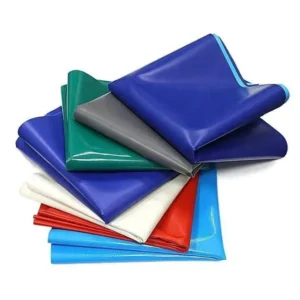
| Color Options | Blue, Blue/Orange, Green, Grey, Black, Clear, Grey/Green, Orange, or custom |
| Waterproof | Yes |
| UV Treatment | Available (test basis not stated) |
| Mildew Proof | Yes |
| Anti-aging | Yes |
| Standards | ISO, CE |
Application Suitability
| Application | Exposure & Requirement |
|---|---|
| Truck and trailer side curtains | Constant flexing at load points, road spray, UV exposure, tie-down tension |
| Flatbed load covers | Direct sunlight, wind lift, abrasion from cargo shifting during transit |
| Transport equipment covers | Repeated folding and unfolding, mechanical contact with steel frames |
| Roof tent fabric | Prolonged weather exposure, mildew risk in humid climates, pack-down abrasion |
Why Truck Cover Fabric Fails at the Seams Before the Fabric Does
Seam failure on a moving load is almost always a specification mismatch, not a material defect.
When a truck cover flexes under highway wind load, the stress concentrates at welded joints and tie-down reinforcement zones. If the PVC Coated Tarpaulin Roll for Truck Cover was selected only on price per square metre without accounting for the flex profile of the specific trailer model, the weld line degrades faster than the surrounding fabric. I have seen heavy-grade coated rolls fail at the weld line while the body of the fabric still had years of service left. [NEED_CITE: tensile and tear test methods for coated fabrics per ISO 1421] The consequence is a cover that must be replaced or patched mid-season, pulling a vehicle out of revenue service.
Matching Roll Width to Trailer Geometry Reduces Waste and Weak Points
Ordering a PVC Coated Tarpaulin Roll for Truck Cover in a width that aligns with your trailer panel dimensions means fewer welded seams in the field. Every heat-welded joint is a potential failure point under cyclic flexing. When a 3.2-metre roll width can cover a standard side curtain panel in a single drop, the result is a cleaner installation with fewer opportunities for moisture ingress or delamination at the weld. Custom widths are available to match non-standard trailer builds and specialised transport equipment.
Reinforcement Zones Where Tie-Down Hardware Meets the Fabric
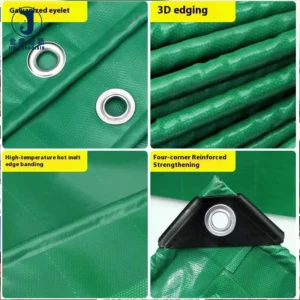
The perimeter hems and eyelet zones on a truck cover endure concentrated point loads every time a strap is tensioned. Reinforced hems distribute that load across a broader area of the base fabric, preventing the eyelet from pulling through under dynamic highway vibration. Available reinforcement options include webbing-backed hems and doubled fabric layers at high-stress corners. Specifying these zones at the roll ordering stage means the fabricator receives material pre-configured for the tie-down system rather than attempting field reinforcement after cutting. [NEED_CITE: DIN 4102 fire classification for building materials]
Reading GSM in Context — Weight Alone Does Not Predict Tear Resistance
The 550g, 600g, 650g and 900g weight grades in this PVC Coated Tarpaulin Roll range each serve different transport exposure profiles. However, GSM reflects total coated weight, not base fabric density or yarn denier. Two rolls at 650 GSM can have very different tear performance depending on whether the extra weight sits in the coating layer or in a denser woven scrim. Coating method — whether knife-over-roll, laminating, or calendering — also influences peel strength and heat-weld behaviour. A laminated structure may weld differently than a knife-coated one at the same GSM, requiring adjusted temperature and dwell time on the weld bar. Thickness values from 0.2 mm to 0.4 mm interact with flex life: thinner gauges fold more easily for roof tent applications, while heavier gauges resist puncture from shifting cargo on flatbeds. UV treatment is available across grades — confirm the treatment level required for your operating climate before specifying.
The Hidden Cost of Specifying Colour Without Batch Controls
When multiple PVC Coated Tarpaulin Roll units arrive with visible shade variation between rolls, the fabricator faces a choice: install mismatched panels side by side on a fleet of trucks, or reject the batch and delay vehicle delivery. Colour drift within a single purchase order typically traces back to coating batches mixed at different times or pigment lots not reconciled before production. For fleet operators and transport equipment builders, consistent colour across every roll in the order is not cosmetic — it is a contractual delivery requirement. [NEED_CITE: colour consistency standards for coated textile batches]
Why Procurement Teams Source Truck Cover Rolls Here
Three full production lines and 36 sets of professional equipment support bulk roll output with consistent coating weight across long production runs. A 10-person R&D team handles custom width, colour matching and pattern printing with sample development before bulk commitment. Dedicated QA and QC inspection at every production stage means each PVC Coated Tarpaulin Roll for Truck Cover is checked for coating adhesion, colour reference and dimensional accuracy before packing. Pre-shipment inspection covers 100 percent of rolls, not a statistical sample. Material specification sheets accompany each order, stating exact GSM, base fabric construction and coating type for receiving verification.
Documentation & Verification
- Material specification sheet stating GSM, base fabric denier and coating weight per roll
- Roll packing list with colour reference, roll ID and net weight for dockside check
- Pre-shipment inspection record confirming dimensional and visual compliance
- ISO and CE certificates included with shipping documentation
- UV treatment test basis documented where applicable to order specification
Fabrication, Handling & Storage
- Heat-weld temperature and dwell time vary by coating method — confirm parameters for 550g through 900g grades before production
- Store rolls upright on pallets to prevent flat-spot deformation on the outer wrap layers
- Allow cold-stored rolls to acclimatise before unrolling to avoid coating crack at low temperature
- Reinforce eyelet zones with webbing backing when using 0.2 mm thickness grades under high tie-down tension
- Cut panels with sealed edges to prevent moisture wicking into the base fabric weave
- Use PVC-compatible adhesive for field repairs to maintain coating adhesion integrity
What to Include in Your Enquiry
Provide the truck or trailer model, panel dimensions and the tie-down system type so the correct roll width and reinforcement configuration can be specified. State the target market and any fire classification or compliance requirement that applies at the destination. Indicate the annual volume and whether you need rolls only or finished cut-and-hemmed covers. Request a sample roll or swatch set if colour matching or weld parameter validation is required before bulk production.
Frequently Asked Questions
Q: How do I verify the GSM on arrival matches the quoted weight?
A: Each PVC Coated Tarpaulin Roll ships with a material specification sheet stating exact GSM, base fabric and coating breakdown. We conduct 100 percent pre-shipment inspection, and the roll packing list includes net weight per roll. You can cross-check the receiving weight against the documented value at the dock.
Q: How do you ensure colour consistency across multiple rolls in one order?
A: Pigment batches are reconciled before production begins, and each roll is checked against the colour reference during in-process QA. This prevents shade variation between rolls within the same purchase order, which is critical when panels are installed side by side on fleet vehicles.
Q: What reinforcement options are available for high-flex and tie-down zones?
A: Reinforced hems, webbing-backed eyelet zones and doubled fabric layers at corners are available depending on the tie-down system and trailer flex profile. Specify these requirements at the enquiry stage so the roll is configured before it reaches the fabricator.
Q: What documentation ships with the rolls for customs and receiving?
A: Orders include a material specification sheet, roll packing list, certificate of origin, pre-shipment inspection record and ISO or CE certificates. Additional test reports are supplied where applicable to the specified treatment grade.