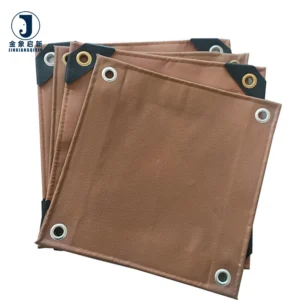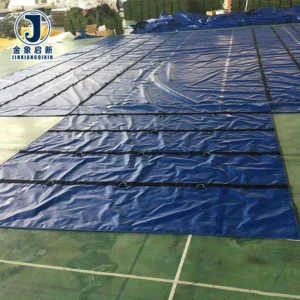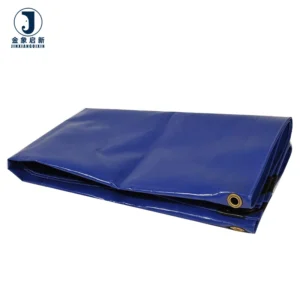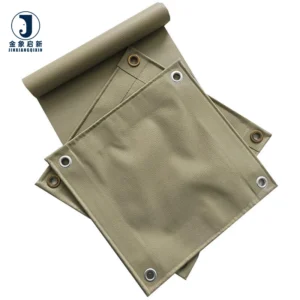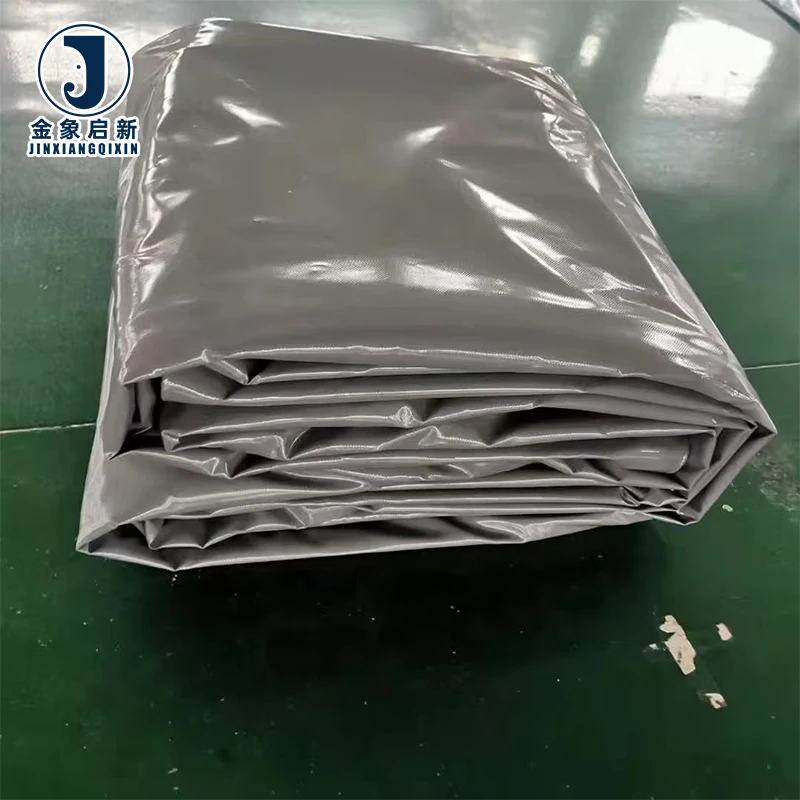
Precision in Every Weld — Deep process control over coating weight and adhesion ensures that PVC coated tarpaulin rolls and cut-to-fit truck covers hold up at the flex points where loads shift and seams strain on the road.
Technical Specifications
| Parameter | Value |
|---|---|
| Product Type | PVC Coated Tarpaulin Roll / Truck Tarpaulin |
| Weight | 630gsm |
| Base Fabric Denier | 200DX300D / 500DX500D / 840DX840D / 1000DX1000D |
| Color | Blue / Grey / Orange |
| Surface Finish | Glossy or matte |
| Waterproof | Yes |
| UV Treatment | Available in treated grades — confirm the UV rating required for your market |
| Flame Retardant | Available in flame retardant grades — confirm the grade required for your market |
| Anti-Fungal | Treated |
| Temperature Range | -15°C to 70°C |
| OEM/ODM | Welcomed |
Application Suitability
| Application | Exposure & Requirement |
|---|---|
| Side curtain truck covers | Constant flexing at load points, road debris impact, UV exposure during long-haul transit |
| Flatbed truck tarpaulins | Full weather immersion, wind uplift forces on tie-downs, abrasion from cargo contact |
| Trailer side panels | Repeated opening and closing, edge wear at curtain tracks, colour matching across fleet |
| Open-bed cargo protection | Sudden rain, load shifting friction, temperature swings during regional transit |
Why Generic Sizing Is Costing Fleet Operators More Than They Realise
A truck cover cut to standard dimensions rather than your specific trailer model leaves excess material flapping in crosswinds and gaps that let rain track onto the load — two failure modes that shorten fabric life and damage cargo.
Generic covers force drivers to improvise tie-downs at non-reinforced points, concentrating stress where the coating has no extra support. Over a season of daily use, those stress concentrations become tear initiation points. Fleet operators running mixed trailer models end up carrying multiple generic sizes that still do not fit any single trailer properly [NEED_CITE: fitment tolerances for side curtain systems on European and North American trailers].
How Model-Specific Cut Eliminates Edge Flutter
PVC coated truck tarpaulin for fleet and transport applications requires dimensional accuracy down to the eyelet position. When the cover is cut and hemmed to the exact rail-to-rail and bulkhead-to-tail dimensions of your trailer, the fabric sits taut without pulling against welded seams. This is where most premature failures originate — at the junction of hem and body fabric where load flex concentrates during cornering and braking.
Reinforcement That Matches the Load Path
Every tie-down point on a truck cover carries dynamic load from strap tension and road vibration. The eyelet spacing and hem reinforcement need to match how your drivers actually secure loads, not a default pattern stamped onto every generic cover. Heavy-duty hems with additional coating layers at the eyelet line distribute strap tension across a wider fabric area, preventing the pull-through failures that expose cargo mid-transit [NEED_CITE: tensile load distribution at reinforced eyelet zones in heavy-duty coated fabric].
What Base Fabric Denier Means for Your Trailer Type
The denier of the base fabric — from 200DX300D up to 1000DX1000D — determines how much tensile and tear load the woven yarn structure can absorb before the PVC coating carries the stress alone. Flatbed covers that get dragged across rough cargo benefit from higher denier bases, while side curtains that flex continuously in tracks need a balance between tear strength and flexibility to prevent stiffening in cold conditions.
Temperature Behaviour on the Road
The operating range of -15°C to 70°C covers the temperature extremes that truck covers encounter from winter starts to summer transit under direct sun. Below the lower boundary, PVC stiffens and becomes more susceptible to cracking at fold lines when drivers unfurl the cover in cold yards. Above the upper boundary, the coating softens and can mark where straps compress it against sharp-edged cargo, leaving thin spots that become weak points over time.
Why GSM and Denier Must Be Read Together
A 630gsm weight tells you the total mass of base fabric plus coating per square metre, but not how that weight is distributed. A high-denier base with a thinner coating gives better tear resistance but less surface protection against abrasion. A lower-denier base with a heavier coating offers a smoother surface and better weldability but depends more on the coating itself to resist tearing [NEED_CITE: relationship between base fabric denier, coating weight, and tear propagation per ISO 1421]. Specifying both GSM and denier together — rather than GSM alone — is how you ensure the fabric matches the mechanical demands of your specific trailer configuration.
The Hidden Cost of Wrong Specification Choices
When a fleet orders PVC coated truck tarpaulin by GSM alone without specifying denier, the supplier can meet the weight target by loading more coating onto a lighter base. The roll arrives on weight, passes a quick scale check, but tears at the first significant load shift because the woven structure underneath was not rated for the application. Similarly, flame retardant or UV claims without a supporting test report leave compliance gaps that only surface when a site inspector or port authority asks for documentation [NEED_CITE: test report standards for flame retardant coated fabrics in transport applications].
Why Procurement Teams Choose This Source
Three full production lines and 36 sets of professional equipment mean that roll-to-roll consistency is maintained through machine-level process control, not manual adjustment between batches. A dedicated 10-person R&D team handles pattern layout and custom sizing before production begins, reducing material waste and ensuring that the first roll matches the last across a fleet-scale order. Every roll passes 100% inspection before dispatch, with GSM, colour reference, and dimensional accuracy verified against the order specification — not sampled from one roll and assumed for the rest.
Documentation & Verification
- Material specification sheet stating 630gsm, base fabric denier, and colour reference per roll
- UV and flame retardant test reports provided where specific grades are requested
- Pre-shipment inspection record confirming dimensions against trailer model fitment data
- Roll packing list with individual roll IDs for traceability across fleet deployments
- Certificate of origin and customs documentation for cross-border fleet procurement
Fabrication, Handling & Storage
- Hot-air welding at recommended temperatures preserves coating adhesion on 630gsm material
- Store rolls upright on pallets to prevent flat spots that telegraph through the PVC surface
- Allow cold-stored rolls to reach ambient temperature before unrolling to prevent coating crack
- Use PVC-compatible cleaners only; solvents degrade the coating bond on glossy or matte finishes
- Reinforce all eyelet positions with additional hem layers to distribute tie-down strap loads
What We Need to Quote Accurately
Provide the exact trailer make and model, or the rail-to-rail and bulkhead-to-tail dimensions, so the cover can be cut to fit rather than supplied in a generic size. Specify the eyelet spacing and any additional reinforcement requirements at high-wear zones. If your fleet operates under a specific UV exposure condition or requires flame retardant documentation for site compliance, state the grade or standard so the correct treatment and test report can be arranged before production.
Frequently Asked Questions
Q: How is the truck cover matched to my specific trailer model?
A: Provide the trailer make, model, and year, or supply measured dimensions from rail to rail and bulkhead to tail. The cover is then cut, hemmed, and fitted with eyelets positioned to match your existing tie-down rail layout rather than a generic template.
Q: How do I know the 630gsm weight is accurate on arrival?
A: Each roll is inspected before dispatch with GSM verified against the order specification. The pre-shipment inspection record documents the measured weight, and you can conduct a cut-and-weigh check on arrival using the same method for direct comparison.
Q: What eyelet and hem reinforcement options are available?
A: Standard configurations include reinforced hems with spaced eyelets for ratchet strap tie-downs. Custom spacing, additional webbing reinforcement at high-load zones, and alternative fastener types can be specified during the sample approval stage before full production runs.
Q: How is colour consistency controlled across a fleet order?
A: All rolls for a single fleet order are produced in the same batch run with coating formulation and colour reference locked at the start. The 100% pre-shipment inspection includes a visual colour match check to confirm no visible variation between rolls when installed side by side.
Q: What documentation supports UV and flame retardant claims?
A: Where UV treatment or flame retardant grades are specified, the corresponding test reports are provided with the shipment documentation. State the required grade or market standard at inquiry stage so the correct treatment level and test basis are confirmed before production begins.