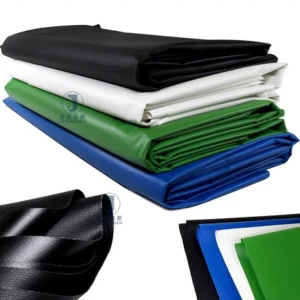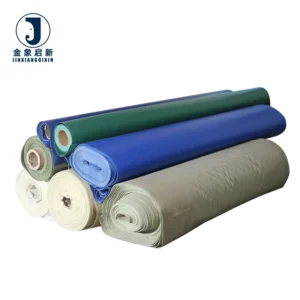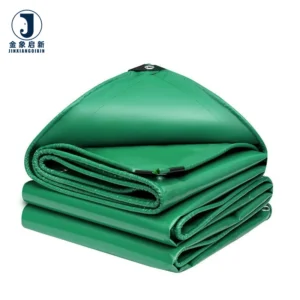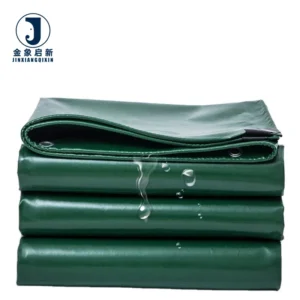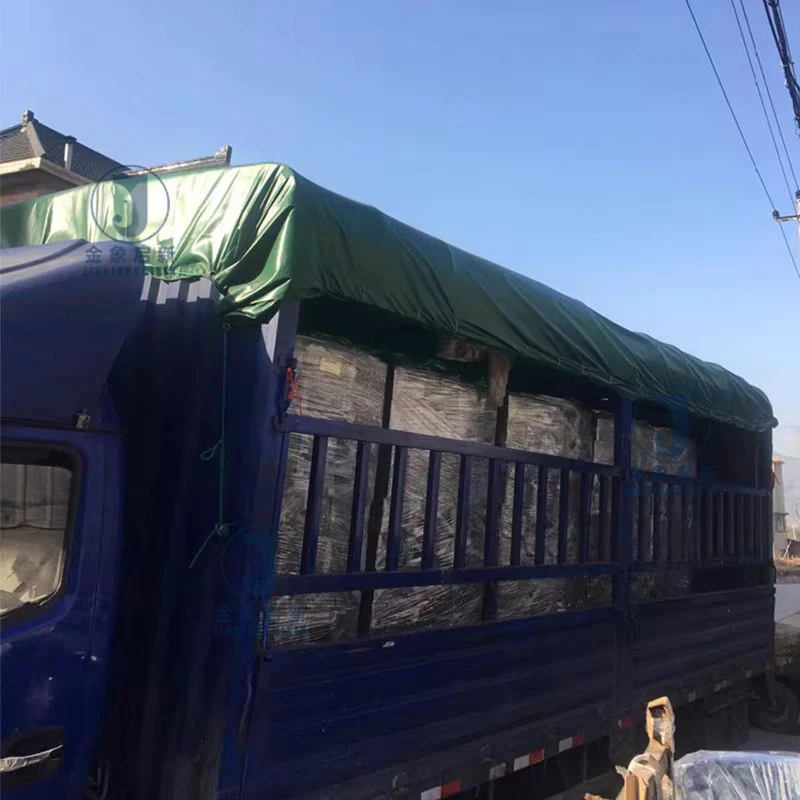
Three full production lines — supporting batch-to-batch color and coating consistency for PVC Coated Tarpaulin Cover for Poultry Farm across roll stock orders.
Technical Specifications
| Parameter | Value |
|---|---|
| Product Type | PVC Coated Tarpaulin |
| Coating Material | PVC |
| Base Fabric | Warp Knitted |
| Waterproof | Yes |
| Tear Resistant | Yes (test basis not stated in source) |
| Anti-Static | Available (grade not stated in source) |
| Style | Plain |
| Color | Customizable colors |
| Application Grade | Industrial / Heavy-Duty |
Application Suitability
| Application | Exposure & Requirement |
|---|---|
| Poultry and livestock farm side curtains | Continuous moisture, ammonia vapour, wind flexing, daily roll-up abrasion |
| Truck and trailer load covers for livestock and feed transport | Road vibration, UV exposure, tie-down tension at hem and eyelet zones |
| Agricultural equipment and hay stack covers | Standing water, soil contact at edges, repeated draping and folding |
| Farm shelter and temporary storage enclosures | Wind load on large unsupported spans, thermal expansion and contraction |
Why Seam Failure Happens Before the Fabric Gives Way
Reinforcing high-stress weld zones is what separates a cover that lasts from one that splits at the first heavy load.
Most field failures on PVC coated tarpaulin for truck and transport do not occur in the body of the fabric. They begin at the welded seams where flexing concentrates stress, particularly around corners and tie-down points. When a trailer load shifts or a farm curtain is rolled up daily, the seam carries more cyclic load than any single area of the coated fabric. [NEED_CITE: tensile and tear test methods for coated fabrics per ISO 1421]. Hot-air welding parameters must match the coating thickness and base fabric construction, or the bond line becomes the weakest element in the entire assembly.
Covering Moving Loads and Farm Shelters with Consistent Roll Stock
When fleet operators and agricultural contractors source PVC Coated Tarpaulin for Truck and Transport, the material must perform across two very different duty cycles. On the road, a truck cover endures vibration, abrasion against load edges, and repeated tension from straps and tie-downs. In the field, the same fabric may serve as a poultry house curtain exposed to ammonia, humidity, and daily mechanical roll-up. The PVC coating provides a continuous waterproof barrier, while the warp knitted base fabric resists tear propagation at stress points where the material is folded, clamped, or stitched.
Color and Coating Consistency Across Multi-Roll Orders
Batch-to-batch variation is a recurring complaint from buyers who receive rolls that look matched on the warehouse floor but show visible shade differences once installed side by side on a fleet of trailers or a row of farm shelters. Controlling pigment dispersion and coating weight simultaneously across three production lines requires in-process measurement at every stage, not just a final visual check. [NEED_CITE: ISO 9001 quality management for coated fabric manufacturing]. Our QA protocol records coating weight and color reference per roll so that every unit in a shipment falls within the agreed tolerance before it leaves the factory.
How Base Fabric and Coating Work Together
The tear resistance of a PVC coated tarpaulin depends on two interacting factors: the denier and weave density of the warp knitted base fabric, and the adhesion of the PVC coating to those yarns. A heavier coating does not automatically mean a stronger fabric; if the bond between coating and base is weak, the layers can delaminate under flex stress, leaving the base yarns exposed and vulnerable to moisture ingress. Plain weave construction provides a stable substrate for heat welding because the coating sits uniformly across the surface, allowing hot-air energy to penetrate consistently along the seam line. Waterproof performance is inherent in the continuous PVC film, but long-term weather resistance depends on whether anti-UV and anti-static treatments are specified — confirm the grade required for your market and climate zone. Available in flame retardant grades where site regulations demand it; verify the classification needed before ordering.
The Hidden Cost of Underspecifying Farm and Transport Covers
A roll that arrives lighter than the quoted GSM may pass a quick visual inspection but will show premature wear at fold lines and hem edges within the first season. Covers cut to a generic size rather than matched to the specific trailer model leave excess fabric that flaps in transit, accelerating abrasion at contact points. [NEED_CITE: field failure analysis of PVC coated tarpaulin in transport applications]. When anti-UV treatment is claimed without a supporting test report, the buyer has no way to predict how quickly the surface will chalk or embrittle under continuous sun exposure. These issues compound across a fleet: one underperforming cover leads to load damage, insurance claims, and replacement costs that far exceed the original material saving.
Why Source This PVC Coated Tarpaulin Here
Coating weight and adhesion are controlled through nearly 30 years of process knowledge specific to PVC on warp knitted substrates, not borrowed from general textile experience. Three full production lines and 36 sets of professional equipment provide the capacity to deliver multi-roll orders with consistent GSM and color across every unit. A 10-person R&D team develops custom widths, colors, and sample panels within days, allowing buyers to verify weld behavior and drape before committing to a production run. Every roll passes through dedicated QA/QC checkpoints with 100% inspection before dispatch, and pre-shipment inspection records accompany each consignment. The result is a PVC Coated Tarpaulin for Truck and Transport that matches the specification agreed at inquiry, not a generic substitute.
Documentation & Verification
- Material specification sheet stating base fabric type, coating weight, and color reference per roll
- Pre-shipment inspection record confirming GSM and visual consistency before dispatch
- Test report for anti-UV or flame retardant grades where applicable and requested
- Roll packing list with individual roll dimensions and net weight for container loading
- Certificate of origin and customs documentation for cross-border shipment
Fabrication, Handling & Storage
- Heat-weld at temperatures matched to PVC coating thickness; test a scrap piece of the warp knitted base before full production
- Reinforce eyelet zones with additional PVC patches to distribute tie-down load across the plain weave structure
- Store rolls horizontally on pallets to prevent flat spots that affect unrolling and tensioning on site
- Avoid dragging cut panels across concrete or gravel to protect the waterproof PVC surface from scoring
- Clean with mild detergent and soft brush; solvent-based cleaners may degrade the PVC coating over repeated use
- Order custom widths to minimize off-cuts and reduce the number of welded seams in large farm shelter panels
What to Include in Your Inquiry
Provide the specific trailer model or farm shelter dimensions so we can recommend panel sizes that minimize seams at high-stress zones. Indicate whether your market requires a particular flame retardant or anti-static classification, and note any color matching requirements against existing fleet or farm branding. Specify whether you need full rolls for your own fabrication or finished cut-to-size panels with hem and eyelet reinforcement.
Frequently Asked Questions
Q: How is the actual GSM verified before shipment?
A: Each roll is weighed and measured during pre-shipment inspection, and the recorded GSM is compared against the value stated on your material specification sheet. The inspection report accompanies the shipment so you can cross-check on arrival. If a discrepancy is found, the roll is held for review before dispatch.
Q: Can color be matched across multiple rolls in one order?
A: Yes. Pigment batches are mixed to a single reference formula, and color is checked at the coating stage against the agreed standard. Rolls in the same shipment are produced in sequence to minimize variation, and the pre-shipment inspection record documents the color consistency check per roll.
Q: What hem and eyelet reinforcement options are available?
A: Hem edges can be folded and heat-welded or reinforced with an additional PVC strip. Eyelet spacing is set to your specification, with reinforced patches welded behind each eyelet to spread tie-down tension across the warp knitted base fabric rather than concentrating stress on a single point.
Q: Are flame retardant or anti-static versions available?
A: These treatments are available in specific grades. Confirm the classification your site or market requires — such as the relevant national fire standard — and the corresponding test report will be supplied with the shipment. Anti-static grade should also be specified at inquiry stage.
Q: What is the lead time for custom width or color?
A: Lead times depend on the width, color, and order volume. Custom runs require pigment mixing and line setup, which adds preparation time compared to standard stock. Request a quotation with your exact roll dimensions and color reference to receive a confirmed production schedule.