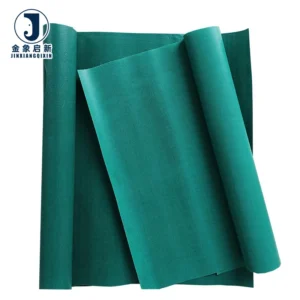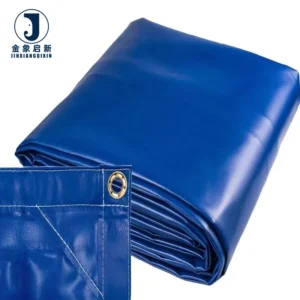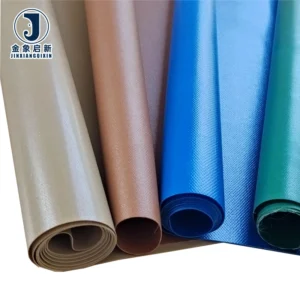
Precision-Coated Weight Control — every roll verified to the quoted GSM before dispatch, supporting the exact load coverage and durability requirements of transport fleet operators specifying PVC coated tarpaulin aftermarket supplier.
Technical Specifications
| Parameter | Value |
|---|---|
| Product Type | PVC Coated Tarpaulin |
| Weight Range | 250gsm-1500gsm |
| Base Fabric Denier | 200D×300D / 500D×500D / 840D×840D / 1000D×1000D |
| Size Options | 3x4m / 6x8m / 8x10m / 10x12m or custom made |
| Coating Material | PVC |
| Finish | Glossy or matte |
| Waterproof | Yes |
| UV Treatment | Customized (test basis not stated in source) |
| Flame Retardant | FR treated (grade not stated in source) |
| Anti-Mildew | Anti fungal treated |
| Temperature Range | -15ºC to 70ºC |
| Working Life | 3-10 years depend on different usage environment |
| Environment | Eco-friendly |
| Key Features | Water-proof, rain-resistant, tear-resistant, durable, good flexibility and adhesion strength, abrasion resistance |
| Certifications | ISO, CE |
Application Suitability
| Application | Exposure & Requirement |
|---|---|
| Truck and trailer load coverage | Continuous road vibration, wind flexing at high speed, abrasion at tie-down contact points |
| Side curtain fabric for transport equipment | Repeated rolling and unrolling, lateral stress during cornering, UV from prolonged outdoor parking |
| Fleet branding and appearance | Colour consistency across multiple vehicles, surface finish for logo adhesion, weather exposure in varied climates |
| Flatbed and curtain-sider operators | Rapid deployment at loading bays, resistance to cargo edge abrasion, secure tie-down point reinforcement |
Why Generic Sizes Leave Your Load Exposed
A PVC Coated Tarpaulin for truck and trailer that does not match your exact vehicle dimensions fails before it even meets the road.
Fleet operators buying standard cut sizes often find excess fabric flapping in the wind, creating drag and wear at unsecured edges. On the other side, a cover that is slightly short leaves cargo exposed at the rear or corners, defeating the purpose of the installation. The mismatch compounds when eyelets do not align with the trailer’s existing tie-down rails, forcing field modifications that weaken the hem [NEED_CITE: tensile and tear test methods for coated fabrics per ISO 1421]. This is a recurring issue when buyers specify from a catalogue rather than providing exact vehicle dimensions. The result is premature replacement, load damage claims, and wasted procurement budget on covers that never fitted correctly.
Cut-to-Model Sizing Eliminates Field Modification
When a PVC Coated Tarpaulin for truck and trailer is cut to the specific trailer model, the eyelets align with factory-installed tie-down points and the hem sits flush against the vehicle profile. This removes the need for operators to punch additional holes or fold excess material, both of which create stress concentrations that initiate tearing. Custom sizing also means the cover deploys faster at loading bays, reducing turnaround time for drivers on tight schedules.
Seam Integrity at the Flex Points That Matter
The welded seams on a truck cover face repeated stress every time the load flexes during braking and cornering. PVC coated tarpaulin aftermarket supplier production controls the heat and pressure at every weld to ensure the seam reaches the fabric’s own strength before the bond fails. This is critical at corners and along the bottom edge where road spray and cargo contact concentrate wear [NEED_CITE: DIN 4102 fire classification for building materials]. Glossy or matte finish options are available depending on fleet branding requirements and the surface that best accepts applied logos.
Reading the Specification Sheet Beyond the GSM Number
The weight of a coated fabric is only one indicator of how it will perform under a moving load. The base fabric denier — whether 500D×500D or 1000D×1000D — determines the underlying tensile structure that carries the load when the cover is pulled tight across cargo. A lighter denier base with a heavy coating may meet the GSM target but will tear more easily along the weave when an edge catches on a load corner. The coating weight and adhesion method determine how well the PVC layer stays bonded to the base fabric through repeated flex cycles, which is where delamination typically starts on a truck curtain that rolls and unrolls daily. Temperature range from -15ºC to 70ºC covers the conditions a fleet encounters from cold-start winter mornings to parked vehicles in direct summer sun, where the fabric surface temperature can exceed ambient significantly.
The Cost of Specifying on Weight Alone
Buyers who approve a PVC Coated Tarpaulin for truck and trailer based only on the GSM figure often discover the material behaves differently than expected once installed. A cover that is light on denier but heavy on coating may feel substantial in the hand yet tear along the weave direction when subjected to lateral load from wind. Colour variation between rolls in the same order becomes visible when two covers are installed side by side on adjacent trailers in a fleet [NEED_CITE: colour fastness and batch consistency in coated fabric production]. Welded seams that were not tested at the actual heat and speed settings used for the specific GSM grade can fail at the bond line while the fabric itself remains intact, leaving operators with a repair problem that should never have occurred.
Why Procurement Teams Source This Fabric Here
Three full production lines with 36 sets of professional equipment mean your order volume is achievable within a predictable schedule, whether you need a single roll for sampling or a container load for fleet-wide rollout. The 10-person R&D team develops samples within days when a custom width, colour, or finish is required, allowing you to confirm material behaviour before committing to production. Dedicated QA/QC at every production stage, including weight verification per roll against the stated GSM before dispatch, prevents the shortfall that causes rejection at your receiving dock. ISO and CE certified production with 100% pre-shipment inspection provides the documentation trail your compliance team requires. After-sales support on installation and repair addresses the issues that arise at flex points once the cover is in service, rather than ending the relationship at dispatch.
Documentation & Verification
- Material specification sheet stating GSM, base fabric denier, coating weight and colour reference for each roll
- Test report for UV and flame-retardant grades where applicable to the treatment specified on your order
- Pre-shipment inspection record confirming weight per roll matches the quoted specification before dispatch
- Roll packing list detailing roll count, individual roll dimensions and net weight for container loading
- Certificate of origin and customs documentation supporting import clearance at your destination port
Fabrication, Handling & Storage
- Heat weld PVC coated tarpaulin rolls at temperature settings matched to the specific coating weight and base denier
- Reinforce eyelet positions with additional PVC patches at tie-down points to distribute load across the 500D×500D or heavier base fabric
- Store rolls upright on their cores to prevent flat spots and permanent creasing in the glossy or matte surface finish
- Allow material to acclimatise before unrolling in cold conditions, as PVC becomes less flexible below -15ºC
- Clean with mild detergent only, avoiding solvents that can soften the coating and reduce abrasion resistance
What We Need From Your Inquiry
Provide the exact truck or trailer model dimensions, including any protrusions such as tail lifts or refrigeration units that affect cover sizing. Confirm the finish preference — glossy or matte — and whether fleet branding or logo application is planned for the surface. Specify the annual volume and whether you require roll stock for in-house fabrication or finished cut-to-size covers with eyelets and reinforced hems already installed.
Frequently Asked Questions
Q: How is the GSM verified on arrival to match the quotation?
A: Every roll undergoes weight verification against the stated GSM during our pre-shipment inspection. The inspection record ships with your order, documenting the actual measured weight per roll so your receiving team can confirm the material matches what was quoted and approved before production began.
Q: Can the tarpaulin be cut to fit my specific trailer model rather than a generic size?
A: Yes. Provide the exact vehicle dimensions including any protrusions, and the cover is cut to match. This ensures eyelet alignment with your existing tie-down rails and eliminates the excess fabric or short coverage that causes problems with standard catalogue sizes.
Q: What eyelet spacing and hem reinforcement options are available?
A: Eyelet spacing is set to match your trailer’s tie-down rail configuration. Hems are reinforced with additional PVC layers at high-stress points. Confirm the spacing and reinforcement requirement during the sampling stage so the production run matches your fleet hardware exactly.
Q: How is colour consistency maintained across rolls for fleet-wide installation?
A: Rolls within a single production batch use the same coating compound and colour formulation. The pre-shipment inspection includes a visual check for roll-to-roll consistency. For multi-batch orders across a year, a colour reference sample is retained to match subsequent productions to the original approval.
Q: What documentation ships with the rolls for customs clearance?
A: Each shipment includes a roll packing list, certificate of origin, commercial invoice and the pre-shipment inspection record. ISO and CE certificates are available for your compliance file. Additional documentation required by your destination port can be arranged before dispatch.