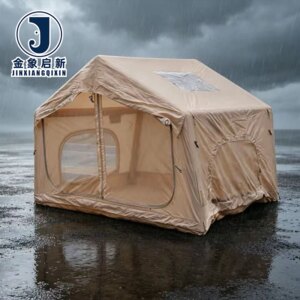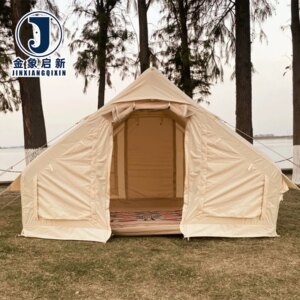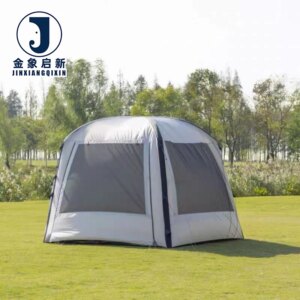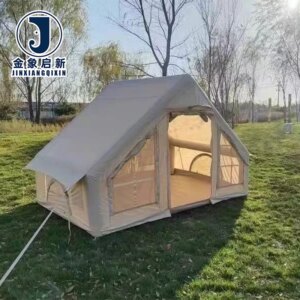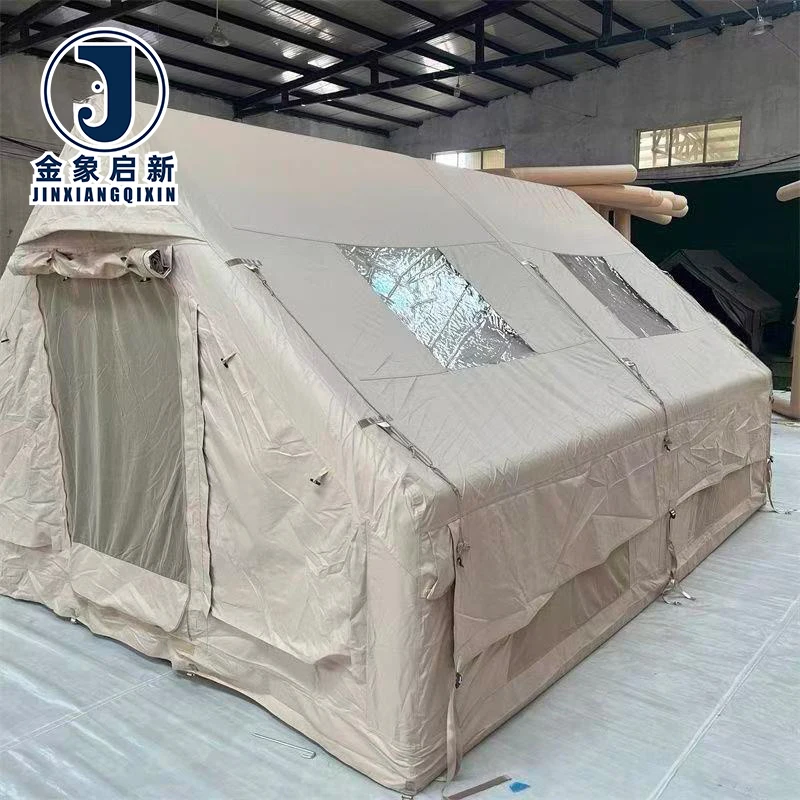
Coating Process Mastery — Nearly 30 years of PVC coating expertise applied to inflatable tent fabric, with dedicated QA/QC verifying every roll before it leaves the production floor.
Technical Specifications
| Parameter | Value |
|---|---|
| Product Type | Inflatable Tent |
| Core Material | PVC tarpaulin |
| Key Performance | Waterproof, tear-resistant |
| Fire-Retardant | Available in flame retardant grades — confirm the grade required for your market |
| Anti-Static | Available in anti-static grades — confirm the standard required for your application |
| UV Resistance | UV-resistant treatment available — test basis to be confirmed per order |
| Capacity | 6-8 Person |
| Season Rating | 4 Season |
| Opening Mechanism | Automatic Opening (Inflatable) |
| Customization | OEM & ODM: sample customization, pattern printing, material selection, product design |
| Standards | ISO9001, ISO14001, ISO45001, CE |
Application Suitability
| Application | Exposure & Requirement |
|---|---|
| Commercial outdoor gear manufacturing | Repeated inflation and deflation cycles, seam integrity under internal air pressure, batch consistency across production runs |
| Camping gear for commercial rental services | Frequent packing and unpacking, abrasion from ground contact, UV exposure during extended outdoor deployment |
| Expedition shelter systems | Extreme temperature fluctuation, high wind load on inflated structure, tear resistance at stress points |
| Industrial event temporary structures | Rapid deployment and dismantling, colour uniformity across multiple units, fire-retardant compliance for public venues |
| Inflatable membrane structure fabrication | Sustained air pressure load, weld line durability, long-term weather exposure on semi-permanent installations |
Why "Flame Retardant" Claims Fail at the Inspection Gate
Specify the exact fire classification your local authority requires before placing the order, and demand the matching test report with every batch.
Event venues and public camping grounds increasingly require documented fire compliance for temporary structures. Yet fabric often arrives with a data sheet claiming flame retardancy and no test report to back it up. When the fire marshal or site safety officer asks for certification matching the installed material, the tent operator has nothing to show. This gap between claim and proof is where Inflatable Tent Fabric for commercial and industrial applications orders get rejected at the final inspection stage [NEED_CITE: fire classification standards for temporary event structures].
Consistency Across Every Roll in the Batch
Commercial tent manufacturers cutting multiple units from a single shipment cannot tolerate shade variation between rolls. Colour drift within the same order becomes visible the moment two tents stand side by side at a festival or rental yard. Our production controls match colour reference across rolls within a batch, so the Inflatable Tent Fabric for commercial and industrial applications you receive presents a uniform appearance from first cut to last.
Weld Line Durability Under Inflation Pressure
Inflatable structures place continuous stress on heat-welded seams. The air beam must hold shape under internal pressure while the tent flexes in wind. If the weld peels before the fabric reaches its tear limit, the entire structure deflates. Our coating formulation supports stable heat-weld parameters, producing seams that match the base fabric strength rather than becoming the weakest point in the assembly [NEED_CITE: tensile and tear test methods for coated fabrics per ISO 1421].
What Base Fabric Density Means for Air-Beam Tents
The denier and weave density of the base fabric determine how the material resists puncture and tear propagation once inflated. A higher-denier yarn in a tight weave limits tear spread if the tent skin contacts a sharp edge during deployment. Coating weight alone does not provide this mechanical protection; the base fabric carries the structural load. When evaluating Inflatable Tent Fabric for commercial and industrial applications, request the base fabric specification alongside the total GSM to understand the full performance picture.
UV Treatment and Extended Outdoor Deployment
Inflatable tents used for multi-week events or seasonal rental fleets face cumulative UV exposure that degrades untreated PVC over time. UV-resistant coating slows this breakdown, preserving tensile strength and surface flexibility through repeated deployment cycles. The level of protection required depends on the climate zone and expected service duration. Confirm the UV test basis applicable to your target market before finalizing the material specification.
The Cost of Overlooking Batch Documentation
A shipment that arrives without a material specification sheet matched to the batch creates downstream problems. The manufacturer cannot verify GSM against the original quotation, the rental operator cannot prove fire compliance to the venue, and the distributor cannot answer customer questions about coating weight. Each missing document delays production, triggers re-inspection, or forces a return. These are preventable failures rooted in documentation discipline, not material quality [NEED_CITE: pre-shipment inspection standards for coated textile exports].
Why Manufacturers Source Inflatable Fabric Here
Our 10-person R&D team handles material selection, pattern printing, and product design in-house, developing samples for custom inflatable tent specifications within days rather than weeks. Three full production lines and 36 sets of professional equipment provide the capacity for bulk orders while maintaining batch-to-batch consistency. Dedicated QA/QC staff inspect every roll at each production stage, with 100% pre-shipment inspection ensuring no roll ships outside specification. ISO9001, ISO14001, ISO45001, and CE certifications underpin the quality management system governing every Inflatable Tent Fabric for commercial and industrial applications order. OEM and ODM services cover the full customization range from sample development through pattern printing and custom sizing.
Documentation & Verification
- Material specification sheet stating base fabric denier, coating type, and total weight for every roll
- Fire-retardant test report matched to batch number and shipped with the order
- UV resistance test documentation provided where treatment is specified
- Pre-shipment inspection record confirming 100% roll inspection before dispatch
- Certificate of origin and customs documentation included for international shipment
Fabrication, Handling & Storage
- Heat-weld temperature and dwell time must be calibrated to PVC coating thickness before production starts
- Store rolls upright on pallets in a dry environment to prevent permanent creasing on the coating surface
- Use compatible PVC adhesive for field repairs on inflated structures to maintain seam integrity
- Cut patterns with allowance for weld overlap to ensure air-beam seams carry full inflation pressure
- Clean finished tents with mild detergent; avoid solvents that degrade the PVC coating surface
What to Include in Your Inquiry
Provide the intended deployment environment and expected service cycle so we can recommend the appropriate coating weight and treatment package. Specify the fire-retardant classification or anti-static standard your market requires, along with target roll width and annual volume. If custom colour or pattern printing is needed, share the reference codes and confirm whether you require roll stock or finished cut panels. Sample development is available for approval before bulk production begins.
Frequently Asked Questions
Q: How do you ensure GSM on arrival matches the quotation?
A: Dedicated QA/QC staff verify weight at each production stage. Every roll undergoes 100% pre-shipment inspection against the stated specification, and the material specification sheet shipped with your order documents the verified GSM for that batch.
Q: Can fire-retardant test reports be supplied with every shipment?
A: Yes. When flame-retardant treatment is specified, the corresponding test report is matched to the batch number and included in the shipment documentation. Confirm the exact fire classification required for your market so we align the treatment and testing accordingly.
Q: What is the sample lead time for custom inflatable tent fabric?
A: Our 10-person R&D team develops samples for custom specifications including sizing, colour, and pattern printing. Samples are typically ready for review within a short turnaround period, allowing approval before bulk production is scheduled.
Q: How is colour consistency maintained across multiple rolls?
A: Colour reference is controlled within each production batch. Rolls destined for the same order are produced under matched conditions and inspected side by side during pre-shipment verification to prevent shade variation across units installed at a single site.
Q: What documentation accompanies each batch for compliance?
A: Each shipment includes a material specification sheet, applicable test reports for fire-retardant and UV treatments, pre-shipment inspection records, certificate of origin, and customs documentation required for international commercial buyers.