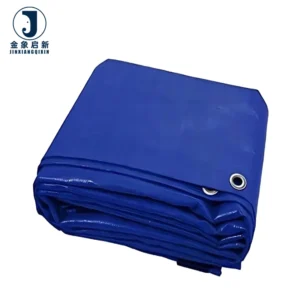
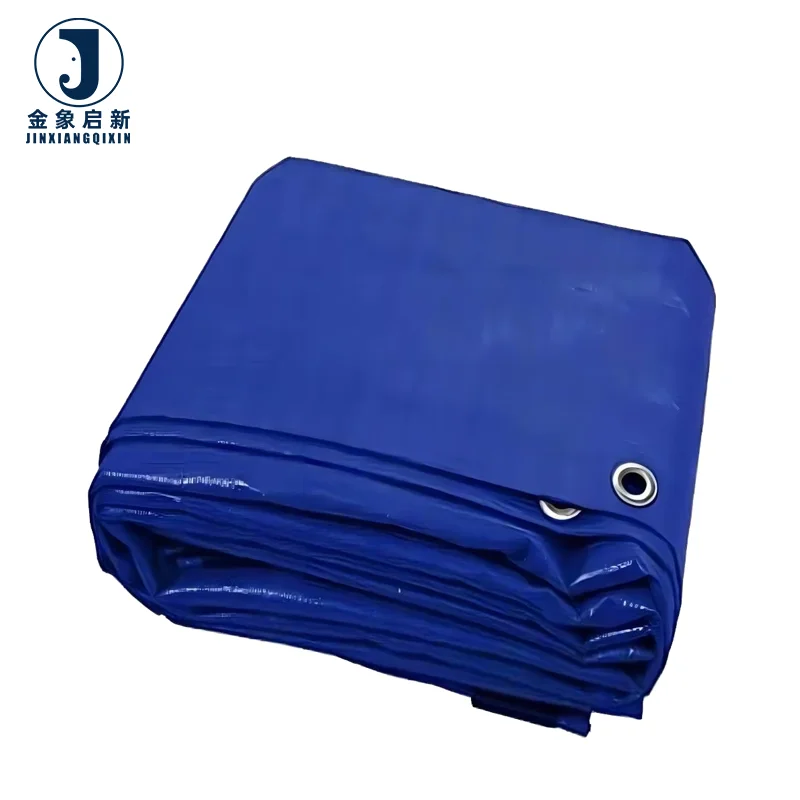
Hot-Melt Coating Expertise — three full production lines control coating weight and adhesion at every stage, ensuring weld integrity on this PVC truck tarpaulin fabric.
Technical Specifications
| Parameter | Value |
|---|---|
| Product Type | PVC Coated Tarpaulin |
| Base Fabric | High-strength polyester mesh fabric |
| Coating Material | PVC |
| Coating Technology | Laminated technology & Hot-melt coating technology |
| Weight Options | 350gsm / 420gsm / 500gsm / 550gsm / 600gsm / 750gsm |
| Thickness Options | 0.32mm / 0.35mm / 0.4mm / 0.45mm / 0.5mm / 0.65mm |
| Roll Size | 2m width × 75m length / 2.1m width × 50m length |
| Finished Product Size | Custom as per customer requirements |
| Color Options | Blue / Red / Yellow / Light blue / Grey (Customized) |
| Key Features | Cold crack resistance, Anti-mildew, Anti-static treatment (grade not stated), Waterproof, Sunproof (test basis not stated), High tearing strength for welding, Best color fastness |
| Standards | ISO, CE |
Application Suitability
| Application | Exposure & Requirement |
|---|---|
| Truck and trailer load covering | Road vibration, constant flexing at tie-down points, weather and spray exposure |
| Side curtain fabric for transport equipment | Repeated opening and closing cycles, abrasion against load edges, wind load stress |
| Cargo ship awning covers | Salt spray, sustained UV exposure, heavy wind loading on large panels |
| Logistics fleet weather protection | Year-round outdoor exposure, thermal cycling, mechanical handling during loading |
Why a Generic Truck Cover Fails Before the Fabric Does
A PVC truck tarpaulin cover that is cut to a standard size rarely sits flush against a specific trailer model, leaving slack zones that flap at highway speed and concentrate stress at the hem. The fit determines the service life as much as the fabric itself.
Fleet operators regularly see welded seams part at the point where the load flexes most, while the body of the fabric remains intact. This is not a material failure — it is a specification mismatch between the cover geometry, the reinforcement layout, and the route conditions the trailer encounters daily [NEED_CITE: tensile and tear test methods for coated fabrics per ISO 1421]. Ordering a PVC coated truck tarpaulin for fleet and transport operations means matching the panel dimensions, eyelet spacing, and hem construction to the actual vehicle, not to a catalogue default.
Hot-Melt Coating and Weld Integrity on Moving Loads
The hot-melt coating technology used on this PVC coated truck tarpaulin for fleet and transport applications forces PVC into the polyester mesh under heat and pressure, creating a mechanical bond that resists delamination at the weld line. When a side curtain or truck cover flexes repeatedly during transit, the welded seam must carry the same tensile load as the body fabric without the coating peeling away from the yarns.
Matching GSM to Route Exposure and Load Type
A 350gsm grade may suffice for short-haul urban deliveries with minimal tie-down tension, while long-haul routes through variable climates demand a heavier construction. The PVC coated truck tarpaulin for fleet and transport use is available across a range from 350gsm to 750gsm, and the correct grade depends on the trailer type, the cargo profile, and the wind load the cover must resist at speed [NEED_CITE: wind load calculations for flexible covers on commercial vehicles]. Selecting the weight involves balancing fabric handling during daily use against the mechanical stress the cover will face over each trip.
What Thickness, Weave, and Coating Together Mean for the Road
Thickness and GSM are related but independent variables — a 0.5mm fabric at 600gsm indicates a denser base yarn construction than a 0.5mm fabric at 500gsm, and that density governs how the material resists tearing when a sharp load edge presses against it. The high-strength polyester mesh base provides the structural skeleton, while the hot-melt PVC coating fills the interstices and bonds to each filament. Laminated construction adds a distinct coating layer on each face, which improves abrasion resistance on the outer surface but changes the hand feel and flexibility. Cold crack resistance means the PVC formulation remains pliable at lower temperatures rather than becoming brittle and cracking at fold points during winter routes.
What Happens When Colour Varies Between Rolls on the Same Fleet Order
A logistics company ordering twenty truck covers in the same colour expects every trailer in the yard to look identical when lined up for a client inspection. When one roll runs slightly darker or shifts in hue, the mismatch becomes visible the moment two covers are installed side by side, and the fleet either accepts an inconsistent appearance or rejects the batch. This colour variation typically traces back to inconsistent pigment dosing or temperature fluctuation across the coating line during production [NEED_CITE: colour consistency standards for coated technical textiles]. Dedicated QA checks at every coating stage, with 100% pre-shipment inspection, catch these deviations before the rolls leave the facility.
Why Procurement Verification Matters for Transport Covers
Fleet operators and transport equipment builders specify a PVC coated truck tarpaulin for fleet and transport duty based on the GSM, coating method, and treatment stated on the quotation. When the material arrives lighter than agreed, the cover will not withstand the same wind load or tie-down tension that the fleet safety protocol was designed around. Anti-static treatment is noted on the specification but the grade is not stated — confirm the anti-static classification required for your application before placing the order. Similarly, sunproof performance is claimed but the test basis is not stated in the source documentation, so request the relevant UV test report for your market’s compliance requirements.
Why Source This PVC Truck Tarpaulin Here
Three full production lines and 36 sets of professional equipment provide the capacity to fulfil fleet-scale orders with reliable on-time delivery, whether you need twenty finished covers or container loads of roll stock. A 10-person R&D team handles material selection, pattern development, and custom sizing, developing samples within days for transport-specific requirements. Dedicated QA and QC at every production stage means each roll of PVC coated truck tarpaulin for fleet and transport application passes 100% inspection before dispatch. Nearly 30 years of focused coated fabric production brings process control over coating weight, adhesion, and colour consistency that directly affects how the cover performs on the road.
Documentation & Verification
- Material specification sheet confirming GSM, base fabric, and coating method per roll
- Weight verification record matching quoted GSM before dispatch
- Pre-shipment inspection report covering colour consistency and surface quality
- Certificate of origin and customs documentation for cross-border fleet procurement
- Test reports for UV and flame-retardant grades where applicable — confirm required standard
Fabrication, Handling & Storage
- Hot-melt coated fabric bonds well under heat welding — confirm temperature and dwell time for the specific GSM grade
- Reinforce hem zones at tie-down points with additional PVC layers to distribute eyelet load across the mesh
- Store rolls horizontally on pallets to prevent permanent creasing in the 0.45mm and heavier grades
- Allow cold-stored rolls to reach ambient temperature before unrolling to protect cold-crack-resistant coating
- Cut panels with consideration for the 2m and 2.1m roll widths to minimise weld seams on large truck covers
- Clean with mild detergent only — aggressive solvents may attack the PVC coating surface
Before You Request a Quote
Provide the truck or trailer model, the route climate range, and the tie-down configuration so the GSM and reinforcement can be matched to the actual duty cycle. Specify whether you need finished covers cut to vehicle dimensions or roll stock for your own fabrication line. Confirm any colour matching, anti-static classification, or UV test standard your fleet compliance requires so the correct grade is quoted from the outset.
Frequently Asked Questions
Q: Can truck covers be cut to fit my specific trailer model rather than a generic size?
A: Yes. Custom sizing is confirmed against your trailer model dimensions before production begins, covering panel geometry, eyelet spacing, and hem reinforcement layout. This eliminates the slack zones and stress concentrations that cause generic-size covers to fail prematurely at high-flex points during transit.
Q: How is GSM verified on arrival and what if the material tests lighter than agreed?
A: Every roll undergoes weight verification against the stated GSM during pre-shipment inspection, and a material specification sheet ships with the order. If a discrepancy is found, it is flagged before dispatch. Buyers are encouraged to conduct their own spot-check weighing on receipt as an additional verification step.
Q: How do you control colour variation between rolls in the same order?
A: Pigment dosing and coating line temperature are monitored at every production stage. All rolls in a single order pass 100% pre-shipment inspection where colour consistency is checked side by side. Deviations are caught and corrected before the rolls are packed and dispatched to your facility.
Q: What documentation ships with the order for customs and fleet compliance?
A: Each shipment includes a material specification sheet, roll packing list, certificate of origin, and pre-shipment inspection record. Where UV or flame-retardant grades are specified, the corresponding test report is included. Confirm any additional compliance documents your market requires when placing the order.