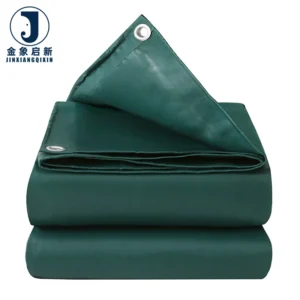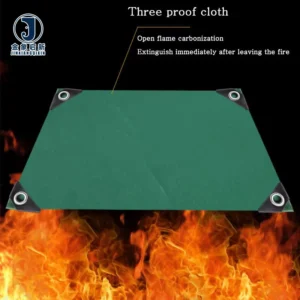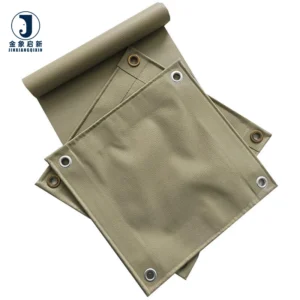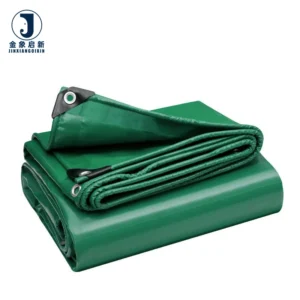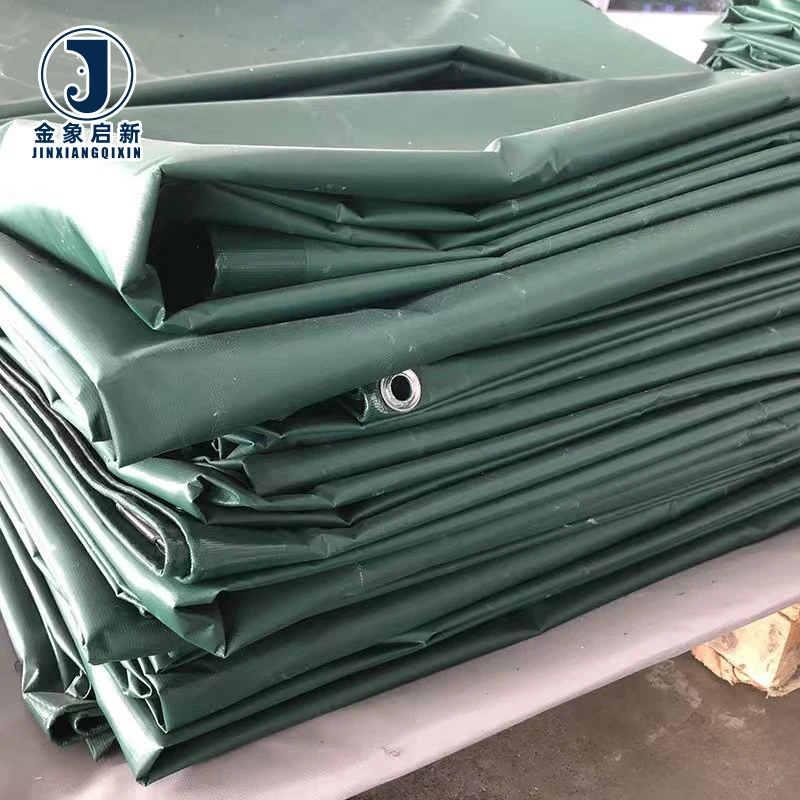
Precision Process Control — every PVC coated tarpaulin for truck covers is verified at the coating stage to ensure adhesion and weight consistency before it reaches the cutting table.
Technical Specifications
| Parameter | Value |
|---|---|
| Product Type | PVC Coated Tarpaulin |
| Base Fabric | 100% high toughness polyester yarn |
| Coating Material | PVC |
| Coating Method | Lamination technology and hot melt coating technology |
| Weight (Medium-duty) | 400-500 g/m² |
| Thickness (Medium-duty) | 0.35-0.45 mm |
| Knitting Density (Medium-duty) | 500D |
| Tensile Strength (Medium-duty) | Warp 1500-2000 N/5cm / Weft 1200-1800 N/5cm |
| Weight (Heavy-duty) | 700-1000 g/m² |
| Thickness (Heavy-duty) | 0.70-1.0 mm |
| Knitting Density (Heavy-duty) | 1000D |
| Tensile Strength (Heavy-duty) | Warp 2000-2500 N/5cm / Weft 1800-2200 N/5cm |
| Weight (Super Heavy) | 1100-1500 g/m² |
| Thickness (Super Heavy) | 1.2-1.5 mm |
| Knitting Density (Super Heavy) | 500D-2000D |
| Tensile Strength (Super Heavy) | Warp 2500-3000 N/5cm / Weft 2200-2800 N/5cm |
| Special Treatments | Flame retardant, anti-static, UV, cold prevention, mold prevention (grades available on request) |
| Waterproof | Fully waterproof coated construction |
| Cold Resistance | Cold resistant cracking |
| Standards | ISO, CE |
Application Suitability
| Application | Exposure & Requirement |
|---|---|
| Flatbed trailer side curtains | Constant flexing at load points, road abrasion, tie-down stress at hem and eyelet zones |
| Tipper and dump truck covers | High mechanical wear from loading, exposure to aggregate impact, frequent deployment and retraction |
| Low-loader and machinery transport | UV exposure on long-haul routes, wind flap fatigue at unreinforced edges, weather ingress at overlaps |
| Curtain-sider fleet replacement panels | Colour matching to existing fleet livery, weld seam integrity at corners and stress concentrations |
Why a Generic-Size Truck Cover Fails on a Specific Trailer Model
A cover cut to a generic dimension will either leave cargo exposed at the edges or bunch at the corners, creating wind flap points that tear the fabric within months.
Fleet operators frequently specify a PVC coated tarpaulin for truck covers based on a nominal length and width, only to find the cover does not account for the trailer’s specific bolster placement, headboard profile, or tailgate clearance. The result is a cover that shifts under highway speed, rubs against sharp metal edges, and fails at the exact points where the load flexes most. [NEED_CITE: wind flap fatigue as primary cause of tarpaulin edge failure in transport applications]
How Model-Specific Sizing Eliminates Cargo Exposure
A PVC coated tarpaulin for truck covers performs only when it is cut to the exact dimensions of the vehicle it protects. This means accounting for the curtain track length, the buckle spacing on tensioning systems, and the radius of the trailer’s front bulkhead. When the sizing is precise, the fabric sits flat under tension, distributing load across the full panel rather than concentrating stress at a single hem line. Fleet operators running mixed vehicle lineups benefit from ordering covers keyed to each trailer registration rather than accepting a single universal size.
Reinforcement at the Points That Actually Fail
The areas around eyelets, tie-down straps, and corner patches experience forces many times greater than the body of the fabric. Hot melt coating technology creates a strong adhesive bond between the polyester base and the PVC layers, but the mechanical fixings still rely on the fabric’s ability to resist tear propagation. [NEED_CITE: tensile and tear test methods for coated fabrics per ISO 1421] Specifying additional webbing or patch reinforcement at these high-stress zones prevents the cover from pulling away from its fixings under crosswind load or during tight cornering on mountain routes.
Reading the Specification Sheet for Transport Use
The weight of a coated fabric, stated in g/m², tells you how much coating and base yarn are present per square metre, but it does not alone predict how the material will behave when welded or tensioned over a load. The knitting density of the base fabric, measured in denier, determines how far a tear will propagate once initiated — a higher denier yarn arrests the tear sooner. Coating method also matters: lamination technology bonds two PVC films to the base scrim under heat and pressure, producing a smooth surface suited to printing and easy cleaning, while hot melt coating forces liquid PVC into the yarn interstices, creating a mechanical lock that delivers higher peel strength at welded seams. The choice between these methods affects both the fabrication parameters your workshop uses and the long-term durability of the cover on the road.
The Cost of Specifying on Price Alone
When a quotation lists a target GSM but the delivered roll arrives lighter than agreed, the fleet operator bears the cost through premature replacement, cargo damage claims, and vehicle downtime. Colour variation between rolls in the same order becomes visible once panels are installed side by side on a curtain-sider, forcing the operator to either accept a mismatched fleet appearance or reject the batch. Welded seams that fail before the fabric does indicate either insufficient peel strength from the coating process or incorrect welding temperature at the fabrication stage — both are quality control failures, not material limitations. [NEED_CITE: coating adhesion and peel strength test standards for PVC coated polyester]
Process Control That Shows Up in the Finished Cover
Three full production lines with dedicated coating stations allow weight and thickness to be held within tight tolerances across the entire roll length. A 10-person R&D team handles pattern development, custom sizing, and material selection for specific vehicle models, producing samples within days rather than weeks. In-process quality checks at the coating head, the laminator, and the winding station catch defects before they become finished goods. Pre-shipment inspection records document the actual GSM of each roll against the specification on the purchase order, giving the buyer a verification trail that goes beyond a generic certificate.
Documentation & Verification
- Material specification sheet listing base fabric denier, coating weight, and colour reference for each roll
- Pre-shipment weight verification confirming GSM matches the quoted specification before dispatch
- UV and flame retardant test reports provided where treatments have been specified for the order
- Roll packing list with individual roll dimensions, weight, and batch number for traceability
- Certificate of origin and customs documentation prepared for cross-border shipment
Fabrication, Handling & Storage
- Hot melt coated fabric requires welding temperature adjusted to coating thickness to achieve full peel strength at seams
- Medium-duty 0.35-0.45 mm grades weld at lower energy settings than heavy-duty 0.70-1.0 mm to avoid scorching the base yarn
- Store rolls on their cores in a dry, shaded area to prevent flat spots that show as crease lines on the finished cover
- Cold resistant grades remain flexible at low temperatures but still require gradual unrolling to avoid surface cracking in winter
- Clean with mild detergent only; solvent-based cleaners degrade the PVC surface and reduce colour fastness over time
- Reinforce eyelet zones with welded PVC patches or webbing to distribute tie-down load across a wider fabric area
What to Include with Your Inquiry
Provide the truck or trailer make, model, and year, along with the curtain track dimensions and tensioning system type. Specify whether you need finished covers with hemming and eyelets or roll stock for your own fabrication. State any fire-retardant or anti-static compliance required at your operating sites, and indicate your annual volume so batch consistency can be planned across your fleet replacement cycle.
Frequently Asked Questions
Q: How do I confirm the GSM I ordered matches what is delivered?
A: Every roll undergoes weight verification before dispatch. You receive a pre-shipment inspection record showing the measured GSM against your purchase order specification. If the roll is part of a larger batch, the record includes batch number and roll position for full traceability back to the coating line.
Q: Can you cut the tarpaulin to fit my specific truck or trailer model?
A: Yes. Provide the vehicle make, model, and curtain track dimensions. The R&D team develops a cutting pattern that accounts for bolster placement, headboard profile, and tailgate clearance, then produces a sample for fitment check before the full production run proceeds.
Q: What test documentation comes with flame-retardant or anti-static grades?
A: Where these treatments are specified, the corresponding test report is included in the documentation package. Confirm the grade required for your market or site regulation at the inquiry stage, as different regions mandate different classification standards for transport and construction applications.
Q: How do you handle colour consistency across multiple rolls in one order?
A: All rolls in a single order are produced from the same coating batch using a single colour reference. The pre-shipment inspection includes a visual check for shade variation between rolls. If panels will be installed side by side on a curtain-sider, this ensures a uniform fleet appearance without visible colour steps.
Q: What is the typical outdoor service life and what affects it?
A: Service life depends on UV exposure intensity, mechanical abrasion from load movement, and welding quality at stress points. The PVC coating includes UV stabiliser treatment, and cold resistant formulation prevents cracking in winter conditions. Actual longevity varies by route climate and maintenance practice.