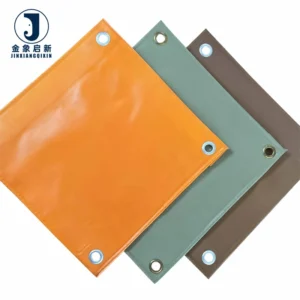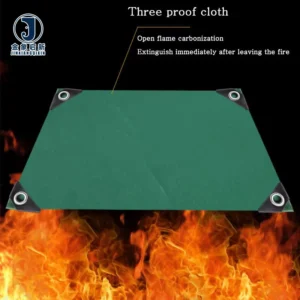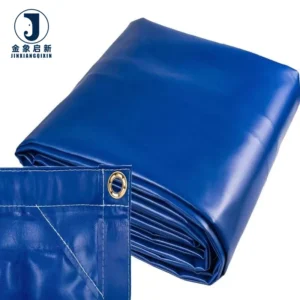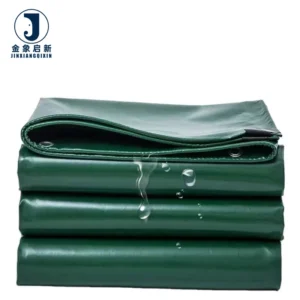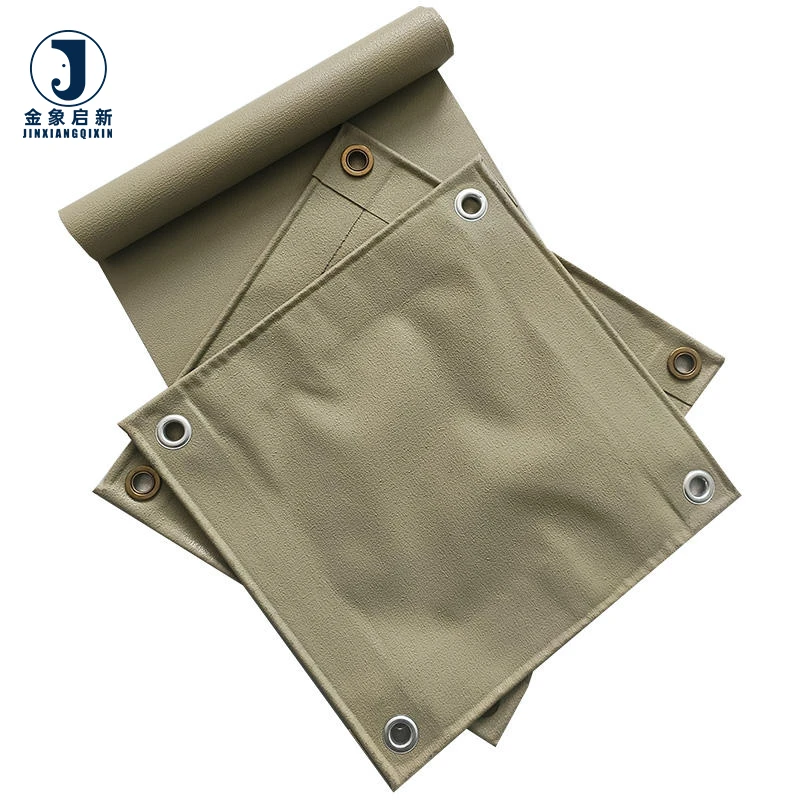
Deep Coating Process Control — nearly three decades focused on knife-coated PVC construction, ensuring consistent adhesion between the woven base fabric and the PVC layer at every seam and weld line across your fleet order.
Technical Specifications
| Parameter | Value |
|---|---|
| Product Type | PVC Coated Tarpaulin Roll |
| Weight (GSM) | At least 450 g/m² |
| Coating Material | PVC Vinyl |
| Coating Method | Knife Coated |
| Base Fabric Type | Woven Fabric |
| Waterproof | Yes |
| UV Treatment | Anti-UV treatment available (test basis not stated) |
| Treatment Options | Anti-UV, Waterproof, Oilproof |
| Custom Size | Available |
| Color | Black back coated variant available |
Application Suitability
| Application | Exposure & Requirement |
|---|---|
| Truck side curtain fabric | Constant flexing at load points, highway-speed wind load, road debris abrasion |
| Custom-fit truck covers | Model-specific trailer dimensions, tie-down strap friction, daily weather cycling |
| Flatbed load covers | Direct UV and rain exposure, abrasion from cargo contact and strap tension |
| Transport equipment covers | Repeated removal and reinstallation, fold-line stress, oil and grease contact |
Why Generic-Size Covers Fail on Mixed-Model Fleets
A PVC coated tarpaulin for truck and transport use must match the exact dimensions of each trailer in your fleet — ordering a standard size and hoping it fits is how loads end up exposed on the highway.
Exact trailer model dimensions drive the fabric cut, eyelet placement, and hem reinforcement pattern — not the other way around.
Fleet operators running mixed-model trailers frequently receive covers that flap at the edges or leave gaps at the corners. The fabric itself may be perfectly adequate, but the fit failure causes wind-driven rain ingress and accelerated abrasion at the loose sections. [NEED_CITE: transport cover fitment standards for curtain-side trailers] Every trailer model has different rail profiles, corner radii, and tie-down point locations that a generic pattern simply cannot accommodate.
Knife Coating and Its Role in Transport Cover Durability
The knife coating process forces PVC compound into the woven base fabric under controlled pressure, filling the gaps between yarns and creating a mechanical bond that resists delamination. For truck and trailer covers that flex repeatedly at load points, this coating-to-fabric adhesion determines whether the material holds together at welded seams. A PVC coated tarpaulin for truck and transport applications depends on this bond integrity more than on the coating thickness alone.
Welded Seam Performance at Flex Zones
Where a truck cover bends around a load or a side curtain flexes in crosswinds, the welded seam carries stress that the flat fabric does not experience. Knife-coated PVC fabric allows heat welding parameters to be matched to the coating weight, producing a seam that fails at a load comparable to the base fabric itself rather than peeling apart at the joint. [NEED_CITE: weld strength testing methods for PVC coated fabrics per ISO 1421] Transport operators replacing side curtains know that seam failure is the most common reason a cover comes off the road before the fabric shows wear.
Reading the Specification Sheet Beyond the GSM Number
The stated GSM of at least 450 g/m² tells you the total mass per square metre, but it does not distinguish between a heavy base fabric with light coating and a light base fabric with heavy coating. For transport covers, the base fabric denier and weave density determine tear resistance at tie-down points, while the coating weight governs waterproofing and UV protection. A balanced construction where the woven base and the PVC coating are matched to the application delivers better field performance than a high GSM achieved through coating weight alone. The knife coating method used here supports this balance by controlling coating application independently from the base fabric selection.
The Hidden Cost of Ordering on GSM Alone
When the roll arrives and the material weighs less than what the quotation stated, the cover will be thinner and weaker than your engineering team specified. For transport applications, underweight fabric shows up first at the eyelets and tie-down zones where strap tension concentrates stress. [NEED_CITE: material weight verification practices for coated fabric shipments] A cover that should handle highway-speed wind load will tear at the hem, forcing an unplanned replacement cycle and leaving cargo exposed in the meantime.
Why Sourcing This Fabric Here Works for Fleet Orders
Three full production lines and 36 sets of professional equipment support bulk roll output with consistent coating weight across your fleet order. The 10-person R&D team develops samples within days when you need a custom size matched to a specific trailer model before committing to volume. Every roll undergoes 100% inspection before shipment, with a pre-shipment record confirming GSM and coating consistency. Custom width and cut-to-model sizing are available without the extended minimums that generic suppliers impose on non-standard dimensions. [NEED_CITE: quality inspection standards for coated fabric pre-shipment] Colour matching across rolls is controlled during production so that panels installed side by side on the same trailer show no visible difference.
Documentation & Verification
- Material specification sheet stating exact GSM and coating weight for cross-check on arrival
- Pre-shipment inspection record confirming weight and visual consistency before dispatch
- UV treatment test report available on request to validate weather resistance claims
- Roll packing list with batch reference for traceability across your fleet order
- Certificate of origin and customs documentation for cross-border shipment support
Fabrication, Handling & Storage
- Heat welding temperature should match the knife-coated PVC layer to avoid delamination at seams
- Eyelet reinforcement at tie-down zones requires hem folding that accounts for the woven base fabric stiffness
- Store rolls upright on end caps to prevent permanent creasing in the 450 g/m² grade material
- Allow rolls to acclimatise before unrolling in cold conditions to avoid coating crack at fold lines
- Use mild detergent for cleaning — solvent-based products may degrade the oilproof treatment surface
What to Include in Your Inquiry
Provide your trailer model numbers and the dimensions of each unit in the fleet so we can recommend cut sizes and reinforcement layouts. Specify whether you need rolls for your own fabrication or finished covers with eyelets and welded hems. If your market requires anti-UV treatment or specific compliance documentation, note this at the inquiry stage so that test reports are prepared alongside production.
Frequently Asked Questions
Q: How do I verify the GSM matches my quotation when the roll arrives?
A: Each shipment includes a material specification sheet stating the exact GSM and coating weight for your order. We recommend weighing a cut sample from the received roll against the stated value. Our pre-shipment inspection record documents the weight check performed before dispatch, giving you a baseline to compare against your own incoming inspection.
Q: What custom sizing options are available for specific truck and trailer models?
A: We cut to your exact trailer dimensions rather than offering generic sizes. Provide the make, model, and year of each trailer, along with rail profile details if available. The R&D team develops a sample panel within days so you can verify fitment before the full fleet order enters production.
Q: How are welded seams reinforced at the flex points where the load moves most?
A: The knife-coated PVC construction allows heat welding parameters to be tuned to the coating weight at each seam. High-flex zones receive additional welding passes or reinforcement strips applied before final assembly, ensuring the joint holds under repeated bending without peeling ahead of the surrounding fabric.
Q: How do you control colour consistency across multiple rolls in one fleet order?
A: All rolls for a single order are produced within the same coating batch using matched pigment formulations. The pre-shipment inspection includes a visual comparison across rolls to confirm no panel-to-panel colour variation before packing. Any roll falling outside tolerance is replaced before dispatch.
Q: What test documentation comes with anti-UV and waterproof treatment claims?
A: UV treatment test reports are available on request and are prepared during production for your specific batch. The waterproof construction is inherent to the knife-coated PVC method, and the coating integrity is confirmed during the pre-shipment inspection. Request the documentation package at inquiry stage to align with your compliance timeline.