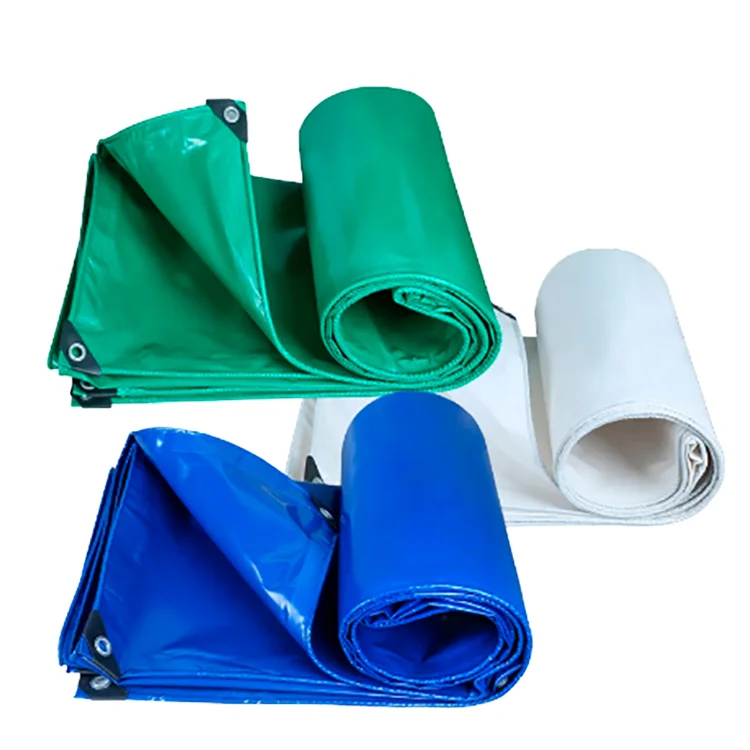
Deep Process Control Over Coating — Every roll of PVC knife-coated tarpaulin leaves our lines with verified coating weight and adhesion, measured stage-by-stage rather than assumed from batch averages.
Technical Specifications
| Parameter | Value |
|---|---|
| Product Type | PVC Coated Tarpaulin |
| Coating Material | PVC |
| Coating Method | Knife Coated |
| Waterproof Rating | Anti-permeable ≥ 20KPa |
| Flame Retardant Grade | Inflame-retarding, ≤ 10 seconds (grade not stated — confirm the classification required for your project) |
| Low-Temperature Flexibility | -30°C |
| Chemical Resistance | Anticorrosion against acid, alkali and brine |
| Anti-Mildew Treatment | Mildew proofing applied (test basis not stated) |
| Material Composition | PVC coated polyester (tricot base) |
| Weight | 500GSM (source value — verify against manufacturer catalog) |
| Surface Style | Plain |
| Key Features | Wrinkle resistant, mildew proof, anti-UV treatment applied |
| Certifications | ISO, CE |
Application Suitability
| Application | Exposure & Requirement |
|---|---|
| Tent and canopy fabrication | Prolonged sun exposure, wind loading, repeated assembly and teardown cycles |
| Awning and shelter structures | UV degradation risk, rainwater pooling, frame abrasion at contact points |
| Truck tarpaulins and side curtains | Highway-speed rain, constant flexing at load points, road salt and chemical splash |
| Outdoor industrial covers | Chemical-zone atmosphere, coastal brine exposure, dust and debris impact |
| Event and temporary structures | Crowd safety compliance requiring flame retardant documentation, short-notice deployment |
What Happens When Coating Weight Is Quoted but Never Verified Before Dispatch
Coating weight on paper means nothing unless every roll is measured before it leaves the factory floor.
We have seen buyers receive shipments where the stated 500GSM material arrived noticeably lighter at the edges, with coating thin enough that the base fabric weave showed through under daylight. The weld lines on these underweight rolls are typically the first to delaminate under flex stress, failing weeks before the fabric body itself shows wear. [NEED_CITE: tensile and tear test methods for coated fabrics per ISO 1421]
A PVC knife-coated tarpaulin for tents and awning fabrication must hold consistent coating thickness across the full roll width — otherwise the panels cut from different sections of the same roll will weld at different temperatures and age at different rates once installed in the field.
Coating Adhesion and Weld Performance on Tent and Awning Panels
The knife coating process deposits a controlled PVC layer onto the polyester tricot base, building adhesion through mechanical interlock rather than surface bonding alone. For tent and awning fabricators, this matters most at the seam: when two panels are hot-air welded, the coating must melt and fuse evenly on both sides without the base fabric separating underneath.
Inconsistent coating adhesion is the hidden reason some welded seams peel apart while adjacent seams on the same structure hold firm — the failure is not in the welding technique but in the coating bond arriving unevenly from the production line.
Colour Consistency Across Rolls for Multi-Panel Structures
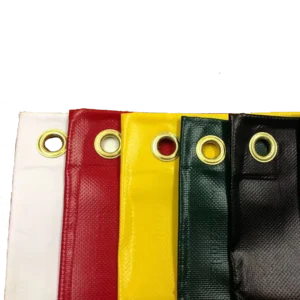
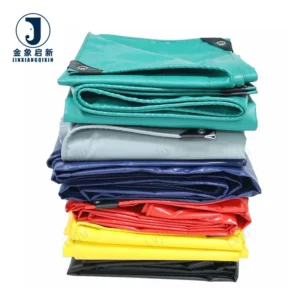
When a tent manufacturer orders multiple rolls to produce a large canopy or event structure, even slight colour drift between rolls becomes visible once panels are installed side by side under natural light. Our in-line QA checks colour reference at defined intervals during each production run, flagging deviation before the roll reaches the packing stage.
This control is critical for awning and shelter contractors who install multiple units in a single venue — a visible shade difference between adjacent structures draws immediate client attention and can trigger rejection of the entire installation. [NEED_CITE: colour fastness standards for coated textiles in architectural applications]
Reading the Specification Sheet Beyond GSM
Weight alone does not determine how a PVC knife-coated tarpaulin performs under load. The 500GSM figure represents the combined mass of the polyester tricot base and the PVC coating applied by knife method — but the ratio between base fabric weight and coating weight tells a different story. A heavier coating on a lighter base may resis*d load, while a heavier base with thinner coating offers better tear propagation resistance but requires more careful weld parameter control.
The anti-permeable rating of ≥ 20KPa confirms the coating forms a continuous barrier against water ingress — relevant for awning panels that may pool water before drainage and for tent roofs under sustained rainfall. Low-temperature flexibility to -30°C means the PVC compound remains pliant in freezing conditions, preventing the brittle cracking that lighter-grade PVC films develop when folded or tensioned in cold weather. The plain surface style provides a consistent base for heat-transfer printing or direct screen printing of branding, while the wrinkle-resistant characteristic keeps installed panels looking taut without excessive tensioning hardware.
The Cost of Specifying the Wrong Flame Retardant Grade
Flame retardancy is often claimed on quotations without a specific grade referenced — and without a test report shipping alongside the goods. When a tent or event structure fabricator installs material that lacks the classification required by the local fire authority, the entire installation can be shut down at inspection, forcing removal and replacement at the contractor’s expense.
We supply flame retardant grades with test documentation, but the specific classification must be confirmed before production begins — different markets and venue types demand different standards, and guessing wrong is a far more expensive mistake than asking upfront. [NEED_CITE: fire safety classification requirements for temporary event structures]
Why Fabricators Source PVC Knife-Coated Tarpaulin Through This Channel
Our three full production lines and 36 sets of professional equipment allow us to hold batch consistency across the volume that tent and awning manufacturers require for seasonal production runs. The 10-person R&D team develops custom width, colour and sample runs within days rather than weeks, letting fabricators confirm material behaviour on their own welding equipment before committing to a full order.
Dedicated QA/QC at every production stage — with 100% inspection before shipment — means coating weight, colour reference and surface integrity are verified roll by roll, not sampled from a batch and assumed uniform. Nearly 30 years focused exclusively on coated fabric gives our production team process control over coating adhesion that shows in weld performance on the fabricator’s shop floor.
Documentation & Verification
- Material specification sheet stating 500GSM weight, tricot base fabric, knife coating method and ≥ 20KPa waterproof rating
- Test report for flame retardant grade and anti-UV treatment supplied with dispatch documentation upon confirmation
- Pre-shipment inspection record covering roll-by-roll weight measurement and visual consistency check
- Roll packing list with individual roll dimensions and net weight for container loading planning
- Certificate of origin and ISO/CE certificates included for import customs clearance
Fabrication, Handling & Storage
- Set hot-air weld temperature to match 500GSM knife-coated construction; test on offcuts before production runs
- Store rolls horizontally on padded racks to prevent compression marks on the plain PVC surface
- Allow cold-stored rolls to reach ambient temperature before unrolling to protect low-temperature flexibility at -30°C
- Use mild pH-neutral cleaners on the anticorrosion-treated surface; avoid solvents that attack the PVC coating bond
- Plan panel cutting layout to maximise yield from each roll width and reduce waste at selvage edges
Preparing Your Inquiry for Production
To move from sampling to production on PVC knife-coated tarpaulin for your tent, awning or canopy line, we need your target panel dimensions or roll width preference, annual volume estimate, and the flame retardant classification required by your end market. If your structures use heat-welded seams, share your welder type and typical temperature settings so we can adjust coating formulation for compatible fusion. Specify whether you require custom colour matching to a Pantone or RAL reference, and whether pattern printing or branding is part of the finished panel.
Frequently Asked Questions
Q: How do you control colour consistency across multiple rolls in a single order?
A: We check colour reference at defined intervals during each production run using the specified Pantone or RAL standard. Any roll showing visible deviation from the approved sample is flagged before packing. For large awning and tent orders where panels install side by side, we recommend requesting a pre-shipment inspection photo set showing rolls laid out together for your visual approval.
Q: Can flame retardant and anti-UV test reports be provided before shipment?
A: Yes — once you confirm the specific grade or standard required for your market, we run the applicable tests and include the reports with your dispatch documentation. Different venues and jurisdictions require different classifications, so we need your target standard before production to ensure the treatment applied matches what your inspector will verify on site.
Q: What documentation ships with the goods for customs clearance?
A: Each shipment includes a roll packing list with individual roll weights and dimensions, certificate of origin, ISO and CE certificates, and the material specification sheet. Flame retardant and anti-UV test reports are included when the corresponding treatment has been specified and confirmed before production. All documents are prepared to match the commercial invoice descriptions.
Q: What weld temperature range works with this 500GSM knife-coated material?
A: The tricot base and PVC coating bond respond to standard hot-air welding, but exact temperature depends on your machine type, air pressure and welding speed. We recommend running test welds on sample offcuts at incremental settings to find the point where coating fuses fully without base fabric distortion. Our R&D team can advise on starting parameters based on your equipment model.