Proven Coating Weight Control — Every roll of PVC tarpaulin fish pond liner is weighed and verified against the stated GSM before it reaches the cutting table, eliminating the short-weight surprises that cause early failures in the field.
Technical Specifications
| Parameter | Value |
|---|---|
| Product Type | PVC Tarpaulin Fish Pond |
| Coating Material | PVC |
| Shape Options | Circular / Rectangular |
| Structure | Foldable |
| Application Form | Fish Tank / Fish Pond |
| UV Treatment | Available — confirm grade required for your market |
| Flame Retardant | Available — confirm grade required for your market |
Application Suitability
| Application | Exposure & Requirement |
|---|---|
| Commercial aquaculture grow-out ponds | Continuous hydrostatic pressure, biological loading, outdoor weathering, puncture risk from substrate |
| Hatchery and nursery tank lining | Clean water containment, frequent draining and refilling, sensitivity to leaching chemicals |
| Recirculating aquaculture systems (RAS) | Long-term water immersion, structural frame contact, repeated flexing during maintenance |
| Agricultural water storage basins | Standing water load, ground contact abrasion, seasonal temperature cycling |
| Ornamental fish tanks and displays | Visible surface finish consistency, custom shape fitment, indoor or sheltered outdoor placement |
Why Stated GSM Does Not Guarantee Pond Liner Durability
Coating weight must be paired with base fabric denier and weave density to predict real-world containment performance.
A PVC fish pond liner quoted at a given GSM may still underperform if the base fabric is loosely woven or uses low-denier yarn. The coating provides waterproofing, but the base fabric carries the tensile and tear load when water pressure cycles against the walls. [NEED_CITE: tensile and tear test methods for coated fabrics per ISO 1421]. When a pond is filled, the liner flexes at the base-to-wall transition — a zone where coating adhesion and fabric strength must work together. A lighter base fabric coated to the target GSM will stretch more under hydrostatic load, stressing the welded seams over time.
Shape-Specific Engineering for Containment Loads
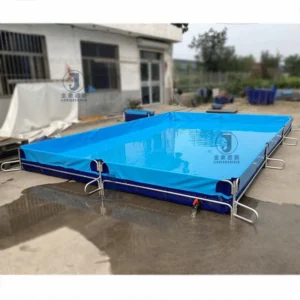
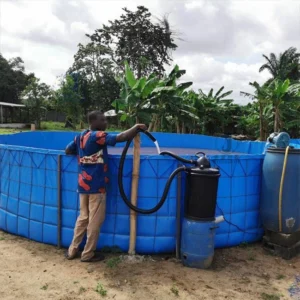
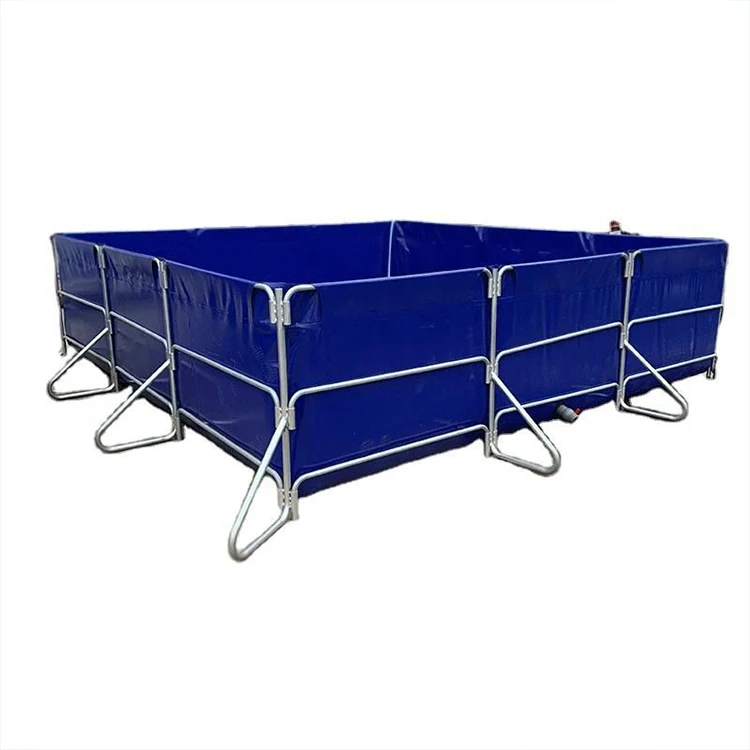
A circular PVC tarpaulin fish pond distributes water pressure evenly around the wall circumference, reducing concentrated stress at corners. Rectangular ponds, by contrast, place higher loads at the corners and along the long walls where the liner meets the support frame. Our cutting and welding process accounts for these differences: circular liners are fabricated with continuous curved seams, while rectangular liners receive reinforced corner welds and additional material allowance at the base-to-wall fold lines.
Foldable Deployment Without Compromising Seam Integrity
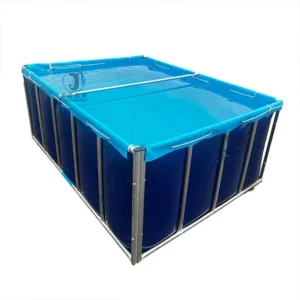
The foldable design allows large-diameter pond liners to be compressed for transport and then unfolded on site without requiring heavy machinery. Each fold line is planned to avoid crossing a primary welded seam, so the liner can be laid flat and filled without the risk of a fold-induced crease developing into a leak path. This matters most for aquaculture operators running multiple pond sizes across a single facility, where logistics and rapid deployment determine project timelines. [NEED_CITE: PVC coated fabric fold recovery and crease-whitening behaviour].
Base Fabric and Coating Weight Interaction
The GSM figure on a quotation reflects total weight — base fabric plus coating on both sides. Two pond liners at the same GSM can behave very differently: one may use a heavier base fabric with a thinner coating, yielding higher tear resistance but less surface abrasion protection; the other may use a lighter base with a thicker coating, which feels stiff initially but offers less structural reserve once the coating surface is scratched. For aquaculture applications where the liner sits in permanent water contact, coating adhesion to the base fabric is critical. Poor adhesion leads to delamination at the weld zones, where heat from the welding process can weaken the bond if the coating formulation is not matched to the base material.
What Happens When Liner Specifications Miss the Mark
Pond liners that arrive lighter than the quoted GSM often trace the shortfall to a thinner coating pass rather than a lighter base fabric — a difference that is hard to detect by hand but becomes visible when the liner is subjected to continuous water pressure. Batch colour variation between rolls used on adjacent ponds creates a visible mismatch once installed and filled, forcing operators to replace sections or accept an inconsistent appearance across the facility. [NEED_CITE: coating weight variance and visual batch consistency in PVC tarpaulin production]. Welded seams that fail before the fabric itself does are frequently traced to welding temperatures that were set for a different coating thickness, causing incomplete fusion at the overlap.
Why Aquaculture Operators Source PVC Tarpaulin Fish Ponds Here
Coating weight verification happens at the roll stage before any cutting begins, so the PVC tarpaulin fish pond you receive matches the specification sheet you approved. Three full production lines with dedicated welding stations handle both circular and rectangular configurations in the same production run, supporting mixed-order flexibility. A ten-person R&D team develops dimension drawings for non-standard pond sizes and produces physical samples within days for your approval before bulk fabrication. Each liner undergoes seam integrity inspection before dispatch, with records documenting the weld parameters used for your specific batch. The foldable packing method is adjusted to your liner dimensions so that on-site unfolding does not stress the primary seams.
Documentation & Verification
- Material specification sheet stating base fabric denier, coating type, and verified weight per roll
- Pre-shipment inspection record including seam integrity check on every welded joint
- ISO and CE certificates available for aquaculture compliance submissions
- Custom dimension drawing confirmed and signed off before production begins
- UV or flame retardant test reports provided where specific grades are requested
Fabrication, Handling & Storage
- Heat-weld seams at temperatures matched to the PVC coating thickness on your pond liner to ensure full fusion
- Store folded liners flat and avoid stacking heavy objects on top to prevent permanent crease marks in the coating
- Unfold the liner on a clean, debris-free surface before filling to avoid puncture from sharp substrate contact
- Use mild detergent and soft brush for cleaning; avoid solvent-based agents that attack the PVC coating surface
- Allow material to reach ambient temperature before unfolding in cold conditions to prevent coating micro-cracking
Planning Your PVC Tarpaulin Fish Pond Order
To move from inquiry to sample, share your pond dimensions (diameter or length/width/depth), the support structure type (frame, earth bank, or free-standing), and whether your site requires specific UV or flame retardant grades. If you are running multiple pond sizes in a single project, indicate the shape mix and quantities so we can plan production runs and container loading together. Let us know if you need a physical sample cut to your exact dimensions before committing to the full order.
Frequently Asked Questions
Q: How do I confirm the GSM matches what I ordered when the pond liner arrives?
A: Each roll is weighed and recorded against the stated GSM before cutting. You can request the weight verification record with your shipment documentation. On arrival, a simple cut-and-weigh test on a sample swatch confirms the total fabric weight matches the specification sheet. We provide the test method and acceptable tolerance range with every order.
Q: What is the lead time for custom-sized ponds in non-standard dimensions?
A: Lead time depends on the complexity of the shape and the number of sizes in your order. Standard circular and rectangular configurations move through production faster, while non-standard depths or unusual aspect ratios require a custom dimension drawing and sample approval step first. We confirm the schedule at the quotation stage so you can plan your site preparation accordingly.
Q: How are welded seams tested before the pond liner ships?
A: Every welded seam on your liner is inspected for fusion completeness and bond strength before dispatch. The inspection record documents the weld parameters used and the visual check results. Seams at high-stress zones — corners on rectangular ponds and base-to-wall transitions — receive additional attention during this pre-shipment check.
Q: Can I order mixed circular and rectangular pond sizes in one shipment?
A: Yes. Our production lines handle both shapes in the same run, and container loading is planned around the folded dimensions of each liner to maximise space. Provide your full size list and quantities at the inquiry stage so we can confirm packing configuration and shipping weight together with your quotation.
Q: Do you provide test reports for UV or flame retardant treatment on pond liners?
A: Test reports are available for specific UV and flame retardant grades upon request. Because requirements vary by market and application, confirm the grade or standard your site regulations demand at the inquiry stage. We then match the treatment to your specification and include the corresponding test documentation with your shipment.