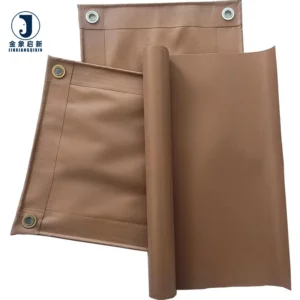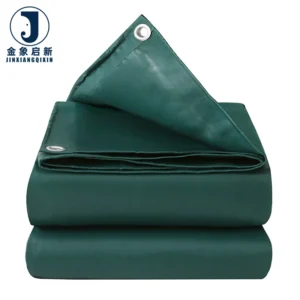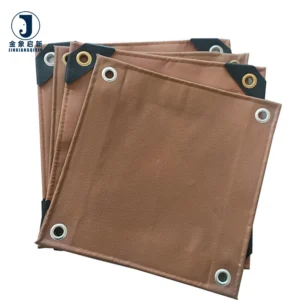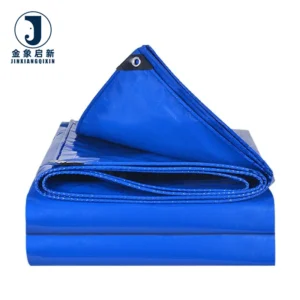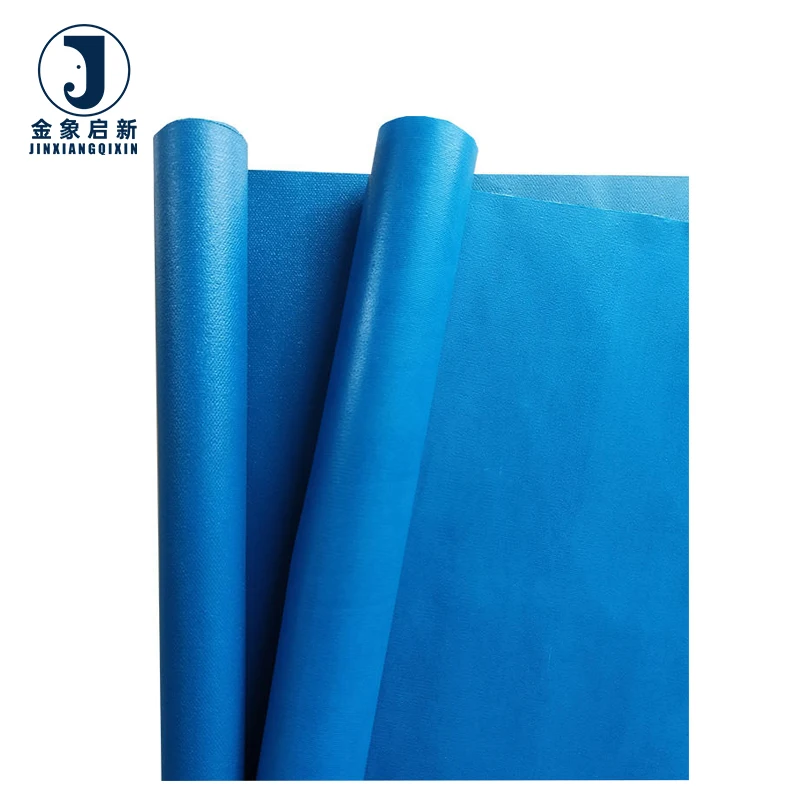
Process Control at Every Stage — Coating weight and adhesion are monitored across three full production lines, ensuring each roll of PVC Coated Tarpaulin for Truck and Transport meets the specification stated on the quotation before it leaves the factory.
Technical Specifications
| Parameter | Value |
|---|---|
| Product Type | PVC Coated Tarpaulin / Truck Cargo Cover |
| Weight (GSM) | 500gsm, 600gsm |
| Coating Material | PVC |
| Waterproof | Yes |
| Flame Retardant | Available (grade not stated — confirm grade required for your market) |
| Anti-Static | Available (standard not stated — confirm requirement) |
| Anti-Cold Treatment | Available |
| Anti-Mildew Treatment | Available |
| Weather Resistance | Suited to extended outdoor exposure |
| Custom Sizing | Available to specific trailer model dimensions |
| Certification | ISO, CE |
Application Suitability
| Application | Exposure & Requirement |
|---|---|
| Long-haul truck cargo covers | Continuous road weather, wind flex, tie-down abrasion at rails and bows |
| Trailer side curtains | Repeated folding and unfolding, UV and road spray, flex-point stress at weld lines |
| Open-deck equipment and pallet covers | Rain and dust ingress, securing with straps, handling wear during loading |
| Construction site transport covers | Mud, debris impact, chemical splash from site environments |
Why a Generic-Size Cover Fails Before the Fabric Does
A truck cover that does not match the trailer model tears at the edges, not in the field of the fabric.
Most early failures on transport covers are not caused by the PVC coated tarpaulin for truck and transport itself but by the fit. When a cover is cut to a standard rectangle and forced onto a specific trailer, excess material flaps in the wind stream while tight sections pull against welded seams at the rear bow and side rail. The resulting abrasion wears through the coating at stress points within the first season of use. Fleet operators then replace covers that still have intact base fabric, paying for material and labour twice. [NEED_CITE: common failure modes in heavy-duty transport tarpaulins under dynamic load]
Cut-to-Model Sizing Eliminates Field Modification
Every trailer model has distinct rail profiles, bow radii and door clearances. This PVC coated tarpaulin is developed against the exact dimensions of the vehicle, so the cover sits flush without loose sections that catch crosswinds or tight sections that strain seam welds. Samples are produced within days, allowing the fleet to confirm fitment on the actual trailer before the production run begins.
Reinforcement Where the Load Flexes Most
Welded seams on a moving cover experience cyclic stress each time the load shifts or the trailer articulates. The seam construction on this PVC coated tarpaulin for truck and transport is designed to distribute that stress across a wider bond area rather than concentrating it at a single weld line. High-flex zones around the rear bow and tie-down points receive additional material layers so the seam outlasts the field of the fabric under normal operating conditions. [NEED_CITE: cyclic fatigue behaviour of heat-welded PVC coated fabric seams]
Reading GSM in Context with Base Fabric Construction
Grams per square metre alone does not determine how a cover performs on a moving truck. A 500gsm fabric built on a high-denier, tight-weave base may resist tear propagation better than a 600gsm fabric on a looser weave, because the yarn structure governs how a puncture spreads. The PVC coating weight then determines surface abrasion resistance and waterproof integrity. Specifying both GSM and base fabric denier together gives a clearer picture of how the material will handle tie-down strap pressure and road debris impact over successive trips.
The Cost of Skipping Fitment Verification
When covers are ordered without confirming trailer dimensions, the result is a batch of units that require on-site cutting and re-hemming. Each field modification introduces an unsealed edge that allows moisture to wick into the base fabric, and each re-weld done outside factory conditions lacks the temperature control needed for full bond strength. Operators absorb the cost of the original cover, the modification labour, and the shortened service life that follows. Colour consistency across the batch also becomes visible only after installation, when mismatched panels sit side by side on adjacent trailers. [NEED_CITE: batch colour variation standards in industrial coated textiles]
Why Sourcing This PVC Coated Tarpaulin Here Works for Fleets
Three full production lines with 36 sets of professional equipment provide the capacity to supply an entire fleet’s cover requirement in a single run, keeping batch consistency tight. A 10-person R&D team handles pattern development and custom sizing, turning trailer drawings into cut-ready specifications within days. Dedicated QA and QC at every production stage means each roll and finished cover is inspected before dispatch, not spot-checked after complaints arrive. Nearly 30 years of focus on coated fabric has produced deep process control over coating weight and adhesion, directly addressing the GSM-verification gap that buyers frequently report.
Documentation & Verification
- Material specification sheet stating GSM, base fabric denier, coating weight, and colour reference per roll
- Pre-shipment inspection record with 100% check on dimensions, weld integrity, and surface finish
- Test reports for flame retardant or anti-static treatments where those options are specified
- Certificate of origin and customs documentation to support cross-border fleet procurement
- Roll packing list cross-referenced to purchase order line items for receiving verification
Fabrication, Handling & Storage
- Heat-weld parameters should be tested on 500gsm and 600gsm samples before setting production temperature and dwell time
- Store rolls vertically on end-caps to prevent flat-spot deformation of the PVC coating surface
- Allow cold-transported rolls to reach ambient temperature before unrolling to avoid coating crack at the core
- Use compatible PVC-based repair patches for field damage, cleaning the area before heat or adhesive application
- Plan cut patterns on standard-width rolls to minimise offcut waste and reduce the number of welded joins per cover
What to Include in Your Enquiry
Provide the trailer make, model, and year along with measured dimensions for each cover type required. State whether your operating jurisdiction mandates a specific flame retardant grade for transport covers, and note any anti-static requirements for sensitive cargo. Confirm the quantity per vehicle type, colour reference, and whether finished covers or roll stock is needed so the quotation reflects accurate lead time and minimums.
Frequently Asked Questions
Q: How is truck cover sizing matched to specific trailer models and what measurements are needed?
A: We require the trailer make, model, overall length, width, height, rail profile, and bow radius. From these, a cut pattern is developed and a physical sample is produced for fitment on the actual vehicle before the full order runs, ensuring the PVC coated tarpaulin for truck and transport sits flush without field modification.
Q: How to verify GSM on arrival matches the quotation for bulk truck cover orders?
A: Each shipment includes a pre-shipment inspection record and material specification sheet stating the contracted GSM. On receipt, take a measured sample from any roll or finished cover, weigh it on a calibrated scale, and compare the result to the documented value to confirm consistency.
Q: What flame retardant grade is required for truck covers in your target market?
A: Requirements vary by jurisdiction and cargo type. Confirm with your local transport authority or insurance provider which grade applies, then request the corresponding test report with your order so the documentation matches the compliance standard your market demands.
Q: How are welded seams reinforced at high-flex points where the load flexes most?
A: Zones around rear bows, tie-down rails, and corners receive additional material layers and wider weld bonds to distribute cyclic stress. This prevents the seam from separating before the PVC coated tarpaulin field fabric reaches its own service limit under normal flexing conditions.