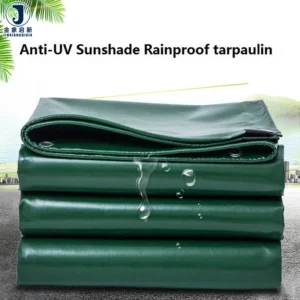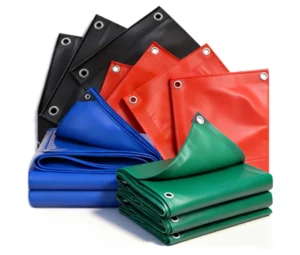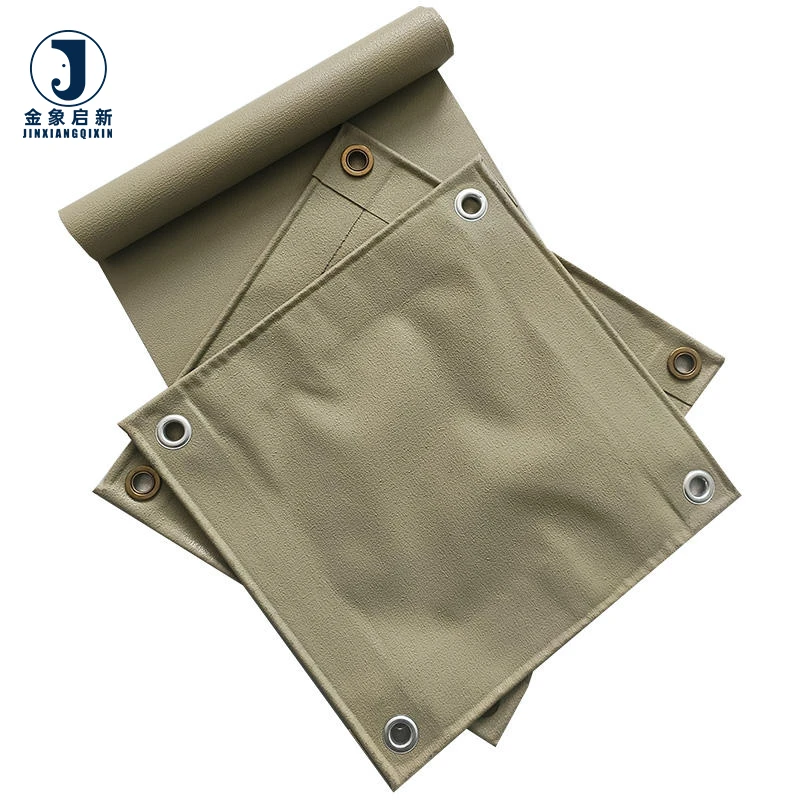
Proven Coating Process Control — Nearly three decades focused on PVC coated fabric production ensures exact GSM delivery and reliable batch-to-batch consistency for fleet operators sourcing truck and trailer cargo covers.
Technical Specifications
| Parameter | Value |
|---|---|
| Product Type | PVC Coated Tarpaulin |
| Weight Range | 700gsm, 850gsm, 900gsm |
| Coating Material | PVC |
| Waterproof | Yes |
| Flame Retardant | Available (confirm the grade required for your market) |
| Anti-Static | Available (confirm the surface resistance standard for your application) |
| Anti-Mildew | Available |
| Anti-Cold | Available |
| Weather Resistance | Suited to extended outdoor and road exposure |
Application Suitability
| Application | Exposure & Requirement |
|---|---|
| Truck and trailer cargo covers | Constant road vibration, tie-down flex stress, weather and UV exposure |
| Side curtain systems for fleets | Repeated folding and unfolding, abrasion against load edges, wind load |
| Flatbed load protection | Direct rain and debris impact, strap tension at contact points |
| Construction equipment transport | Puncture risk from machinery edges, prolonged outdoor staging |
Why the Wrong PVC Coated Truck Tarpaulin Fails Before the Fabric Does
Seam integrity and dimensional accuracy determine real service life far more than base fabric weight alone.
Fleet operators regularly receive covers that measure correctly on paper but fail at the welded joints within the first season of use. The problem rarely traces back to the PVC coating itself. Generic sizing forces excessive material overlap or leaves critical load edges exposed, and the resulting stress concentrates at the seams where the fabric flexes most during transit [NEED_CITE: weld seam failure modes in coated fabric covers under cyclic loading]. A PVC coated truck tarpaulin cut to exact trailer dimensions distributes tension evenly across the full panel, extending functional life well beyond generic alternatives.
Fitment Precision for Fleet-Specific Trailer Profiles
Every trailer model carries distinct dimensions, corner radii, and tie-down configurations that a generic cover cannot accommodate. Our PVC coated truck tarpaulin is produced against the exact measurements you supply for each vehicle in your fleet, including door clearance, roller track channels, and ratchet strap positions. This approach eliminates the excess fabric that flaps at highway speed and causes premature abrasion at contact points.
Treatment Selection Based on Operating Environment
Flame retardant and anti-static treatments are available in grades suited to different regulatory frameworks and cargo types. Operators transporting hazardous materials or running routes through jurisdictions with strict fire safety codes should specify the exact standard their market requires [NEED_CITE: fire safety classifications for transport covers in regulated environments]. Anti-mildew treatment proves relevant for fleets operating in high-humidity regions where covers remain furled for extended periods between loads.
Understanding How GSM and Base Fabric Interact
The 700gsm, 850gsm, and 900gsm grades offered here reflect total coated weight, which combines the polyester base fabric density and the PVC coating applied to both faces. A higher GSM does not automatically translate to greater tear resistance — the denier of the yarns and the weave density of the base fabric play an equally important role. The coating method determines how well the PVC bonds to the base: knife-over-edge coating drives the compound into the weave for stronger adhesion, while lamination can leave a weaker boundary layer that separates under repeated flex. Selecting the right grade means matching both the total weight and the construction method to the specific mechanical stress your covers will face [NEED_CITE: relationship between base fabric construction and coated fabric tensile performance per ISO 1421].
The Cost of Specifying on Weight Without Verification
Quotations that state a target GSM but ship material measurably lighter than agreed shift the real cost onto the buyer through shortened replacement cycles and cargo exposure incidents. Colour variation between rolls in the same delivery becomes visible once multiple covers are deployed side by side on a fleet, forcing partial returns and inconsistent appearance. Covers cut to a generic template rather than specific trailer dimensions waste material at the edges while leaving gaps at critical load points, and the resulting uneven tension accelerates seam failure under road vibration [NEED_CITE: batch consistency and dimensional tolerance standards for coated fabric covers].
Production Capability Backed by Process Depth
Three full production lines and 36 sets of professional equipment support bulk volume runs with consistent delivery scheduling across fleet-sized orders. The 10-person R&D team handles pattern development, custom sizing, and sample preparation so that fitment is confirmed before full production begins. Dedicated quality control at every production stage with full pre-shipment inspection catches GSM deviation and surface defects before material leaves the facility. Deep process control over coating weight and adhesion, built across nearly 30 years of PVC coated fabric focus, directly addresses the buyer concern of stated weight not matching delivered weight.
Documentation & Verification
- Material specification sheet stating exact GSM and coating construction for each roll
- Flame retardant test report with applicable grade where treatment is specified
- Pre-shipment inspection record confirming weight and dimensional accuracy per order
- Colour reference card matched to approved sample for multi-roll consistency
- Certificate of origin and customs documentation for cross-border fleet procurement
Fabrication, Handling & Storage
- Heat welding parameters must match the specific PVC coating thickness of the selected GSM grade
- Reinforce eyelet and hem zones with additional PVC layers at strap contact points
- Store rolls upright in dry conditions to prevent edge compression marks on the coating surface
- Allow cold-stored rolls to reach ambient temperature before unrolling to avoid coating crease damage
- Use PVC-compatible cleaners only; solvent-based products degrade the plasticiser in the coating
- Cut panels with allowance for thermal expansion to prevent tension distortion after installation
Requesting a Specification Match for Your Fleet
Provide the trailer make and model list, typical cargo types, and the operating climate range for your routes. Specify any fire safety or anti-static compliance requirements mandated by your target markets or cargo insurance policies. Indicate whether you need finished covers with welded hems and hardware, or roll stock for your own fabrication line.
Frequently Asked Questions
Q: How do I verify the GSM matches my order specification on arrival?
A: Every shipment includes a material specification sheet stating the exact GSM alongside a pre-shipment inspection record. We recommend spot-checking received rolls with a calibrated scale against the documented weight. Any deviation flagged during incoming inspection is addressed through our quality resolution process before the covers enter service.
Q: What flame retardant grade is available and does it meet my market requirement?
A: Flame retardant treatment is available across the 700gsm, 850gsm, and 900gsm grades. The specific grade depends on the fire safety standard your jurisdiction or cargo type requires. Share your target compliance framework during inquiry so we can match the treatment and provide the corresponding test report with your order.
Q: How are truck covers sized to fit specific trailer models rather than generic dimensions?
A: We work from the exact trailer model dimensions you provide, including door openings, roller channels, and tie-down positions. A sample or detailed drawing is confirmed before full production so the PVC coated truck tarpaulin fits your specific vehicle without excess overlap or exposed load edges.
Q: What documentation accompanies certified flame retardant or anti-static covers?
A: Orders specifying flame retardant or anti-static treatment ship with the applicable test report and material specification sheet. The pre-shipment inspection record confirms that the treatment was applied and verified. Certificate of origin and packing documentation are included for customs clearance.
Q: How are welded seams reinforced at flex and tie-down stress points?
A: Weld zones at high-stress areas such as corners, strap contact points, and hem edges receive additional PVC reinforcement layers during fabrication. The welding parameters are calibrated to the coating thickness of the selected GSM grade, ensuring bond strength matches the base fabric rather than becoming the failure point.