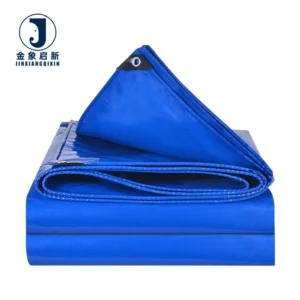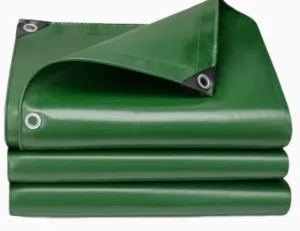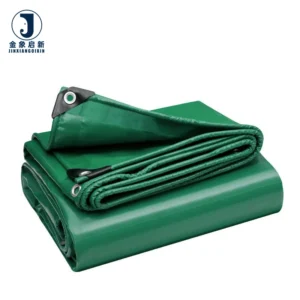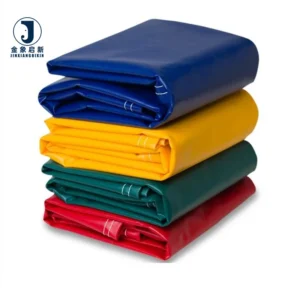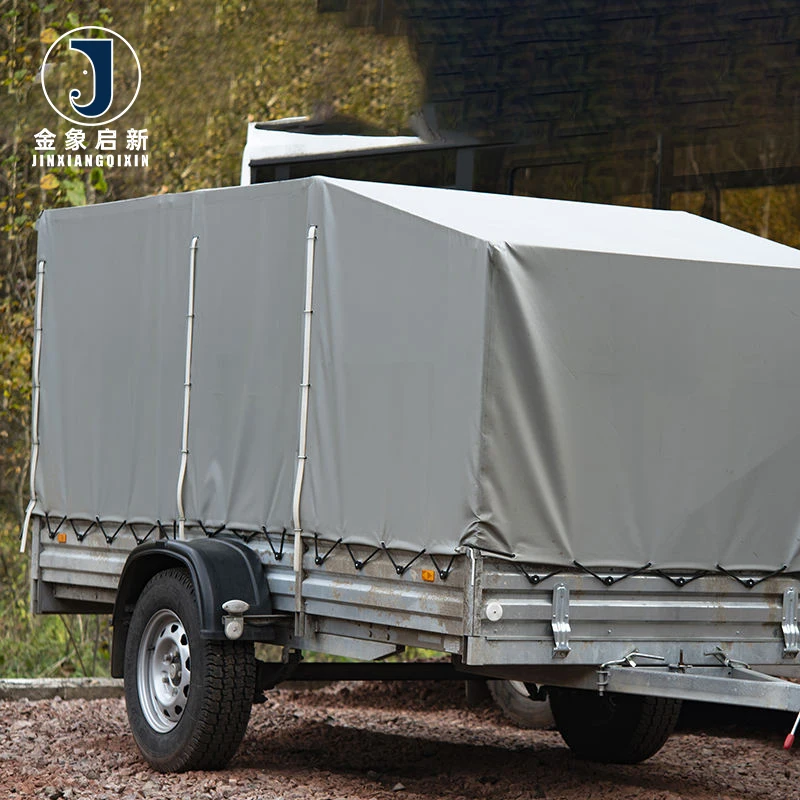
Deep Process Control Over Coating Weight — Verified GSM matching the quoted specification on every roll of PVC coated tarpaulin for truck and transport, confirmed through roll-by-roll inspection before dispatch.
Technical Specifications
| Parameter | Value |
|---|---|
| Product Type | Fire Retardant Waterproof PVC Tarpaulin Roll |
| Material | 100% high toughness polyester yarn with PVC coating |
| Coating Technology | Lamination and hot melt coating |
| Weight Range | 400-500 g/m² (medium), 700-1000 g/m² (heavy-duty), 1100-1500 g/m² (super heavy) |
| Thickness Range | 0.35-0.45 mm (medium), 0.70-1.0 mm (heavy-duty), 1.2-1.5 mm (super heavy) |
| Base Fabric Denier | 500D (medium), 1000D (heavy-duty), 500D-2000D (super heavy) |
| Tensile Strength (Medium Grade) | Longitude 1500-2000 / Latitude 1200-1800 N/5cm |
| Fire Retardant Grade | B1 Standard |
| Key Features | Waterproof, cold resistant cracking, mold proof, anti-static treatment available, excellent welding tear strength, good color fastness |
| Special Treatments Available | Flame retardant, anti-static, cold prevention, mold prevention, UV protection |
| Outdoor Durability | Suited to extended weather exposure |
Application Suitability
| Application | Exposure & Requirement |
|---|---|
| Truck side curtains | Constant flexing at load points, road abrasion, tie-down stress, UV and weather exposure |
| Heavy truck tarpaulins | High-tension securing loads, wind flap fatigue, contact with cargo edges |
| Warehouse covers | Permanent outdoor storage, rain and wind load, fire safety compliance on site |
| Construction site protection | Debris impact, equipment contact, temporary enclosure requiring B1 fire classification |
| Engineering protective cloth | Abrasion from machinery, chemical splash exposure, repeated handling and folding |
| Industrial pipe canopies | Spanning unsupported distances, wind uplift, long-term weather resistance |
What "Fire Retardant" Means Without Documentation Behind the Claim
A B1 rating only matters if the test report travels with the shipment and matches the material actually delivered.
Buyers specifying PVC coated tarpaulin for truck and transport applications often request flame retardant fabric, then receive rolls with no supporting documentation. The claim appears on the quotation but the test report never arrives, or it references a different product grade entirely. Site inspectors reject the installation, the fleet operator faces compliance delays, and the entire order becomes a dispute. [NEED_CITE: DIN 4102 fire classification for building materials and transport covers]. The gap between a verbal flame retardant claim and a verifiable B1 certification is where most procurement failures occur.
Fitment and Reinforcement for Moving Loads
Truck and trailer covers fail first at the points where the load flexes and the fabric is tied down. This PVC coated tarpaulin for truck and transport uses hot melt coating and lamination technology to build adhesion between the polyester base and the PVC layer, so welded seams hold under the repeated stress of road vibration and cargo movement. Generic covers cut to standard dimensions leave excess fabric that flaps in transit, accelerating wear at the edges and eyelet lines.
Batch Consistency Across Fleet Orders
When a fleet operator orders side curtain fabric for multiple vehicles, colour variation between rolls becomes visible once installed side by side on the same trailer. This PVC tarpaulin roll aftermarket supplier controls coating weight and pigment dispersion across the production run, with pre-shipment inspection confirming roll-to-roll consistency. The result is a uniform appearance across an entire fleet, not just within a single roll. [NEED_CITE: color consistency standards for coated fabrics in transport applications].
Reading the Specification Sheet Beyond GSM
The weight of a coated fabric tells only part of the story. A 700-1000 g/m² heavy-duty grade paired with a 1000D polyester base delivers the tensile and tear balance needed for truck side curtains that face constant tie-down tension. The base fabric denier and weave density determine how a tear propagates once initiated — a higher denier yarn resists tear spread far better than a lighter yarn at the same coating weight. Hot melt coating technology produces a stronger bond between the PVC and the polyester base compared to simple lamination, which directly affects how the fabric behaves at welded seams. When the seam must flex repeatedly under road conditions, the adhesion strength between coating and base fabric determines whether the weld holds or delaminates first. B1 fire retardant classification under DIN 4102 addresses the specific fire safety requirements for warehouse and construction environments, but buyers should confirm the grade required for their market and application.
The Cost of Specifying on Weight Alone
Quoting on GSM without verifying base fabric denier and coating adhesion leads to covers that tear at the eyelets within months of service. Flame retardant claims unsupported by test reports result in failed site inspections and rejected deliveries. Colour inconsistency across rolls in a single order forces the buyer to sort and match fabric on the dock, delaying installation and creating visible panel mismatches on finished truck side curtains. [NEED_CITE: common failure modes in PVC coated tarpaulin used for transport and fleet applications]. Welded seams that fail before the fabric itself reaches end of life point directly to inadequate coating-to-base adhesion, a problem that originates in the coating process, not in the fabrication shop.
Why Source This PVC Tarpaulin Here
Three full production lines with dedicated equipment support bulk roll output with consistent coating weight across the run. The 10-person R&D team handles material selection, custom sizing and sample development, producing samples within days so buyers can confirm colour, finish and fitment before committing to bulk. QA and QC checkpoints at every production stage mean the PVC coated tarpaulin for truck and transport is inspected in-process, not just at the end. Pre-shipment inspection verifies GSM roll by roll against the quoted specification, eliminating the shortfall problem that plagues coated fabric procurement. The facility holds ISO and CE certification, and documentation accompanies every shipment — not as an afterthought, but as part of the standard dispatch process.
Documentation & Verification
- Material specification sheet stating GSM, base fabric denier, coating method and B1 test report
- Pre-shipment inspection record confirming weight verification roll by roll against quoted GSM
- Fire retardant and anti-static test reports included with shipment documentation where applicable
- ISO and CE certificates enclosed with customs and compliance paperwork
- Roll packing list with batch reference for traceability across the order
Fabrication, Handling & Storage
- Hot melt coated surfaces require adjusted heat and dwell time settings for clean welded seams
- Reinforce eyelet and tie-down points to distribute load across the 1000D base fabric structure
- Store rolls upright on pallets to prevent flat-spotting and permanent creasing in the PVC coating
- Allow cold-stored rolls to reach ambient temperature before unrolling to avoid coating crack damage
- Use mild detergent for cleaning; solvent-based products may degrade the PVC surface treatment
- Plan cutting layout to minimise waste and reduce the number of welded seams in finished covers
Request a Quotation with Your Specifications
Provide the truck or trailer model, required dimensions, and the fire safety or compliance standard your market requires. Specify whether you need rolls in stock widths or custom-cut panels with finished hems and eyelets. Confirm your colour requirements and whether printed branding is needed on the finished covers. Share your target delivery timeline and annual volume so the production schedule can be aligned to your fleet rollout or distribution plan.
Frequently Asked Questions
Q: How do you verify the GSM matches the quoted specification when the rolls arrive?
A: Every roll is weighed and inspected before dispatch, and a pre-shipment inspection record is included with the shipment documentation. This record confirms the actual coating weight against the quoted GSM, so you can verify on arrival that no shortfall has occurred. The inspection is roll by roll, not sample-based.
Q: Can you provide test reports for the B1 flame retardant and anti-static treatment?
A: Test reports for flame retardant B1 classification and anti-static treatment are included with shipment documentation where these treatments have been specified and applied. Buyers should confirm the specific grade and standard required for their market at the inquiry stage so the correct treatment and documentation are prepared.
Q: What is the minimum order for custom width, colour, or printed branding?
A: Minimum quantities depend on the specific customisation requested — custom colour, printed pattern, or non-standard width each have different production thresholds. Provide your requirements at inquiry and the team will confirm the minimum and lead time. Samples are developed within days for approval before bulk production begins.
Q: How do you ensure colour consistency across multiple rolls in the same order?
A: Pigment dispersion and coating weight are controlled throughout the production run, and pre-shipment inspection includes visual colour matching across rolls in the same batch. This prevents the visible panel mismatch that occurs when rolls from different production runs are installed side by side on truck side curtains.
Q: What documentation accompanies each shipment?
A: Each dispatch includes a material specification sheet, pre-shipment inspection record, roll packing list with batch reference, certificate of origin, and relevant test reports for flame retardant or anti-static grades where specified. ISO and CE certificates are enclosed for customs and site compliance requirements.