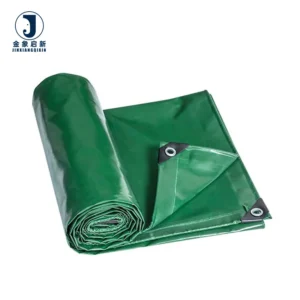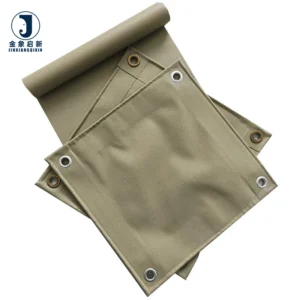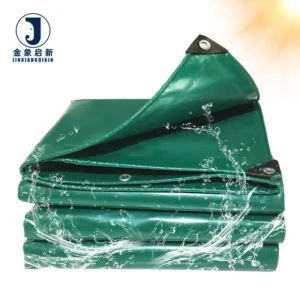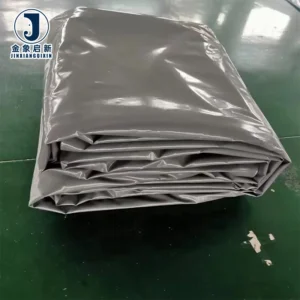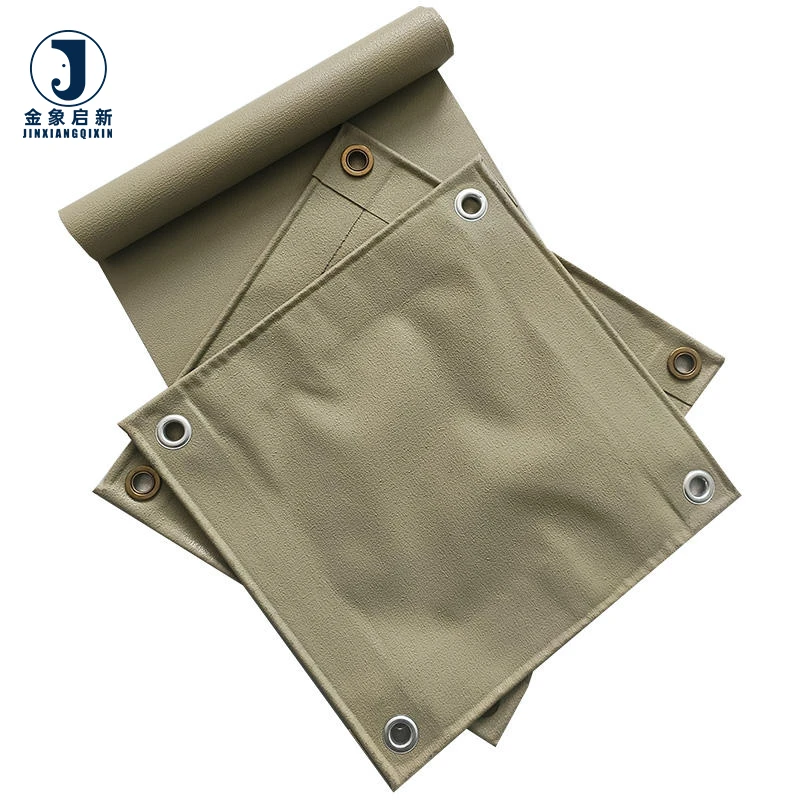
Near-Three-Decade Coating Expertise — Our PVC knife-coated tarpaulin for truck covers is produced on dedicated lines with controlled coating weight and verified adhesion, ensuring every roll meets the mechanical demands of moving loads.
Technical Specifications
| Parameter | Value |
|---|---|
| Product Type | PVC Coated Tarpaulin |
| Coating Material | PVC |
| Coating Method | Knife Coated |
| Base Fabric Construction | 1000×1000 Woven Fabric |
| Weight | At least 450 GSM (verify against manufacturer catalog) |
| Waterproof Rating | Fully waterproof |
| UV Treatment | Anti-UV treatment available — confirm test basis required for your market |
| Surface Finish | Waterproof, Oilproof |
| Printing Compatibility | Banner printable |
| Custom Options | Custom size available |
| Standards | ISO, CE certified production facility |
Application Suitability
| Application | Exposure & Requirement |
|---|---|
| Flatbed and tautliner side curtains | Continuous flexing at load-bearing points, road debris abrasion, wind-driven rain ingress |
| Custom-fit truck cover panels | Model-specific dimensions, tie-down stress at eyelet zones, UV exposure on open trailers |
| Tie-down zone reinforcement fabric | High-abrasion cargo securement areas, concentrated load at strap contact points |
| Industrial equipment covers on transit | Fuel and oil splash, mechanical impact during loading, weather exposure during staging |
Why Welded Seams Fail Before the Fabric Does on Truck Covers
Coating adhesion at the weld line determines whether the seam holds or splits under flex stress.
When a PVC coated tarpaulin for truck cover applications is tensioned over a load, the highest stress concentrates at welded seams — precisely where the fabric bends around corners and tie-down points. I have seen heavy-grade coated rolls fail at the weld line long before the body of the fabric shows any wear. The failure mode is consistent: the coating delaminates from the base fabric under repeated flexing, and the seam opens. [NEED_CITE: weld strength versus fabric tensile test methods per ISO 1421]
The root cause is rarely the fabric weight alone. It is the bond between the PVC coating and the woven base that governs how well a heat-welded joint survives years of road vibration and load movement.
How Knife Coating Secures the Weld Line Under Road Stress
The knife-coated construction used for this PVC coated tarpaulin for truck cover applications forces PVC paste into the woven base fabric under controlled pressure, creating a mechanical lock between coating and yarn. Unlike laminated fabrics where a film layer sits on the surface, knife coating produces a unified structure where the coating penetrates the weave. This means that when a weld is applied, the heat fuses coating material that is already bonded through the full thickness of the base — not just a surface film that can peel away under tension.
For fleet operators specifying side curtain fabric, this construction method directly affects how the material behaves at the high-stress zones where curtain straps attach and where the fabric folds during opening and closing cycles.
Base Fabric Density and Tear Resistance at Tie-Down Points
The 1000×1000 woven base fabric provides a dense yarn grid that resists tear propagation when concentrated loads are applied at eyelets and tie-down straps. In a truck cover environment, a single strap pulling against a grommet creates a point load that can initiate a tear if the base fabric lacks sufficient yarn density in both warp and weft directions. The balanced weave structure distributes this load across multiple yarns rather than allowing it to concentrate on a single thread.
When a tear does start — typically from a nick caused by road debris or a sharp cargo edge — the tight weave grid acts as a barrier that slows the tear from running across the panel. [NEED_CITE: tear propagation testing methods for coated technical textiles] This is particularly relevant for flatbed covers where the fabric is in constant contact with irregular load surfaces.
Reading the Specification Sheet Beyond GSM
The stated weight of at least 450 GSM provides a baseline, but the actual performance of a PVC coated tarpaulin for truck cover use depends on how that weight is distributed between the base fabric and the coating layers. A fabric can reach a target GSM through heavy coating on a light base — which gives good waterproofing but lower tensile strength — or through a heavier base with thinner coating, which improves mechanical strength but may reduce surface durability.
The knife-coated method allows precise control over coating thickness on each side of the 1000×1000 base, so the weight contribution from coating versus yarn can be balanced for the specific demands of transport covers. The oilproof and waterproof surface finish is a function of the coating formulation and the surface treatment applied during the final pass. For operators in regions with strong sun exposure, anti-UV treatment is available — buyers should confirm the specific test basis required by their market or regulatory authority before placing an order.
What Happens When the Wrong Fabric Grade Goes on a Truck
Specifying a material without verifying the relationship between base fabric density and coating weight leads to predictable field failures. A cover that looks correct on the quotation can arrive lighter than agreed, with the GSM deficit hidden in the coating rather than the structural yarn. The result is a cover that passes initial inspection but begins to show seam stress within months of road use.
Colour variation between rolls in the same order becomes visible once the fabric is installed side by side on a fleet — a problem that does not affect performance but damages the professional appearance of the vehicles. [NEED_CITE: batch colour consistency standards in coated fabric manufacturing] When generic-size covers are fitted to specific trailer models, the excess material flaps in the wind, accelerating abrasion at the contact points and shortening the service life of the entire cover system.
Procurement Backed by Process Control
Three full production lines and 36 sets of professional equipment support consistent output for fleet-scale orders of this PVC coated tarpaulin, with capacity to handle multiple roll runs while maintaining coating weight uniformity.
A 10-person R&D team handles custom sizing requests, matching cut dimensions to specific truck and trailer models rather than supplying generic panels that require on-site trimming.
Dedicated QA/QC inspection runs at every production stage, with 100% pre-shipment inspection covering coating adhesion, seam weld samples, and GSM verification against the quoted specification.
Samples for custom width, colour, or print requirements are developed within days, allowing buyers to confirm material suitability before committing to full production runs.
ISO and CE certified production processes ensure that documentation meets the compliance requirements of international transport and logistics operators.
Documentation & Verification
- Material specification sheet stating confirmed GSM, base fabric construction, and coating type per roll
- Pre-shipment inspection record covering coating adhesion and weld integrity test results
- UV treatment test report supplied where applicable to match route exposure requirements
- Custom sizing confirmation sheet with vehicle model-specific cut dimensions before dispatch
- Certificate of origin and customs documentation for cross-border fleet procurement
Fabrication, Handling & Storage
- Heat-weld parameters should be set to match the knife-coated PVC formulation for optimal seam fusion
- Eyelet placement in the 1000×1000 base fabric requires reinforced hem tape at high-load tie-down zones
- Store rolls vertically on cores to prevent flat spots that affect coating adhesion during fabrication
- Clean the oilproof surface with mild detergent only — solvent-based cleaners degrade the PVC coating layer
- Unroll and allow the fabric to relax at ambient temperature before cutting to avoid dimensional shift
- Overlap welds by a minimum width suited to the fabric weight to ensure structural seam continuity
Preparing Your Specification for Quotation
To move from inquiry to sample, provide the specific truck or trailer model dimensions, the exposure conditions your fleet encounters on typical routes, and any regional compliance requirements for UV or fire performance. Specify whether you need rolls for your own fabrication facility or finished panels with eyelets and reinforced hems ready for installation. Confirm your target colour reference and whether batch consistency across multiple rolls is required for fleet-wide deployment.
Frequently Asked Questions
Q: How is GSM verified on delivery to confirm the quoted weight matches the roll received?
A: Every roll is weighed during pre-shipment inspection, and the result is recorded against the quoted specification. The material specification sheet included with your shipment states the verified GSM for each roll, so you can cross-check on arrival rather than relying on quotation figures alone.
Q: What eyelet spacing and hem reinforcement options suit high-stress truck tie-down zones?
A: Eyelet spacing and hem reinforcement are configured based on the specific trailer model and load type. The 1000×1000 woven base fabric supports reinforced hem tape and closer eyelet spacing at strap contact zones where point loads are highest during transit.
Q: How does knife coating compare to laminated construction for flex-point abrasion resistance?
A: Knife coating forces PVC into the base fabric weave, creating a mechanical bond through the full thickness. Laminated fabrics rely on a surface film that can delaminate under repeated flexing. For truck side curtains that open and close daily, the knife-coated structure provides superior weld line integrity.
Q: Can the fabric be cut to a specific trailer model dimension rather than a generic size?
A: Yes. Custom sizing is available based on exact vehicle or trailer model dimensions. The R&D team develops a cut pattern for your specific model, and sample panels are produced for fit confirmation before the full order enters production.
Q: What is the batch colour consistency process when ordering multiple rolls for a fleet?
A: All rolls within a single order are produced in the same batch run with colour reference checked at multiple points during coating. Pre-shipment inspection includes a visual comparison across rolls to confirm consistency before the order is packed and dispatched.