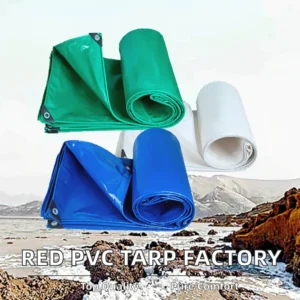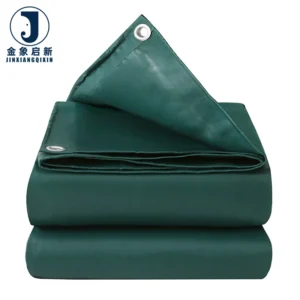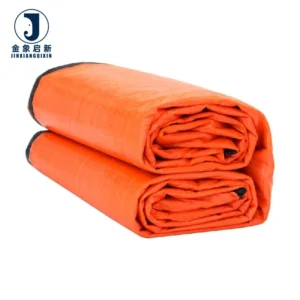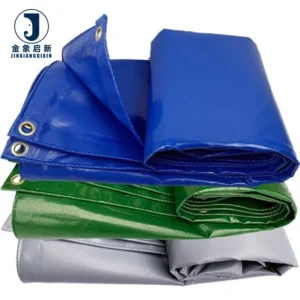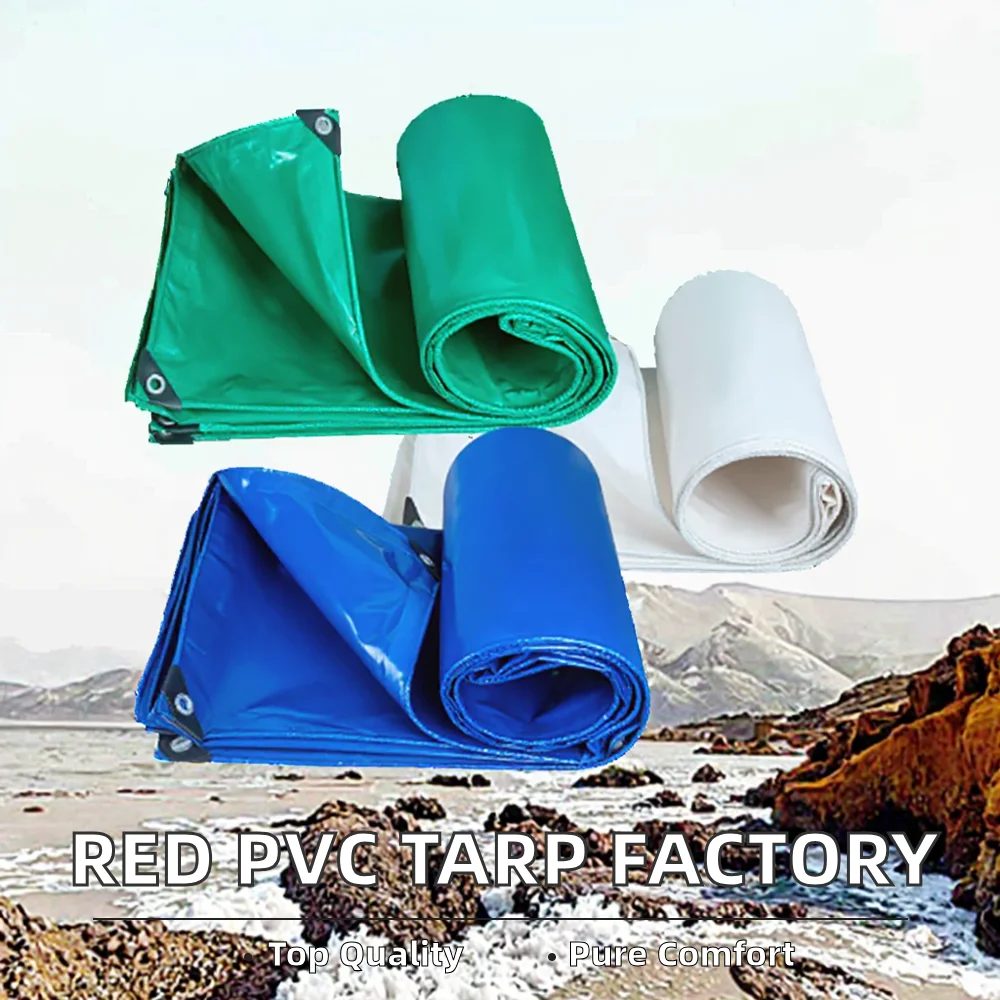
Precision-Coated Fabric Supply — deep process control over coating weight and adhesion ensures PVC coated tarpaulin for truck and transport arrives with verified GSM and consistent roll-to-roll quality.
Technical Specifications
| Parameter | Value |
|---|---|
| Product Type | PVC Coated Tarpaulin |
| Material | PVC Coated Polyester Fabric |
| Service Life | 3–5 years outdoor exposure (source value — verify against manufacturer catalog) |
| Special Treatments | Flame retardant (grade not stated in source); Anti-static (standard or surface resistance not stated in source); Anti-cold; Anti-mildew; 3P |
| Finish Options | Glossy / Matte |
| Applications | Truck Cover Fabric, Outdoor Tent, Banner, Pond Liner |
| Standards | ISO, CE |
Application Suitability
| Application | Exposure & Requirement |
|---|---|
| Truck and trailer side curtains | Constant flexing at load points, road debris abrasion, daily UV exposure, tie-down strain at reinforced hems |
| Flatbed and tipper load covers | Weather exposure during transit, wind flap fatigue, abrasion from shifting cargo against fabric underside |
| Outdoor tent and awning structures | Prolonged sun and rain exposure, wind loading on seams, requirement for clean visual appearance |
| Construction site enclosures | Dust and moisture ingress prevention, mechanical contact with scaffolding and equipment, UV degradation over project duration |
Why a Generic-Size Truck Cover Costs More Than the Fabric Itself
A truck cover cut to a generic size never fits the trailer properly — and a welded seam that fails before the fabric does costs far more than specifying the right PVC coated tarpaulin for truck and transport from the start.
Fleet operators replacing side curtains or load covers often receive material cut to a standard rectangle that does not account for the specific trailer model’s dimensions, corner radii or tie-down positions. The result is excess fabric that flaps in transit, creating fatigue points at the welds. When a welded seam splits at the point the load flexes most, the cargo is exposed and the entire cover must come off the trailer for repair — downtime that far exceeds the material cost. [NEED_CITE: tensile and tear test methods for coated fabrics per ISO 1421]
Model-Fit Sizing Eliminates the Most Common Cover Failure
Supplying PVC coated tarpaulin for truck and transport in dimensions matched to the specific trailer model removes the excess material that causes wind flap and seam fatigue. Reinforced hems and eyelet zones are positioned at the actual tie-down points rather than at arbitrary intervals, so the load transfers through the fabric structure rather than concentrating at a single overstressed weld line.
Treatment Verification Before the Roll Ships
Flame retardant and anti-static grades are available — confirm the grade required for your market and the test documentation needed for compliance. Anti-UV treatment is offered to support extended outdoor and road exposure, and test reports can be supplied with the quotation rather than after delivery. This approach ensures that the PVC coated tarpaulin for truck and transport meets the regulatory environment of the destination country before production begins. [NEED_CITE: DIN 4102 fire classification for building materials]
Reading the Specification Sheet Beyond the GSM Number
Coating weight alone does not determine how the fabric behaves under load. The base fabric denier and weave density establish the tensile and tear baseline; the PVC coating adds abrasion resistance, waterproofing and the surface that accepts welded seams. A knife-coated construction typically achieves higher adhesion between coating and base fabric than laminated alternatives, which directly affects how well heat-welded seams hold when the cover flexes under a strapped load. Glossy and matte finish options influence both cleanability and how the fabric handles on the fabrication table — a factor worth considering when the same material is used across a mixed fleet with different cover designs.
What Happens When Roll-to-Roll Consistency Is Missing
Colour variation between rolls in the same order becomes visible the moment two panels are installed side by side on a trailer, forcing the fleet operator to reject one and wait for a replacement. GSM that arrives lighter than the quotation stated means the fabric is thinner than specified, reducing tear resistance at exactly the points where the cover endures the most stress. These are not cosmetic complaints — they are specification failures that delay vehicle commissioning and erode trust in the supply chain. [NEED_CITE: ISO 9001 quality management requirements for coated textile manufacturing]
Why Fabrication Know-How Matters at the Procurement Stage
Three full production lines and 36 sets of professional equipment support bulk roll output with consistent coating weight across every metre produced. A 10-person R&D team handles material selection, pattern printing, custom sizing and sample development, meaning a sample can be developed within days for a specific trailer model before the full order runs. Dedicated QA and QC at every production stage with full pre-shipment inspection ensures that each roll of PVC coated tarpaulin for truck and transport leaves the facility meeting the stated specification — not an average of the batch. [NEED_CITE: pre-shipment inspection protocols for industrial coated fabrics]
Documentation & Verification
- Material specification sheet stating GSM, base fabric denier and coating type for each roll
- Test report for UV and flame retardant grades where applicable to the order
- Pre-shipment inspection record confirming weight and visual check per roll
- Roll packing list with net and gross weights for container loading plans
- Certificate of origin for customs clearance at destination port
Fabrication, Handling & Storage
- Heat-weld parameters should be tested on a sample piece of the glossy or matte finish before full production
- Store rolls upright on a flat surface to prevent permanent creasing of the PVC coating layer
- Allow cold-stored rolls to reach ambient temperature before unrolling to avoid coating crack at low temperature
- Use compatible PVC-based adhesives for field repairs to maintain coating bond integrity
- Plan cutting layout around available roll widths to minimise offcut waste and transverse weld seams
Specifying Your Requirement
Provide the exact trailer model, cover dimensions and the environmental conditions the fabric will face in service. State the flame retardant or anti-static grade required by your market regulator, along with the test documentation needed for site acceptance. Indicate whether you need rolls at stock width or custom cut-to-model panels, and whether a pre-production sample is required before the full order runs.
Frequently Asked Questions
Q: How do I specify a cover that actually fits my trailer model?
A: Provide the trailer make, model and year along with measured cover dimensions including corner radii and tie-down positions. Custom cut-to-model sizing is available, and a sample panel can be produced within days for fit verification before the full order is committed to production.
Q: What test reports come with flame retardant or anti-UV fabric?
A: Test reports for UV and flame retardant grades are supplied where applicable to the specific order. Confirm the grade and standard required by your destination market at the inquiry stage so the correct treatment and documentation are included with the quotation, not requested after delivery.
Q: Why did the welded seam fail before the fabric itself?
A: Weld failure typically occurs when heat settings are incorrect for the coating thickness or when the seam is positioned at a high-flex point without adequate reinforcement. Requesting fabrication guidelines matched to the specific GSM and coating type helps the converter set the right parameters from the first panel.
Q: How do I verify the GSM matches what was quoted?
A: Every roll undergoes weight verification as part of the pre-shipment inspection process. A material specification sheet stating the GSM, base fabric and coating weight accompanies the shipment, allowing you to cross-check the received roll against the original quotation value on arrival.
Q: Can I order custom widths and colours without excessive minimums?
A: Custom width and colour orders are supported across the production lines. Minimum quantities depend on the specific width, colour and treatment combination requested — confirm these details at the inquiry stage for an accurate lead time and volume requirement.