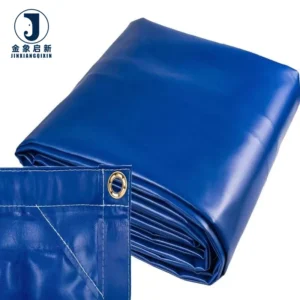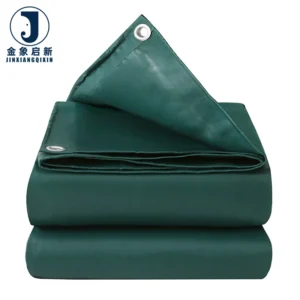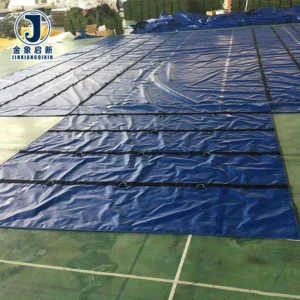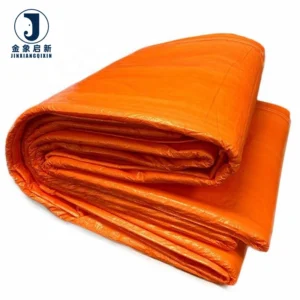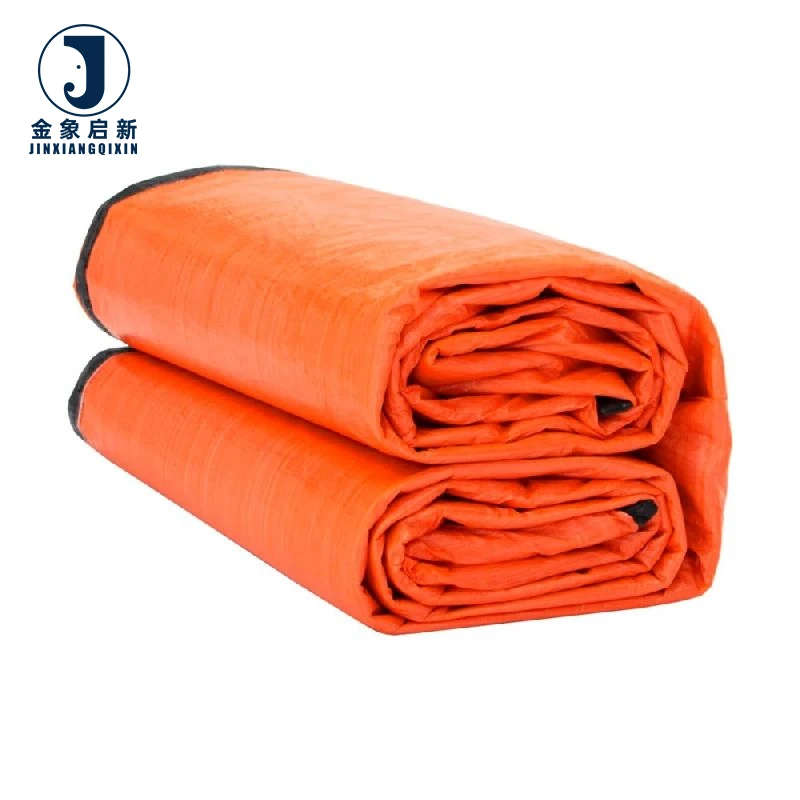
Dedicated QA/QC at every production stage — 100% pre-shipment inspection on every insulated PE tarpaulin roll and cut size confirms thickness, grommet spacing, and foam core integrity before dispatch.
Technical Specifications
| Parameter | Value |
|---|---|
| Product Type | Insulated PE Tarpaulin / Concrete Curing Blanket |
| Dimensions Available | 6ftx24ft, 8ftx25ft, 12ftx20ft, 12ftx24ft |
| Thickness Options | 2x2mm, 3×1.5mm, 1x4mm, 5mm, 6mm, 8mm, 12mm |
| Material Structure | PE cloth + closed cell PE foam core + PE cloth |
| Color Options | Orange, Black, White, Silver, Customized color |
| Grommet Configuration | Aluminum grommets, hole distance 61cm and 91.5cm |
| Coating Material | PE |
| Edge Finish | Reinforcement stitch, stitched edges |
| UV Treatment | Yes (test basis not stated — request report) |
| Water Resistance | Waterproof surface fabric |
| Flame Retardant Grade | Grade not stated — confirm required grade for your market |
| Wind Resistance | Designed to withstand medium to high wind loads |
Application Suitability
| Application | Exposure & Requirement |
|---|---|
| Concrete curing blanket in cold weather pours | Prolonged ground contact, moisture exposure, need for consistent thermal retention across the slab surface |
| Heated construction enclosure insulation | Temperature differential between interior and exterior, wind-driven rain, repeated install and teardown cycles |
| Temporary building enclosure and wind block | Medium to high wind loads, lateral stress on grommets and stitched edges, UV exposure over project duration |
| Trailer and transport insulation | Road abrasion, vibration, flex at load-bearing points, thermal control for temperature-sensitive cargo |
Why Thickness Claims Without Core Density Verification Leave Buyers Exposed
An insulated PE tarpaulin is only as effective as the closed cell foam core trapped between its outer layers.
Buyers routinely receive Insulated PE Tarpaulin for truck and transport covers that match the stated outer dimensions but fall short on the foam layer itself. A total thickness reading of 8mm might include compressed foam from improper roll storage, or the outer PE cloth layers might be carrying more of the measurement than the insulating core. On a cold weather job site where concrete curing depends on maintaining slab temperature through the night, a compressed or undersized foam core means heat escapes faster than the enclosure heater can replace it. [NEED_CITE: thermal resistance testing methods for multi-layer insulated fabrics] The result is not just a failed cure — it is a pour that must be broken out and redone.
Three-Layer Construction and How It Retains Heat on Site
The closed cell PE foam core sits between two PE cloth faces, creating a barrier that slows thermal transfer in both directions. This Insulated PE Tarpaulin for truck and transport applications keeps heated air inside an enclosure while blocking cold wind from penetrating the outer face. The closed cell structure prevents moisture absorption into the core itself, which would otherwise reduce insulating performance and add dead weight when the tarp is wet.
Aluminum Grommets and Reinforced Edges Under Wind Load
Aluminum grommets spaced at 61cm and 91.5cm intervals distribute tie-down tension across the tarpaulin face. On vertical hanging applications such as awning blocks or site enclosures, wind pressure concentrates force at each grommet point. The reinforcement stitch along all finished edges prevents the PE cloth from tearing outward from the grommet hole under sustained lateral load. [NEED_CITE: grommet pull-through test methods for coated and laminated fabrics]
Reading the Thickness Options Against Your Actual Insulation Need
The available thickness range spans from 2x2mm to 12mm, but the number alone does not define insulating capacity. The 2x2mm structure uses two layers of foam, while the 3×1.5mm uses three thinner layers — the air gaps between laminated foam layers contribute to thermal resistance alongside the foam material itself. For a concrete curing blanket laid flat on a slab, a single 4mm or 5mm core may be sufficient. For a vertical heated enclosure exposed to sustained wind, the 8mm or 12mm options provide the additional thermal mass needed to hold temperature overnight without constant heater operation. Choosing the right thickness depends on whether the tarp hangs vertically or lies flat, and what temperature differential the enclosure must maintain.
The Cost of Specifying Thickness Without Verifying Core Composition
A buyer specifying an 8mm insulated tarp for a winter concrete pour may receive material that measures 8mm on a caliper but achieves that number through thicker outer PE cloth rather than a denser or deeper foam core. The tarp handles and looks correct, but the thermal performance falls short once installed over fresh concrete. Batch inconsistency between orders compounds the problem — one shipment cures the slab properly, the next does not, and the cause is traced back to a foam core that was compressed during transit or substituted with a lower-density grade. [NEED_CITE: quality variance in multi-layer laminated tarpaulin shipments]
Why Procurement Teams Source This Insulated Tarpaulin Here
Three full production lines with 36 sets of professional equipment support bulk capacity and reliable on-time delivery for large construction projects requiring multiple cut sizes in a single order. The 10-person R&D team develops samples within days when a contractor needs a specific thickness and grommet layout validated before committing to a full order. Dedicated QA/QC inspection at every production stage ensures that the foam core thickness and grommet spacing match the specification sheet, not just the outer dimensions. ISO and CE certified production processes provide documentation that satisfies site compliance requirements on regulated construction projects. Full customization on colour, size, and grommet configuration allows fleet operators and contractors to order tarps that fit specific trailer models or enclosure frames without field modification.
Documentation & Verification
- Material specification sheet stating PE foam core structure, thickness grade, and colour reference per order
- Pre-shipment inspection record confirming grommet spacing at 61cm or 91.5cm and edge reinforcement stitch quality
- UV treatment test report available on request to validate outdoor exposure claims for project duration
- 100% inspection before shipment with roll and cut-size packing list matching the purchase order
- Certificate of origin and customs documentation included for cross-border construction supply chains
Fabrication, Handling & Storage
- Stitched edges with reinforcement stitch require heavy-duty thread; standard sewing may not hold under flex load
- Aluminum grommets at 61cm spacing suit standard tie-down hardware; verify hook size matches grommet inner diameter
- Store rolls upright or laid flat to prevent foam core compression that reduces insulating performance over time
- Unroll in temperatures above freezing to allow PE cloth faces to relax before tensioning on enclosure frames
- Clean with mild detergent only; solvents may degrade the PE coating and compromise waterproof surface integrity
- Field repairs on minor cuts can be made with PE-compatible adhesive patches applied to both outer faces
Requesting a Quote That Matches Your Job Site Conditions
Provide the specific application — whether this Insulated PE Tarpaulin for truck and transport use will lie flat as a concrete curing blanket or hang vertically as an enclosure wall. State the lowest ambient temperature the tarp must perform in and the target temperature on the protected side. Confirm whether you need one of the standard cut sizes or a custom dimension to fit a specific trailer or frame. Indicate colour preference and whether UV treatment verification documentation is required for your project compliance file.
Frequently Asked Questions
Q: How do I verify the insulation thickness and foam core density when the shipment arrives?
A: Request the pre-shipment inspection record that documents measured thickness and core structure before dispatch. On arrival, use a caliper on a cut edge to confirm the total thickness matches the specification. If the foam core appears compressed, allow the tarp to relax flat for several hours before re-measuring, as roll packing can temporarily compress the closed cell PE foam layer.
Q: What UV treatment test basis supports the outdoor exposure claim for this tarpaulin?
A: UV treatment is integrated into the base fabric, but the specific test standard and exposure duration rating are not stated in the source documentation. Request the UV test report before ordering to confirm the treatment matches your project timeline. For multi-month outdoor exposure, verify that the test covers the expected duration at your site’s latitude and sun intensity.
Q: Can these tarps be custom sized to fit a specific trailer model or enclosure frame?
A: Standard cut sizes include 6ftx24ft, 8ftx25ft, 12ftx20ft, and 12ftx24ft, but custom dimensions are available. Provide the exact frame or trailer measurements along with grommet spacing requirements. The R&D team develops a sample within days so you can confirm fit and tie-down compatibility before committing to the full production run.
Q: How do stitched edges compare to welded seams at flex points under load?
A: Welded seams on PE-insulated tarps can fail where the load flexes most because the foam core compresses unevenly at the weld line. The reinforcement stitch used on this product distributes stress across a wider area along the finished edge, maintaining integrity at grommet points and corners where tie-down tension concentrates under wind load.
Q: Will colour vary between tarps in the same order when installed side by side?
A: Batch colour consistency is controlled through dedicated QA/QC at every production stage with 100% inspection before shipment. The pre-shipment inspection record documents the colour reference for each production run. For projects where multiple tarps are visible together, request that all units are cut from the same dye lot to ensure uniform appearance across the installation.