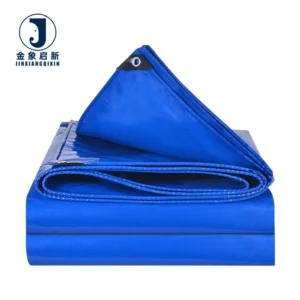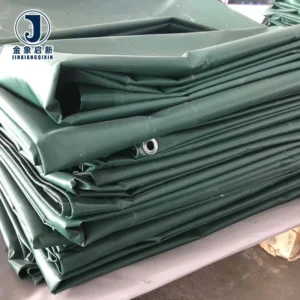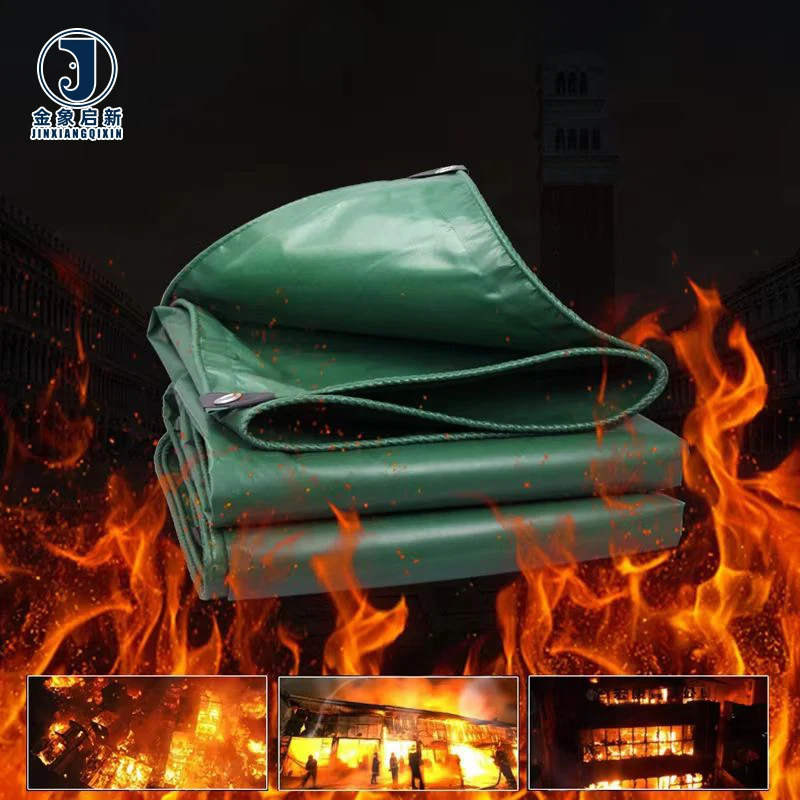
Coated Fabric Expertise — 29 years of PVC coating process control applied to every roll, ensuring knife-coated adhesion withstands the flex points and road abrasion that generic truck covers cannot survive.
Technical Specifications
| Parameter | Value |
|---|---|
| Product Type | PVC Coated Tarpaulin Roll |
| Weight | At least 450 GSM |
| Coating Material | PVC |
| Coating Method | Knife Coated |
| Base Fabric | Woven Fabric |
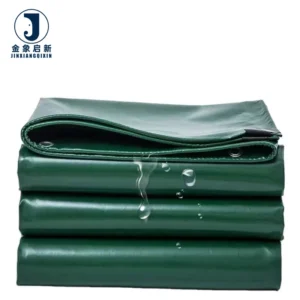
| Waterproof | Fully waterproof coated construction |
| UV Treatment | Anti-UV coated — confirm test basis required for your market |
| Flame Retardant | Available in flame retardant grades — confirm the grade required for your market |
| Tear Resistance | Tear-resistant — confirm test basis required for your market |
| Oilproof | Yes |
| Printing Compatibility | Banner printing compatible |
| Roll Format | Available in roll |
| Custom Size | Available |
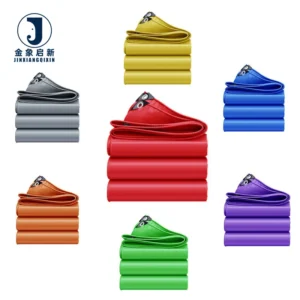
| Color | Multiple / Custom options |
| Standards | ISO, CE (company certification) |
Application Suitability
| Application | Exposure & Requirement |
|---|---|
| Flatbed and curtain-side truck covers | Constant load flexing, road debris abrasion, tie-down tension at hems and eyelets, prolonged weather exposure |
| Trailer side curtain fabric for logistics fleets | Repeated rolling and unrolling at curtain mechanisms, highway wind load, UV degradation over long-haul routes |
| Heavy-duty vehicle and equipment covers in transport yards | Static outdoor storage, dust and oil contact, occasional handling and repositioning stress |
Why a Generic-Size Truck Cover Costs More Than a Custom Fit
A truck cover that does not match your trailer dimensions creates gaps, flapping damage, and cargo exposure that no amount of fabric strength can compensate for.
Fleet operators frequently replace covers not because the material failed, but because the size was wrong from the start. Generic cut sizes leave excess fabric that flaps in highway wind, accelerating wear at the hem and eyelet line. [NEED_CITE: transport industry studies on tarpaulin replacement frequency and root causes] Corners that do not align with the trailer frame leave cargo exposed during rain, defeating the waterproof purpose of the PVC coated tarpaulin for truck cover applications entirely. The result is premature reorder cycles and frustrated drivers managing loose fabric on every stop.
Fitment That Follows Your Trailer, Not a Catalog Size
Every transport fleet runs mixed trailer models, and each demands a different cut pattern. Our PVC coated tarpaulin for truck cover use is produced to your specific vehicle dimensions — width, drop length, and curtain mechanism clearance. This eliminates the overlap waste and corner gaps that generic sizing produces. When the cover fits precisely, tension distributes evenly across the fabric, reducing concentrated stress at the tie-down points where most covers begin to fail.
Road Exposure Demands More Than Waterproofing
Highway transport subjects fabric to conditions that static storage never does. Wind load creates constant low-amplitude flexing across the entire curtain surface. Road grit and debris strike the lower section repeatedly. UV exposure accumulates over thousands of hours of daylight transit. [NEED_CITE: coated fabric degradation mechanisms under dynamic mechanical and UV stress] The knife-coated PVC construction bonds the coating to the woven base fabric at a molecular level, maintaining adhesion through the flex cycles that cause laminated alternatives to delaminate at the seams.
Reading the Weight Behind the GSM Number
The stated GSM tells you the total weight per square metre, but it does not reveal how that weight is distributed between base fabric and coating. A 450 GSM PVC coated tarpaulin can have a dense woven base with moderate coating, yielding high tensile and tear strength. Alternatively, it can carry a heavy coating layer over a lighter base, which may resist puncture well but tears more easily once a cut initiates. Knife coating ensures the PVC penetrates the woven structure rather than sitting on top, creating a unified composite rather than a layered sandwich. The woven base fabric denier and weave density determine how well the material resists tear propagation once the surface is breached — a critical factor for truck covers where road debris cuts are common. Anti-UV treatment, where specified, slows the polymer breakdown that makes PVC brittle over time, though the specific test basis should be confirmed for your operating climate. Oilproof properties protect against diesel and hydraulic fluid contact common in transport yard environments.
The Hidden Cost of Underspecified Fabric in Fleet Operations
When a truck cover is specified on price and GSM alone, the failures that follow rarely appear in the first month. They emerge after a season of highway use — at the welded seams where the cover flexes most, at the eyelets where tie-down tension concentrates, and along the lower edge where road grit erodes the coating. [NEED_CITE: field failure patterns in transport tarpaulins related to specification gaps] A cover that fails mid-route exposes cargo to weather, triggers insurance disputes, and forces an emergency reorder at premium lead times. The cost of the replacement fabric is minor compared to the operational disruption and cargo damage claims that follow.
Why Transport Operators Source This Fabric Here
Three full production lines and 36 sets of professional equipment handle bulk fleet orders with consistent on-time delivery, whether you need rolls for new trailer production or cut covers for fleet replacement. The 10-person R&D team develops samples within days when you need custom sizing confirmed against your trailer drawings before committing to a full order. Dedicated QA/QC runs at every production stage, with pre-shipment inspection verifying that GSM, colour, and dimensions match the quotation roll by roll. [NEED_CITE: quality management standards for coated fabric manufacturing] Nearly 30 years of focused coated fabric production means the process control behind knife coating adhesion and weave consistency is built into the manufacturing routine, not added as an inspection afterthought.
Documentation & Verification
- Material specification sheet confirming base fabric denier, coating weight, and GSM per roll
- Pre-shipment inspection record verifying weight and colour consistency across the order
- Custom sizing confirmation cross-referenced against your trailer model drawing
- Eyelet spacing and hem reinforcement schedule documented before production
- UV and flame retardant test reports provided where treatments are specified
- Certificate of origin and customs documentation for international shipment
Fabrication, Handling & Storage
- Hot air welding suits the knife-coated PVC surface for strong seam bonds at high-flex zones
- Specify eyelet spacing and hem reinforcement to match your tie-down system load points
- Store rolls upright on a flat surface to prevent permanent creasing in the woven base fabric
- Allow cold-stored rolls to reach ambient temperature before unrolling to avoid coating stress
- Use mild detergent for cleaning; avoid solvent-based agents that attack the PVC coating layer
- Cut-to-size covers should be patterned from trailer drawings to maximise fabric utilisation
Starting Your Specification
Provide your trailer model list with dimensions, the operating environment including typical route exposure conditions, and any fire classification requirements for your market. Indicate whether you need roll stock for your own fabrication or finished cut covers with eyelets and reinforced hems. If colour matching or printed branding is required, share your reference standard so samples can be developed for approval before production.
Frequently Asked Questions
Q: How do you ensure the truck cover fits my specific trailer model?
A: We work from your trailer model drawings or dimensional survey to produce the exact cut pattern. Width, drop length, curtain mechanism clearance, and tie-down point positions are all matched to your vehicle. A sample or dimensional confirmation is completed before full production runs, so the PVC coated tarpaulin for truck cover use arrives ready to install without field modifications.
Q: How is GSM verified on arrival to prevent under-weight delivery?
A: Each roll undergoes weight verification during pre-shipment inspection against the GSM stated on your quotation. The inspection record travels with your shipment documentation, so you can cross-check on receipt. This eliminates the common problem of material arriving lighter than agreed, which compromises both durability and warranty claims.
Q: What eyelet spacing and hem reinforcement options are available for tie-down systems?
A: Eyelet spacing is set to match your trailer’s tie-down rail configuration, and hem reinforcement is specified based on the tension load at each attachment point. Reinforced webbing or doubled fabric layers are used where tie-down straps concentrate force. The exact schedule is confirmed against your trailer drawing before the PVC coated tarpaulin for truck cover application enters production.
Q: How do you control colour consistency across rolls in a fleet-wide order?
A: Rolls for a single fleet order are produced in the same batch run where possible, with colour checked roll by roll during pre-shipment inspection. The inspection record documents consistency across your order. This prevents the visible colour variation that occurs when rolls from different batches are installed side by side on adjacent trailers.
Q: What is the recommended welding method for seams at high-flex points on truck covers?
A: Hot air welding is the standard method for knife-coated PVC, producing a bond that matches or exceeds the fabric strength. The weld parameters are adjusted to the specific coating thickness and base fabric weight. Seams at high-flex zones — typically where the cover bends around the trailer frame — are positioned and reinforced to handle repeated flexing without delamination or cracking over time.