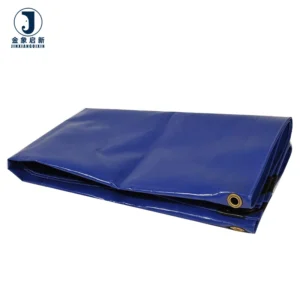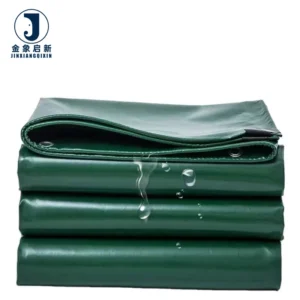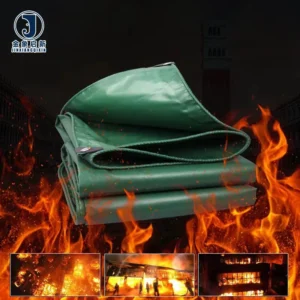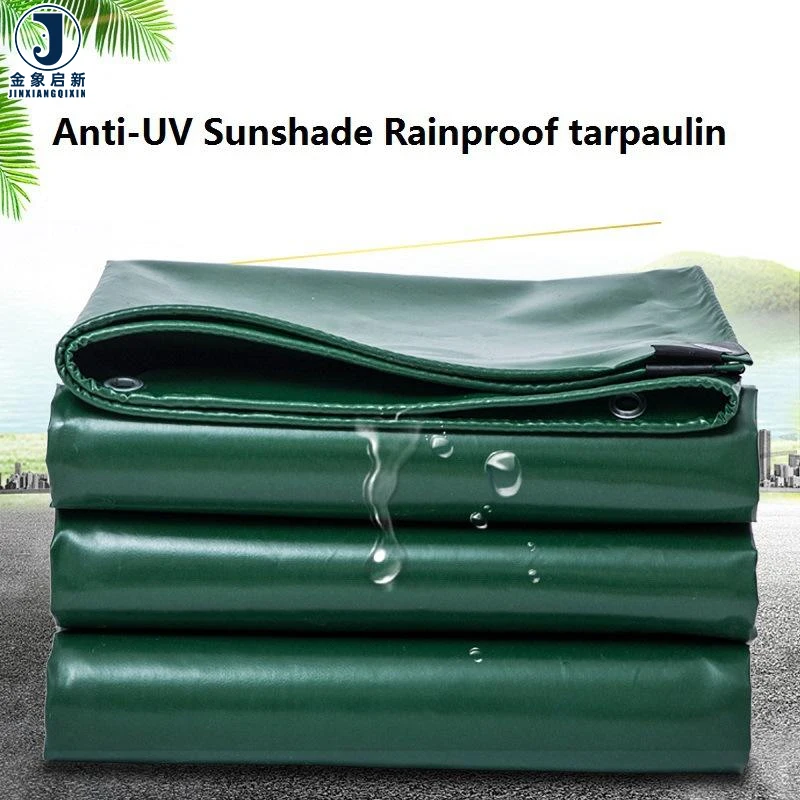
Process Control Over Coating Weight — verified through dedicated QA/QC at every production stage, ensuring the PVC coated tarpaulin meets the specified GSM before it leaves the facility.
Technical Specifications
| Parameter | Value |
|---|---|
| Product Type | PVC Coated Tarpaulin |
| Base Fabric | 500D x 500D Polyester |
| Coating Material | PVC (Double-sided) |
| Weight Range | 450 – 900 g/m² |
| Surface Characteristics | Smooth, leather-like texture |
| Water Resistance | Fully waterproof coated construction |
| Flame Retardant | Available in flame retardant grades — confirm the grade required for your market |
| Anti-UV | Available with anti-UV treatment — request test basis for your region |
| Fabrication / Repair | Repairable by hot air welding |
| Packaging | Roll packing, bale packing, carton |
| Standards | ISO, CE |
Application Suitability
| Application | Exposure & Requirement |
|---|---|
| Flatbed Truck & Trailer Covers | Constant flexing at load points, road abrasion, high-speed wind uplift, UV and rain exposure. |
| Side Curtain Fabric for Transport Fleets | Repeated rolling and tensioning, lateral movement, flex-point fatigue, weather sealing. |
| Machine and Equipment Covers | Outdoor static exposure, puncture risk from sharp edges, dust and moisture ingress. |
| Construction Site Covers | Heavy debris impact, prolonged UV exposure, wind loading, temporary weather protection. |
Why Generic Sizes Guarantee Premature Failure on the Road
A truck cover must be engineered around the specific dimensions and tie-down points of the trailer, not cut from a generic template.
Fleet operators frequently receive PVC coated tarpaulin for truck and transport covers that are technically the "right" size but fail within months. The failure rarely happens in the middle of the fabric; it happens at the edges, the hems, and the points where the load flexes most during transit. When a cover is cut to a standard dimension rather than the exact profile of a specific trailer model, the tension distribution is wrong. The fabric pulls unevenly, placing excessive stress on eyelets and seams. Welded seams then fail before the fabric itself does, precisely at the flex points where the load moves [NEED_CITE: tensile and tear test methods for coated fabrics per ISO 1421]. Specifying a custom-fit PVC coated tarpaulin aftermarket supplier solution eliminates this predictable failure mode.
Engineered for the Flex Points of a Moving Load
The primary engineering challenge for any transport cover is managing the stress concentrations that occur when a vehicle is in motion. Our PVC coated tarpaulin for truck and transport applications addresses this by utilizing a 500D x 500D polyester base fabric. This denier provides the necessary tensile strength to handle the dynamic loads experienced on highways and rough terrain. The double-sided PVC coating ensures complete waterproof sealing, protecting the cargo from driving rain and road spray while maintaining the structural integrity of the base fabric.
Securing the Load: Hems, Eyelets, and Custom Fitment
A generic cover relies on standard eyelet spacing that rarely aligns with the actual tie-down rails or D-rings on a specific truck or trailer. This misalignment forces operators to use bungee cords or improper tensioning methods, which acceler* By specifying custom sizing, the PVC coated tarpaulin is cut and fabricated to match the exact dimensions of the vehicle. Reinforced hems and strategic eyelet placement are then integrated into the design, ensuring that the tension from tie-down straps is distributed evenly across the fabric, significantly reducing the risk of tearing at high-stress areas.
Decoding the 500D Polyester Base and Coating Weight
The 500D x 500D yarn count refers to the denier, or weight in grams of 9,000 meters of yarn, for both the warp and weft threads. This creates a balanced, high-tensile base fabric that resists tearing in both directions. However, denier alone does not dictate the final performance; the coating weight is equally critical. A 450 g/m² cover will be lighter and more flexible, suitable for smaller vehicles or temporary covers, while a 900 g/m² cover offers substantially higher puncture resistance and rigidity, necessary for heavy machinery or flatbed loads exposed to severe weather. The relationship between the base fabric density and the PVC coating weight determines the overall tear propagation resistance [NEED_CITE: DIN 53354 tear strength testing for textiles].
The Cost of Ignoring Weld Integrity at High-Stress Zones
Many transport covers fail not because the fabric tears, but because the welded seams delaminate. When hot air welding parameters are not precisely calibrated to the specific GSM and coating formulation of the PVC, the bond strength is compromised. If a 650 g/m² cover is welded using settings optimized for a lighter grade, the seam will peel apart under the tension of a heavy load shifting during braking. This type of failure leaves the cargo exposed and requires immediate, often costly, replacement of the entire cover rather than a simple field repair [NEED_CITE: hot air welding parameters for PVC coated fabrics].
Why Fleet Operators Source This PVC Coated Tarpaulin
Nearly 30 years of focused production on coated fabrics provides the deep process control necessary to maintain consistent coating weight and adhesion across large fleet orders. Three full production lines and 36 sets of professional equipment ensure that bulk orders for transport fleets are completed with reliable on-time delivery, minimizing vehicle downtime. A dedicated 10-person R&D team handles the custom sizing and pattern printing required to match specific trailer models and corporate branding. Every roll undergoes 100% pre-shipment inspection, guaranteeing that the GSM and color consistency meet the exact specifications agreed upon at the sampling stage.
Documentation & Verification
- Material specification sheet detailing base fabric denier and PVC coating weight.
- Test reports for UV and flame-retardant grades where applicable to your market.
- Pre-shipment inspection records verifying fabric weight against the quoted GSM.
- Roll packing list specifying dimensions and weight for customs clearance.
- ISO and CE certificates supporting international compliance requirements.
Fabrication, Handling & Storage
- Hot air welding temperature and speed must be calibrated to the specific 450-900 g/m² weight range.
- Store rolls horizontally on a flat surface to prevent permanent creasing of the PVC coating.
- Allow rolls to acclimatize to ambient temperature before unrolling to prevent coating micro-cracking.
- Use mild, non-solvent cleaners to maintain the smooth, leather-like surface texture.
- Field repairs on tears or punctures can be executed using standard hot air welding equipment.
Requesting a Custom Transport Cover Specification
To receive an accurate quotation and sample for your fleet, please provide the exact make and model of the trucks or trailers requiring covers. Specify the required GSM range within our 450-900 g/m² capability and indicate if your operating region mandates specific flame-retardant or anti-UV test standards. Confirm whether you require finished, hemmed covers with specific eyelet patterns, or roll stock for in-house fabrication.
Frequently Asked Questions
Q: How do you ensure the PVC tarpaulin fits specific trailer models?
A: We do not rely on generic size charts. Provide the exact make, model, and year of the trailer, or detailed dimensional drawings. Our R&D team develops a custom sample within days to verify the fitment, eyelet alignment, and hem reinforcement before bulk production begins.
Q: What test documentation supports the UV or flame-retardant claims?
A: We supply material specification sheets and third-party test reports for treated grades. Because fire safety and UV degradation standards vary by region, you must specify the exact standard required for your market (e.g., NFPA 701, B1) so we can provide the relevant documentation.
Q: Can I get consistent colour and GSM across multiple rolls in one order?
A: Yes. Our production process includes dedicated QA/QC at every stage. We conduct 100% pre-shipment inspection to verify that the coating weight matches the quotation and that color consistency is maintained across all rolls in a single batch, preventing visible variations when installed side-by-side.
Q: How do welded seams compare to stitched seams at high-flex load points?
A: For PVC coated tarpaulin used in transport, hot air welding is superior to stitching. Stitching creates needle holes that compromise waterproofing and act as stress concentrators where tearing initiates under load flexing. A properly calibrated welded seam creates a homogeneous bond that is often stronger than the base fabric itself.