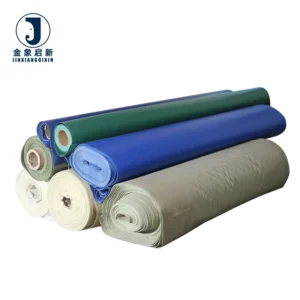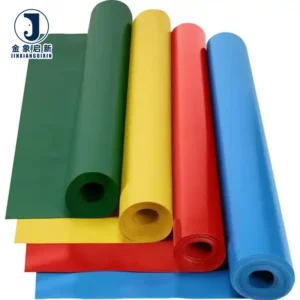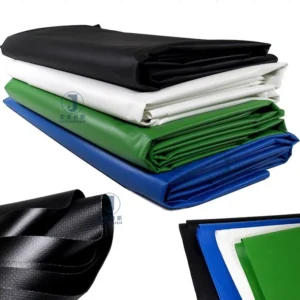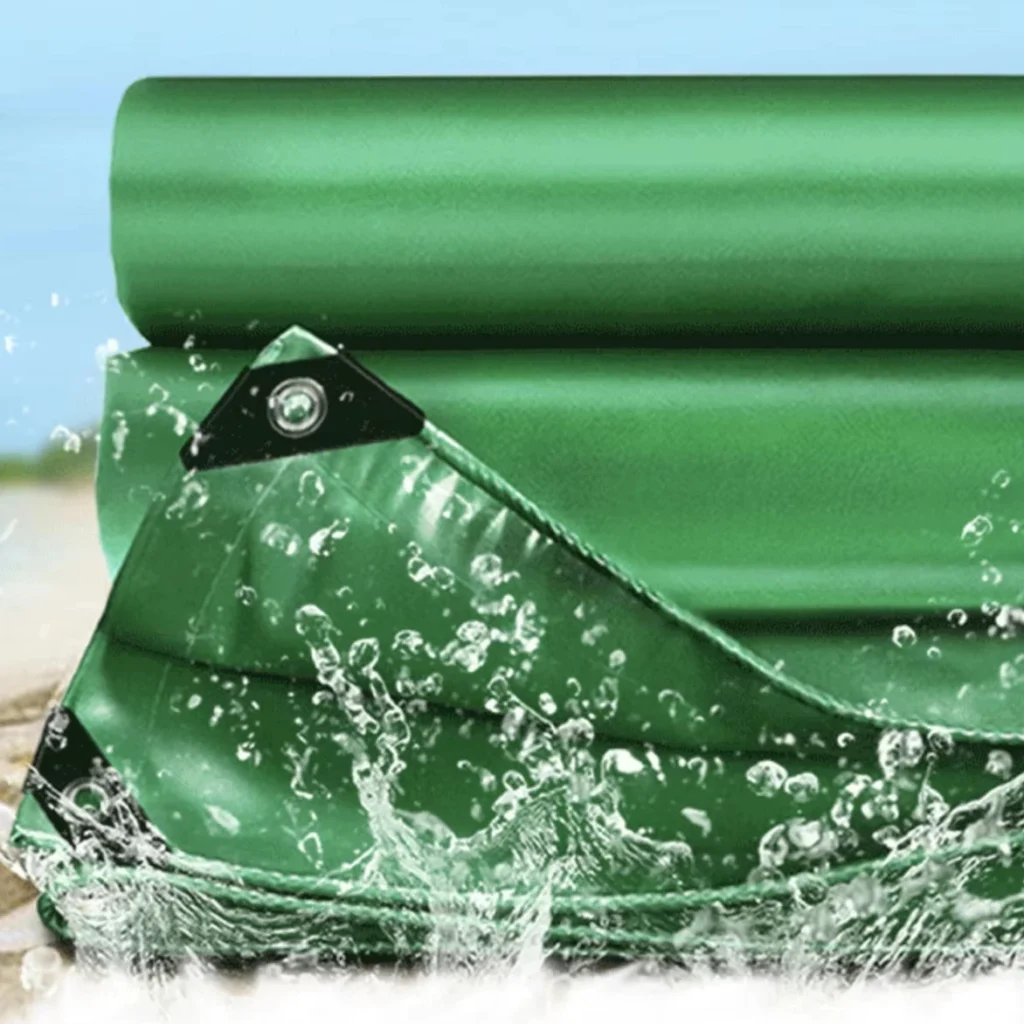
Roll-to-Roll Consistency in Every Shipment — Every PVC Coated Tarpaulin Roll undergoes 100% in-process QA with dedicated coating weight checks across all three production lines, ensuring your transport covers meet specification from the first metre to the last.
Technical Specifications
| Parameter | Value |
|---|---|
| Product Type | PVC Coated Tarpaulin Roll |
| Base Fabric | PVC & Polyester |
| Yarn Count | 500D-500D |
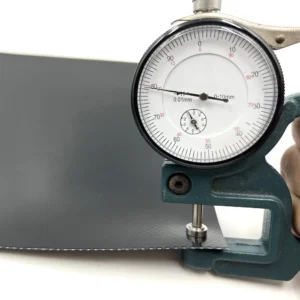
| Coating Thickness | 0.3mm |
| Area Weight | 400g/m² |
| Flame Retardant | Flame retardant grades available — confirm the grade required for your market |
| Anti-UV | Anti-UV treatment applied — request test report for classification details |
| Waterproofing | Water resistant, waterproof coated construction |
| Packing Options | Roll packing, bale packing, carton |
| Certification | ISO, CE |
Application Suitability
| Application | Exposure & Requirement |
|---|---|
| Truck Side Curtain | Constant flexing at load points, road debris abrasion, prolonged UV exposure during transit |
| Trailer Cover | Wind lift stress at seams, water ingress prevention for high-value cargo, tie-down point strain |
| Machine Cover | Outdoor storage exposure, dust and moisture ingress, handling abrasion during installation and removal |
| Wood Cover | Moisture protection for timber stacks, wind flap fatigue, UV degradation over extended storage periods |
| Awning | Sun and rain exposure, tension stress at fixing points, colour consistency across joined panels |
| Tent Fabric | Weather exposure at camp or site, repeated assembly and teardown stress, pack weight considerations |
Why GSM Alone Does Not Guarantee Cover Durability on the Road
A 400g/m² PVC Coated Tarpaulin Roll is only as reliable as the base fabric and coating adhesion behind that number.
Fleet operators have rejected entire containers because the stated gsm on the quotation did not match what arrived at the dock. The coating weight was light, or the base polyester yarn count was thinner than agreed. A PVC Coated Tarpaulin Roll aftermarket supplier can print any number on a spec sheet, but without verified in-process control, the fabric may tear at the eyelet under a ratchet strap or crack at the weld line after one winter on the road [NEED_CITE: tensile and tear test methods for coated fabrics per ISO 1421]. That is why every roll we ship is checked against the agreed area weight before it leaves the line.
Covering Moving Loads: What Transport Fleets Actually Need
A truck cover is not a static sheet; it flexes thousands of times per journey. The PVC Coated Tarpaulin Roll must tolerate repeated folding at load corners, abrasion from cargo shifting against the inner face, and UV exposure on the outer surface without the coating becoming brittle. Our 500D-500D polyester base fabric provides the structural backbone that resists tear propagation when the cover is tensioned over uneven loads.
Edge and Seam Behaviour Under Tie-Down Stress
Where the strap meets the eyelet, the fabric must transfer load into the polyester weave without the coating delaminating. At 0.3mm coating thickness and 400g/m², this PVC Coated Tarpaulin Roll provides sufficient coating adhesion for standard reinforcement methods, while remaining light enough for one person to handle during daily rigging. Thicker constructions can make the panel too rigid for practical side curtain use, leading to cracking at fold lines over time.
Reading the Spec Sheet Beyond the Weight Number
The 500D-500D yarn count defines the denier of both warp and weft polyester yarns. This balanced construction distributes load evenly across both directions, reducing the chance of the fabric tearing preferentially along one axis when the cover is pulled taut over a flatbed. The 0.3mm total thickness indicates a mid-range coating build that balances waterproof coverage with flexibility — critical for covers that must be folded and stored between trips. The PVC coating itself provides the waterproof barrier, while the polyester base handles the mechanical loads; if either layer falls short, the cover fails prematurely [NEED_CITE: coating adhesion and peel strength testing per DIN 53354]. The 400g/m² weight sits at the intersection of durability and practical handling weight for fleet operators who deploy and stow covers multiple times per day.
The Hidden Cost of Skipping Batch Verification
When a fleet standardises on a single cover specification across mixed trailer models, even a slight shift in coating weight between production batches can change how the fabric behaves during heat welding. A batch that coats light may produce a weld that fails under strap tension, while a batch that coats heavy may not seal cleanly at the intended temperature. Over a fleet of trailers, these inconsistencies multiply into warranty claims, cargo damage, and roadside re-tarping delays that cost more than the original fabric savings [NEED_CITE: weld strength variability in PVC coated fabrics across production batches]. This is why pre-shipment inspection records are non-negotiable documentation, not optional paperwork.
Why Procurement Teams Source This Roll Here
Our coating lines run dedicated QA at every stage, meaning the 400g/m² weight on your sample matches what is in the container — verified before dispatch, not after you open it at the dock. The 10-person R&D team handles vehicle model fitment and reinforcement specification, so your cover cuts match the trailer rather than the other way around. With three full production lines and professional equipment sets, we maintain batch consistency across multi-roll orders for fleet-wide standardisation. Samples are developed within days for custom width or treatment requirements, cutting the lead time between specification and container loading. Documentation — including weight verification, UV test reports, and pre-shipment inspection records — ships with every consignment, so your receiving team has proof before the container door opens.
Documentation & Verification
- Area weight verification recorded per roll against the 400g/m² specification before dispatch
- Anti-UV test report confirming treatment classification for transport exposure conditions
- Flame retardant grade certificate aligned with your destination market requirements
- Pre-shipment inspection record covering coating consistency and fabric integrity
- Material specification sheet listing 500D-500D base fabric, 0.3mm thickness, and treatment details
- Roll packing list with individual roll identification for batch traceability
Fabrication, Handling & Storage
- Heat weld at manufacturer-recommended temperature for the 0.3mm PVC coating to achieve full seam adhesion
- Reinforce eyelet zones with an additional PVC patch to distribute tie-down load into the 500D polyester base
- Store rolls upright on a flat surface to prevent permanent creasing in the 400g/m² coated fabric
- Avoid deploying the PVC cover below the stated low-temperature flexibility limit to prevent coating fracture
- Clean with mild detergent only; solvents can degrade the PVC coating surface and compromise waterproofing
- When cutting panels from the roll, nest patterns to minimise offcut waste from the standard roll width
Requesting a Quotation
To move forward, share the specific trailer or equipment models the covers must fit, the number of rolls or finished panels required per quarter, and whether flame retardant certification is mandatory for your operating jurisdiction. If you need custom widths or printed branding for fleet identification, confirm the colour reference and print layout. We will return a specification recommendation with sample options within days, not weeks.
Frequently Asked Questions
Q: How do I specify fabric for a specific truck or trailer model?
A: Provide the exact trailer make, model, and year, along with the curtain track type and panel dimensions. Our R&D team cross-references your vehicle data against known fitment templates and develops a sample cut for approval before production. This avoids the common problem of generic-sized covers that do not align with your trailer’s tie-down rails or rear door clearance.
Q: What reinforcement options exist at tie-down and eyelet points?
A: We apply additional PVC patches or heat-welded reinforcement strips at specified eyelet zones to spread the load from ratchet straps into the 500D-500D polyester base fabric. The exact patch size and placement depend on your strap spacing and load weight. Provide your tie-down layout so we can engineer reinforcement at each stress point rather than guessing at generic spacing.
Q: How can I verify the anti-UV and flame retardant treatment claims?
A: Request the specific test report for your order batch. We supply documentation showing the UV treatment classification and the flame retardant grade — both referenced to recognised standards. Review these reports with your compliance team before approving the production run, and cross-check the certificate details against your destination market’s regulatory requirements to avoid rejection at customs or on-site inspection.
Q: Can custom widths and lengths be produced for fleet standardisation?
A: Yes. We produce PVC Coated Tarpaulin Roll in custom widths to match your trailer panel dimensions, reducing the number of field welds needed during installation. Provide your target width, roll length, and annual volume. Minimum order quantities and lead times depend on the custom dimension and treatment combination, so early specification allows us to schedule efficiently and deliver consistent batches.
Q: What documentation accompanies each shipment?
A: Every dispatch includes a material specification sheet listing the 400g/m² weight and 500D-500D base fabric, anti-UV or flame retardant test reports where applicable, a pre-shipment inspection record, roll packing list, ISO and CE certificates, and a certificate of origin. These documents support your receiving inspection and customs clearance without requiring follow-up requests after the container has sailed.