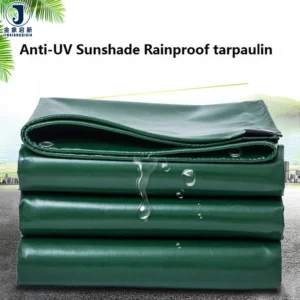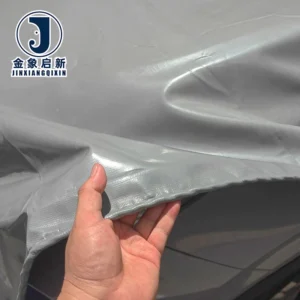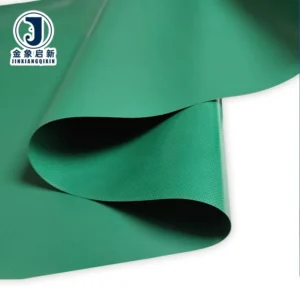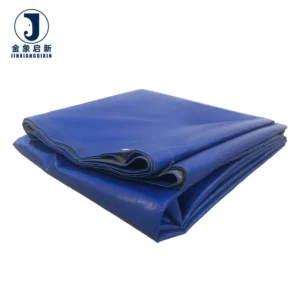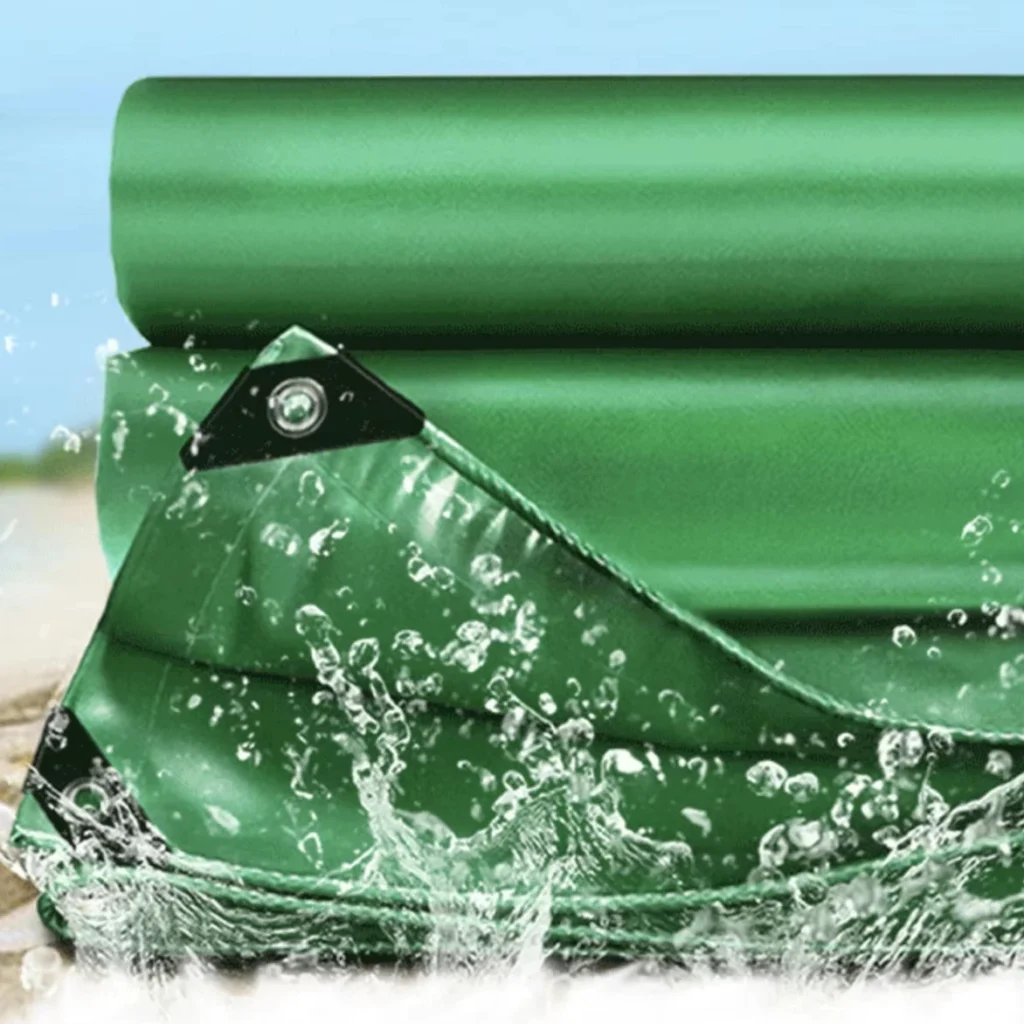
Deep Process Control — coating weight and adhesion monitored across every production stage, ensuring 400 g PVC tarpaulin roll stock meets specified GSM on arrival for transport and fleet applications.
Technical Specifications
| Parameter | Value |
|---|---|
| Product Type | PVC Coated Tarpaulin |
| Weight | 400 g/m² |
| Total Thickness | 0.3 mm |
| Base Fabric Denier | 500D × 500D Polyester |
| Coating Material | PVC Double-Side Coating |
| Color | Blackout |
| Water Resistance | Waterproof coated construction |
| Flame Retardant | Available in flame retardant grades — confirm the grade required for your market |
| UV Resistance | Anti-UV treatment available — confirm test basis required for your market |
Application Suitability
| Application | Exposure & Requirement |
|---|---|
| Truck side curtain fabric | Constant flexing at load points, road debris abrasion, prolonged UV exposure |
| Flatbed trailer cover | Wind lift tension, tie-down strap compression, weather sealing over cargo |
| Vehicle and machinery wrap | Outdoor storage exposure, dust and moisture ingress prevention |
| Awning and tent fabrication | Tensile demand during frame tensioning, weather resistance in pitched position |
| Wood and lumber cover | Moisture protection, stacking compression, repeated handling and repositioning |
Why Generic-Size Covers Fail Where Custom-Cut PVC Tarpaulin Roll Stock Succeeds
A cover that does not match the trailer model flaps in transit, concentrating stress at welded seams until they split.
Fleet operators replacing truck covers often receive generic dimensions that leave excess fabric loose on one edge and stretched beyond tolerance on another. The flapping creates fatigue cycles at every flex point, and the seam gives way before the base fabric reaches its useful life. When PVC coated tarpaulin for truck and trailer cover applications is cut to exact vehicle dimensions, the tension distributes evenly across the panel. [NEED_CITE: flex fatigue failure patterns in transport covers per ISO 1421 test methods]
Roll-to-Roll Batch Consistency for Transport Fabricators
Fabricators cutting side curtains and truck covers from roll stock need assurance that the 400 g/m² weight and 0.3 mm thickness hold from the first roll to the last in the same container shipment. Batch variation in coating weight changes how the fabric behaves under the hot wedge welder, forcing operators to adjust temperature and speed settings mid-production run. This PVC coated tarpaulin for truck and trailer cover use is produced with in-process QA checkpoints that monitor coating adhesion and GSM across the production run, reducing weld parameter drift.
Cutting to Exact Trailer Dimensions Reduces On-Site Rework
Transport equipment builders fabricating OEM covers for specific truck and trailer models work from cut sheets rather than generic rectangles. When the PVC tarpaulin roll stock arrives in widths and lengths matched to the vehicle panel layout, the fabricator cuts fewer pieces and runs fewer welded seams. Each eliminated seam is a failure point removed from the finished cover. [NEED_CITE: seam-to-fabric failure ratio in coated textile assemblies under dynamic load]
What the 500D Base Fabric Means for Tie-Down Stress
The 500D × 500D polyester base fabric carries the tensile load when tie-down straps compress the cover against the cargo. Denier alone does not determine strength — the weave density and the PVC coating adhesion together define how the fabric resists tear propagation at the eyelet line. At this 400 g grade, the fabric balances flexibility for folding and handling with sufficient tensile capacity for standard flatbed and curtain-side applications, where strap tension and wind lift generate sustained directional force on the cover panel.
The Cost of Specifying Weight Without Checking Coating Adhesion
A PVC tarpaulin that measures correct GSM on arrival can still underperform if the coating adhesion to the base fabric is inconsistent. When adhesion falls below the required threshold, the PVC layer delaminates at flex points — typically where the cover bends over the trailer edge or where tie-down straps press into the fabric. The base fabric then absorbs moisture directly, and the cover fails at a point that looks like a material defect but is actually a coating bond failure. Pre-shipment inspection records that include adhesion testing alongside GSM verification catch this before the rolls leave the production line. [NEED_CITE: coating adhesion test methods for PVC-coated polyester per DIN 53354]
Why Procurement Teams Source Transport-Grade PVC Tarpaulin Roll Stock Here
Three full production lines and 36 sets of professional equipment support bulk roll orders with consistent on-time dispatch, reducing the container-shipping gaps that delay fleet cover replacement programs. The 10-person R&D team handles custom width and cut-to-model sizing requests, developing samples within days so fabricators can validate weld parameters and eyelet placement before committing to full production runs. Dedicated QA/QC operates at every coating and finishing stage, with inspection documentation that matches what the buyer specified on the purchase order. Roll-to-roll colour consistency is verified at the batching stage, preventing the visible panel mismatch that forces a fabricator to rework an entire side curtain set.
Documentation & Verification
- Material specification sheet stating 400 g GSM, 0.3 mm thickness, and 500D base fabric denier
- Pre-shipment inspection record confirming weight and coating adhesion per roll
- Batch colour consistency report across all rolls in the same order
- Flame retardant and anti-UV test reports where treatment is specified for the order
- ISO and CE certificates covering the production facility
- Roll packing list with roll count, dimensions, and gross weight for customs clearance
Fabrication, Handling & Storage
- Set hot wedge welder temperature to match the 0.3 mm PVC coating thickness for consistent seam bonding
- Reinforce eyelet zones with additional PVC patches to distribute tie-down strap load across the 500D base fabric
- Store rolls upright on pallets to prevent flat-spot compression marks on the blackout coating surface
- Allow cold-stored rolls to reach ambient temperature before unrolling to avoid PVC coating crack at low temperature
- Clean the double-side PVC surface with mild detergent only — solvent-based cleaners degrade the coating layer
- Plan panel cut layout to maximise yield from the roll width and minimise welded seam count per cover
Requesting a Specification Match for Your Fleet or Transport Application
Provide the truck or trailer model reference, panel dimensions, and whether the cover will be welded, stitched, or mechanically fastened at the edges. If the operating market requires flame retardant or anti-UV certification, state the applicable standard so the correct treatment grade is confirmed before sample development. Indicate the roll width and length format preferred, along with annual volume, to support accurate lead time and minimum order planning.
Frequently Asked Questions
Q: How do I verify the 400 g GSM on arrival matches the quotation?
A: Request the pre-shipment inspection record that documents measured GSM per roll before dispatch. On arrival, conduct a spot-check using a calibrated scale on a cut sample of known area. The inspection record should list individual roll weights, not just the batch average, so you can trace any discrepancy to a specific roll in the shipment.
Q: Can the PVC tarpaulin be cut to fit my specific truck or trailer model?
A: Yes. The roll stock supports custom width and length, and the R&D team can develop cut-to-model panels based on vehicle dimension drawings. Requesting a sample panel before bulk production lets you confirm fitment, eyelet placement, and weld seam positioning against the actual trailer frame.
Q: What flame retardant grade applies to this PVC tarpaulin?
A: Flame retardant treatment is available in multiple grades depending on the destination market requirement. State the standard your application must meet — such as DIN 4102, NFPA 701, or a local building code classification — and the production team will confirm the applicable grade and provide the corresponding test report with the shipment documentation.
Q: How is colour consistency maintained across rolls in a bulk order?
A: Colour is verified at the batching stage before coating begins, and QA checks roll-to-roll consistency throughout the production run. If your application joins multiple panels side by side on a truck or trailer, request the batch colour consistency report to confirm all rolls in the order fall within the accepted tolerance range.
Q: What is the lead time for custom-width or custom-colour roll orders?
A: Custom specifications require a sample development phase followed by a scheduled production run. Typical lead times depend on order volume, treatment requirements, and current production line allocation. Provide your target delivery date and roll quantity early in the inquiry to receive an accurate production schedule.