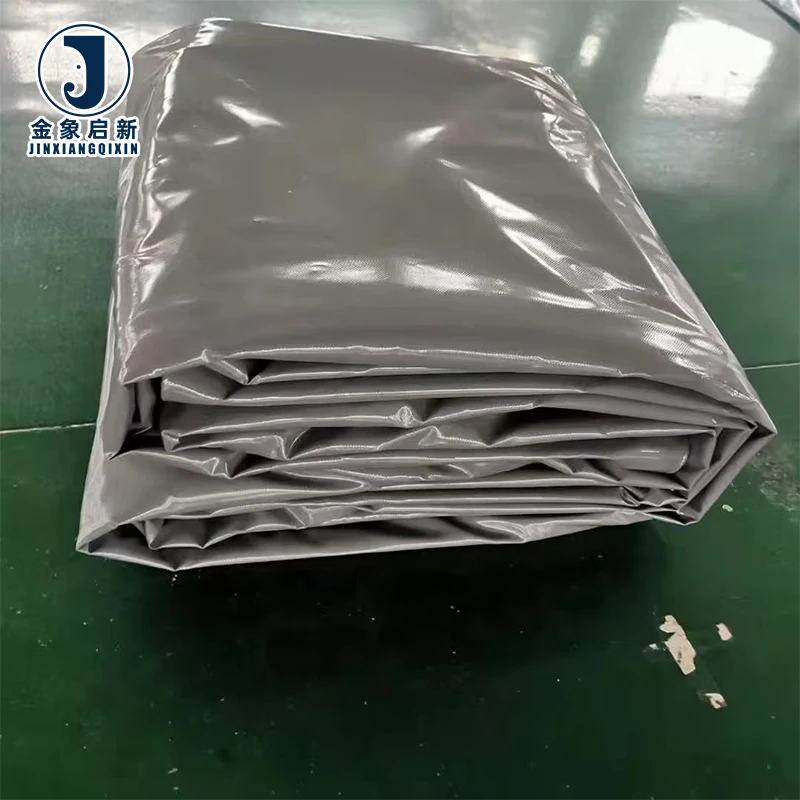
Proven Coating Consistency — Every 630 Gsm PVC Tarpaulin Roll for Truck Cover is verified at the coating stage, with in-process QA ensuring the stated weight and denier match across the entire production run.
Technical Specifications
| Parameter | Value |
|---|---|
| Product Type | PVC Coated Tarpaulin |
| Weight | 630 GSM |
| Base Fabric Denier | 200Dx300D / 500Dx500D / 840Dx840D / 1000Dx1000D |
| Coating Material | PVC |
| Surface Finish | Available in glossy or matte |
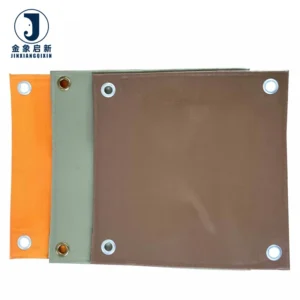
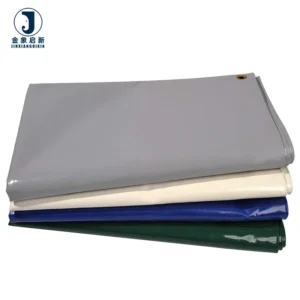
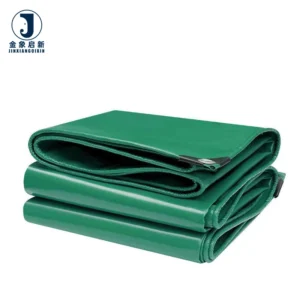
| Colour Options | Blue, Yellow, Black, Green, White, and custom colours |
| Waterproof | Yes — fully coated construction |
| UV Treatment | Available — confirm the test basis required for your market |
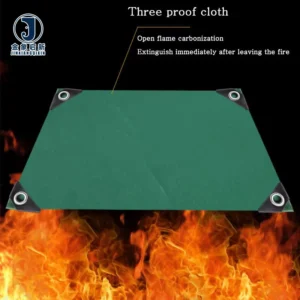
| Flame Retardant | FR treated — confirm the grade required for your market |
| Anti-Fungal | Anti-fungal treated |
| Temperature Range | -15°C to 70°C |
| Size Options | 3x4m / 6x8m / 8x10m / 10x12m or custom made |
| OEM/ODM | Accepted |
| Standards | ISO, CE |
Application Suitability
| Application | Exposure & Requirement |
|---|---|
| Flatbed and curtain-side trailer covers | Continuous road vibration, wind flex at tie-down zones, rain and UV exposure over long-haul routes |
| Transport equipment side curtains (new trailer builds) | Repeated opening and closing cycles, abrasion against cargo edges, model-specific panel dimensions |
| Fleet cover replacement for regional logistics | Daily handling and folding, contact with road salt and diesel particulates, colour consistency across multiple vehicles |
| General-purpose truck load protection | Weather exposure during transit, tie-down strap pressure at hem and eyelet zones, varied cargo shapes |
Why Truck Covers Fail First at the Seam, Not the Fabric
The weld line carries the flex load that the fabric alone cannot absorb, and most generic covers are joined with parameters suited to flat stock, not moving loads.
When a PVC coated truck tarpaulin is cut to a standard rectangle and fitted to a trailer that is longer, taller, or shaped differently, the stress concentrates at the tie-down points and along the hem. Road vibration and wind pressure force the fabric to flex repeatedly at these zones. If the seam was welded with heat and dwell time calibrated for a lighter grade or a flat application, the bond degrades before the base fabric shows any sign of wear [NEED_CITE: tensile and tear test methods for coated fabrics per ISO 1421]. Fleet operators then face a cover that looks intact in the centre panel but splits along the join — the most expensive failure mode because it requires a full replacement rather than a field repair.
Model-Specific Pattern Cutting Eliminates Edge Gap Failures
A PVC coated truck tarpaulin that is patterned to the exact dimensions of your trailer model removes the excess material that flaps in crosswinds and the tight spots that pull seams apart at the corners. Each panel is cut from the 630 GSM roll to match the vehicle’s side curtain channels, roof bow spacing, and tie-down rail positions. This means the eyelet placement aligns with your existing strap hardware, reducing the chance of point-load tearing at mismatched positions.
Welded Seam Construction at High-Flex Zones
The junction where a side curtain meets the trailer coaming rail is the single highest-stress point on any truck cover. Our welding process adjusts temperature, pressure, and dwell time to the denier and coating thickness of the selected base fabric, whether 500Dx500D for standard curtain-side duty or 1000Dx1000D for heavy-abrasion routes. The goal is a seam that flexes with the fabric rather than acting as a rigid hinge that cracks under repeated road vibration [NEED_CITE: peel strength and weld integrity testing for PVC coated fabrics].
Reading the Spec Sheet Beyond the GSM Number
A 630 GSM weight tells you how much PVC and base fabric are in each square metre, but it does not tell you how that weight is distributed between coating and yarn. A roll built on a 200Dx300D base with a heavier coating coat will feel stiff and may crack at low temperatures, while a 1000Dx1000D base with a proportionate coating layer delivers higher tensile and tear resistance with better low-temperature flexibility. The denier selection matters as much as the GSM when specifying a PVC coated truck tarpaulin for long-haul exposure where temperature swings from -15°C to 70°C are routine. Surface finish also plays a role: a glossy surface sheds road grime and rain residue more easily during transit, while a matte finish reduces glare and provides a better substrate for printed fleet branding. Anti-fungal treatment prevents mildew buildup on covers that are folded while damp — a common occurrence when a curtain-side trailer is unloaded in wet conditions and the cover is retracted immediately.
The Hidden Cost of Batch Colour Mismatch Across a Fleet
When a logistics company orders replacement covers for multiple trucks and the colour varies between rolls in the same shipment, the difference becomes visible the moment two panels hang side by side on adjacent vehicles. This is not a cosmetic complaint alone — it signals inconsistent pigment dispersion in the coating compound, which can also correlate with uneven UV stabiliser distribution across the batch [NEED_CITE: colour fastness and batch consistency standards for coated textiles]. A fleet operator then faces the choice of accepting the mismatch or rejecting an entire shipment, both of which carry operational cost.
Why Source Your Truck Tarpaulin Here
Deep process control over coating weight and adhesion is built into every production run, with dedicated QA checkpoints that verify GSM and coating bond before the roll leaves the line. Three full production lines and 36 sets of professional equipment support bulk capacity, so fleet-scale orders for multiple trailer models can be fulfilled within a single production window. A 10-person R&D team develops pattern-cut samples within days, allowing you to confirm fit on your specific trailer before committing to the full order. Every roll undergoes 100% pre-shipment inspection with a documented check on coating weight, seam integrity, and eyelet reinforcement. Nearly 30 years of focus on coated fabric production means the process parameters for welding, coating, and finishing are established from long production history rather than adjusted by trial on each new order.
Documentation & Verification
- Material specification sheet confirming GSM, denier, and coating type per roll shipped
- UV and flame retardant test reports supplied with batch documentation where applicable
- Pre-shipment inspection record covering coating weight verification and seam check
- Roll packing list with individual roll dimensions and weight for receiving inspection
- Certificate of origin and customs documentation for cross-border shipment clearance
Fabrication, Handling & Storage
- Heat-weld at temperatures matched to 630 GSM coating thickness; test on a sample strip before full-panel welding
- Reinforce eyelet zones with additional PVC patches where tie-down straps concentrate load on the hem
- Store rolls upright on pallets to prevent flat-spot deformation of the 630 GSM coated surface
- Allow cold-stored rolls to reach ambient temperature before unrolling to avoid coating crease marks
- Use mild detergent for cleaning; avoid solvent-based products that can soften the PVC coating layer
- Cut panels with at least 50mm hem allowance to accommodate double-fold reinforcement at stress points
What to Include in Your Enquiry
To specify the right PVC coated truck tarpaulin for your fleet, share the trailer make and model, the side curtain or cover panel dimensions, and the type of cargo exposure your vehicles face most frequently. If your operating region mandates specific fire-retardant or UV performance grades, note the required standard so the correct treatment can be applied and documented. Indicate whether you need finished, eyelet-fitted covers or raw roll stock for your own fabrication facility, and confirm the quantity per trailer model so production can be batched efficiently.
Frequently Asked Questions
Q: How do you cut the tarpaulin to fit my specific truck or trailer model?
A: We request the trailer manufacturer, model designation, and panel dimensions including curtain channel spacing and tie-down rail positions. A pattern is developed and a sample cover is produced for fitment check before the full production run proceeds, ensuring each PVC coated truck tarpaulin matches the vehicle geometry without generic excess or shortage at the edges.
Q: How can I verify the GSM on arrival matches what was quoted?
A: Each shipment includes a pre-shipment inspection record that documents the measured coating weight per roll. You can cross-check this against the material specification sheet and the original quotation. Our QA process verifies GSM at the coating stage and again before dispatch, so any deviation is caught before the roll is packed.
Q: What UV test basis supports the anti-UV claim for long-haul sun exposure?
A: UV treatment is available for this 630 GSM fabric, and the specific test basis depends on your market requirements. We supply the applicable test report with the batch documentation. When placing your enquiry, specify the UV performance standard your region or fleet policy requires so the correct stabiliser package is applied and verified.
Q: How are eyelets and hems reinforced at tie-down and high-flex points?
A: Hem zones are double-folded and heat-welded before eyelet insertion, with additional PVC reinforcement patches applied at positions where tie-down straps exert concentrated force. Eyelet spacing is matched to your trailer’s strap hardware layout, distributing load across the 630 GSM fabric rather than concentrating stress at arbitrary intervals.
Q: What is the lead time and minimum order for custom-sized truck covers?
A: Lead times depend on the number of trailer models, colour requirements, and whether finished covers or roll stock is needed. Custom widths, colours, and pattern-cut sizes are produced on our three full lines, which handle both small batch sampling and fleet-scale volume. Share your model list and quantities for a confirmed production schedule.