Collapsible PVC Fabric Tank — Nearly three decades of coated fabric process control applied to a rainwater collection system that ships flat and deploys on-site in minutes.
Technical Specifications
| Parameter | Value |
|---|---|
| Product Type | Collapsible Rain Barrel Rainwater Collection System |
| Coating Material | PVC |
| Base Fabric | PVC Mesh Cloth |
| Support Structure | PVC Support Rod |
| Waterproof | Yes |
| UV Treatment | Claimed (test basis not stated in source) |
| Flame Retardant | Claimed (grade not stated in source) |
| Anti-Static | Claimed (standard not stated in source) |
| Anti-Mildew | Claimed |
| Anti-Bacteria | Claimed |
| Tear-Resistant | Claimed (test standard not stated in source) |
| Abrasion-Resistant | Claimed |
| Windproof | Claimed |
| Shrink-Resistant | Claimed |
| Color | Green |
| Form Factor | Collapsible / Portable |
Application Suitability
| Application | Exposure & Requirement |
|---|---|
| Residential garden rainwater harvesting | Continuous UV exposure, seasonal temperature swings, contact with organic debris from roof runoff |
| Agricultural irrigation catchment | High-volume filling cycles, exposure to fertiliser-laden runoff, standing water for extended periods |
| Remote construction site water storage | Dust and abrasion from site traffic, temporary deployment and frequent relocation |
| Commercial landscaping water collection | Distributed placement across sites, public visibility requiring clean appearance |
What "Anti-UV and Mildew-Resistant" Actually Means Without Test Reports
A coating treatment claim only matters if you can verify it survived the first summer in direct sunlight.
Many rainwater collection barrels ship with a data sheet that lists UV stabiliser and anti-mildew additives but provides no third-party exposure data or accelerated weathering results. Buyers install them in full sun, and within one season the surface chalks, the mesh loses flexibility, and mildew colonises the inner wall where stagnant water meets warm PVC. [NEED_CITE: ISO 4892 accelerated weathering methods for plastics and coated fabrics] A Collapsible Rain Barrel manufacturer that cannot supply a test report is asking you to take the treatment claim on faith alone.
Collapsible Design and Freight Economics for Water Storage
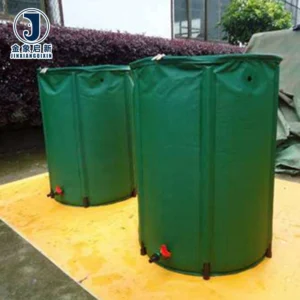
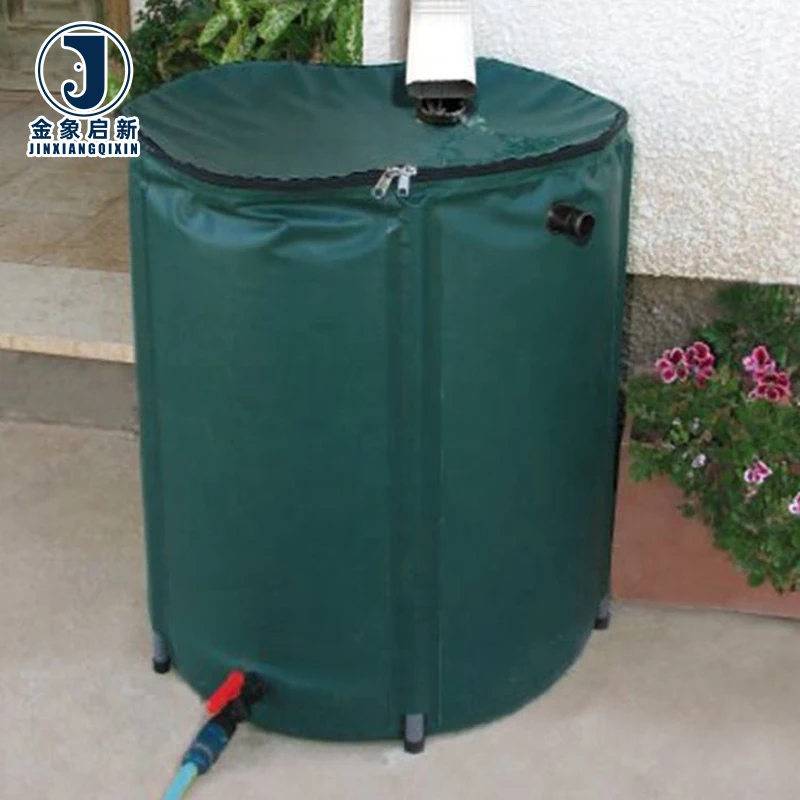
Rigid rain barrels consume their full volume whether empty or full, making container loading inefficient and freight cost per unit disproportionately high. This collapsible rainwater collection system folds flat around its PVC support rod frame, allowing multiple units to ship in a single carton. On-site, the rods slide into sleeves and the barrel stands upright without tools or permanent foundations. For fleet operators and agricultural distributors sourcing in volume, the difference in landed cost per unit between a flat-pack fabric tank and a blow-moulded rigid barrel becomes significant once freight is factored in.
PVC Mesh Cloth as a Structural Material for Liquid Containment
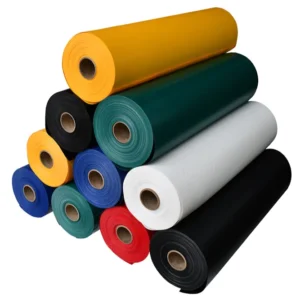
The base fabric in this system is PVC mesh cloth, which differs from solid woven polyester in that its open-weave structure is fully encapsulated by the coating rather than simply laminated on one side. This encapsulation locks the yarns in place, preventing delamination when the barrel flexes during filling and draining cycles. [NEED_CITE: tensile and tear test methods for coated fabrics per ISO 1421] The mesh construction also distributes point loads across a wider area of the fabric, which is critical at the inlet and outlet fittings where hose connections create concentrated stress.
How Mesh Denier and Coating Weight Interact in Water Storage Fabric
The performance of a collapsible water storage barrel depends on the relationship between the mesh cloth denier, the weave density, and the total coating weight applied to both faces. A heavier denier yarn provides higher baseline tensile strength, but if the coating weight is too low, the yarns remain partially exposed and vulnerable to UV degradation and mildew ingress. Conversely, excessive coating on a light denier mesh adds stiffness without proportional strength gain, making the barrel harder to fold and increasing the risk of cracking at crease lines during storage. The anti-mildew and anti-bacteria treatments function at the coating surface, meaning they are only as durable as the coating adhesion to the base mesh. [NEED_CITE: DIN 4102 fire classification for building materials] Buyers specifying material for year-round outdoor water storage should request a material specification sheet that breaks down base fabric denier, weave count, and coating weight per side rather than accepting a single GSM figure.
The Hidden Cost of Under-Specified Fabric for Outdoor Water Storage
When a collapsible rain barrel is specified purely on price and capacity, without verifying the coating weight and mesh grade, the failure pattern is predictable. The seams — typically heat-welded at the barrel’s vertical joints — carry the full hydrostatic load when the barrel is filled. If the PVC coating is too thin or the mesh too light, the weld line separates before the body fabric shows any sign of stress. [NEED_CITE: seam strength testing for heat-welded coated fabrics] The barrel does not slowly leak; it splits open under full load, releasing hundreds of litres of collected water onto the installation site. For agricultural operators using stored rainwater for livestock, an unannounced failure also means crop irrigation schedules break and replacement units must be sourced on emergency timelines.
Why Source This Collapsible Rain Barrel Here
Three full production lines and 36 sets of professional equipment give this facility the capacity to handle bulk orders of collapsible water storage tanks without compressing lead times. A 10-person R&D team manages material selection, capacity scaling, and custom inlet-outlet configurations directly — meaning a change in barrel diameter or fitting layout does not require a new mould tool as it would with rigid tanks. Every unit passes 100% pre-shipment inspection with photographic records of weld seams, support rod fit, and surface finish before dispatch. The facility’s ISO and CE certification framework applies to the same coating processes used here, and documentation packages travel with each shipment. Samples for custom capacity or colour requirements are developed within days, allowing buyers to verify dimensional fit and fabric hand before committing to production volume.
Documentation & Verification
- Material specification sheet stating PVC mesh denier, coating weight per side, and total GSM
- UV and flame-retardant test reports supplied where applicable to confirm treatment grade
- Pre-shipment inspection record with photographic evidence of all weld seams and support rod sockets
- Certificate of origin and customs documentation included for cross-border shipments
- Roll and unit packing list detailing quantity, colour, and capacity per carton
Fabrication, Handling & Storage
- Heat-weld seams at the PVC mesh overlap zones using temperature settings matched to coating thickness to avoid burn-through or cold joints
- Store collapsed barrels flat in shaded, dry conditions to prevent permanent crease marks in the PVC coating
- Avoid dragging the PVC mesh cloth base against abrasive surfaces during deployment to protect the coating face
- Clean the inner surface with mild, non-solvent detergent to preserve the anti-mildew and anti-bacteria treatment layer
- Inspect PVC support rod sleeves for debris before each seasonal reassembly to ensure smooth insertion
What to Include in Your Collapsible Rain Barrel Enquiry
Specify the target capacity, the installation environment — whether the barrel will sit on soil, concrete, or a raised platform — and the expected filling frequency. If your market requires flame-retardant or anti-static certification for outdoor storage products, state the standard your jurisdiction enforces so the correct fabric grade is selected from the outset. Indicate whether you need the barrel supplied as a complete unit with fittings and support rods, or as cut-and-welded fabric panels for your own assembly line. Colour and branding requirements should be confirmed at enquiry stage so that pigment matching can be validated against a physical sample before production begins.
Frequently Asked Questions
Q: How is the PVC mesh cloth weight and coating thickness verified on arrival?
A: Each shipment includes a material specification sheet stating the base fabric denier and coating weight per side. Buyers can cross-check GSM by cutting a measured sample from the barrel wall and weighing it. Discrepancies between quoted and actual weight should be flagged against the pre-shipment inspection record provided with the documentation package.
Q: What UV and anti-mildew test reports are supplied with each shipment?
A: UV resistance and anti-mildew treatment claims are supported by test reports where the applicable grade has been specified at the order stage. Buyers should confirm the required exposure standard for their market during enquiry so the correct test documentation is prepared before production begins.
Q: Can the barrel capacity, colour and inlet/outlet fittings be customised per project?
A: Capacity, diameter, height, colour, and fitting layout are all adjustable. The R&D team develops a physical sample within days so that dimensional fit, fabric hand, and fitting placement can be verified before the bulk production run is scheduled.
Q: How does the collapsible design affect container loading and freight cost per unit?
A: The barrel folds flat around its PVC support rod frame, allowing multiple units to pack into a single carton. This flat-pack configuration significantly increases unit count per container compared with rigid barrels, reducing landed freight cost per unit for volume buyers.
Q: What seam welding method is used, and how is leak resistance tested before dispatch?
A: Seams are heat-welded at the PVC mesh overlap zones. The 100% pre-shipment inspection includes visual and physical checks of every weld line, and the inspection record with photographic evidence is included in the shipment documentation for buyer review.